
- Release Year: 2018
- Platforms: Windows
- Publisher: Metal Fox
- Developer: ARGames
- Genre: Action
- Perspective: 1st-person
- Game Mode: Single-player
- Gameplay: Open World, Sandbox, Shooter
- Average Score: 37/100
Description
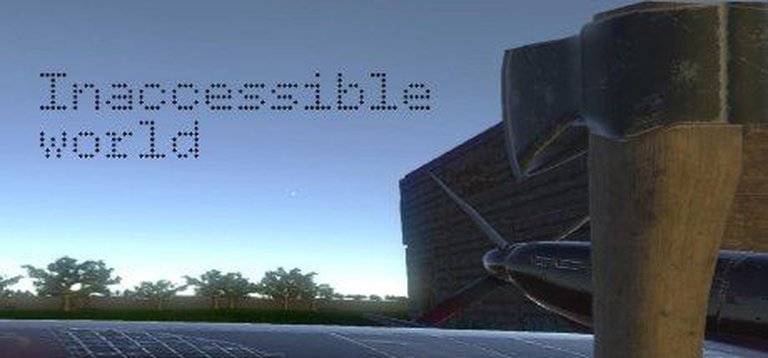
Inaccessible World is a first-person survival shooter and open-world sandbox game where, once a year, intrepid hunters are granted access to a forbidden and extremely perilous realm for the most dangerous hunting challenge on Earth, testing their skills in combat, exploration, and endurance against deadly threats.
Where to Buy Inaccessible World
PC
Inaccessible World Reviews & Reception
steambase.io (36/100): Mostly Negative (36/100 from 70 reviews)
store.steampowered.com (38/100): Mostly Negative (38% positive)
Inaccessible World: Review
Introduction
Imagine being air-dropped into a forsaken wilderness, armed only with your wits, a rifle, and the gnawing hunger for survival—where every rustle in the underbrush could mean dinner or death, and your leaderboard rank determines your next meal from the skies. Inaccessible World, released in 2018 by the diminutive ARGames studio, pitches itself as the ultimate test of mettle: a week-long gauntlet of “the most dangerous hunting in the world.” In an era flooded with survival sandboxes like Rust and The Forest, this obscure Unity-powered indie dares players to endure isolation without escape until evacuation day. Yet, its legacy is one of quiet obscurity, collected by a mere handful of players on databases like MobyGames and languishing with a “Mostly Negative” Steam rating. My thesis: Inaccessible World is a fascinating artifact of Steam’s budget indie boom—a stripped-down survival simulator that innovates with its persistent scoring loop but crumbles under technical jank, empty ambition, and unfulfilled promise, marking it as more cautionary footnote than timeless classic.
Development History & Context
Developed by ARGames—a small outfit known primarily for bundling low-profile titles like Dragon Perception and Tank Raid—and published by Metal Fox, Inaccessible World emerged on February 15, 2018, amid Steam’s explosive indie saturation. Priced at a rock-bottom $0.99 (often discounted to $0.49), it exemplifies the era’s “asset-flip” wave, where Unity’s accessibility enabled solo or tiny teams to flood the platform with quick-turnaround survival games. ARGames leveraged Unity’s engine for “good optimization,” targeting modest rigs (Intel Core 2 Duo, GeForce 6800GS), reflecting post-DayZ hype where open-world survival promised endless replayability.
The 2018 gaming landscape was defined by giants like PUBG dominating battle royales and polished indies like Subnautica elevating the genre, but Steam’s algorithm favored volume over quality, birthing hundreds of clones. Metal Fox’s bundling strategy (e.g., the 13-game ARGames pack or 32-game “bandle”) underscores a business model reliant on impulse buys and deep discounts, not critical acclaim. With no documented pre-release hype, patches, or expansions—and credits so sparse they’re absent from MobyGames—this was likely a passion project or rapid prototype, constrained by limited resources. Technologically, it nods to early VRAM-light shooters, but lacks the procedural generation or multiplayer that contemporaries used to hook players. In historical context, it parallels 2010s Eastern European indies pushing survival tropes into uncharted, budget territory, yet without the cultural cachet of Russian devs like those behind Escape from Tarkov.
Narrative & Thematic Deep Dive
Inaccessible World eschews traditional storytelling for a stark, emergent narrative: you’re a voluntary hunter thrust into an inescapable zone for seven in-game days (or real-time sessions), competing for “hunting rating points” via kills. No voiced protagonists, no lore books—just a premise evoking real-world extreme challenges like the Iditarod or Chernobyl exclusion zones (hinted by forum mentions of “radioactivity” barriers). Dialogue is nil; HUD prompts and supply drops convey progression, with your score persisting across runs like a roguelite meta-layer.
Thematically, it probes isolation as ordeal and survivalist machismo. The “one week in the year” hook romanticizes peril, positioning players as elite predators in a Darwinian arena where higher scores yield better airdrops—mirroring gamified leaderboards in Hunt: Showdown. Characters? Absent; you’re a faceless everyman, animals anthropomorphized via “animated” behaviors (boars that flip cars, per Steam screenshots). Subtle motifs emerge: resource scarcity (water hunts spark forum pleas) critiques over-reliance on RNG chests, while evacuation victory underscores endurance over aggression. Yet, without deep lore—unlike RPGs discussed in unrelated Reddit threads on world-building—it’s thematically shallow, a canvas for player projection. Critically, it evokes post-apocalyptic fatalism, but botched execution (empty maps, finicky mechanics) dilutes its man-vs-nature purity into frustration.
Gameplay Mechanics & Systems
At its core, Inaccessible World loops scavenge-hunt-survive-evacuate, blending first-person shooter precision with sandbox freedom. Direct control (keyboard/mouse) yields responsive shooting, but the real hook is the hunting score system: kills rack points (birds low, boars high-risk/high-reward), unlocking superior supplies and profile prestige. Progression is session-based—stockpile via plane drops (food, water, ammo)—with automobiles enabling traversal in a purportedly vast open world.
Combat is straightforward: aim, fire, loot. Animals are “anatomized” (detailed injury models?), but rarity frustrates (forums lament scarce wildlife). Survival systems track hunger/thirst (water scarcity a pain point), radiation zones block areas, and vehicles offer “quick movement” but flip hilariously under boar charges. UI is minimalist—HUD for vitals/score—but opaque (achievement woes like “200 hunter score” stump players). Innovation shines in persistent scoring: replays build efficiency, like roguelikes, with win condition (evacuate alive) rare amid permadeath risks.
Flaws abound: empty loops (vast but barren world), RNG dependency (water bottles in chests?), no multiplayer despite pleas, and jank (invisible barriers, unresponsive controls per implied reviews). Simple to learn (“simple in learning”), but lacks depth—no crafting, base-building, or AI variety. Achievements (3 total) and leaderboards add competition, but brevity (hours to “beat”) exposes thin systems. Verdict: intriguing risk-reward hunt, sabotaged by undercooked polish.
World-Building, Art & Sound
The eponymous “inaccessible” world is a Unity-generated wilderness—forests, ruins, radioactive no-go zones—evoking a quarantined Chernobyl or Pacific exclusion isle. Atmosphere builds via isolation: sparse spawns heighten tension, cars rumbling across empty expanses amplify loneliness. Visuals are low-fi 2018 indie: blocky textures, flat lighting, but “good optimization” ensures fluidity on potatoes. Animals pop with exaggerated animations (car-lifting boars meme-worthy), yet world feels hollow—forum gripes of emptiness underscore procedural failures.
Art direction is utilitarian: muted greens/browns for immersion, HUD-free vistas for scale. Sound design? Minimal—gunshots, animal grunts, plane hums (implied)—lacking dynamic OST or Foley richness. No voice acting; subtitles/English interface only. Collectively, elements forge raw peril, but asset reuse and pop-in betray budget roots. Compared to The Long Dark‘s moody fidelity, it’s primitive, yet its unadorned sparseness uniquely sells vulnerability.
Reception & Legacy
Launch reception was muted: no MobyScore, zero critic reviews (Metacritic barren), Steam’s 38% positive (31 reviews) damning it “Mostly Negative.” Players praise optimization/simple hunts but savage emptiness, bugs, and grind (“world looks empty,” achievement opacity). Collected by 4 on MobyGames, it fades into obscurity—no patches, forums dormant post-2021.
Legacy? Negligible. No industry influence; absent from historical lists (Wikipedia’s era-spanning sims ignore it). Bundled oblivion (ARGames pack) ensures survival via sales, but it typifies Steam’s graveyard: a 2018 casualty of oversupply. Echoes in modern cheapies like World of Cubes, but no cult following. As historian, it’s emblematic of indie democratization—accessible tools birthing ambitious failures.
Conclusion
Inaccessible World tantalizes with its brutal hook—a score-driven survival hunt in inescapable wilds—bolstered by zippy Unity guts and vehicular flair, but founders on barren design, opaque systems, and absent content. ARGames delivered a pure, if flawed, simulator amid 2018’s deluge, but without iteration, it remains a curio for completionists. Final verdict: 3/10. Skip unless you’re archiving Steam’s underbelly; it earns a niche in video game history as the indie survival that promised the world’s dangers but delivered only tedium. For true peril, hunt elsewhere.