
- Release Year: 2015
- Platforms: Windows
- Publisher: New Reality Games
- Developer: Astronomic Games
- Genre: Role-playing
- Perspective: Diagonal-down
- Gameplay: Turn-based
- Setting: Futuristic, Sci-fi
Description
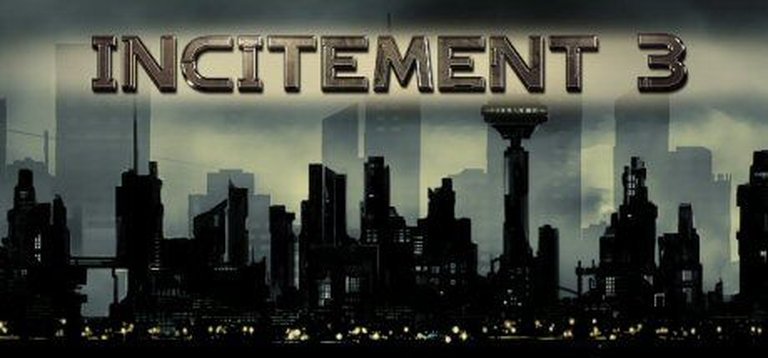
Incitement 3 is a science fiction role-playing game and sequel to Incitement and Incitement 2, set in a futuristic world where the Sophorian civilization embarks on a quest to discover other sentient races. Featuring turn-based battles with fully animated combat, customizable equipment via add-ons, and exploration across diverse locations, this approximately 7-10 hour adventure supports up to 11 playable characters and offers two difficulty modes for varied gameplay experiences.
Where to Buy Incitement 3
PC
Incitement 3 Free Download
PC
Incitement 3 Cracks & Fixes
Incitement 3 Guides & Walkthroughs
Incitement 3: A Monument to Ambitious Indie RPG Maker Storytelling
Introduction: The Unlikely Peak of a Trilogy
In the vast digital archives of PC gaming, nestled within the community-driven ecosystem of RPG Maker, exists a trilogy that defies the typical expectations of its toolset. Incitement 3 (2015), the culmination of Matthew Ashworth’s decade-spanning Incitement series, is not merely a game but a testament to what can be achieved when a dedicated creator maximizes every ounce of potential from a constrained engine. While its commercial release on Steam and itch.io for $5.99 marked its formal debut, its legacy is deeply rooted in the freeware scene, where its predecessors built a cult following through sheer narrative ambition and mechanical ingenuity. This review posits that Incitement 3 stands as a pivotal, if imperfect, landmark in the history of indie RPGs—a game that transcends its RPG Maker VX Ace origins through masterful world-building, a tightly-woven political sci-fi narrative, and a suite of innovative systems that compensate for technical limitations with deep, player-driven customization. It is a game that asks not to be judged by the AAA standard, but by the monumental effort it represents and the immersive experience it delivers against all odds.
Development History & Context: From Freeware Phenomenon to Commercial Aspiration
The Creator and the Engine: At the heart of Incitement 3 is developer Matthew Ashworth, operating under the banner Astronomic Games. His journey with the series began with the freeware Incitement (2007) and Incitement 2 (2011), both developed in earlier versions of RPG Maker and distributed freely on communities like RPG Maker Network (RMN). These games garnered significant praise for their “top-notch” scripting, eventing, and “strong sci-fi feel” reminiscent of “something you could’ve played on the SNES that a major studio would have produced” (Zevia, RPG Maker Forums). By the time of Incitement 3, Ashworth had transitioned to RPG Maker VX Ace, a more robust but still visibly constrained engine, and partnered with publisher New Reality Games for a commercial release.
Vision and Iteration: Ashworth’s development philosophy, evident throughout the RPG Maker forums, was one of iterative refinement. He consistently engaged with community feedback from Incitement 2, addressing criticism directly in the development of the sequel. As noted in forum posts, player feedback highlighted issues like character personality depth, consumable over-reliance, and inconsistent art. Ashworth’s responses were concrete: he aimed to “make characters more interesting,” overhaul the ammo and healing system, and standardize character portraits using RTP-style graphics to avoid the “obvious” mix of generator and custom faces. The game’s features announced in 2015—the Weapon/Body/Head Add-On system, unique ammo for skills, and refined hacking minigames—were direct solutions to perceived shortcomings in the previous title.
Technological Constraints and Ingenuity: RPG Maker VX Ace in 2015 was a tool with clear graphical and systemic boundaries. The “side-view battles with fully animated battlers” were a significant technical achievement for the engine, requiring custom scripting (credited to plugin masters like Yanfly, Galv, Dekita) and extensive sprite work from a team of 23 artists. The game’s “diagonal-down” perspective, while standard for the engine, was used to create varied environments. The ambition to include vehicle chase scenes, space battles, and complex minigames within RPG Maker speaks to a developer pushing the engine to its absolute limits, using plugins and creative eventing to simulate sequences it was never designed for.
Gaming Landscape and Release: Releasing in August 2015, Incitement 3 entered a PC RPG landscape dominated by successful indie titles like The Witcher 3 (AAA) and爆红的 Undertale (a year later). Its competition was less other games and more the sheer volume of RPG Maker titles flooding online marketplaces. Its commercial release on Steam (following a Greenlight process) and multiple storefronts (itch.io, New Reality Games, Aldorlea Games, Green Man Gaming) was a bold move for a series born from freeware. The pricing at $5.99/£5.99 positioned it as a budget premium experience. A key strategic decision, debated heatedly on forums, was to not bundle the first two games commercially due to non-commercial resource licenses, but to keep them free and link to them—a move that respected the series’ roots while offering new players a rich, accessible history.
Narrative & Thematic Deep Dive: The Unraveling of Sophorian Order
Plot Architecture: Incitement 3 continues the saga of Adrial, a central figure from previous installments, within the politically fractured Sophorian civilization—a spacefaring human society obsessed with integrating alien species but plagued by internal dissent. The narrative is set one year after a devastating EMP attack crippled a major city, a event that forms the backdrop of lingering instability. The plot kicks off with Adrial and his allies being caught in a new, mysterious attack. The core investigative thrust is to “assemble your allies, uncover this scheme, expose the enemy, and stop them before their actions magnify into catastrophic proportions.”
The story is structured episodically, reflected in the four “episodic” playable characters, suggesting a narrative that unfolds in distinct arcs or chapters. This design allows for party splits, a feature Ashworth specifically implemented to “encourage players to give each character some attention,” addressing a key criticism from Incitement 2 where characters felt underdeveloped. The overarching mystery connects to two prior cataclysmic attacks: one on the government, one on the army, positing a deeper, ongoing conspiracy threatening the civilization’s existence.
Character Ensemble and Dynamics: With 11 playable characters (7 main, 4 episodic), the game leverages its large cast for narrative diversity. The main party provides a steady core, while episodic characters likely appear for specific story segments, reinforcing the episodic structure. Forum feedback from Incitement 2 desired more personality, a charge Ashworth took to heart for the third installment. The combat roles are specialized, making each character tactically distinct and narratively functional—the healer, the tech expert, the soldier—each presumably tied to the hacking minigames and ammo management systems that define gameplay.
Underlying Themes: The narrative delves into classic sci-fi themes:
* Integration vs. Purity: The Sophorian project of forced integration is the central political tension. The antagonistic force likely represents a faction opposed to this assimilation, possibly advocating for Sophorian purity or a different ideological path.
* Cyclical Violence and Historical Trauma: The plot question—”will history repeat itself over and over until there’s no civilization left?”—frames the conflict as a cycle of attack and response, with the EMP attack a recent scar. The player must break this cycle.
* The Cost of Security and Progress: The EMP attack’s aftermath and the perpetual state of readiness suggest a society trading freedom and stability for security, a common dystopian trope. The “booster injections” system from Incitement 2 (removed in favor of headgear in 3) hints at transhumanist themes of bodily modification for enhancement.
* Knowledge as Power: The hacking minigames are not just gameplay mechanics but diegetic—they represent the act of penetrating secure systems, a core activity in a conspiracy thriller. Success here directly advances the plot and provides resources.
The storytelling, as praised for Incitement 2, is described as “well-written” and “forceful,” with cutscenes that maintain a “gigantic sense of urgency” akin to Mass Effect. This pacing is crucial for a game with an 8-10 hour length, ensuring the political mystery propels the player forward through diverse sci-fi locales.
Gameplay Mechanics & Systems: Customization as the Core Loop
Core Gameplay Loop: Incitement 3 follows the classic RPG Maker adventure template: exploration of town and dungeon maps, triggered events and cutscenes, random or scripted encounters, and turn-based combat viewed from a side perspective. The loop is enriched by several innovative systems designed to engage the player in resource and build management.
Combat and Progression: Combat is the definitive test of the game’s systems. Key features include:
1. Ammo Management Revolution: The most significant departure from standard RPG Maker design. “Some abilities require unique ammo.” This transforms spellcasting and special skills from a simple MP (Magic Point) tax into a strategic resource management sim. Different abilities likely consume different ammo types, forcing players to consider inventory loadout, enemy vulnerabilities, and conservation. This system directly addresses the “too many consumables” issue from Incitement 2, making healing pills (now in three tiers, with cheap weak versions) and offensive ammo a deliberate part of strategy rather than an afterthought.
2. Tiered Add-On System: This is the game’s signature customization layer. Equipment is split into:
* Weapon Add-Ons: Offensive bonuses (e.g., +Attack, +Critical Rate).
* Body Add-Ons: Defensive bonuses (e.g., +Defense, +Evasion).
* Head Add-Ons: Bonuses to stat growth upon leveling (e.g., “Atk Master” grants +1 Attack per level up).
This three-tiered system allows for hyper-specific character building. A character can have a base weapon/armor, an offensive add-on, a defensive add-on, and a headgear that shapes their long-term growth. This depth compensates for the relatively simple base equipment and creates meaningful choices and Alternate Character Builds (ACBs) within the constrained party of 7 active members.
3. Difficulty Modes: The “Normal” and “Challenging” modes cater to two audiences. Normal provides a “casual experience,” while “Challenging” promises “thrills and kills.” This binary approach is simpler than sliders but effective in an indie context, likely tuning enemy stats, EXP, and item availability.
UI and Quality of Life: The UI must present the complex add-on and ammo systems clearly. Forum testers noted a passability bug on railings, a common issue in tile-based engines, but praised the overall presentation. The ability to carry save files from the demo to the full game was a planned feature, showing consideration for player investment.
Innovation vs. Flaw: The systems areinnovative for RPG Maker. However, potential flaws lurk in balance. The head add-on system, while clever, could lead to min-maxing where certain characters are permanently assigned specific growth roles, reducing flexibility. The ammo system, if not carefully balanced, could lead to frustrating scarcity or trivial abundance. Ashworth’s tweaks from Incitement 2—weaker burn states, limiting “Strengthen/Enforce” buffs to non-stacking states—show an active effort to balance these deep systems.
World-Building, Art & Sound: Crafting a Dystopian Future on a Budget
Setting and Atmosphere: The world is a “dystopian sci-fi” future of the Sophorian civilization. Locations range from restored post-EMP cities to alien landscapes and high-tech facilities like the “Vorlox base” shown in screenshots. The atmosphere is one of rebuilding and underlying tension. The diverse “color schemes” for different areas, as noted by a Incitement 2 player, help distinguish locations and reinforce mood. The world-building is conveyed through environmental storytelling, NPC dialogue, and the pervasive sense of a society on a knife’s edge.
Visual Direction: The game’s art is a collage of contributions from a large team (23 artists listed). It uses a mix of:
* Enterbrain RTP (Default) assets: For tilesets and some interfaces.
* Custom Tilesets: Notably, the “Futuristic Tiles pack” was heavily used in earlier games. For 3, there was a conscious move away from obvious generator faces toward more consistent RTP-style portraits, responding to player criticism.
* Anime/Manga Style: The character portraits and battle sprites adhere to an anime aesthetic, common in RPG Maker games but here applied to a serious sci-fi setting, creating a unique tonal blend.
* Fully Animated Battlers: This is a major visual feat for VX Ace. Custom side-view sprites with multiple attack and idle animations bring battles to life, far surpassing the static default battlers.
The result is a visually heterogeneous but often cohesive style. The “shinier” hacking minigame graphics show attention to UI polish. However, the reliance on community resources means visual consistency is a challenge—some assets may clash.
Sound Design: This is universally praised. The soundtrack by Scythuz (Benjamin Carr) and Joel Steudler is highlighted in every piece of promotion and player feedback. It’s described as setting the mood “without being distracting,” with a main theme deemed “wonderful.” For a sci-fi RPG, the music successfully evokes tension, mystery, and epic scale, often doing the heavy lifting for atmosphere that the graphics cannot. Sound effects from Joel Steudler and Enterbrain complete the audio landscape.
Synthesis of Elements: The sound and art work in tandem to sell the sci-fi premise. The anime character designs juxtaposed with gritty, futuristic environments and a serious, driving soundtrack create a specific, memorable identity. The limitations of the engine are masked by strong direction in music and palette, focusing player engagement on the narrative and systems rather than graphical fidelity.
Reception & Legacy: A Cult Classic Defined by Community
Critical and Commercial Reception: Formal critic reviews were scarce; Metacritic lists none. The Steam user score sits at “Mixed” (69% positive from 63 reviews at the time of data, growing to 168 total with a similar ratio). This is a solid, if divided, reception for a niche RPG Maker title. Positive reviews likely praise the depth of customization, the engaging story, and the soundtrack. Negative reviews, as glimpsed in the “Overall Reviews” breakdown, probably cite the dated RPG Maker aesthetic, potential balance issues, or simply a disconnect with the anime/sci-fi blend.
Commercial Performance: As a $5.99 title on multiple storefronts, its commercial success is modest but significant for an indie RPG Maker game. Its presence in bundles (e.g., “Testing Positive Bundle” with other Astronomic games) suggests a strategy of cross-promotion within a community of similar-style indie RPGs. The developer’s Patreon link indicates a reliance on direct fan support, a common model for niche creators.
Evolving Reputation and Influence: Within the tight-knit RPG Maker community, Incitement 3 is held in high regard. It is seen as the polished, commercial culmination of a respected freeware series. Its influence is primarily within the RPG Maker ecosystem:
1. Proof of Concept for Deep Systems: It demonstrated that RPG Maker could host complex resource management (ammo) and multi-layered equipment systems (add-ons) without breaking the engine, inspiring other developers.
2. Community Development Model: Ashworth’s transparent forum updates, responsiveness to feedback, and demo releases (like the 1-hour pre-alpha) exemplify an ideal indie-community relationship. His willingness to remake earlier games with commercial licenses, though ultimately shelved for the trilogy due to publisher advice, showed a commitment to legacy and accessibility.
3. Genre Niche: It helped solidify the “serious sci-fi RPG” as a viable niche within RPG Maker, moving beyond fantasy defaults. The combination of political thriller, cyberpunk elements (EMP, hacking), and epic scale is a specific template.
Its legacy is that of a cult classic—a game deeply loved by a specific audience who value systemic depth and narrative ambition over graphical prowess. It is a touchstone for what devoted fans call “RPG Maker masterpieces.”
Conclusion: An Imperfect Masterpiece of Constrained Ambition
Incitement 3 is a game of profound contradictions. It is an elaborate political thriller built on 2000s-era aesthetics; a deep tactical RPG with layers of customization running on an engine known for simplicity; a commercial product that forever lives in the shadow of its freeware origins. Its flaws are those of its medium and budget: visual inconsistency, occasional passability bugs, and an interface that can’t fully escape its RPG Maker roots. Its triumphs are in its audacity. The narrative, while not breaking new ground in sci-fi premises, is delivered with urgency and coherence. The combat and progression systems—the ammo economy, the add-on trinity—transform the standard turn-based model into a genuinely strategic exercise. The soundtrack elevates every moment.
For the historian, Incitement 3 is a crucial data point. It represents the late-stage flowering of a specific indie RPG Maker ethos: that story and systems can overcome technological barriers through creativity, iteration, and community engagement. It is the product of a developer who listened, learned, and poured a decade of experience into a final, definitive statement. For the player willing to look past the “Made with RPG Maker” tag, it offers an 8-10 hour journey into a vividly imagined dystopian future, where every equipment choice matters and every hacking minigame feels like a step closer to unraveling a grand conspiracy.
Final Verdict: Incitement 3 is not for everyone. Its aesthetic will alienate those allergic to anime stylings, and its systems demand engagement. But for the patient enthusiast of indie RPGs, it is an essential, rewarding experience—a monument to what one dedicated creator, a legion of supporting artists, and a vibrant community can achieve. It secures its place in video game history not as a mainstream landmark, but as a pinnacle of its niche: a smart, substantial, and sincerely crafted sci-fi epic that proves the heart of an RPG lies in its systems and story, not its polygon count. 8/10 – Highly Recommended for Genre Enthusiasts and RPG Maker Aficionados.