
- Release Year: 2022
- Platforms: Macintosh, Windows
- Publisher: Idle System, Inc.
- Developer: Hapiwaku Project
- Genre: Idle, Role-playing (RPG)
- Perspective: Diagonal-down
- Game Mode: Single-player
- Gameplay: Persistent, Point and select
- Setting: Fantasy
- Average Score: 78/100
Description
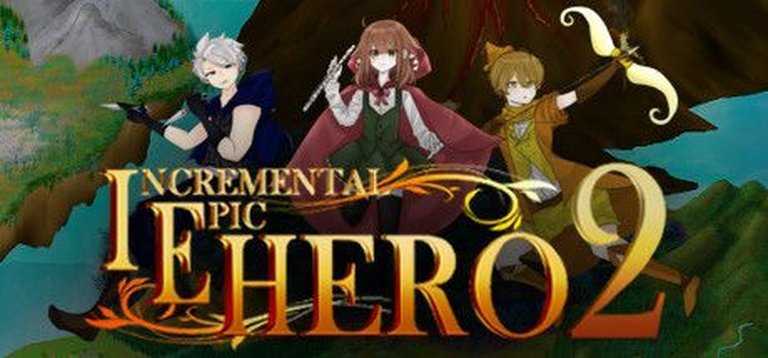
Incremental Epic Hero 2 is a fantasy-themed incremental RPG that blends idle gameplay with deep role-playing mechanics. Set in a vibrant world teeming with monsters and hidden treasures, players embark on an epic adventure, leveling up their hero, unlocking powerful skills, and conquering challenging dungeons. The game features persistent progression, allowing players to grow stronger even when offline, while offering strategic depth through class customization, quests, and super dungeons.
Gameplay Videos
Where to Buy Incremental Epic Hero 2
PC
Incremental Epic Hero 2 Mods
Incremental Epic Hero 2 Guides & Walkthroughs
Incremental Epic Hero 2 Reviews & Reception
steambase.io (71/100): A mixture of incremental/idle and roleplaying game set in fantasy world filled with monsters and things to explore.
armorgames.com (86/100): Incremental Epic Hero 2 is a reimagining of the original Incremental Epic Hero.
Incremental Epic Hero 2 Cheats & Codes
PC
Enter codes in the settings menu > Bonus Tab > Insert Bonus Code.
| Code | Effect |
|---|---|
| IEH2MajorUpdate | 1000 Epic Coin, 100% Nitro, 5 Refresh Tickets |
| IEH2hapiwaku | 1000 Epic Coin |
| IEH2onemonth | 1000 Epic Coin and 5 Proficiency Scrolls |
| IEH2portalorb | 30 Portal Orbs |
| IEH2ExtractForge | 3 Extract Scroll [Forge] |
| IEH2Hapiwaku | 1000 Epic Coin and 100% Nitro |
| IEH2SuperDungeon | 1000 Epic Coin, 100 Portal Orbs and 5 Refresh Tickets |
| IEH2earlyaccess | 100% Nitro (allows exceeding cap) |
| IEHhapiwaku | 200 Epic Coins and 1 Super Rebirth Ticket |
| IEHmonthlycontest | 250 Epic Coins and 500 Monster Fluids |
| IEHhapiwakuMay | 300 Epic Coins and 1 Instant Rebirth Upgrade Ticket |
| IEHhapiwakuJune | 500 Epic Coins, 500 Monster Fluids and 50 Red Chillis |
| IEHhapiwakuJuly | 700 Monster Fluid, 700 Epic Coins and 70 Red Chillis |
| IEHhapiwakuAugust | 1000 Epic Coins, 1000 Monster Fluid, and 100 Red Chillis |
| IEHhapiwakuSeptember | 1000 Epic Coins, 1000 Monster Fluid, and 100 Red Chillis |
| IEHhapiwakuOctober | 1000 Epic Coins, 1 Super Rebirth Ticket, and 1 Reset Spirit Upgrade Ticket |
| IEHoctobaddie30 | 10000 Epic Coins, 3 Super Rebirth Ticket, 2 Instant Rebirth Upgrade Ticket, 1 Reset Rebirth Upgrade Ticket, 100000 Monster Fluid |
Incremental Epic Hero 2: A Masterclass in Idle RPG Evolution
Introduction: The Idle RPG That Refuses to Stand Still
Incremental Epic Hero 2 (IEH2) is a paradox—a game about relentless progression that itself refuses to remain static. Released in July 2022 by Hapiwaku Project and published by Idle System, Inc., it is the ambitious sequel to Incremental Epic Hero (2020), a title that already pushed the boundaries of the incremental genre. IEH2 doesn’t just iterate; it reimagines, expanding the scope of what an idle RPG can be while grappling with the inherent tensions of its own design philosophy.
At its core, IEH2 is a fusion of incremental mechanics, idle gameplay, and deep role-playing systems, all wrapped in a vibrant fantasy aesthetic. Players control six distinct heroes, battle hordes of monsters, capture and train creatures, craft potions, enchant gear, and prestige their way through multiple layers of progression. Yet, beneath its polished surface lies a game in constant flux—one that has evolved dramatically since its Early Access launch, shaped by community feedback, developmental challenges, and the ever-present specter of its own ambition.
This review will dissect IEH2 in exhaustive detail, exploring its development history, narrative and thematic depth, gameplay systems, artistic direction, and legacy. We’ll examine how it stands as both a triumph of the incremental genre and a cautionary tale about the perils of scope creep in live-service game design. By the end, you’ll understand why IEH2 is not just another idle clicker, but a living, breathing experiment in player-driven evolution.
Development History & Context: A Game Forged in the Fires of Early Access
The Studio Behind the Game: Hapiwaku Project
Hapiwaku Project is a small, Japan-based indie studio with a singular focus: crafting deep, engaging incremental games. Their first major title, Incremental Epic Hero (2020), was a surprise hit, blending the addictive loops of idle games with the strategic depth of RPGs. The studio’s ethos is rooted in community collaboration, with Discord playing a central role in shaping their games. This iterative, player-first approach is evident in every facet of IEH2’s development.
From Early Access to “Full Release”: A Tumultuous Journey
IEH2 entered Steam Early Access on July 22, 2022, with a promise: this would be a game that grew alongside its players. For 2.5 years, Hapiwaku delivered on that promise, rolling out updates that expanded mechanics, refined balance, and introduced new systems like World Ascension, Super Dungeons, and Tier 4+ Rebirths.
However, the road to its official “full release” on January 2, 2025, was fraught with controversy. Players who had followed the game since Early Access noted that many advertised features—such as expanded boss battles, metal slime capture mechanics, and additional rebirth tiers—remained unfinished or labeled with the ominous “Stay tuned for future updates.” The Steam community erupted in debate: was this truly a “full release,” or had the publisher, Idle System, Inc., prematurely pushed the game out of Early Access to capitalize on its growing player base?
The Truth Behind the Scenes
Community discussions on Steam and Reddit revealed a more complex reality. According to posts by users like Skyswimsky and Darnavir, the game’s development was hampered by intellectual property disputes between Hapiwaku and the original co-developer of Incremental Epic Hero. The rights holder (the publisher, not the developer) reportedly restricted certain features, leaving Hapiwaku to work within a limited scope. Additionally, financial constraints meant that income from the game wasn’t sufficient to support the full vision.
In a December 2025 development update, Hapiwaku confirmed that work on IEH2 had officially resumed, with plans for the “largest update in IEH2’s history” slated for early 2026. This update would include alpha and beta tests via Discord, signaling a renewed commitment to the game’s long-term future.
The Incremental Genre in 2022: Standing Out in a Crowded Field
IEH2 launched into a genre dominated by titles like Adventure Capitalist, Cookie Clicker, and Melvor Idle. What set it apart was its depth. While most incremental games rely on simple click-and-upgrade loops, IEH2 integrated:
– Six unique hero classes (Warrior, Mage, Archer, etc.), each with distinct skill trees.
– Monster capture and training, borrowing elements from Pokémon and Dragon Quest Monsters.
– Alchemy and enchanting, adding crafting depth reminiscent of RuneScape.
– Multi-layered prestige systems (Rebirth, World Ascension, Area Prestige), ensuring long-term engagement.
This complexity was both a blessing and a curse. It attracted hardcore fans but alienated casual players who found the learning curve steep. The game’s Steam reviews reflect this divide: a “Mostly Positive” rating (71% from 1,561 reviews) with recent reviews trending “Mixed” (54% in the last 30 days), suggesting that while veterans adore it, newcomers often feel overwhelmed.
Narrative & Thematic Deep Dive: A Silent Epic
Plot: Minimalist Storytelling in a Maximalist World
IEH2 is not a narrative-driven game in the traditional sense. There is no grand plot, no cinematic cutscenes, no voice acting. Instead, the “story” emerges organically through:
– Environmental storytelling: The world map unfolds as players progress, revealing new biomes (forests, volcanoes, dungeons) populated by increasingly bizarre monsters.
– Quest logs: Simple, text-based quests provide context for why heroes are battling (e.g., “Defeat the Slime King to restore peace to the village”).
– Monster lore: The Bestiary offers flavor text for each creature, hinting at a larger world (e.g., Metal Slimes are described as rare, elusive beings with mysterious properties).
This minimalist approach is intentional. IEH2 is a game about player-driven progression, not scripted events. The “epic” in the title refers not to a grand narrative but to the epic scale of growth—watch as your hero evolves from a humble warrior swinging a wooden sword to a godlike entity capable of obliterating entire dungeons in seconds.
Themes: The Illusion of Infinite Growth
Beneath its cheerful fantasy veneer, IEH2 grapples with existential themes:
1. The Myth of Perpetual Progress: The game’s prestige systems (Rebirth, Ascension) force players to reset their progress to grow stronger—a metaphor for the cyclical nature of self-improvement.
2. Automation vs. Agency: Heroes fight automatically, but players must constantly optimize. The tension between idle efficiency and active engagement mirrors modern life’s balance between convenience and effort.
3. The Cost of Power: Late-game mechanics like World Ascension require sacrificing hard-earned resources for greater long-term gains, echoing real-world trade-offs in ambition and sacrifice.
Characters & Dialogue: Functional, Not Flamboyant
The six heroes are archetypal:
– Warrior: The tanky frontline fighter.
– Mage: The high-damage spellcaster.
– Archer: The ranged DPS.
– Thief: The crit-focused rogue.
– Priest: The healer/support.
– Berserker: The high-risk, high-reward melee.
Dialogue is sparse, limited to tutorial pop-ups and quest descriptions. While this lacks the charm of games like Slay the Spire, it keeps the focus on gameplay. The real “characters” are the monsters, each with unique behaviors (e.g., slimes split when killed, bats flee at low health).
Gameplay Mechanics & Systems: A Labyrinth of Progression
IEH2’s gameplay is a multi-layered onion—peel back one system, and another awaits. We’ll dissect each layer, from surface-level combat to endgame prestige mechanics.
Core Gameplay Loop: The Dance of Automation and Optimization
- Combat: Heroes auto-attack monsters in real-time. Players can manually target foes or let the AI handle it.
- Strengths: Smooth, satisfying feedback with particle effects and damage numbers.
- Weaknesses: Late-game combat becomes a visual cacophony—so many numbers and effects that it’s hard to parse what’s happening.
- Progression:
- Short-term: Kill monsters → gain EXP → level up → unlock new areas.
- Mid-term: Complete quests → earn blue gems (premium currency) → upgrade town buildings.
- Long-term: Prestige (Rebirth/Ascension) → unlock permanent bonuses → repeat.
Prestige Systems: The Heart of IEH2
IEH2’s depth comes from its three major prestige mechanics:
1. Rebirth:
– Reset your hero’s level and area progress to gain Rebirth Points (RP).
– Spend RP on permanent upgrades (e.g., +10% damage, +5% gold gain).
– Tiers: Up to Tier 4+, with each tier unlocking new bonuses.
2. World Ascension (WA):
– The “hard reset.” Sacrifice all progress (except certain permanent upgrades) to ascend the world.
– Unlocks Ascension Points (AP), which provide massive multipliers.
– Controversial: Players report that early WAs are brutally punishing, requiring hours of grind to recover.
3. Area/Dungeon Prestige:
– Reset individual zones to earn local bonuses (e.g., +20% monster spawn rate in Forest).
– Keeps older areas relevant in the late game.
The Problem with Prestige
While these systems extend playtime, they also create friction:
– New players often don’t understand the trade-offs (e.g., “Should I Rebirth now or wait?”).
– Mid-game slumps occur when progression stalls between prestige tiers.
– Endgame complexity becomes overwhelming, with dozens of currencies (RP, AP, Guild Coins, Alchemy Materials, etc.) to manage.
Heroes & Skills: Customization with Caveats
- Six classes, each with unique skill trees.
- Shared skills: Unlock a skill on one hero, and others can use it (e.g., a Mage’s Fireball can be equipped by an Archer).
- Passive vs. Active skills: Some require manual activation, adding a layer of strategy.
Issues:
– Balance problems: Some skills (e.g., Warrior’s Whirlwind) are mandatory for efficiency, limiting build diversity.
– UI clutter: Managing skills across six heroes is cumbersome, especially on smaller screens.
Monster Capture & Training: A Half-Realized Dream
- Nearly every monster can be captured (via right-click or special items).
- Level them up to unlock passive bonuses (e.g., a captured Slime might grant +1% gold find).
- Potential: This could have been a Pokémon-like system, but it’s underdeveloped.
- No evolution mechanics.
- Limited utility: Most captured monsters provide minor bonuses, making the system feel tacked-on.
Alchemy & Enchanting: Crafting with Depth
- Alchemy: Brew potions using materials gathered from monsters.
- Water-based system: Early-game focus on collecting water for potions.
- Super Queue: Automates crafting, but bugs (e.g., post-WA queue resets) frustrate players.
- Enchanting: Apply scrolls to gear for random stat boosts.
- RNG-heavy: Players report hours of grinding for the perfect enchant.
- Inventory management nightmare: Without DLC expansions, inventory fills quickly with “junk” enchanted gear.
Town Building: A Slow Burn
- Build structures (Statue of Heroes, Alchemist’s Hut, etc.) to unlock new features.
- Guild Level: Acts as a soft cap—higher Guild Levels unlock more heroes and quests.
- Criticism: Town upgrades are slow and expensive, making early-game progression feel sluggish.
Endgame Systems: The Grind Within the Grind
- Super Dungeons: High-difficulty dungeons with unique mechanics.
- Challenge Battles: Boss rushes with modifiers (e.g., “All monsters have 50% more HP”).
- Tier 4+ Rebirths: Require exponential resources, gatekeeping casual players.
Player Feedback:
– Veterans love the depth but complain about lack of late-game content.
– New players feel lost due to poor onboarding (despite tutorials).
World-Building, Art & Sound: A Vibrant Fantasy Sandbox
Setting: A Living, Breathing World
IEH2’s world is a colorful, cartoonish fantasy realm, divided into biomes:
– Forest: Home to slimes, wolves, and goblins.
– Volcano: Fire-elemental monsters and lava-themed dungeons.
– Sky Island: Floating continents with angelic and demonic foes.
– Super Dungeons: Surreal, high-difficulty zones (e.g., a dungeon where monsters grow stronger over time).
The world persists—monsters respawn, areas can be prestiged, and the map expands as you progress. This creates a sense of a living ecosystem, rare in incremental games.
Visual Design: Charming but Cluttered
- Art Style: Bright, anime-inspired sprites with hand-drawn flourishes.
- Strengths:
- Monster designs are creative (e.g., a fox that summons clones, a mimic chest that explodes).
- Equipment variety: Over 200 pieces of gear, each with unique sprites.
- Weaknesses:
- UI overload: Late-game screens are covered in numbers, icons, and menus.
- Performance issues: Some players report lag during massive enemy swarms.
Sound Design: The Unsung Hero
- Combat sounds: Satisfying clangs, whooshes, and spells that make auto-battling feel impactful.
- Music: A looping fantasy soundtrack that, while pleasant, becomes repetitive.
- Ambient noise: Subtle touches like forest rustling or lava bubbles enhance immersion.
Missed Opportunity: No dynamic music (e.g., tension-building tracks during boss fights).
Reception & Legacy: A Game That Defies Easy Categorization
Critical Reception: A Tale of Two Audiences
| Platform | Rating (as of 2026) | Notes |
|---|---|---|
| Steam | 71% Positive (1,561 reviews) | “Mostly Positive” overall, but recent reviews trend “Mixed.” |
| Armor Games | 86/100 (397 ratings) | Highly rated by browser players. |
| CrazyGames | 9.4/10 (985 votes) | Praised for depth and replayability. |
| Mixed | Veterans love it; newcomers call it “overwhelming.” |
Common Praise:
– “Addictive progression” – Players sink hundreds of hours into optimization.
– “Surprisingly deep” – More strategic than typical idle games.
– “Great for AFK grinding” – Perfect for second-screen gaming.
Common Criticism:
– “Steep learning curve” – Tutorials don’t fully prepare players.
– “Mid-game slump” – Progression stalls between prestige tiers.
– “Unfinished features” – “Full release” felt premature to some.
Commercial Performance: Free-to-Play with a Catch
- Monetization: Free base game with optional DLCs (e.g., inventory expansions, skill slots).
- Controversy: Some DLCs (e.g., Advanced Auto-Disassembling Equipment) have vague descriptions, leading to buyer’s remorse.
- Player Sentiment: Many feel the game is generous with free content but frustrating in its microtransaction implementation.
Influence on the Genre: A Blueprint for Depth
IEH2 has inspired a wave of hybrid idle-RPGs, including:
– Incremental Adventures (2019)
– Incremental Cubes (2021)
– Incremental Dice (2024)
Its multi-layered prestige systems and monster capture mechanics have become benchmark features for the genre.
The Future: A Phoenix Rising?
With development officially resumed in late 2025, IEH2’s future looks bright:
– 2026 Update: Promises new endgame content, QoL improvements, and balancing fixes.
– Community Involvement: Alpha/beta tests via Discord suggest a return to the player-first ethos of Early Access.
– Potential Pitfalls: Can Hapiwaku deliver on their ambitious roadmap without repeating past mistakes?
Conclusion: A Flawed Masterpiece
Incremental Epic Hero 2 is a contradiction—a game about infinite growth that itself has struggled to grow beyond its constraints. It is brilliant in its depth, offering one of the most complex and rewarding idle RPG experiences available. Yet, it is also flawed in its execution, with unfinished features, steep learning curves, and monetization missteps that have left some players disillusioned.
Final Verdict: 8.5/10 – “A Triumph of Ambition, Marred by Growing Pains”
Who Should Play It?
✅ Hardcore incremental fans who crave depth and long-term progression.
✅ RPG enthusiasts who enjoy optimization and prestige mechanics.
✅ AFK gamers who want a second-screen experience with strategic depth.
Who Should Avoid It?
❌ Casual players who prefer simple, pick-up-and-play idle games.
❌ Narrative-driven gamers—this is not a story-rich experience.
❌ Those averse to grind—late-game progression requires serious time investment.
Legacy:
IEH2 will be remembered as a turning point for the incremental genre—a game that proved idle RPGs could be as deep as they are addictive. Its struggles with scope and monetization serve as valuable lessons for future developers. If Hapiwaku can deliver on their 2026 update, IEH2 may yet achieve its full potential. Until then, it remains a flawed masterpiece—a game that dares to dream big, even if it sometimes stumbles along the way.
Final Thought:
In a world where most idle games are forgotten within weeks, Incremental Epic Hero 2 stands as a testament to the power of community-driven evolution. It is not just a game; it is a living experiment—one that continues to grow, adapt, and surprise. And in the end, isn’t that what the best games do?
Now, go forth and prestige. The grind awaits. 🗡️✨