
- Release Year: 2018
- Platforms: Windows
- Publisher: Droid Riot Studio
- Genre: Action
- Perspective: Side view
- Average Score: 55/100
Description
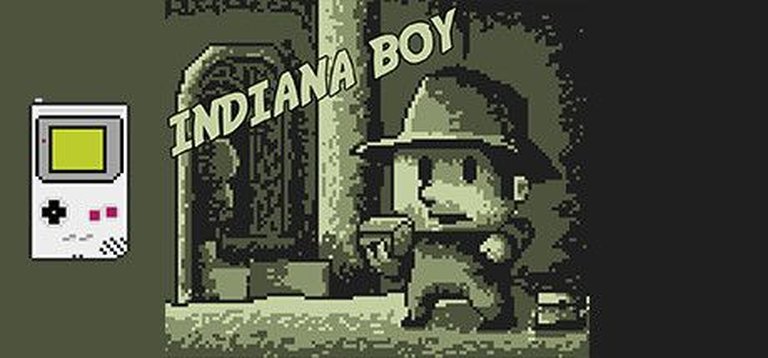
Indiana Boy is a nostalgic puzzle-platformer inspired by classic Game Boy games, featuring side-view, fixed-screen levels where players control the adventurous Indiana Boy to collect treasures and keys across 10 challenging stages. Navigate treacherous dungeons filled with mummies, snakes, and environmental puzzles, using precise movements and clever strategies to overcome obstacles and relive the retro gaming era.
Where to Buy Indiana Boy
PC
Indiana Boy Reviews & Reception
steambase.io (55/100): Mixed
Indiana Boy: Review
Introduction
In an era dominated by hyper-realistic blockbusters and sprawling open worlds, Indiana Boy emerges as a pixelated time capsule, thrusting players back to the monochrome glow of the Nintendo Game Boy. Released in late 2018, this unassuming indie title by solo developer “One Man” (Fabio Fortino) captures the essence of 8-bit puzzle-platformers like Boulder Dash or Supaplex, blending treasure-hunting adventure with deadly precision traps. Its legacy? A niche darling for retro enthusiasts, evoking nostalgia amid a sea of modern excess. Yet, does it truly relive the “graphics and emotions of the legendary Game Boy,” as its Steam blurb promises? My thesis: Indiana Boy is a heartfelt, if mechanically rudimentary, tribute to handheld gaming’s golden age—flawed in execution but shining in its unpretentious charm, deserving rediscovery by puzzle aficionados despite its obscurity.
Development History & Context
Indiana Boy was crafted by Fabio Fortino under the banner “One Man,” a true solo endeavor emblematic of the 2010s indie renaissance on Steam. Published by Conglomerate 5 (with ties to Droid Riot Studio), it launched on November 28, 2018 (Steam) or December 13, 2018 (per MobyGames), during a flood of retro-inspired titles capitalizing on nostalgia for pre-16-bit eras. Fortino’s vision, as gleaned from promotional materials like Indie Retro News, was explicit: recreate Game Boy-era puzzle platformers, complete with side-scrolling, fixed-screen progression and direct controls suited to thumbsticks or D-pads.
Technological constraints mirrored its inspiration—the Game Boy’s limited 160×144 resolution, 4-shade grayscale palette, and chiptune austerity. Modern PC hardware (minimum: dual-core 2.5GHz CPU, Intel HD 4000 graphics, 2GB RAM) allowed pixel-perfect emulation without bloat, running on Windows 7/8/10 with DirectX 9.0c. The 2018 gaming landscape was saturated with retro homages (Celeste, Shovel Knight), but Indiana Boy stood apart as a budget puzzle-platformer ($0.49-$4.99), targeting casual players amid Steam’s “Casual Games” surge. No patches or expansions noted, suggesting a “ship and forget” model common for micro-indies. Publishers like Conglomerate 5 bundled it with other obscurities (e.g., Droid Riot bundles), highlighting its role in Steam’s long-tail economy rather than blockbuster ambitions.
Narrative & Thematic Deep Dive
Indiana Boy‘s story is whisper-thin, a deliberate nod to Game Boy classics where plot served gameplay, not vice versa. You embody “Indiana Boy,” a fedora-clad adventurer delving into dungeon lairs to “recover all the treasures and keys.” No cutscenes, voice acting, or dialogue—narrative unfolds via environmental storytelling: crumbling tombs guarded by mummies, slithering snakes, and implied bats (per Indie Retro News). Levels escalate from key hunts to multi-objective hauls, culminating in “bringing the booty home.”
Core Plot Breakdown
The 10-level campaign forms a linear odyssey through trap-riddled chambers. Early stages introduce basics—grab keys, unlock chests—while later ones demand sequencing (e.g., lure enemies into pitfalls). No branching paths or multiple endings; success is binary: collect all, exit alive.
Character Analysis
Indiana Boy is archetypal: whip-less (Game Boy memory limits?), acrobatic sprite navigating with precise jumps. Enemies lack personality—mummies shuffle predictably, snakes patrol linearly—serving as mobile hazards rather than foes. No progression for the protagonist; he’s a vessel for player cunning.
Thematic Layers
At its heart, Indiana Boy explores nostalgic escapism and precarious adventure. Dungeons symbolize the Game Boy’s portable peril—every move risks doom, mirroring battery-life anxiety of 1989-1998 handhelds. Themes of resource scarcity (limited lives implied, keys as “currency”) evoke pulp archaeology tropes, sans Indiana Jones’ bombast. Subtly, it critiques modern gaming bloat: 10 levels “designed to keep you entertained for a long time” via replayable puzzles, championing brevity over endless grinds. Environmental interaction (push blocks? Lure foes?) underscores cleverness over power, a humanist rebuttal to power-fantasy trends.
Gameplay Mechanics & Systems
Indiana Boy distills puzzle-platforming to its essence: side-view, fixed/flip-screen traversal with direct controls (arrow keys/WASD presumed). Core loop—enter level, collect keys/treasures, evade enemies/traps, exit—spans 10 stages, blending Lemmings-style planning with Rick Dangerous-esque hazards.
Core Loops Deconstructed
1. Exploration & Collection: Scout fixed screens for keys (unlocks treasures) and gems. Flip-screen mechanic reveals adjacent rooms, encouraging backtracking.
2. Puzzle Solving: “Take advantage of the environment”—push crates? Trigger switches? Sources imply logic gates (e.g., block enemy paths).
3. Combat/Avoidance: No weapons; survival via positioning. Mummies/snakes follow patterns—time jumps to dodge. Traps (spikes? pits?) demand pixel-perfect timing.
4. Progression: Zero RPG elements—no levels, upgrades, or shops. Replay levels for mastery/secrets?
Strengths & Flaws
Innovative: Tight integration of platforming/puzzles keeps loops addictive, per Steam tags (Platformer, Puzzle). UI is minimalist—likely HUD for score/keys—evoking Game Boy purity. Flaws: Repetitiveness in 10 levels; vague controls (community requests controller support); potential frustration from instant-death traps without checkpoints. No achievements/multiplayer limits depth. Overall, competent for solo dev but lacks polish (e.g., no Steam Deck verification).
UI/UX Notes
Clean, retro HUD; family sharing enables gifting. Single-player focus suits bite-sized sessions.
World-Building, Art & Sound
The game’s setting—a labyrinthine dungeon network—immerses via Game Boy facsimile aesthetics. Fixed/flip-screen vistas depict torch-lit tombs, crumbling ledges, and serpentine depths, fostering claustrophobic tension.
Visual Direction
Grayscale pixels mimic LCD screens: chunky sprites, dithered shading, flip-screen transitions. Indiana Boy’s silhouette nods Indiana Jones, enemies (mummies in bandages, coiling snakes) pop with era-appropriate animation. Atmosphere builds via peril—shadowy pits evoke doom—contributing to “emotions of the legendary Game Boy.” Scale feels intimate, amplifying every leap’s stakes.
Sound Design
Chiptune presumed: bleepy jumps, ominous enemy slithers, triumphant key-jingles. No full audio noted, but “common sound card” reqs suggest basic SFX/music loops. Sound reinforces nostalgia—sparse, functional—heightening isolation. Collectively, art/sound forge a portal to 90s pocket gaming, where imagination filled narrative voids.
Reception & Legacy
Launch reception was muted: Zero critic reviews (Metacritic, MobyGames); Steam’s 8-22 user reviews yield “Mixed” (53-55% positive, per Steambase). Positives praise nostalgia (“pure puzzle fun”); negatives cite repetition, control quirks (e.g., controller pleas). Sales modest—bundled cheaply, low wishlist traction.
Evolution & Influence
Post-2018, obscurity grew: Sparse forum activity, no updates. Yet, it endures in retro databases (Moby ID 164629, Wikidata Q122367788), linking to “Indiana” clones (Indiana Jim, 1986). Influences the indie retro wave—echoed in Cave Story successors—but no direct progeny. Legacy: A footnote in solo-dev triumphs, exemplifying Steam’s viability for $0.49 gems amid 309k+ MobyGames titles.
Conclusion
Indiana Boy is no masterpiece, but a valiant solo echo of Game Boy ingenuity—10 levels of taut puzzles, retro visuals, and unadorned adventure that punch above their weight. Its flaws (repetition, minimalism) mirror inspirations’ limits, yet charm endures for nostalgia seekers. In video game history, it claims a humble pedestal: essential for puzzle-platformer completists, skippable for others. Verdict: 7/10—a preserved relic worth $0.49, cementing indie devs’ power to resurrect the past. Rediscover it; your inner child might thank you.