
- Release Year: 2014
- Platforms: Windows
- Publisher: rondomedia Marketing & Vertriebs GmbH
- Developer: ActaLogic
- Genre: Simulation
- Perspective: Diagonal-down
- Game Mode: Single-player
- Gameplay: Business simulation, City building, construction simulation, Managerial
- Average Score: 29/100
Description
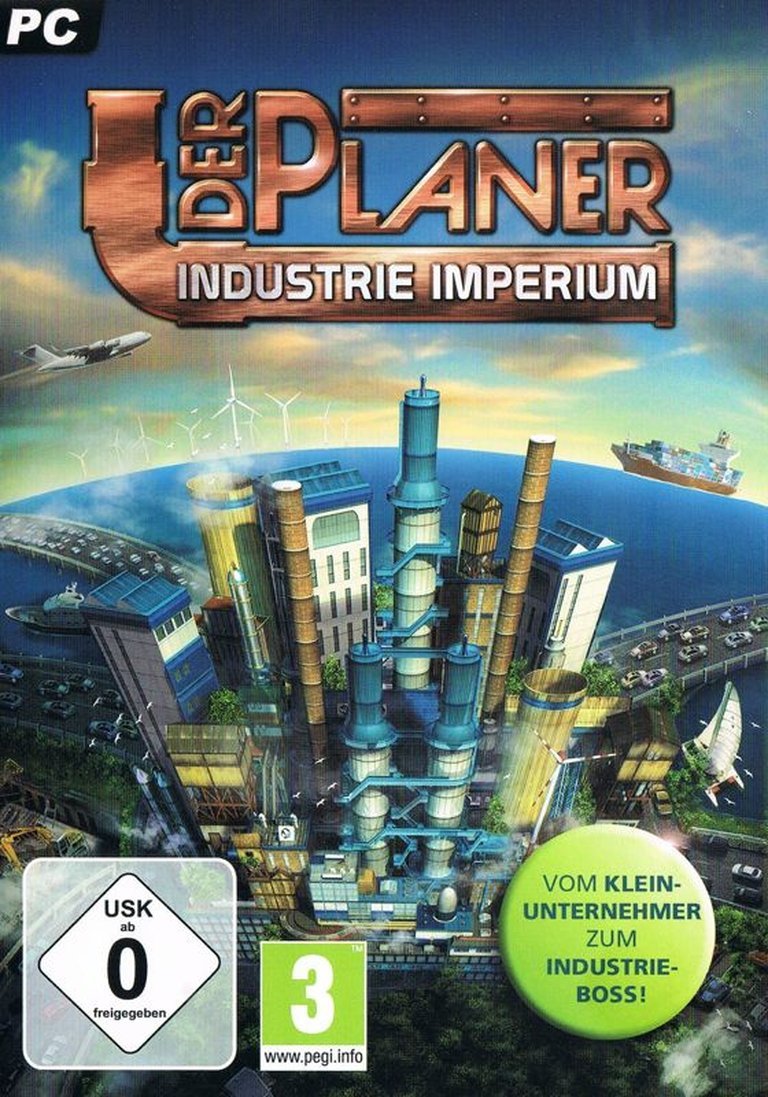
Industry Empire is a real-time business simulation game where players establish and expand a vast industrial empire, managing every aspect from gathering raw materials and producing 160 different goods to sales and logistics. Players buy land, construct factories, and navigate eight diverse scenarios, such as saving a region from bankruptcy or modernizing outdated structures, in a diagonal-down perspective city-building and managerial experience.
Where to Buy Industry Empire
PC
Industry Empire Guides & Walkthroughs
Industry Empire Reviews & Reception
metacritic.com (20/100): Generally Unfavorable.
steambase.io (34/100): Mostly Negative.
steamcommunity.com : Well crafted game with nothing special; don’t bother buying.
store.steampowered.com (31/100): Mostly Negative.
gamepressure.com (34/100): Mostly Negative.
Industry Empire: Review
Introduction
In the mid-2010s, as the simulation genre blossomed with ambitious titles promising economic mastery and sprawling empires, Industry Empire arrived with a tantalizing pitch: become the “boss of all bosses,” transforming raw resources into a 160-product industrial juggernaut while watching cities boom under your influence. Released in 2014 as the latest entry in Germany’s venerable Der Planer (The Planner) series, it evoked memories of classics like Industry Giant and Transport Tycoon, blending city-building construction with hardcore managerial simulation. Yet, beneath its promise of tycoon triumph lies a game hampered by archaic design choices and executional stumbles. This review argues that Industry Empire represents a missed opportunity—a conceptually rich business sim whose depth is undermined by frustrating interfaces, relentless micromanagement, and a lack of polish, relegating it to obscurity in an era demanding intuitive accessibility.
Development History & Context
Developed by ActaLogic, a studio known for niche simulators like Farming Giant and Ship Simulator: Maritime Search and Rescue, Industry Empire was published by rondomedia Marketing & Vertriebs GmbH, a German outfit specializing in European-market tycoons. The game builds directly on the Der Planer series, evolving from Der Planer 4 (2010), with a vision centered on granular industrial control: from land acquisition to full production chains, research trees, and dynamic regional growth. Credits list 40 contributors, heavy on product management (e.g., Reinhard Vree, Stefan Kummer) and marketing (Buschbaum Media team), suggesting a focus on localization and sales over groundbreaking tech—many staff overlapped with low-profile sims like Recycle: Garbage Truck Simulator.
Launched July 30, 2014, for Windows (DVD-ROM and Steam), it targeted an era sandwiched between the decline of dated tycoons (Anno series pivoting to 3D) and the rise of polished modern sims (Cities: Skylines in 2015, Factorio in 2016). Technological constraints were modest: minimum specs demanded only a Dual Core 2.4 GHz CPU, 2 GB RAM, and a GeForce 7600 GT—reminiscent of early 2000s hardware—indicating reliance on a lightweight, likely custom engine optimized for diagonal-down, real-time views with free camera movement. The 2014 gaming landscape brimmed with economy sims (Banished, RimWorld alpha), but Industry Empire‘s menu-driven interface and PEGI 3 rating positioned it as a “safe,” accessible entry for casual managers. Developer responsiveness shone through Steam forums, with PierreFM (likely Pierre Friedrichsmeier from credits) posting a detailed beginner’s guide and promising patches, reflecting a small-team scramble amid launch backlash. Internet multiplayer was specced but rarely evidenced, hinting at cut or underdeveloped features.
Narrative & Thematic Deep Dive
Industry Empire eschews traditional narrative for pure simulation, lacking plot, characters, or dialogue—its “story” emerges from emergent economic drama. Players embody an anonymous industrialist, starting from humble farms and ascending to steel mills and luxury estates via eight scenarios: rescuing bankrupt regions, modernizing outdated infrastructure, or free-play empire-building. No voiced protagonists or branching tales exist; progression is dictated by XP from contracts, unlocking 160+ goods in chains (e.g., wheat → eggs → manure recycling).
Thematically, it delves into unvarnished capitalism: supply-demand flux, loan risks (up to six with escalating interest), worker management (idle payroll drains), and urban interdependence (supply cities to spur expansion, but beware encroaching towns). Luxury buildings offer subtle rewards—0.5% loan interest cuts, 5% research boosts—symbolizing elite excess amid gritty production. Scenarios inject purpose, like averting regional collapse, evoking real-world bailouts or Rust Belt revivals. Yet, absent cutscenes or lore, themes feel procedural rather than poignant; a tutorial’s text-heavy exposition (golden arrows, pop-ups) imparts accounting drudgery over inspiration. Compared to narrative sims like The Movies (Hollywood satire), Industry Empire prioritizes mechanical fidelity, rendering its empire-building a solitary ledger of profit and peril—engaging for economists, arid for story-seekers.
Gameplay Mechanics & Systems
At its core, Industry Empire loops through meticulous empire expansion: acquire land (custom shapes/sizes, pricey in bulk), build basics (houses for workers, power plants/water pumps), erect a logistics center (vehicle hub, road-connected), produce starter goods (farms, chicken coops), secure market contracts, dispatch specialized trucks (e.g., refrigerated for eggs), and scale via levels/research. Free camera aids oversight in diagonal-down views; real-time pacing demands constant monitoring—warning triangles flag shortages (red UI highlights water/energy/workers).
Core Loops: Land choice is pivotal (near towns for short hauls vs. mountains for mining, risking water scarcity). Production demands inputs (e.g., manure for farms); sales via “Market” window (hover demands, accept contracts weighing quantity/price/penalty/deadline). “My Orders” dispatches: select factory → vehicle → route. Roads are fiddly—tool-based, straight-line defaults, manual curves expensive/red if blocked. Progression gates advanced chains (e.g., mining → steel) behind XP; research/dynamic growth adds replayability. Scenarios vary difficulty; free-play emphasizes long-term planning.
Innovations & Flaws: Land-buying shines for precision; online leaderboards/63 achievements encourage competition. But UI is “kruden und unnötig verschachtelten” (crude, nested)—endless clicks for sales/shipments (7-21 per order), no auto-sell/intervals, outdated menus evoke 90s relics. Micromanagement dominates: manual dispatches clog play, trucks pathfind poorly (“No associated garages”), bugs halt vehicles. Tutorial skimps depth, scenarios “zu unübersichtlich” for newbies or trick-solvable. Loans/taxes add tension, but balance tilts grindy—farms yield “lächerlich kleine Beträge.” Multiplayer? Specced but absent in practice. Overall, systems innovate modestly (luxury bonuses) but falter on usability, alienating beyond diehards.
| Mechanic | Strengths | Weaknesses |
|---|---|---|
| Land/Construction | Custom plots, road tools | Costly, straight-line rigidity |
| Production/Logistics | 160 goods, specialized trucks | Manual dispatching, pathing bugs |
| Economy/Contracts | Dynamic markets, penalties | Clickfest sales, no automation |
| Progression | Levels/research/scenarios | Grind-locked chains |
| UI/Controls | Keyboard/mouse, pause | Nested menus, tiny text |
World-Building, Art & Sound
The world is a sprawling, realistic expanse of fields, mountains, towns, and factories—diagonal-down perspective with free camera fosters god-game oversight, as player actions spur “dynamic urban growth” (supplied cities expand, potentially crowding industry). Atmosphere evokes industrial heartlands: watch trucks rumble on player-laid roads, factories hum amid evolving landscapes. Visuals, however, scream dated—blocky models, flat textures akin to Farming Giant, no flair/humor (e.g., no cartoonish tycoon vibes). 256 MB VRAM suffices; no widescreen/AA/VSync issues noted, but 4K/modern displays strain tiny text/UI.
Sound design is sparse: functional industrial hums, truck engines, basic menu beeps—no orchestral scores or dynamic OST like Anno. Audio reinforces monotony—monotone alerts for shortages/penalties—without immersion-boosting ambiance. Elements cohere for “Spaß an der Monotonie” (monotony’s joy), but lack artistry; world feels alive via simulation (growing metropolises), not sensory polish.
Reception & Legacy
Launch reception cratered: MobyGames critics averaged 41% (GameStar 45%: “schieren Resignation” from poor tutorial/menus; Computer Bild 42%: logic errors kill flow; 4Players 35%: “hanebüchenen Straßenbau” ignores progress). Steam: Mostly Negative (31% positive from 172 reviews, 34% overall from 239); Metacritic user 2.0/10. Players decried micromanagement (“click as fast as humanly possible”), UI (“counter intuitive”), grind (“ship 50,000 wheat on 12/day farms”). Developer patches (e.g., 1.0.4.3) and guides helped marginally, but no roadmap doomed turnaround.
Commercially niche (bundled low-price), legacy is faint—overshadowed by superiors (Rise of Industry, Factorio, Workers & Resources). Influences Der Planer fans minimally; related sims (Industry Giant 4.0 2024) iterate better. As historian, it’s a cautionary relic: 2014’s tech allowed more, but execution echoed 90s rigidity amid rising standards.
Conclusion
Industry Empire ambitiously simulates industrial ascent—land trades, vast chains, reactive economies—but drowns in tedious UI, bugs, and grind, betraying its Der Planer heritage. For masochistic sim enthusiasts craving unfiltered tycoon toil, its depth endures; casuals flee the “endless Klickaufwand.” In video game history, it occupies a footnote: a flawed 2014 artifact, eclipsed by intuitive evolutions, warranting rediscovery only on deep sales for genre diehards. Verdict: 4/10—procedural promise, procedural pain.