
- Release Year: 2020
- Platforms: Android, iPad, iPhone, Windows
- Publisher: NetEase Games, Netease Interactive Entertainment Pte. Ltd.
- Developer: NetEase Games, Netease Interactive Entertainment Pte. Ltd.
- Genre: Strategy, Tactics
- Perspective: 3rd-person (Other)
- Game Mode: MMO
- Gameplay: 4X, Massively Multiplayer, Real-time strategy (RTS)
- Setting: Futuristic, Sci-fi
- Average Score: 69/100
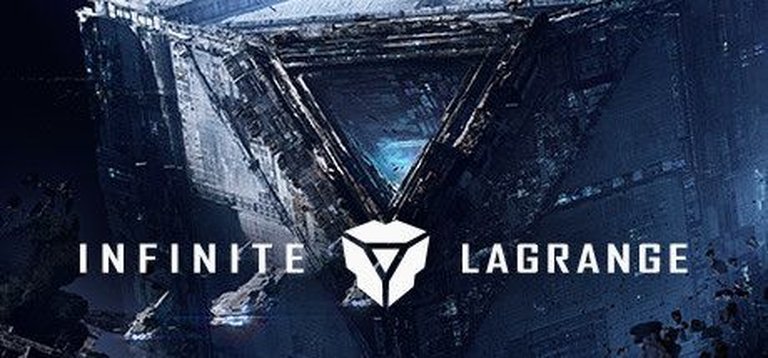
Description
Infinite Lagrange is a sci-fi real-time strategy game set in a futuristic, persistent galaxy where players build and customize massive fleets, engage in large-scale battles, forge alliances, mine resources, and uncover hidden lore through interstellar exploration. Developed by NetEase Games, it combines 4X elements with massively multiplayer gameplay, allowing for base upgrades, faction interactions, and strategic fleet combat on an unprecedented scale.
Gameplay Videos
Where to Buy Infinite Lagrange
PC
Infinite Lagrange Patches & Updates
Infinite Lagrange Guides & Walkthroughs
Infinite Lagrange Reviews & Reception
reddit.com : This game is surprisingly really fucking good
Infinite Lagrange Cheats & Codes
Infinite Lagrange
Enter codes in the in-game redemption field to claim rewards.
| Code | Effect |
|---|---|
| LAG22222 | Redeem this code for a reward. |
| LAG888 | Redeem this code for a reward. |
| V44-NRY-264 | Redeem this code to get 1200 eCoins. |
| 8V9-KUH-5G2 | Redeem this code to get 800 Research Points |
| 422-J5W-359 | Redeem this code to get 320 Proxima Coins |
| B39-JEE-8Y5 | Redeem this code to get a random reward |
Infinite Lagrange: Review
Introduction: A Galaxy of Ambition in Your Pocket
In the crowded landscape of mobile gaming, few titles have dared to stride so boldly into the complex, demanding realm of the 4X strategy genre as NetEase’s Infinite Lagrange. Released in 2020 for mobile platforms before expanding to PC, the game represents a significant technological and design assertion: that the deep, systemic complexity of a real-time, massively multiplayer space empire builder could not only exist on a smartphone but could thrive there. Its legacy is not one of a traditional single-player classic, but of a pioneering, if contentious, force in mobile MMO strategy. This review will argue that Infinite Lagrange is a landmark achievement in portable game design—a brilliant, flawed, and socially-driven galaxy simulator that redefined what was technically possible on mobile, even as its monetization models and steep learning curve created a formidable barrier to entry. It is less a finished masterpiece and more a living, evolving ecosystem, a digital frontier where the player’s own ambitions and alliances ultimately write the narrative.
Development History & Context: NetEase’s Galactic Wager
Studio & Vision: Developed and published by Chinese tech and gaming giant NetEase, Infinite Lagrange was a high-budget, high-stakes project. NetEase, known for its successful MMOs like Fantasy Westward Journey, leveraged its expertise in persistent online worlds and live-service economies to tackle a genre traditionally dominated by PC titans like Sins of a Solar Empire and EVE Online. The stated vision, culled from official descriptions and the “Shadow of Lagrange” lore series on its website, was to create a “large scale, strategic, real-time, multi-player space simulation” where players would not just manage fleets, but collectively shape the fate of a newly discovered star system via the titular “Lagrange System”—a vast interstellar transportation network.
Technological Constraints & Breakthroughs: The game’s most immediate and shocking feats are technical. Released initially for Android and iOS in June 2020, Infinite Lagrange achieved unprecedented 3D graphical fidelity for a mobile strategy game. Fully rendered ship models, dynamic lighting, and large-scale, cinematic fleet engagements where players could zoom from a strategic map view to a detailed, action-packed 3D battle were nothing short of revolutionary for the platform. This was not a simplified “mobile-friendly” version of a PC game; it was a genuine attempt to bring the sensory spectacle of a AAA space RTS to a handheld device. The subsequent Windows port (2021) was a straightforward extension of this same client, highlighting the game’s “play anywhere” design philosophy.
The Gaming Landscape: Infinite Lagrange entered a mobile strategy market saturated with base-builders, Clash-of-Clans clones, and auto-battlers. Its direct predecessor in ambition was likely Stellaris: Galaxy Command, a mobile adaptation of Paradox’s grand strategy title that was ultimately discontinued. Infinite Lagrange learned from this failure by doubling down on real-time interaction and player-driven diplomacy, creating a more dynamic, less pre-determined experience. It also arrived as the “mobile MMO” genre was maturing, with players increasingly willing to engage in deep, long-term persistent worlds on their phones, provided the social hooks were strong enough.
Narrative & Thematic Deep Dive: The Shadow Over the System
Unlike many strategy games that relegate story to a tutorial and some flavor text, Infinite Lagrange integrates its narrative directly into the game’s core mechanics and long-term events through the episodic “Shadow of Lagrange” series and in-game lore reveals.
Plot & Setting: The backdrop is humanity’s expansion through the “Lagrange System,” a network of stargates spanning a third of the Milky Way. Players are “captains” arriving in a newly opened, resource-rich star system (a server) under a “Star System Development Agreement.” The immediate lore, delivered in a lengthy opening cinematic, establishes a history of interstellar travel, corporate/state competition, and mysterious precursors. The primary narrative tension lies in the promise and peril of this new frontier: the chance for glory and discovery versus the harsh realities of competition, sabotage, and the looming threat of “privateer” fleets (NPC antagonists) and, more ominously, the “Shadow of Lagrange”—a cryptic, seemingly destructive force referenced in the lore chapters (e.g., “Pale Blue Dot,” “Neptune Minerals”). This isn’t a plot about a chosen hero, but about collective endeavor and the inevitable conflicts that arise when disparate forces vie for control of virgin territory.
Themes: The game’s themes are deeply embedded in its 4X loops:
* Manifest Destiny vs. Sustainable Coexistence: The core 4X drive to “Expand” and “Exterminate” is constantly tempered by the necessity of “Exploit” (resource management) and the game’s emphasis on Unions (alliances). Victory conditions like “Galaxy Dominator” encourage total control, while others may involve cooperative achievements, mirroring the tension between pure conquest and managed growth.
* The Scale of Human Endeavor: The lore repeatedly focuses on isolated outposts, long-distance communication delays (“this message was sent 3 months ago”), and the fragility of a single base against the void. This reinforces the player’s experience: you are a tiny, struggling faction in a vast, uncaring galaxy, where survival depends on social bonds as much as military might.
* Legacy and Information: The “Golden Record” and “Enlightenment Star” lore entries point to themes of preserving knowledge and understanding lost histories, a meta-commentary on the player’s own act of building a lasting presence in a server that will eventually reset or evolve.
Dialogue & Characters: Character development is minimal at the individual level but substantial at the faction and Union level. Key NPC figures like Yue Wenfeng and Andre from the lore fragments represent ideological poles—collaboration versus independence, caution versus ambition. The true “characters” are the other player captains and Union leaders you interact with. Their decisions—to honor a trade pact, to break an alliance, to send reinforcements during a siege—become the game’s most memorable narrative moments, creating emergent stories of betrayal, loyalty, and large-scale warfare that no scripted writer could produce.
Gameplay Mechanics & Systems: The Engine of Empire
Infinite Lagrange is a masterclass in layered, interconnected systems that learn from both PC 4X classics and mobile UX principles.
Core Loop & 4X Execution:
* Explore: Done via the Lagrange Network jump gates. Players select a star system (server) to enter, a permanent choice that defines their entire campaign. Exploration within the system reveals resource nodes, NPC fleets, and other player outposts.
* Expand: The base (Station) starts as Zone 1. Expansion is gated by research, specific buildings, and the critical need to secure and develop Outposts on different planets/asteroids. These outposts mine specific resources (Metal, Crystal, Helium-3) and must be linked back to the main base via Constructions (space lanes), creating a tangible, physical web of territory.
* Exploit: Resource management is constant and multi-layered. Resources are produced at specific outposts, must be transported (via fleet or instant “teleport” with a cooldown/currency cost), and are consumed by everything: shipbuilding, research, building upgrades, and fleet movement. The Operation Point system is a brilliant mobile adaptation: it’s a regenerating pool of action points used for most fleet activities (attacking, reinforcing, transporting). This prevents 24/7 hyper-activity and creates a strategic “chessboard” pacing, as noted by players.
* Exterminate: Combat is real-time and fully viewable in 3D. The fleet composition system is deep: a fleet has a Command Point cap, filled by the “weight” of ships. This forces meaningful trade-offs—do you bring expensive, high-damage capital ships or more numerous, cheaper frigates? Ship classes have clear rock-paper-scissors counters (e.g., fighters strong against destroyers, carriers weak to concentrated fire). Flanking and encirclement are real tactical factors in the 3D space. Battles can be ambushes or gate defenses, with the “Major Battle” mechanic creating temporary no-fly zones.
Progression & Customization: Progression is primarily horizontal and tech-tree based. Ship Blueprints are the core unlock, often obtained randomly from Dawn Funding (battle pass) chests or research—this is the source of the game’s controversial loot-box style monetization. Once a blueprint is obtained, ships can be built, then upgraded in Tier (e.g., I to V). The Weapon System allows per-ship modification of guns, missiles, and special modules, offering deep tactical customization. Player progression is also tied to Union rank and contribution.
User Interface (UI): The UI is a feat of information density. It must manage: the strategic star map, the base construction screen, fleet deployment, the 3D battle viewer, resource flow charts, Union diplomacy tools, and various event/quest trackers. For newcomers, it is overwhelming—the “steep learning curve” is the most consistent critique. However, for veterans, it provides unparalleled control. The ability to zoom seamlessly from a galaxy view to a close-up on a capital ship’s torpedo launch is a constant delight and a key part of the game’s fantasy.
Innovative & Flawed Systems:
* The Operation Point System: An innovative anti-botting and pacing mechanism perfectly suited to mobile. It encourages thoughtful planning over frantic clicking.
* Union-Centric Warfare: The social organism is the game’s core. Rallies (mass attacks) and Reinforcements are coordinated through Union channels. Defending a key mining zone or attacking a rival Union’s headquarters creates the game’s most epic, community-driven moments.
* Monetization & RNG: The loot-box model for critical ship blueprints is the game’s greatest flaw. While daily activities and battle passes provide a “safety net” (e.g., a guaranteed blueprint after opening enough boxes), the grind for a specific, competitive ship can be brutal. This “pay-to-progress-faster” model, combined with RNG in combat outcomes (hits can miss, damage can vary), can make losses feel punishing and unfair, especially to newer or free-to-play players. It’s a classic free-to-play tension: accessibility versus advantage.
* PvP Pressure: As noted in reviews, direct, unprovoked PvP is less prevalent than in sandbox titles like EVE Online. Conflict is often organized at the Union level and tied to territory control. This makes the world feel safer for solo players but can blunt the constant, emergent danger some players crave.
World-Building, Art & Sound: A Cinematic Frontier
The game’s world is its most universally praised aspect.
Setting & Atmosphere: The “newly discovered star system” is not a static map. It’s a dynamic warzone. The visual language is one of cold, beautiful vastness: nebulas glow in the background, asteroid belts are dense with mineable resources, and the player’s station grows from a few domes into a sprawling, glowing metropolis with defense platforms. The sense of place is heightened by the Constructions—physical space lanes you build linking your holdings—making your territory feel constructed and tangible. The lore fragments (“Dawn Ring,” “Horologium C2136”) give poetic, specific names to these locations, selling the idea of a living, mapped galaxy.
Visual Direction: The 3D graphics are, without exaggeration, best-in-class for mobile and competitive with many PC strategy games. Ship designs are a blend of sleek, functional realism and dramatic flair (e.g., the “Solar Whale Carrier”). Lighting and particle effects during battles—laser fire, missile trails, explosion bloom—are spectacular and crucial for readability. Being able to rotate the camera around a chaotic dogfight to assess flanking positions is a strategic advantage born from the impressive engine.
Sound Design: The soundtrack is a moody, ambient, and orchestral score that underscores both the loneliness of space and the grandeur of empire-building. The sound design in battles is impactful: the deep thump of macro-cannon batteries, the shriek of missile launches, and the satisfying crunch of a shield generator overload. The one consistent player complaint, notably from the Reddit review, is the unskippable, repetitive voice lines during battles (“Weapons hot!”, “Taking damage!”), which break the immersion after the hundredth hearing.
Reception & Legacy: The Frenzy and the Fracture
Critical & Commercial Reception at Launch: Critical reception was mixed to positive, with widespread astonishment at its technical prowess counterbalanced by skepticism toward its monetization. It holds no Metacritic score due to a lack of aggregated critic reviews, a common fate for mobile-focused titles. Its commercial success is evidenced by its high player base and NetEase’s continued, aggressive support with frequent major updates (e.g., “Legacy version,” “Strategic Assets,” “Twin Festival”). The Steam version, however, exists in a strange limbo—as noted by a community member, it lacks cross-platform play and feels like an afterthought to the primary mobile experience.
Evolving Reputation: Its reputation has solidified into a cult classic among mobile strategy enthusiasts and a cautionary tale for others. Communities on Reddit and Discord are active, passionate, and helpful to newcomers—a sign of a healthy core player base. The praise consistently centers on: 1) the unparalleled visual and systemic scale, 2) the thrill of coordinated Union warfare, and 3) the genuine strategic depth in fleet composition and positioning. The criticisms remain constant: the loot-box grind, the unforgiving RNG in combat, and a UI that, while powerful, is not新用户-friendly.
Influence on the Industry: Infinite Lagrange‘s primary influence is proof-of-concept. It demonstrated that a full-fat, real-time 3D RTS with MMO elements could be built for mobile. It likely emboldened other publishers to invest in similar high-production mobile titles. Its systems—particularly the Operation Point pacing and the Union-organized territory control—are being iterated on by others. More broadly, it is a key case study in the “mobile-native MMO” design space, showing that social structures (Clans, Guilds, Unions) must be the central pillar, not an add-on, for such a game to retain players against the relentless pressure of its own monetization models.
Conclusion: A Monumental, Messy Masterpiece
Infinite Lagrange is not a perfect game. Its reliance on random-number generation for core progression and its occasionally obtuse interface are significant blemishes. Its narrative, while intriguing, is buried in optional lore entries. Yet, to dismiss it as merely a “gacha game in space” is to miss its monumental achievements.
It is the first game to successfully marry the grand, cinematic scale of a PC space RTS with the persistent, social ecology of an MMO, and to do so in a package that runs in your pocket. The feeling of staring at a holographic star map, planning a multi-fleet, multi-Union offensive with allies across timezones, and then executing it in a breathtaking 3D battle where individual ships can be followed as they dogfight—that feeling is unique and powerful. It is a game that understands its medium: the smartphone is not a lesser PC, but a device with different rhythms (the Operation Point system) and different social affordances (the necessity of Union play).
Its place in history is secure as the vanguard of the “hardcore mobile MMO.” It is a flawed, ambitious, and incredibly robust galaxy simulator where the players are the true content. For those willing to weather its learning curve and its monetization quirks, it offers an experience unmatched in the mobile sphere: the genuine, emergent, and epic narrative of building an empire among the stars, one fleet deployment at a time. Infinite Lagrange is, ultimately, a testament to the idea that the frontier of space and the frontier of mobile gaming are, in their own ways, infinitely expandable.