
- Release Year: 2010
- Platforms: Windows
- Publisher: xii games
- Developer: xii games
- Genre: Action
- Perspective: Behind view
- Game Mode: Single-player
- Gameplay: Aviation, Direct control, Flight, Platform, Shooter
- Setting: Futuristic, Sci-fi
Description
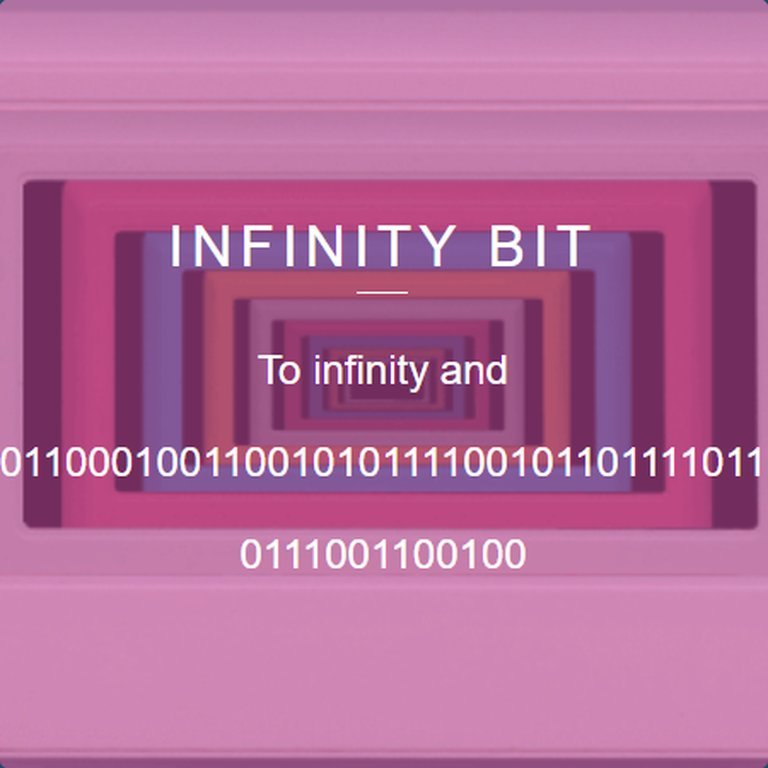
Infinity Bit is a freeware action shooter platformer developed by xii games, released in August 2010 for Windows. Set in a sci-fi futuristic world, the game combines side-view and behind-view perspectives, focusing on fast-paced combat and vehicular flight elements. Built using the Adventure Game Studio (AGS) engine, it was created for ‘The A Game By Its Cover Competition’ on TIGSource.com, offering direct-control gameplay with a solitary offline player experience.
Infinity Bit Free Download
PC
Infinity Bit Reviews & Reception
adventuregamestudio.co.uk : Better controls would improve the game immensely, but fans of old school, difficult arcade games will still find much to like.
Infinity Bit: Review
Introduction
In the vast ocean of indie game development, where passion projects often flicker briefly before vanishing into obscurity, Infinity Bit (2010) stands as a curious artifact—a minimalist sci-fi shooter born from the constraints of a game jam and the creative vision of solo developer Vince Twelve. Released as freeware for Windows, this bite-sized title emerged from the A Game By Its Cover competition on TIGSource, a celebration of retro aesthetic reinterpretation. Though overshadowed by its fortuitously named contemporary Infinity Blade, Infinity Bit carves its own niche as a testament to rapid development and thematic cohesion. This review dissects its design, context, and legacy, revealing how a one-month project encapsulates the DIY ethos of early 2010s indie gaming.
Development History & Context
The Studio and Vision
Developed by xii games—effectively a pseudonym for Vincent (Vince) Wesselmann—Infinity Bit was crafted in response to the Famicase 2010 exhibition, where artists reimagined fictional Famicom cartridge artwork. Wesselmann, inspired by a mock cover depicting a neon-drenched spaceship hurtling through an abstract corridor, sought to embody its “retro-futurist energy” within a playable framework. The competition’s mandate—to create a game matching the art’s spirit in 30 days—demanded efficiency. Wesselmann, leveraging Adventure Game Studio (AGS), prioritized simplicity: a vertical slice of arcade action unburdened by complex systems.
Technological and Era Constraints
AGS, typically associated with point-and-click adventures, was an unconventional choice for a fast-paced action game. Its limitations—rigid sprite-based rendering, limited physics—forced inventive solutions. Enemy patterns were hand-coded; parallax backgrounds simulated depth. Released in August 2010, Infinity Bit debuted amid an indie renaissance fueled by platforms like Steam Greenlight and Xbox Live Indie Games, yet its freeware status and lack of marketing relegated it to niche forums. Technologically, it mirrored the era’s fascination with “demake” aesthetics, echoing Geometry Wars’ vector minimalism but with 16-bit flair.
Gaming Landscape of 2010
2010 was a watershed year: Super Meat Boy and Limbo redefined indie polish, while AAA studios leaned toward cinematic narratives (Red Dead Redemption, Mass Effect 2). Against this backdrop, micro-projects like Infinity Bit thrived in the margins, offering pure, undiluted gameplay loops. Its corridor-shooting focus placed it alongside contemporaries like Bit.Trip Runner but distinguished itself through its abstract, endless-runner ethos.
Narrative & Thematic Deep Dive
Plot and Characters
Infinity Bit eschews explicit narrative. The player pilots an escape pod fleeing through a procedurally generated “Infinity Corridor,” evading robotic sentinels and collecting energy upgrades. This minimal setup—akin to Asteroids or Tempest—invites projection: Are you a rebel escaping tyranny? A lone explorer charting cosmic depths? The absence of text or dialogue leans into the “cover art as story” philosophy, where the player’s imagination completes the world.
Thematic Underpinnings
The game’s themes emerge through its mechanics and aesthetic:
– Isolation: The pod’s solitary journey through repetitive, labyrinthine corridors evokes cosmic loneliness.
– Persistence: Death resets progress, but mastery unlocks incremental upgrades—a metaphor for Sisyphean struggle.
– Retro-Futurism: Pixelated neon grids and chiptune synths nod to 1980s arcade fantasies of the future, contrasting with 2010’s gritty sci-fi trends.
Gameplay Mechanics & Systems
Core Loop
Infinity Bit operates on a straightforward loop:
1. Movement: Control a spacecraft with WASD/arrow keys, switching between flight (top-down) and platforming (side-scrolling) segments.
2. Combat: Auto-fire lasers target enemy drones; shields absorb limited damage.
3. Collection: Scattered “bit” upgrades grant temporary buffs (speed boosts, weapon enhancements).
4. Progression: Death resets the run, but persistent currency unlocks ship modifications (e.g., faster engines, stronger shields).
Combat and Controls
The hybrid perspective—shifting from behind-view flight to side-view platforming—was ambitious for AGS. Flight sections emphasize dodging and precision shooting, while platforming introduces timing-based jumps. The UI is spartan: a health bar, shield meter, and score counter. Enemy AI follows predictable paths, but later zones layer threats—homing missiles, laser grids—demanding memorization.
Progression and Customization
The “Bit Shop” allows post-run purchases using collected points, fostering a roguelike-lite progression. Upgrades like the Plasma Cannon or Phase Shield subtly alter playstyles, though balance issues emerge: certain builds trivialize later zones, undermining tension.
Flaws and Innovations
Innovations:
– Dynamic Perspective Shifts: Rare for AGS games, these transitions create rhythm and variety.
– Modular Upgrades: Prefiguring the roguelike boom, builds encourage experimentation.
Flaws:
– Repetition: Limited enemy types and samey corridors induce fatigue by the 30-minute mark.
– Janky Physics: Platforming segments suffer from floaty jumps and collision hiccups.
– Unpolished UI: Menu navigation feels clunky, with unclear tooltips.
World-Building, Art & Sound
Visual Direction
Infinity Bit’s art adheres to a cyberpunk palette: electric blues, fiery oranges, and monochrome grids. The pod and enemies resemble Gradius-era sprites—blocky yet charming. Backgrounds pulsate with CRT-filtered scanlines, evoking a “lost arcade cab” aesthetic. While low-res, the consistency sells the retro-futuristic immersion.
Sound Design
Ferry Timmers’ soundtrack—credited as Wyz—mixes pulsating chiptune basslines with ambient synth pads. Sound effects are delightfully crunchy: laser blasts mimic NES Contra, while explosion “booms” evoke Space Invaders. The audio elevates the minimalist visuals, grounding the abstract world in sonic familiarity.
Atmosphere
The cumulative effect is hypnotic: the endless corridor’s repetition morphs into a meditative trance, punctuated by adrenaline spikes during boss encounters. The lack of narrative or dialogue positions the player as a silent observer in a sterile, mechanical cosmos—a bold, if alienating, choice.
Reception & Legacy
Critical and Commercial Reception
As freeware, Infinity Bit bypassed traditional commercial metrics. Its primary audience was TIGSource forums, where it garnered modest praise for its ambition despite limited scope. One user wrote, “It’s janky, but there’s soul here—like a demo from an alternate 1989.” No professional reviews surfaced, cementing its status as a cult curio.
Legacy and Influence
Though not directly influential, Infinity Bit embodies several 2010s indie trends:
– Game Jam Spirit: Its rapid development foreshadowed the rise of itch.io and Ludum Dare.
– Retro Revival: It preceded the 2012-2016 wave of “neo-retro” games (Hotline Miami, Furi).
– Minimalist Storytelling: Its “environment-as-narrative” approach mirrors Proteus or Lumino City.
The game’s greatest legacy lies in its existence: a proof-of-concept for Vince Twelve’s later work (Soul Gambler, The Cat Lady), proving that constrained tools could yield evocative experiences.
Conclusion
Infinity Bit is neither a masterpiece nor a failure—it’s a time capsule. Within its clunky controls and repetitive corridors lies a poignant snapshot of indie gaming’s adolescence: unpolished, experimental, and fiercely imaginative. As a technical exercise, it stumbles; as an artistic statement, it resonates. For historians, it exemplifies how limitations breed creativity. For players, it offers a 45-minute diversion into a neon-soaked daydream. While forgotten by most, Infinity Bit deserves recognition as a humble pioneer—a pixel in the mosaic of gaming’s evolution.
Final Verdict: A flawed but fascinating artifact of indie passion, best appreciated as a historical curiosity rather than a timeless classic.