
- Release Year: 2017
- Platforms: PlayStation 4, Windows Apps, Windows, Xbox One
- Publisher: Warner Bros. Interactive Entertainment Inc.
- Genre: Compilation
- Average Score: 95/100
Description
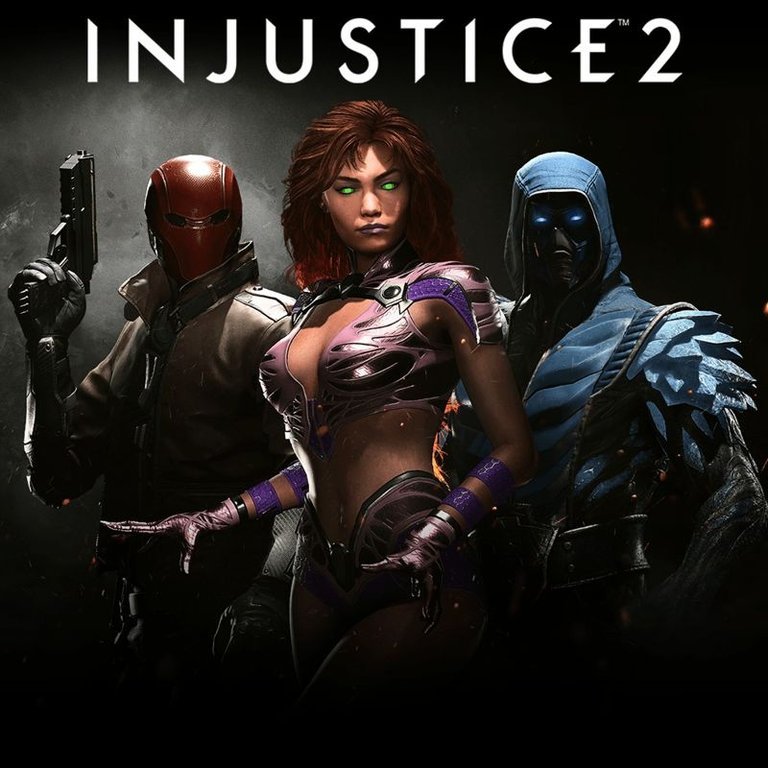
Injustice 2: Fighter Pack 1 is a downloadable content compilation for the DC Universe-based fighting game Injustice 2, adding four new playable characters—Power Girl, Red Hood, Starfire, and Sub-Zero—along with the Gods Shader Pack for cosmetic customization. This expansion enhances the base game’s roster with iconic superheroes and villains, set within the storyline where Batman leads an insurgency against emerging threats like The Society and Brainiac.
Injustice 2: Fighter Pack 1 Reviews & Reception
metacritic.com (90/100): he is a lot of fun to play in Injustice 2.
metacritic.com (100/100): Excellent game and must-have for any fan of this genre.
Injustice 2: Fighter Pack 1: The Keystone of a Post-Launch Dynasty
Introduction: A New Era for Fighting Games and DC Fandom
When NetherRealm Studios and Warner Bros. Interactive Entertainment launched Injustice 2 in May 2017, they didn’t just release a sequel to a beloved fighting game; they announced a new paradigm for the genre. The promise was audacious: a full-fledged fighting game with an RPG-inspired progression system, a cinematic story mode, and a commitment to a long-term content pipeline. Fighter Pack 1, arriving just weeks after launch with the trio of Red Hood, Starfire, and Sub-Zero, was the first tangible proof of that commitment. More than a simple character bundle, it was the foundational stone of an expansive post-launch ecosystem that would redefine player expectations for “games as a service” in the fighting game community. This review will dissect Fighter Pack 1 not as an isolated product, but as a critical case study in modern DLC strategy, character design, and its role within the masterful—if controversial—architecture of Injustice 2 itself.
Development History & Context: The Aggressive DLC Mandate
The context for Fighter Pack 1 is inseparable from the overarching vision for Injustice 2. Following the critical and commercial success of Injustice: Gods Among Us (2013), NetherRealm Studios, led by creative director Ed Boon, sought to “do something unexpected and long-term.” This philosophy directly stemmed from two sources: a conceptual desire since the Midway Games era to blend RPG progression with fighting game mechanics, and a commercial recognition of the evolving market.
The Gear System, the game’s revolutionary loot-and-customization engine, was the centerpiece of this vision. As producer Adam Urbano noted, the idea had been floating for years, but Injustice 2 was the first project where Warner Bros. and DC Comics granted the trust to execute it. This system was designed from the ground up to be content-agnostic. Every new character, skin, or gear piece was a potential reward within its endless loot crates (“Mother Boxes”) or a purchasable item with the premium currency, “Source Crystals.” This meant Fighter Pack 1 wasn’t just about adding fighters; it was about injecting new gear sets, shaders, and Premier Skins (like the included Power Girl skin for Supergirl) into the core reward loop.
The “aggressive approach” to DLC, as Boon termed it, was a calculated response to player demand for ongoing support. The pattern was clear: Mortal Kombat had 4 DLC characters, Injustice 1 had 6, Mortal Kombat X had 8. Injustice 2 aimed to surpass that. Fighter Pack 1 (Red Hood, Starfire, Sub-Zero) was the first step, released on a tight schedule—Red Hood (June 13), Sub-Zero (July 11), and Starfire (August 8), 2017—to maintain player engagement and media momentum. This rapid cadence, combined with the Gear System’s grinding incentives, created a powerful retention engine that kept the community active for months and years beyond launch.
Narrative & Thematic Deep Dive: Weaving New Threads into the Tapestry
The story of Injustice 2 is a densely plotted epic set in its dystopian Regime-ruled universe, following Batman’s efforts to rebuild society while threats from The Society (led by Gorilla Grodd) and the cosmic Brainiac emerge. Fighter Pack 1’s characters are not mere cameos; they are integral, plot-critical additions that enrich the narrative’s themes of legacy, redemption, and ideological conflict.
- Red Hood (Jason Todd): His inclusion is a masterstroke of thematic synergy. As Batman’s second, failures-ridden Robin, Jason Todd represents the dark mirror to Dick Grayson’s Nightwing and the idealized Robin Damian Wayne. His story in the campaign is one of violent, uncompromising justice. He is recruited by Batman’s Insurgency but his brutal methods constantly clash with Bruce’s code. His presence forces players and the narrative to confront a central question: in a world already broken by Superman’s tyranny, can Batman’s moral absolutism still hold? Todd’s narrative arc—culminating in his defiance of Batman’s orders and his declaration “I’m not your Robin” — is one of the pack’s strongest contributions, adding layers of gritty, street-level conflict to the cosmic-scale plot.
- Starfire (Koriand’r): The exiled Tamaranian princess brings a foreign perspective to the Earthly conflict. Her story is one of trauma and resilience, fleeing the destruction of her homeworld. In the campaign, she fights alongside the Insurgency, her pure-hearted desire to protect her new home contrasting with the jaded politics of Earth’s heroes. Her interactions, particularly with Supergirl (another alien survivor), create a powerful bond of shared experience. Her inclusion visually and thematically expands the game’s scope beyond Earth, reminding us that Brainiac’s threat is a galactic one.
- Sub-Zero (Kuai Liang): As the first third-party guest character from Mortal Kombat, Sub-Zero’s narrative integration is more pragmatic but still significant. He arrives not as a central plot driver but as a mysterious, powerful ally recruited by Batman. His presence serves a dual purpose: it thrillingly crosses the DC/Mortal Kombat divide for fans, and it provides a neutral, non-DC-centric power set within the story. His character, while given less dialogue and backstory than the others, operates on a simple, honorable code that stands in stark contrast to the political machinations of Brainiac and Grodd. His Lin Kuei background and ice-based powers offer a unique visual and gameplay flavor within the DC sandbox.
The Gods Shader Pack included with the Fighter Pack, while cosmetic, extends the narrative’s aesthetic. It allows players to visually align characters with a more Olympian, mythic palette, subtly reinforcing the game’s theme of gods and monsters walking among men.
Gameplay Mechanics & Systems: Expanding the Strategic Sandbox
The genius of Injustice 2‘s design is how its Gear System and character-specific mechanics create a “combat puzzle” where builds matter. Fighter Pack 1 successfully added three distinct strategic archetypes to this puzzle.
- Red Hood: His gameplay is a fascinating hybrid. He utilizes a dual-pistol stance for ranged, quick projectile harassment and a staff for close-range, high-damage combos. His “Arsenal Overdrive” trait lets him switch stances on the fly, demanding opponent readjustment. His special moves include explosive grenades, a leaping knee strike, and a powerful anti-air. Gear sets for Red Hood often focus on amplifying his projectile spam, his rushdown potential, or his devastating “Red Hood’s Revenge” super move. He fits the “zoner/rushdown” hybrid mold, similar to a character like Mortal Kombat‘s Erron Black.
- Starfire: She is the quintessential zoner/keep-away specialist. Her Starbolt projectiles can be fired in multiple arcs and speeds. Her “Starfire’s Fury” trait allows her to charge her basic attacks for extra damage and hit-stun. Her specials include a fireball dash, an anti-air grab, and a full-screen, multi-hitting super. Her gear sets heavily influence the speed, screen coverage, and damage of her projectiles. Mastering Starfire is about controlling space and punishing opponent mistakes from a distance, a playstyle that contrasts sharply with the close-combat brawlers.
- Sub-Zero: NetherRealm’s adaptation of the Mortal Kombat icon is a lesson in respectful translation. He retains his ice clone (a teleporting, freezing substitute), his ground freeze (a low, unblockable trap), and his ice ball projectile. However, for Injustice 2‘s balance, the ice clone no longer works at point-blank range (to prevent unpunishable, lockdown teleports), and his long-range freeze requires meter. This makes him a defensive, footsies-oriented character who uses the clone for repositioning and whiff-punishing. His gear sets can enhance his freeze’s utility, his damage output, or his already solid defensive stats. He introduces a “matter-of-fact” grappler/trapper style uncommon in the main DC roster.
Crucially, all three characters work within the Gear System framework. Collecting specific set bonuses (e.g., 5/5 of a particular gear set) could fundamentally alter a character’s strategy—increasing projectile speed for Starfire, reducing cooldown on Red Hood’s stance switch, or extending Sub-Zero’s ice clone duration. This system meant that Fighter Pack 1 wasn’t just three new characters; it was dozens of potential new playstyles to discover and min-max.
World-Building, Art & Sound: Consistent Excellence
Fighter Pack 1 assets are seamlessly integrated into the Injustice 2 production pipeline. There is no “DLC drop” in quality.
- Visuals & Animation: Characters like Starfire and Red Hood feature the same photogrammetry-based facial scanning and high-fidelity motion capture as the base roster (a process described in the Wikipedia source using 44 DSLR cameras and complex rigging). Their animations are fluid, expressive, and perfectly match the game’s cinematic tone. Sub-Zero’s redesign, courtesy of comic artist Jim Lee, gives him a rugged, armored look that fits the game’s darker aesthetic while retaining iconic MK elements. Their stages (included in the pack’s “Gods Shader Pack” palette swaps) and the inclusion of Power Girl’s Premier Skin for Supergirl all use the same high-resolution textures and particle effects.
- Sound Design: The brutal, impactful sound of punches, the crackle of Starfire’s flames, the crunch of Sub-Zero’s ice formations, and the bang of Red Hood’s pistols are all crafted with the same meticulous attention as the core cast. Voice acting is top-tier, with returning and new talent delivering performances that match the gravitas of the story cutscenes. The shared soundtrack by Christopher Drake underscores their entrances and battles without differentiation.
- Atmosphere: Their inclusion reinforces the game’s core dystopian superhero aesthetic. Red Hood’s grim practicality, Starfire’s hopeful resilience in the face of loss, and Sub-Zero’s stoic, otherworldly power all feel native to the world of Injustice 2. They don’t feel like visitors from another franchise; they are assimilated into its grim, tactile reality.
Reception & Legacy: The Template for Success (and Controversy)
The release of Fighter Pack 1 was met with generally positive critical reception, consistent with the base game’s acclaim.
- Critical Response: Reviewers praised the diversity of playstyles added. Sub-Zero was highlighted as a successful cross-franchise guest, “toned down” from his MK incarnation but still distinct and fun (as noted in the Gamers’ Temple review excerpt). Red Hood’s dual-stance gameplay was celebrated as inventive. Starfire’s role as a powerful zoner filled a necessary niche. The consistent art and sound quality was a given, cited as a hallmark of NetherRealm’s production values.
- Commercial Impact: Sales data (referenced in the Wikipedia source) showed Fighter Pack 1 was a top download on PlayStation Store in June 2017, immediately following its release. This demonstrated the powerful “content drip” strategy in action: the game’s player base remained active and spending, driven by the promise of the next Pack (which would bring Black Manta, Raiden, and Hellboy). It validated Warner Bros.’ aggressive DLC schedule.
- Community & Legacy: Fighter Pack 1’s legacy is twofold:
- It established the release cadence and quality bar for all subsequent DLC. The three-month rhythm between packs became expected. The formula of 2 DC characters + 1 third-party guest (or vice-versa) was solidified.
- It intensified the debate around the Gear System and microtransactions. While critics praised the customization, many (like those from GameRevolution and Kotaku cited in the Wikipedia source) criticized the “random loot” and the pressure to use Source Crystals to bypass grind. Fighter Pack 1 characters were not exempt; obtaining their best gear sets required significant playtime or currency. This was the system’s core tension: deep, rewarding customization versus a grind that felt intentionally paced to encourage microtransaction use.
- It proved guest characters could be narrative assets. Sub-Zero’s integration, while lighter than the DC characters, was seamless. This paved the way for the even more narratively integrated Teenage Mutant Ninja Turtles in Fighter Pack 3 and set a precedent for future crossovers.
Conclusion: The Indispensable First Chapter
Injustice 2: Fighter Pack 1 is not a game to be judged in a vacuum; it is a vital organ within the living body of Injustice 2. Its historical significance lies not in revolutionary mechanics—it uses the base game’s systems—but in its execution of a bold post-launch strategy. It delivered three highly distinct, narratively relevant, and mechanically sound characters that expanded the game’s strategic landscape and met the fervent demand for new content.
Its flaws are the flaws of its host: a reliance on random loot that could frustrate completionists, and a premium currency system that walk a fine line between convenience and exploitation. Yet, within the fighting game landscape of 2017, it represented a peak. No other major fighting game (Street Fighter V, Tekken 7) was offering such a consistent stream of fully integrated, story-relevant DLC characters with this level of customizability.
Final Verdict: Fighter Pack 1 is an essential chapter in the Injustice 2 saga. It successfully achieved its primary goals: sustaining player engagement, diversifying the roster with compelling choices from both within and outside the DC Universe, and demonstrating that a fighting game’s life cycle could be dramatically extended through a smart blend of narrative integration and RPG-style progression. While its business model remains a point of contention, its effectiveness is undeniable. For collectors, competitive players, and DC fans, it is a non-negotiable piece of one of the most ambitious and content-rich fighting games ever made. 9/10 – A Model of Post-Launch Execution.