
- Release Year: 2017
- Platforms: PlayStation 4, Windows, Xbox One
- Publisher: Warner Bros. Interactive Entertainment Inc.
- Genre: Special edition
- Game Mode: Single-player
- Average Score: 83/100
Description
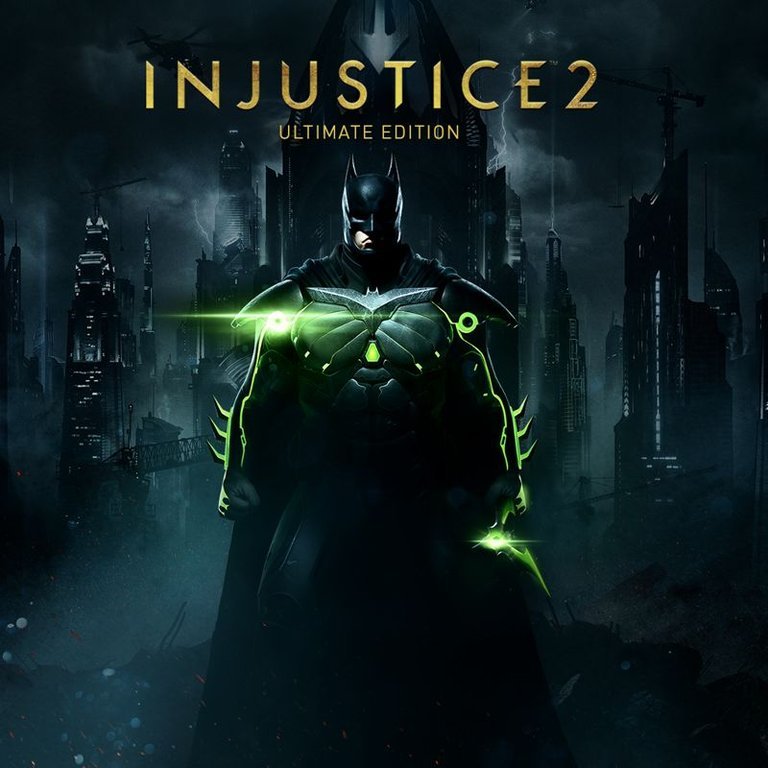
Injustice 2 (Ultimate Edition) is a fighting game developed by NetherRealm Studios and published by Warner Bros. Interactive Entertainment. Set in a universe where Superman’s regime has fallen, the game follows Batman and his allies as they rebuild society while facing new threats from villains like Gorilla Grodd and the cosmic conqueror Brainiac. The Ultimate Edition includes the base game along with all downloadable content, featuring additional fighters, skins, and gear packs, offering an expanded roster and enhanced gameplay experience.
Injustice 2 (Ultimate Edition) Mods
Injustice 2 (Ultimate Edition) Guides & Walkthroughs
Injustice 2 (Ultimate Edition) Reviews & Reception
ign.com : Faster, deeper action and a wealth of content make this fighting game feel super.
metacritic.com (87/100): Excellent game and must-have for any fan of this genre. Sophisticated gaming mechanisms are complemented by a good campaign and an addictive Multiverse.
imdb.com (80/100): Injustice 2 is the sequel to Injustice: Gods Among Us, and it has some new additions as well as a great story.
gamingtrend.com : The gear system is awesome in this game.
Injustice 2 (Ultimate Edition): A Masterclass in Superhero Fighting Games
Introduction
Injustice 2 (Ultimate Edition) is not just a fighting game—it’s a narrative-driven, mechanically refined, and visually stunning evolution of the superhero brawler genre. Released in 2017 by NetherRealm Studios, it builds upon the foundation of Injustice: Gods Among Us while introducing groundbreaking systems like the Gear System, a deeper single-player experience, and a roster that blends DC Comics icons with unexpected guest stars. This review will dissect every facet of the game, from its development history to its lasting legacy, to determine why it remains one of the most celebrated fighting games of its generation.
Development History & Context
The Rise of NetherRealm Studios
NetherRealm Studios, led by industry veteran Ed Boon, emerged from the ashes of Midway Games, the original creators of Mortal Kombat. After Midway’s collapse in 2009, Warner Bros. Interactive Entertainment acquired the studio, rebranding it as NetherRealm. Their first major project under this new identity was Mortal Kombat (2011), a critical and commercial success that revitalized the franchise. Following this, they turned their attention to the DC Universe with Injustice: Gods Among Us (2013), a game that blended the brutal combat of Mortal Kombat with the iconic characters of DC Comics.
Injustice: Gods Among Us was a revelation. It introduced a cinematic story mode, a concept that would become a staple of NetherRealm’s future titles, and a fighting system tailored to superhero combat. The game’s alternate universe storyline, where Superman becomes a tyrant after the Joker tricks him into killing Lois Lane and destroying Metropolis, resonated with fans and critics alike. It was a bold, mature take on DC’s characters, and it set the stage for an even more ambitious sequel.
The Vision for Injustice 2
With Injustice 2, NetherRealm aimed to push the boundaries of what a fighting game could be. The studio’s goal was to create a game that was not only mechanically deep but also rich in content, offering players a reason to keep coming back long after the story was over. This vision was encapsulated in the game’s tagline: “Every Battle Defines You.”
One of the most significant innovations was the introduction of the Gear System, a loot-driven progression mechanic inspired by role-playing games (RPGs). This system allowed players to customize their fighters with unique gear pieces that altered both their appearance and their stats. The idea had been floating around NetherRealm since the Midway days, but it wasn’t until Injustice 2 that the studio had the resources and creative freedom to implement it fully.
Ed Boon and his team also wanted to refine the combat mechanics introduced in the first Injustice. They focused on making the game more accessible to casual players while ensuring it remained deep enough for competitive play. This included tweaks to movement speed, the addition of new defensive options like the evasive roll and air recovery, and the ability to block environmental attacks—a feature that was completely unavoidable in the first game.
Collaboration with DC Comics
NetherRealm worked closely with DC Comics throughout Injustice 2’s development, ensuring that the game’s story, characters, and designs stayed true to the source material while still allowing for creative liberties. The studio was given considerable freedom to interpret DC’s characters, which led to some bold choices, such as the inclusion of lesser-known heroes like Atrocitus and Swamp Thing.
The game’s art direction, led by Steve Beran, was particularly praised for its attention to detail. The team used a custom photogrammetry facial scanner to capture realistic facial animations, and all motion capture was performed in-house. This resulted in some of the most lifelike character models and animations seen in a fighting game at the time.
The Gaming Landscape in 2017
Injustice 2 launched in May 2017, a year that was packed with high-profile releases. Competitors like Tekken 7 and Marvel vs. Capcom: Infinite were also vying for the attention of fighting game fans. However, Injustice 2 stood out thanks to its robust single-player content, deep customization options, and a story mode that felt like a blockbuster DC film.
The game’s release was supported by an aggressive marketing campaign, including a beta test that allowed players to get a taste of the gameplay before launch. Warner Bros. also announced the Injustice 2 Championship Series, a global esports program with a $600,000 prize pool, further cementing the game’s place in the competitive fighting game community.
Narrative & Thematic Deep Dive
A Story of Redemption and Consequences
Injustice 2’s story picks up five years after the fall of Superman’s Regime. Batman and his Insurgency are working to rebuild society, but their efforts are complicated by the emergence of The Society, a group of supervillains led by Gorilla Grodd. The Society’s goal is simple: to conquer Earth in the power vacuum left by Superman’s defeat. However, their plans are merely a prelude to a far greater threat: Brainiac, an alien collector of worlds who sees Earth as his next prize.
The narrative is divided into twelve chapters, each focusing on a different character. This structure allows the story to explore multiple perspectives, from Batman’s struggle to maintain order to Superman’s internal conflict over his past actions. The writing is sharp, with dialogue that feels authentic to each character, and the voice acting—featuring returning stars like Kevin Conroy (Batman) and George Newbern (Superman)—is top-notch.
Themes of Power and Morality
At its core, Injustice 2 is a story about the consequences of power and the moral dilemmas that come with it. The game explores how far heroes are willing to go to protect the world and whether the ends justify the means. This is most evident in the dynamic between Batman and Superman, whose ideological clash was the driving force of the first game. In Injustice 2, their conflict is more nuanced, as both characters grapple with the fallout of their past actions.
The introduction of Brainiac as the primary antagonist adds another layer to this theme. Brainiac is not just a villain; he’s a force of nature, a being who sees entire civilizations as mere collectibles. His presence forces the heroes to confront the idea that some threats are beyond their usual moral frameworks, leading to difficult choices that test their principles.
Character Arcs and Development
One of the strengths of Injustice 2’s story is its focus on character development. The game does an excellent job of giving even minor characters moments to shine, whether it’s Harley Quinn’s struggle to move on from the Joker’s death or Supergirl’s journey to understand her cousin’s fall from grace.
-
Batman: The Dark Knight is at his most vulnerable in Injustice 2. He’s no longer just fighting against Superman’s Regime; he’s trying to rebuild a broken world while dealing with the guilt of his past failures. His leadership is tested repeatedly, and the game does a great job of showing the weight of his responsibilities.
-
Superman: The Man of Steel is a shadow of his former self. Imprisoned and depowered, he’s forced to confront the monstrous actions he committed under the influence of the Joker’s manipulation. His arc is one of redemption, as he slowly regains the trust of his former allies and grapples with the idea that he might not be the hero Earth needs.
-
Supergirl: As a newcomer to the Injustice universe, Supergirl serves as the audience’s surrogate. She’s horrified by the actions of her cousin and struggles to reconcile the Superman she knew with the tyrant he became. Her journey is one of discovery, as she learns what it means to be a hero in a world that has lost its way.
-
Brainiac: The game’s primary antagonist is a fascinating study in cold, calculating villainy. Unlike the Joker, who thrives on chaos, Brainiac is methodical and detached. His goal isn’t to conquer Earth for personal gain but to add it to his collection, treating its inhabitants as little more than specimens. This makes him a uniquely terrifying villain, as his motives are beyond human comprehension.
The Multiverse and Alternate Endings
Injustice 2’s story culminates in a climactic battle between Batman and Superman, with the player’s choice determining the game’s ending. This branching narrative adds replayability, as players can experience both outcomes:
-
Batman’s Ending (Absolute Justice): Batman defeats Superman and permanently depowers him with Gold Kryptonite, sending him to the Phantom Zone. He then offers Supergirl a place in the newly reformed Justice League, symbolizing a return to the ideals of hope and justice.
-
Superman’s Ending (Absolute Power): Superman defeats Batman and re-establishes his Regime, using Brainiac’s technology to brainwash his enemies and restore Earth’s cities. This ending is darker, showing Superman’s descent into full-blown tyranny, with Supergirl as the only hope for resistance.
These endings not only provide closure to the story but also set the stage for future narratives, whether in sequels, comics, or other media.
Gameplay Mechanics & Systems
Core Combat: Refined and Expanded
Injustice 2 retains the core combat mechanics of its predecessor while introducing several key refinements. The game is a 2.5D fighter, meaning characters move in a 3D space but are confined to a 2D plane during combat. This allows for dynamic stage transitions and environmental interactions, which remain a hallmark of the series.
-
Movement and Speed: One of the most noticeable changes is the increased walk speed, which makes the game feel faster and more fluid. Characters can now move around the stage more quickly, allowing for more aggressive playstyles.
-
Defensive Options: The addition of the evasive roll and air recovery gives players more tools to escape combos and avoid pressure. The evasive roll is particularly useful for overcoming zoning tactics, while the air recovery allows players to break out of juggle combos early.
-
Environmental Attacks: Unlike the first game, where environmental attacks were unavoidable, Injustice 2 allows players to block or dodge most of them. This adds a layer of strategy, as players must decide whether to risk taking damage or use their defensive options to avoid it.
-
Trait System: Each character has a unique trait that complements their playstyle. For example, Superman’s trait grants him temporary invulnerability, while Batman’s allows him to summon a swarm of bats to stun his opponent. These traits add depth to the combat, giving each character a distinct feel.
The Gear System: A Game-Changer
The Gear System is Injustice 2’s most significant innovation. Inspired by RPG mechanics, this system allows players to customize their fighters with gear pieces that alter their appearance and stats. Gear is obtained through Mother Boxes, loot crates that can be earned by playing the game or purchased with in-game currency.
-
Gear Types: Gear comes in three varieties:
- Equipment: Costume pieces that can be equipped to different parts of a character’s body (head, torso, arms, legs, and an accessory slot).
- Abilities: Modifications to a character’s special moves or new abilities that can be equipped.
- Shaders: Color schemes that can be applied to a character’s gear.
-
Stats and Augments: Each piece of gear has stats that affect a character’s strength, defense, health, and ability power. Rarer gear can also include augments, which provide additional bonuses like increased experience gain or altered visual effects for special moves.
-
Loadouts: Players can create up to five different gear loadouts for each character, allowing them to switch between different builds depending on their playstyle or the matchup.
The Gear System was designed to cater to both casual and hardcore players. Casual players can enjoy the visual customization, creating unique looks for their favorite characters, while competitive players can experiment with different stat builds to optimize their performance.
Microtransactions and Controversy
While the Gear System was largely praised, the game’s microtransaction system drew criticism. Players can purchase Source Crystals, a premium currency, to buy Mother Boxes, premier skins, and other cosmetic items. This led to concerns about pay-to-win mechanics, though NetherRealm clarified that Source Crystals could not be used to purchase gear with direct gameplay advantages.
However, the random nature of loot drops meant that players could spend hours grinding for specific gear pieces, only to receive duplicates or unwanted items. This frustration was compounded by the fact that some of the rarest gear was locked behind higher-tier Mother Boxes, which could only be obtained with Source Crystals.
Despite these criticisms, the Gear System remains one of Injustice 2’s most defining features, offering a level of customization and progression rarely seen in fighting games.
Multiverse Mode: Endless Content
Injustice 2’s Multiverse Mode is a testament to the game’s commitment to providing endless content. Inspired by Mortal Kombat X’s Living Towers, the Multiverse allows players to travel through parallel worlds within the DC Universe, each with its own set of challenges and rewards.
-
Parallel Worlds: Each world in the Multiverse has a unique theme, such as a world where all characters are powered by the Green Lantern Corps or a world where Batman has gone rogue. These themes affect the modifiers applied to fights, such as increased health for the opponent or altered move properties.
-
Rewards: Completing Multiverse challenges grants players gear, experience, and in-game currency. The rewards are often tied to the world’s theme, encouraging players to explore different playstyles.
-
Daily and Weekly Events: The Multiverse is constantly updated with new events, ensuring that there’s always something new to do. This keeps the game fresh long after the story mode is completed.
Online and Competitive Play
Injustice 2’s online modes are robust, offering both casual and competitive play. The game includes ranked matches, player matches, and the ability to form guilds with up to 50 other players. Guilds can participate in cooperative objectives to earn exclusive gear and climb the global leaderboards.
For competitive players, the game includes an option to disable the Gear System’s stat modifications, ensuring a level playing field. This is crucial for tournaments, where balance is paramount. The game’s netcode, which uses rollback-based technology, ensures smooth online play, though some players reported issues with input delay.
The Injustice 2 Championship Series, a global esports program, further solidified the game’s place in the competitive fighting game community. With a $600,000 prize pool, the series attracted top players from around the world, culminating in the ELEAGUE Injustice 2 World Championship.
World-Building, Art & Sound
A Living, Breathing DC Universe
Injustice 2’s world is a dark, dystopian version of the DC Universe, where the fallout of Superman’s Regime has left cities in ruins and societies fractured. The game’s stages reflect this, with locations like the Batcave, Gorilla City, and Brainiac’s Ship offering a mix of iconic DC settings and original designs.
-
Stage Interactivity: One of the standout features of Injustice 2 is its interactive stages. Players can use the environment to their advantage, throwing opponents into walls, off ledges, or even into other areas of the stage. Some stages also feature stage transitions, where a powerful attack sends the opponent crashing through a wall or into a new area.
-
Atmosphere: The game’s art direction is moody and cinematic, with a color palette that leans heavily into blues, grays, and blacks. This reflects the game’s serious tone, where even the most heroic characters are grappling with the consequences of their actions.
Visual Design: A Feast for the Eyes
Injustice 2 is a visually stunning game, with character models that are among the most detailed in the fighting game genre. The use of photogrammetry for facial animations ensures that each character’s expressions are lifelike, adding emotional weight to the story mode.
-
Character Designs: The game’s character designs are a mix of classic DC looks and original interpretations. For example, Batman’s default costume is a sleek, armored suit that reflects his role as a leader, while Superman’s design is more rugged, reflecting his fall from grace.
-
Gear Customization: The Gear System allows for an incredible amount of visual customization. Players can mix and match gear pieces to create unique looks for their characters, from a cybernetic Batman to a demonic Wonder Woman. This level of customization ensures that no two players’ characters will look the same.
Sound Design: A Symphony of Superheroes
The game’s sound design is equally impressive, with a dynamic soundtrack composed by Christopher Drake. The music shifts seamlessly between epic orchestral pieces during story mode cutscenes and high-energy electronic tracks during battles.
-
Voice Acting: The voice acting in Injustice 2 is top-tier, with many actors reprising their roles from Injustice: Gods Among Us. Kevin Conroy’s Batman is as commanding as ever, while George Newbern’s Superman conveys the character’s internal struggle with nuance. Newcomers like Laura Bailey (Supergirl) and Ike Amadi (Atrocitus) also deliver standout performances.
-
Sound Effects: The game’s sound effects are punchy and satisfying, with each hit, block, and special move accompanied by a distinct audio cue. This feedback is crucial for competitive play, as it helps players react quickly to their opponent’s actions.
Reception & Legacy
Critical Acclaim
Injustice 2 was met with widespread critical acclaim upon its release. Reviewers praised its story mode, improved gameplay mechanics, and the depth of its Gear System. On Metacritic, the game holds scores of 87/100 (PS4), 89/100 (Xbox One), and 86/100 (PC), making it one of the highest-rated fighting games of 2017.
-
Story and Presentation: Critics lauded the game’s narrative, with many calling it a significant step up from Injustice: Gods Among Us. The motion capture, voice acting, and facial animations were particularly highlighted as standout features.
-
Gameplay and Content: The refined combat mechanics, faster walk speed, and new defensive options were praised for making the game more accessible while retaining depth. The Multiverse Mode was also commended for providing endless content, ensuring that players would have plenty to do long after the story was over.
-
Customization: While the Gear System was praised for its depth, some critics expressed frustration with the random nature of loot drops. The microtransaction system also drew criticism, with concerns about pay-to-win mechanics.
Commercial Success
Injustice 2 was a commercial success, topping sales charts in multiple regions. In the UK, it was the best-selling game for two consecutive weeks, outselling Injustice: Gods Among Us by roughly one-third. The game also performed well in the US, Australia, and New Zealand, cementing its place as one of the most successful fighting games of 2017.
The game’s DLC also saw strong sales, with characters like Darkseid, Hellboy, and the Teenage Mutant Ninja Turtles proving popular among fans. The Ultimate Edition, which included all DLC characters and additional gear, was particularly well-received.
Awards and Accolades
Injustice 2 won numerous awards, including Best Fighting Game at The Game Awards 2017, the D.I.C.E. Awards, and IGN’s Best of 2017 Awards. It was also nominated for Best Xbox One Game and Best Spectator Game at IGN’s awards, further highlighting its appeal to both casual and competitive players.
Influence on the Genre
Injustice 2’s success had a significant impact on the fighting game genre. Its Gear System inspired other developers to experiment with progression mechanics in their games, while its story mode set a new standard for narrative-driven fighting games. The game’s blend of single-player content and competitive play also influenced future titles, with many developers striving to create games that appeal to both casual and hardcore audiences.
The Injustice series as a whole has also had a broader cultural impact, with its alternate universe storyline influencing DC Comics’ own narratives. The success of the games led to a prequel comic series, an animated film, and even discussions about a potential live-action adaptation.
Conclusion: A Defining Entry in the Fighting Game Genre
Injustice 2 (Ultimate Edition) is more than just a fighting game—it’s a masterclass in storytelling, gameplay design, and player engagement. With its deep combat mechanics, innovative Gear System, and a narrative that rivals some of DC’s best comics, it stands as one of the most ambitious and successful fighting games of its generation.
While its microtransaction system and random loot drops drew some criticism, these flaws are outweighed by the game’s many strengths. The Ultimate Edition, in particular, offers the definitive Injustice 2 experience, with all DLC characters, additional gear, and an expanded tutorial system that makes it accessible to newcomers.
In the pantheon of fighting games, Injustice 2 is a titan. It’s a game that respects its source material while daring to take it in bold new directions. It’s a game that rewards both casual players and competitive warriors. And most importantly, it’s a game that proves that superhero fighting games can be more than just flashy spectacles—they can be deep, emotional, and unforgettable experiences.
Final Verdict: 9.5/10 – A near-perfect blend of storytelling, gameplay, and customization that sets a new standard for superhero fighting games.