
- Release Year: 2015
- Platforms: Nintendo Switch, Windows
- Publisher: Chequered Ink Ltd.
- Developer: Chequered Ink Ltd.
- Genre: Puzzle
- Game Mode: Single-player
- Gameplay: Contextual deduction, Number assignments, Word construction
- Average Score: 72/100
Description
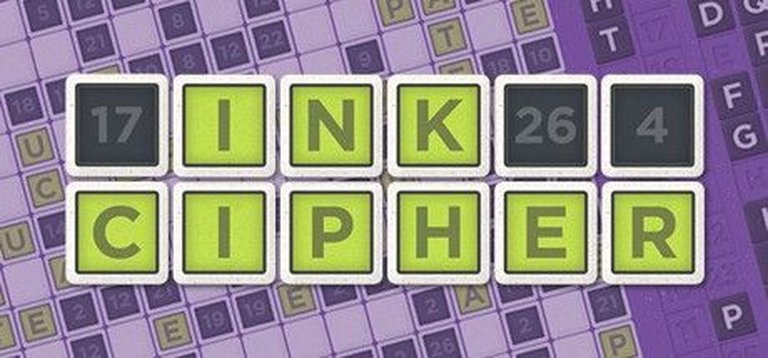
Ink Cipher is a digital puzzle game that tasks players with solving crossword-style grids by deducing letter assignments from numerical clues, focusing on word construction and contextual reasoning rather than trivia. Set in a minimalist interface, it offers 220 challenging puzzles for solo play, appealing to enthusiasts of linguistic deduction and logic-based gameplay.
Where to Buy Ink Cipher
PC
Ink Cipher Guides & Walkthroughs
Ink Cipher: A Cerebral Cipher in the Digital Age
Introduction: The Quiet Appeal of the Cipher Crossword
In the vast ecosystem of video games, few experiences are as purely cerebral and devoid of spectacle as the humble puzzle game. Yet within this quiet corner, certain titles carve out a dedicated following by honoring a specific, time-honored tradition: the cipher crossword. Ink Cipher, developed by the modest UK-based Chequered Ink Ltd., stands as a digital inheritor of this pen-and-paper pastime, translating the tactile joy of code-breaking into a minimalist point-and-click interface. First released in 2015 for Windows, with a subsequent Nintendo Switch port in 2022, the game’s legacy is one of niche excellence—a title that understands its core mechanic with devoted precision but occasionally stumbles over the very accessibility it seeks to provide. This review will argue that Ink Cipher is a fundamentally sound and often satisfying puzzle experience, elevated by its generous content and clean design, yet consistently held back by a series of baffling omissions and technical quirks that transform what could be a universally appealing time-killer into a game strictly for the persevering logophile.
Development History & Context: A Small Studio, A Focused Vision
Chequered Ink Ltd. represents the classic indie developer archetype: a small, likely single-person or very tight-knit team, operating with limited resources but a clear, focused vision. Their choice of GameMaker as a development engine is telling—a tool celebrated for its accessibility and rapid prototyping capabilities, perfectly suited for a 2D, grid-based puzzle game with no need for complex physics or high-fidelity graphics. This aligns with the mid-2010s indie boom, where such engines empowered small studios to bring niche concepts to digital storefronts like Steam.
The game’s release in October 2015 places it in a fertile period for puzzle games. The success of titles like The Witness (2016) and a resurgence of interest in “casual” but deep mobile puzzlers created a market hungry for fresh takes on classic formats. Ink Cipher’s specific niche—the cipher crossword (also known as Code Word or Kaidoku)—was largely untapped in the digital space, where most crossword-adjacent games leaned on trivia (Brain Age) or pattern-matching (* mahjong solitaire*). Chequered Ink’s vision was to strip the crossword to its logical core: the interplay between word patterns and a hidden substitution cipher. The decision to make the game touch-friendly and keyboard-agnostic was forward-looking, anticipating the rise of touch interfaces and hybrid devices, even if its primary launch was on PC.
Technologically, the constraints were minimal but evident. The system requirements (512 MB RAM, 128MB VRAM) reflect a deliberately lightweight application, ensuring near-universal accessibility. This technical modesty, however, may have contributed to the game’s somewhat unpolished feel, as resources were likely funneled into puzzle generation and core logic rather than UI/UX polish or audio balancing.
Narrative & Thematic Deep Dive: The Story Is the Puzzle
Ink Cipher possesses no traditional narrative, characters, or dialogue. There is no plot, no world to explore, and no emotional arc. This is not a deficiency but a defining characteristic. The “narrative” is entirely emergent, lived out in the player’s mind as they engage in the deductive process.
The core thematic thrust is the joy of cryptanalysis and linguistic intuition. Each puzzle grid is a silent challenge: a web of numeric placeholders where every number (1-26) corresponds to a unique letter of the alphabet. The player’s journey is one of gradual revelation. Initially, the grid is an indecipherable sea of digits. The first breakthrough—recognizing a common short word like “THE” or “AND” based on its pattern (e.g., a three-letter word with a repeated first letter)—acts as a narrative climax for that puzzle. The subsequent mapping of numbers to letters, the cascading recognition of longer words, and the final verification that all words fit together coherently constitute a complete story of problem-solving.
This approach aligns with a phenomenology of play where meaning is derived purely from intellectual conquest. The “themes” are abstract: pattern recognition, constraint satisfaction, lexical knowledge, and the eureka moment. The puzzle titles (implied by the “occasional hint from the puzzle title” in the store description) might offer thematic nudges, but the source material provides no examples, suggesting they are likely generic (“Puzzle #45”) or mildly evocative (“Seaside” suggesting words like “BEACH,” “TIDE”). The experience is thus intensely personal; the game is a Rorschach test for one’s vocabulary and reasoning skills. Its legacy, therefore, is not in telling a story but in facilitating a thousand miniature stories of deduction, each puzzle a self-contained mystery novel where the reader is also the detective.
Gameplay Mechanics & Systems: Logic in a Box
Core Loop & Cipher Logic
The gameplay loop is elegantly simple yet deeply engaging. The player is presented with a fixed or flip-screen grid (typically a standard crossword-like rectangle) filled with numbered black squares forming across and down words. The fundamental rule: each unique number consistently represents the same letter throughout the entire puzzle. The objective is to assign letters to numbers until the grid is fully solved, with all across and down clues forming valid English words.
This is a pure logic puzzle, distinct from trivia-based crosswords. Solving depends on:
1. Word Pattern Recognition: Identifying common short words (e.g., “THE” = 1-2-1, “THAT” = 1-2-1-3).
2. Letter Frequency Analysis: In English, E, T, A, O, I, N are most common. A number appearing very frequently is likely a common letter.
3. Intersections: The primary mechanic. Solving one word provides letters that constrain intersecting words.
4. The Puzzle Title (Occasional Hint): As per the official description, the title may contain a word or theme relevant to the puzzle’s solution, offering a starting point.
Progression & Content
Ink Cipher boasts a hefty library of over 200 puzzles (the Steam store page states “over 200,” MobyGames confirms “220 puzzles considering the tiny $2 price tag” per the eShopper review). Puzzles are presumably sequenced by increasing difficulty, with early puzzles featuring more pre-filled letters or simpler patterns to teach the mechanic, and later ones becoming fiendishly complex. This volume is a major selling point, offering exceptional value for a $0.99/$1.00 title.
Interface & Systems: Strengths and Flaws
The game’s interface is point-and-select, designed to be “touch friendly” and “intuitive.” In practice, the community feedback reveals a mixed bag:
Strengths:
* Clean, Minimalist Design: The grid is the sole focus. There is no clutter.
* No Keyboard Requirement: As advertised, it can be played entirely with a mouse or touch, lowering the barrier to entry.
* Help Screen: Includes instructions on how to play, which is crucial for a genre many may not know.
Notable Flaws & Community Points (from Steam Discussions):
* Critical Lack of a Robust Hint System: This is the most frequently cited issue. The game includes a “clue (+1 letter)” feature (likely a button that reveals one letter in a chosen word), but users report it as buggy or insufficient. A user on November 1, 2020, desperately requested a hint feature, stating they nearly refunded the game due to being unable to start puzzles. Another on July 16, 2021, reported a bug where the clue feature didn’t work as expected. The existence of the feature but its poor implementation suggests a half-hearted attempt at accessibility.
* Obfuscatory Language from the Start: The eShopper review (58/100) sharply notes that “the obscure language the game uses in its puzzles right from the start makes this only a game for the most dedicated fans of the English language.” This implies early puzzles may use less common words, relying on a broad vocabulary rather than teaching through common words, creating a brutal initial hurdle.
* UI/UX Oddities: User “Dohi64” (April 15, 2021) provided crucial feedback:
* The term “tap” is used in a PC game, breaking immersion.
* The help button cannot be dismissed by pressing it again; it requires clicking the window.
* No audio settings of any kind—no mute, no separate volume sliders. Sound effects are reported as “way too loud compared to music (and annoying).”
* No timer toggle, which is necessary for a relaxing puzzle experience.
* Keyboard controls exist but are undocumented and “wonky.”
* No exit button; the player must press ESC.
* Puzzle Quality Control Issues: Multiple threads report typos and non-words:
* Puzzle 99 contains “mised,” which is not a standard English word (likely a typo for “missed” or “mused”).
* Puzzle 004 has two valid answers, suggesting an ambiguous puzzle design.
* Puzzle 095 has a title typo (“Tyop”).
* Puzzle 059 has a typo.
These errors directly compromise the core gameplay, as a cipher puzzle requires a single, unambiguous solution. Such mistakes undermine player trust and can lead to frustrating dead ends.
Innovative or Flawed Systems
The core cipher mechanic is not innovative—it’s a faithful digital adaptation of a century-old paper puzzle. The innovation, if any, lies in its accessibility Attempts: the touch-friendly interface and the planned “free updates.” However, the execution of these systems (the clue button, the audio, the polish) is where the game is most flawed. It feels like a proof-of-concept that reached commercial release before its user experience was fully refined.
World-Building, Art & Sound: Austerity as Aesthetic
Given its nature as a abstract logic puzzle, Ink Cipher has no “world” in the conventional sense. There are no environments, characters, or lore. The “setting” is the psychospace of the puzzle grid itself.
Visual Direction:
The visuals are ultra-minimalist, consisting almost entirely of:
* A clean, high-contrast grid (likely white background, black lines, black numbers for unsolved cells, colored letters for solved cells).
* A simple, functional UI for letter input (click a number, type or select a letter).
This austerity serves a purpose: it eliminates all distraction, forcing the player’s entire attention onto the logic of the cipher. It’s a “sleek” design as advertised, prioritizing cognitive clarity over aesthetic flourish. Screenshots (implied by the Fandom wiki and Steam page) would show nothing more than a spreadsheet-like interface. This is a strength for its purpose but may contribute to a feeling of cheapness or lack of “game feel.”
Sound Design:
Sound is markedly absent in a positive sense and problematic in a negative one. The Steam store page mentions “contains a help screen on how to play” but is silent on sound. Community feedback, however, highlights two critical issues:
1. Annoying Sound Effects: Users describe them as “annoying” and disproportionately loud.
2. Lack of Audio Controls: There is no way to mute or adjust volume, a baffling omission in 2018 (and beyond). This suggests the audio was an afterthought or implemented by someone without a focus on user customization.
The likely soundscape is a series of electronic beeps and clicks for navigation and success, and perhaps a simple loop for background music. Its contribution to the experience is negligible at best and actively intrusive at worst. The overall atmosphere created is one of sterile, clinical solitude—you and your thoughts, punctuated by jarring electronic chirps.
Reception & Legacy: A Cult Curiosity with Caveats
Critical & Commercial Reception at Launch
Ink Cipher never achieved mainstream critical attention. The only aggregated critic score on MobyGames is 58% from a single source, eShopper Reviews. Their assessment is blunt: the game is a “solid setup” with great content (220 puzzles for ~$1), but the “obscure language” right from the start makes it “only a game for the most dedicated fans of the English language.” This encapsulates the core tension: a technically competent implementation of a niche puzzle type, hobbled by a refusal to ease players into its difficulty.
Commercially, it seems to have found a small, steady audience. Steam user reviews are “Very Positive” with 86% of 23 reviews being positive as of the latest data (Steambase). The disparity between the sole critic’s 58% and the user aggregate 86% suggests that while professional reviewers found it too niche and flawed, the self-selected group of players who bought it were precisely the “dedicated fans” it was designed for and were willing to overlook its issues for the core gameplay.
Evolution of Reputation
Its reputation has likely stabilized as a cult favorite for cipher enthusiasts. The Steam community hub is active with discussions primarily about puzzle-specific bugs and typos (e.g., “Puzzle 99 has word ‘mised'”). This indicates a player base deeply engaged with the content but frustrated by the lack of polish. The developer, Chequered Ink Ltd., appears to have released updates (discussions mention a “v 1.2” update and a “major update”), but the persistent bugs reported as late as 2024 (“Tyop in level 117?”) suggest development pace is slow or priorities are misaligned—focusing on new puzzles over fixing existing ones.
Influence on the Industry & Genre
Ink Cipher‘s direct influence on the industry appears negligible. It did not spawn clones or significantly alter the puzzle genre’s trajectory. Its legacy is more documentary than inspirational: it stands as a capable, if flawed, digital artifact of the cipher crossword tradition. In an era of mobile-dominated casual puzzles (Wordscapes, Bonza), it represents a more hardcore, “analog feel” alternative. Its existence validates that there is a market for even the most obscure paper-puzzle adaptations, however small. It shares a spiritual lineage with other single-concept indie puzzle games like Hexcells or Tamatik, which prioritize pure, unadorned logic over presentation.
Conclusion: A Flawed Gem for the Persistent Lexician
Ink Cipher is a game of profound duality. On one hand, it is a masterclass in minimalist puzzle design, offering a pure, unadulterated cipher crossword experience with staggering quantity (220+ puzzles) for a pittance. Its core mechanic is timeless, and when it works, the satisfaction of cracking a difficult code is immense. For aficionados of word play, cryptograms, and logic grids, it is a deeply satisfying toolbox.
On the other hand, it is a textbook case of missed opportunities and frustrating oversights. The lack of a proper hint system, the prevalence of typos and non-words in its puzzles, the absent audio controls, and the inconsistent UI terminology (“tap” on PC) are not minor nitpicks; they are fundamental barriers to accessibility and enjoyment. These flaws transform the game from a potential gateway into the genre into a gatekeeper—only those with stubborn patience and a high tolerance for frustration will endure long enough to appreciate its strengths.
Its place in video game history is secure but humble. It is not a landmark title that reshaped its genre. Instead, it is a curio, a diligently crafted enthusiast’s project that serves as a digital archive for a specific puzzle format. It proves that a compelling core idea can carry a game, but also that polish and player respect are not optional extras. For the right player—the logophile who relishes a challenge and doesn’t mind quitting a puzzle to look up a word—Ink Cipher is a hidden gem. For everyone else, it remains a fascinating “what if,” a cipher whose solution is frustratingly out of reach due to its own making. Its ultimate verdict is a qualified recommendation: engage with it, but manage your expectations.