
- Release Year: 2019
- Platforms: Nintendo Switch, Windows, Xbox One
- Publisher: ZRZStudio Ltd.
- Developer: ZRZStudio Ltd.
- Genre: Action
- Perspective: Side view
- Game Mode: Single-player
- Gameplay: Platform, Puzzle elements
- Average Score: 76/100
Description
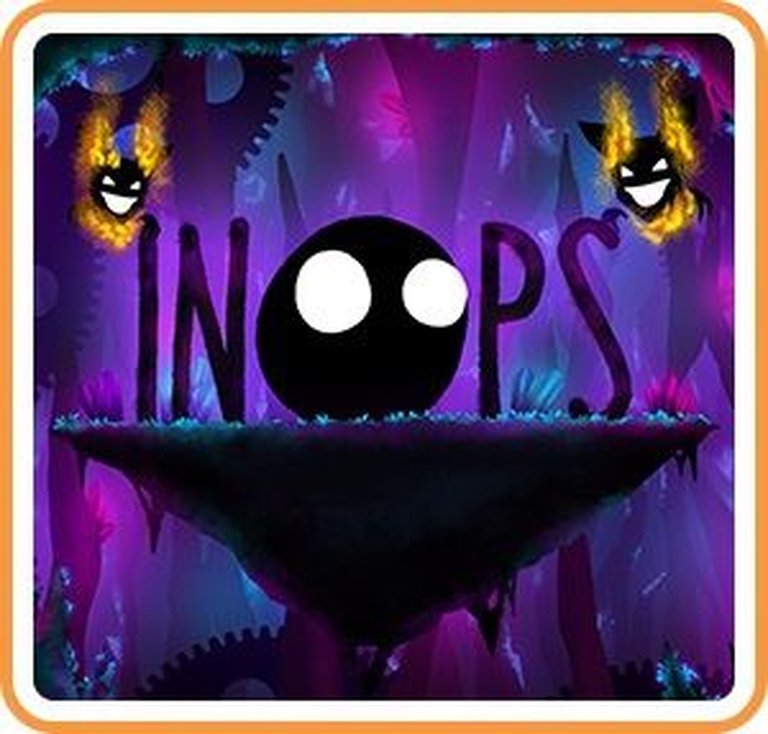
Inops is a 2D side-scrolling platformer with puzzle elements, developed and published by ZRZStudio Ltd. Players navigate through diverse environments, including a shadowy mine, a twisty jungle, and an extra-terrestrial city, while avoiding traps and enemies. The game’s unique mechanic allows players to split into multiple smaller creatures or merge into one larger entity, utilizing the environment and interactive components to solve puzzles and save as many Inops as possible.
Gameplay Videos
Where to Buy Inops
PC
Inops Reviews & Reception
metacritic.com (70/100): Inops is a charming, yet dark, 2D platformer. It’s paced just right, a relaxingly chilled experience that offers up a spectacular visual journey.
opencritic.com (80/100): Overall, Inops offers great puzzle-platforming action. Its creative style, mixed in with some decent platforming and an intuitive way to solve environmental puzzles makes it a bit of a gem.
watchmojo.com : The game’s atmosphere is its strongest selling point.
Inops: A Fragmented Gem in the Puzzle-Platformer Pantheon
Introduction
In Inops, ZRZStudio Ltd. delivers a hauntingly beautiful puzzle-platformer that marries innovative creature-based mechanics with a moody, neon-drenched world. Released in 2019 for the Nintendo Switch and later ported to Xbox One and PC, Inops stands as a curiosity—a game with flashes of brilliance overshadowed by moments of frustration. This review argues that while Inops stumbles in execution, its bold vision and atmospheric design carve a niche for it among indie puzzle-platformers, even if it never ascends to the ranks of genre-defining classics like Limbo or Celeste.
Development History & Context
Studio Background & Vision
ZRZStudio Ltd., a small developer previously known for mobile titles like Tap Tap Builder and Dumb Chicken, took a leap into console gaming with Inops. Their ambition was clear: to create a tactile, physics-driven puzzle-platformer that emphasized player agency through its titular creatures’ splitting-and-merging mechanics. Developed in Unity, the game’s design reflects the indie experimentation of the late 2010s, where studios like Playdead and Team Cherry redefined minimalistic storytelling and precision platforming.
Technological Constraints
Built for the Nintendo Switch, Inops leverages the console’s hybrid nature with optional touch controls—a vestige of ZRZStudio’s mobile roots. However, this dual-input approach led to friction; critics noted that touchscreen interactions felt cumbersome compared to traditional Joy-Con inputs. The Unity engine’s flexibility allowed for crisp 2D visuals, but occasional performance hiccups (e.g., frame drops during complex puzzles) hinted at the technical challenges of scaling a small project across platforms.
The 2019 Gaming Landscape
Inops debuted amid a crowded field of indie darlings, including Hollow Knight and Gris. Its release strategy—first on Switch, then Xbox and PC—mirrored the industry’s trend of prioritizing Nintendo’s indie-friendly audience. Yet, its subdued marketing and lack of a defined genre hook (beyond its creature mechanics) left it struggling for visibility.
Narrative & Thematic Deep Dive
Plot & Characters
Inops eschews traditional storytelling for environmental vignettes. Players guide a herd of gelatinous creatures—silhouetted black blobs with luminous eyes—through three distinct biomes: a shadowy mine, a bioluminescent jungle, and the alien geometries of “Elect-City.” The scattered Inops must reunite to escape encroaching dangers, with minimal narrative framing beyond the official description’s promise to “avoid being lonesome.”
Themes
The game’s central theme—unity in fragmentation—is woven into both gameplay and aesthetics. By splitting the protagonist into smaller Inops or merging them into a single entity, players embody the tension between individuality and collectivism. This metaphor extends to the world itself: traps and puzzles often require synchronized actions, echoing the cooperative ethos of games like Pikmin. However, the lack of narrative depth leaves these themes underdeveloped, relying on gameplay alone to carry the message.
Gameplay Mechanics & Systems
Core Loop
The gameplay revolves around two primary actions:
1. Splitting: Dividing the Inops herd to navigate narrow passages or trigger multiple switches.
2. Merging: Combining into a single large Inop to scale obstacles or stomp enemies.
Innovations & Flaws
– Puzzle Design: Levels demand creative use of the split/merge mechanic, such as using smaller Inops to manipulate wind tunnels or merging to crush barriers. However, Nintendo Life criticized late-game puzzles as “occasionally sloppy,” with solutions feeling unintuitive.
– Controls: The touchscreen integration (highlighting objects with L/R buttons) was lambasted by Way Too Many Games as “clunky,” disrupting flow during timed sequences.
– Difficulty Curve: To unlock boss stages, players must collect 45/50 Inops per world—a punishing requirement given the creatures’ fragility. Deaths from barely visible hazards (e.g., thorns) exacerbate the frustration, leading to repetitive replays.
UI & Progression
The minimalist UI focuses on Inop counts and collectible stars—a nod to Super Mario’s design. Yet, the lack of a mid-level checkpoint system feels archaic, clashing with modern expectations.
World-Building, Art & Sound
Visual Direction
Inops’ aesthetic is its crowning achievement. Drawing comparisons to Limbo, the game bathes its creatures in moody chiaroscuro, juxtaposing their inky forms against ethereal backdrops. Elect-City’s neon grids and the jungle’s pulsating flora showcase ZRZStudio’s knack for atmosphere, though some critics noted that overly dark environments occasionally obscure hazards.
Sound Design
A somber, ambient soundtrack underscores the isolation of the Inops’ journey. Creature sounds—chirps and squelches—add charm, while enemy growls (like those of fire-breathing demons) punctuate the silence effectively. However, the audio lacks dynamism, fading into the background during extended play sessions.
Reception & Legacy
Critical Response
Inops earned mixed reviews:
– Praise: Nintendo Life (80%) lauded its “creative style” and “intuitive puzzles.”
– Criticism: Way Too Many Games (65%) cited “unpolished mechanics” and “headache-inducing controls.”
The Steam version fared better, with an 83% approval rating, though players echoed frustrations with difficulty spikes.
Commercial Impact & Influence
Though not a breakout hit, Inops found a niche among puzzle-platformer enthusiasts. Its creature mechanics influenced later titles like The Gunk (2021), which similarly explored symbiotic relationships between protagonists and their environment. However, ZRZStudio’s subsequent silence—no major projects since 2020—has left Inops as a fascinating one-off in their catalog.
Conclusion
Inops is a game of contradictions: gorgeous yet occasionally opaque, inventive yet unwieldy. Its splitting mechanic and atmospheric world-building merit attention, but technical shortcomings and punitive design hold it back from greatness. For patient players willing to forgive its flaws, Inops offers a haunting, if uneven, journey—a testament to indie ambition in an era of pixel-perfect polish. While it may not join the pantheon of genre legends, it remains a compelling curio for fans of experimental platformers.