
- Release Year: 2017
- Platforms: Windows
- Publisher: Proximity Games
- Developer: Proximity Games
- Genre: Action, Horror
- Perspective: Side view
- Game Mode: Single-player
- Gameplay: Platform
- Setting: Contemporary
- Average Score: 32/100
Description
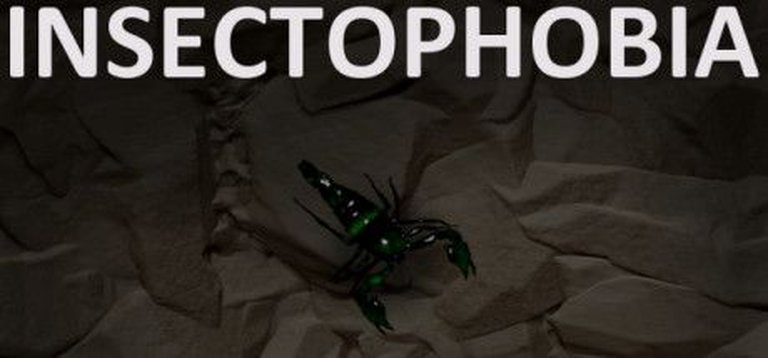
Insectophobia: Episode 1 is an episodic horror-platformer that follows John Benton, a technician sent to a remote research facility to repair communication lines, only to discover the island overrun by monstrous insects. Developed by Proximity Games, this side-scrolling action game blends survival horror with puzzle-platforming elements, featuring Full HD graphics, multiple weapons, and a chilling narrative as John uncovers the dark truth behind the creatures’ transformation.
Where to Buy Insectophobia: Episode 1
PC
Insectophobia: Episode 1 Cracks & Fixes
Insectophobia: Episode 1 Guides & Walkthroughs
Insectophobia: Episode 1 Reviews & Reception
steambase.io (36/100): This score is calculated from 39 total reviews which give it a rating of Mostly Negative.
store.steampowered.com (28/100): 28% of the 32 user reviews for this game are positive.
completionist.me (39/100): 39.45 Game Rating
idownload.it.com (26/100): Might be the worst shit I’ve played. Wanted to play it ironically though I couldn’t even endure 10 minutes of this whatever the hell this is.
Insectophobia: Episode 1 – A Flawed but Fascinating Relic of Indie Horror
Introduction: The Curious Case of a Forgotten Horror Platformer
Insectophobia: Episode 1 is a game that exists in the shadowy liminal space between ambition and execution—a title that, despite its glaring flaws, offers a peculiar glimpse into the indie horror landscape of the mid-2010s. Released on July 4, 2017, by the obscure studio Proximity Games, this episodic platformer promised a chilling narrative about a technician trapped in a research facility overrun by monstrous insects. Yet, instead of becoming a cult classic, it languished in obscurity, garnering a “Mostly Negative” reception on Steam and fading into the background noise of the platform’s vast library.
This review seeks to dissect Insectophobia: Episode 1 not merely as a game to be judged by modern standards, but as a historical artifact—a product of its time, its tools, and its limitations. It is a study in how even the most flawed games can reveal broader truths about indie development, the challenges of episodic storytelling, and the fine line between “so bad it’s good” and “so bad it’s unplayable.”
Development History & Context: The Rise and Fall of Proximity Games
The Studio Behind the Game
Proximity Games is a name that barely registers in the annals of game development history. With no notable titles before or after Insectophobia, the studio appears to be a one-hit wonder—or, more accurately, a one-miss wonder. The game was developed using Adventure Game Studio (AGS), a free, open-source tool designed primarily for point-and-click adventure games. AGS is not inherently flawed, but its use here highlights a critical mismatch: a platformer forced into an engine ill-suited for the genre.
This choice speaks volumes about the constraints faced by indie developers in the mid-2010s. Tools like AGS, GameMaker, and RPG Maker democratized game creation, but they also imposed limitations that could stifle creativity if not wielded with care. Insectophobia’s reliance on AGS suggests either a lack of resources, a lack of experience, or both.
The Episodic Experiment
The game was marketed as the first in a four-part series, a bold ambition for a studio with no prior track record. Episodic gaming was in vogue at the time, thanks to the success of titles like The Walking Dead (Telltale, 2012) and Life is Strange (Dontnod, 2015). However, Proximity Games failed to capitalize on this trend. Episode 1 was released in 2017, and as of 2026, no subsequent episodes have materialized. This abandonment left players with an incomplete narrative and a sense of betrayal—a common pitfall of episodic storytelling when developers underestimate the resources required to see a project through.
The Gaming Landscape of 2017
2017 was a banner year for indie horror. Games like Little Nightmares (Tarsier Studios), Outlast 2 (Red Barrels), and Resident Evil 7 (Capcom) dominated the conversation, raising the bar for atmospheric tension, narrative depth, and technical polish. Insectophobia, with its rudimentary graphics, clunky mechanics, and barebones storytelling, was doomed to be overshadowed. It lacked the marketing muscle, the innovative hooks, or the sheer audacity to stand out in a crowded field.
Yet, its very existence is a testament to the indie spirit—a reminder that not every game needs to be a masterpiece to be worthy of analysis. Sometimes, the most interesting stories are found in the failures, the misfires, and the games that dared to exist despite their flaws.
Narrative & Thematic Deep Dive: A Story of Missed Potential
Plot Summary
Insectophobia: Episode 1 follows John Benton, a technician sent to a remote research facility on a deserted island to repair communication lines. Upon arrival, he discovers that the facility has been overrun by gigantic, mutated insects—the result of a scientific experiment gone horribly wrong. The game’s premise is a classic B-movie setup: isolation, scientific hubris, and nature’s revenge. Think Jurassic Park meets The Fly, but with bugs.
The narrative is delivered through sparse dialogue and environmental storytelling. John’s journey through the facility’s sectors (A through F) reveals snippets of the disaster—abandoned notes, broken equipment, and the occasional corpse. The game’s brevity (most players complete it in under an hour) means there’s little room for character development or world-building. John is a cipher, a silent protagonist with no discernible personality beyond his role as the player’s avatar.
Themes: Fear, Control, and the Limits of Humanity
Despite its simplicity, Insectophobia touches on several intriguing themes:
1. Entomophobia and the Uncanny: The game’s title is a direct reference to the fear of insects, a phobia that taps into primal, evolutionary dread. The oversized, grotesque insects are designed to unsettle, their exaggerated proportions and erratic movements playing into the uncanny valley. However, the execution is undermined by the game’s technical limitations—the insects often feel more ridiculous than terrifying.
2. Scientific Hubris: The research facility’s downfall is a textbook example of humanity’s overreach. The scientists’ attempts to control and weaponize nature backfire spectacularly, a theme echoed in countless horror narratives. Yet, the game does little to explore the ethical implications of their work, leaving the theme underdeveloped.
3. Isolation and Survival: John’s struggle to escape the facility is a metaphor for the human condition—facing insurmountable odds with limited resources. The game’s emphasis on conservation (ammo is scarce, health is precious) reinforces this theme, though the punishing difficulty often feels arbitrary rather than intentional.
Dialogue and Writing
The game’s writing is functional at best, laughable at worst. Dialogue is minimal, often reduced to exposition dumps or cryptic notes. One Steam user quipped, “The writing is so bad it loops back around to being funny,” a sentiment echoed by many who played the game ironically. The lack of voice acting (despite the game’s support for multiple languages) further flattens the narrative, leaving players to fill in the gaps with their imagination.
The Unfinished Story
The most glaring narrative flaw is the game’s incompleteness. Episode 1 ends abruptly, with no resolution to the overarching mystery of the facility or John’s fate. The promise of three more episodes feels like a bait-and-switch, leaving players with a narrative that goes nowhere. This abandonment is a microcosm of the risks inherent in episodic gaming—when developers bite off more than they can chew, the audience is left holding the bag.
Gameplay Mechanics & Systems: A Masterclass in Frustration
Core Gameplay Loop
Insectophobia is, at its heart, a 2D side-scrolling platformer with light survival-horror elements. Players guide John through a series of linear sectors, each filled with mutated insects that must be either avoided or killed. The game offers two weapons—a pistol and a shotgun—both of which are severely limited in ammunition. This scarcity forces players to make tactical decisions: do they engage enemies head-on, or do they attempt to sneak past?
In theory, this creates tension. In practice, it creates frustration.
Combat: A Study in Jank
The combat system is the game’s most glaring weakness. Hitboxes are inconsistent, enemy behavior is unpredictable, and the controls feel sluggish. Players report instances where insects “magnetize” to John, making escape impossible, or where bullets pass harmlessly through enemies despite appearing to make contact. The shotgun, in particular, is rendered nearly useless by its limited range and the game’s wonky collision detection.
The lack of a melee option exacerbates these issues. With no way to conserve ammo effectively, players are often left defenseless, forced to restart sections repeatedly until they memorize enemy patterns—a far cry from the strategic depth the game seemingly aims for.
Progression and Difficulty
Progression is tied to reaching checkpoints (sectors A through F), with no meaningful character upgrades or skill trees. The game’s difficulty curve is erratic, with some sections feeling trivial and others nearly impossible due to poor design rather than challenge. Death sends players back to the last checkpoint, but enemies respawn at full health, while the player’s resources do not. This punishing mechanic feels less like a deliberate design choice and more like an oversight.
Stealth and Avoidance
The game encourages players to avoid combat when possible, but the stealth mechanics are equally flawed. John moves at a snail’s pace, and enemies often detect him from unreasonable distances. There’s no crouching, no hiding, and no real stealth system—just a hope that the insects won’t notice you as you inch past them.
Achievements and Replayability
Insectophobia includes nine Steam achievements, most tied to progression (e.g., “Reach Sector B”) or combat (e.g., “Kill 10 insects”). The two most notable achievements—“Cleaner” (finish the game by killing all insects) and “Avoiders” (finish by killing fewer than five)—hint at the game’s intended dual playstyles. However, the punishing difficulty and lack of rewards make replaying the game a masochistic endeavor.
UI and Technical Issues
The user interface is barebones, with no map, no health bar (health is represented by a vague “stamina” meter), and no clear indication of ammo counts. The game’s technical issues extend beyond combat:
– Crashes: Multiple players report that the game crashes upon death, forcing a full restart.
– Save System: The game lacks manual saving, relying instead on automatic checkpoints that are often placed poorly.
– Performance: Despite its simple graphics, the game occasionally stutters, even on modern systems.
World-Building, Art & Sound: Atmosphere Undermined by Execution
Setting and Atmosphere
The game’s setting—a deserted research facility—is a horror staple, evoking comparisons to Resident Evil’s Spencer Mansion or System Shock’s Citadel Station. The facility is divided into sectors, each with a distinct visual theme (laboratories, storage rooms, outdoor areas). The environmental storytelling is minimal but effective in places: overturned chairs, bloodstains, and abandoned notes hint at the chaos that unfolded before John’s arrival.
However, the atmosphere is consistently undermined by the game’s technical limitations. The facility feels empty, the lighting is flat, and the lack of ambient sound (beyond the occasional insect chirp) drains the setting of tension.
Visual Design: Retro or Just Outdated?
Insectophobia’s graphics are a mixed bag. The game boasts 1920×1080 Full HD resolution, but the art style is rudimentary, with stiff animations and repetitive sprites. The insects, while grotesque, lack the detail or fluidity to be truly unsettling. The facility’s design is functional but uninspired, with little variation between sectors.
The game’s visual identity is further muddled by its use of AGS. The engine’s strengths lie in point-and-click adventures, not platformers, and the result is a game that feels visually disjointed—neither retro-charming nor modern-polished.
Sound Design: The Silence is Deafening
Sound is a critical component of horror, but Insectophobia squanders this opportunity. The game features:
– No voice acting, despite support for 17 languages.
– Minimal ambient noise—no creaking doors, no distant screams, no eerie hum of machinery.
– Repetitive sound effects—the same gunshot sound plays regardless of weapon, and insect noises loop ad nauseam.
The soundtrack, such as it is, consists of a few forgettable tracks that do little to enhance the atmosphere. The absence of sound design is particularly glaring in a genre where audio cues are often as important as visuals.
The Horror of Limitations
What Insectophobia demonstrates, perhaps unintentionally, is how technical constraints can sabotage even the most promising horror concepts. The game’s setting and premise are ripe for tension, but the execution lacks the polish, the sound, and the visual fidelity to deliver on that promise. The result is a game that feels less like a horror experience and more like a tech demo gone wrong.
Reception & Legacy: The Game That Time Forgot
Critical Reception: A Resounding Thud
Insectophobia: Episode 1 received no professional reviews upon release, a telling sign of its obscurity. On Steam, it holds a “Mostly Negative” rating, with only 28% of 32 user reviews being positive. Common criticisms include:
– “Unplayable due to bugs and crashes.”
– “The controls are broken, the hitboxes are awful.”
– “A cash grab with no substance.”
– “I bought it ironically, and even then, it was a mistake.”
The few positive reviews come from players who approached the game as a so-bad-it’s-good experience, praising its unintentional humor and janky charm. One reviewer wrote, “This game is a masterpiece of incompetence, and I love it for that.”
Commercial Performance
The game’s commercial performance is equally dismal. As of 2026, it has 369 owners on Steam, with only 39 players recorded by completionist.me. Its price has been slashed repeatedly, from $0.99 to $0.49, a clear indication of weak sales. The game’s inclusion in the Proximity Games Complete Pack (a bundle of six titles for $2.22) suggests an attempt to offload unsold inventory.
Legacy: A Cautionary Tale
Insectophobia’s legacy is one of warning rather than inspiration. It serves as a case study in:
1. The perils of episodic gaming: Promising a series without the resources to deliver is a recipe for disappointment.
2. The importance of tool selection: Using an engine ill-suited for your genre can cripple even the simplest designs.
3. The limits of irony: While some players enjoy “bad” games for their humor, there’s a fine line between charmingly janky and outright unplayable.
The game’s abandonment by Proximity Games—no updates, no patches, no subsequent episodes—further cements its status as a relic of indie development’s less glamorous side.
Influence on Subsequent Games
Insectophobia has had no discernible influence on the gaming industry. It is neither referenced in discussions of horror platformers nor cited as an inspiration by other developers. Its closest kin are other AGS-made indie titles, many of which suffer from similar issues of polish and execution.
Conclusion: A Flawed Gem or a Forgotten Mistake?
Insectophobia: Episode 1 is a game that defies easy categorization. It is not good by any conventional metric—its mechanics are broken, its narrative is incomplete, and its presentation is lackluster. Yet, it is not without merit. There is a strange, perverse fascination in playing it, in witnessing a game that so clearly aspired to be something more than it ultimately became.
In the grand tapestry of video game history, Insectophobia is a footnote—a curiosity rather than a classic. It is a reminder that not every game needs to be a masterpiece to be worth remembering. Sometimes, the most interesting stories are found in the failures, the missteps, and the games that dared to exist despite their flaws.
Final Verdict: 3/10 – A Fascinating Train Wreck
- For Horror Fans: Skip it. There are far better indie horror experiences (LIMBO, Inside, Little Nightmares).
- For Bad Game Enthusiasts: A must-play. Its janky physics, broken mechanics, and unintentional humor make it a prime candidate for ironic enjoyment.
- For Game Historians: A case study in indie development pitfalls. Insectophobia is a textbook example of what happens when ambition outstrips execution.
Insectophobia: Episode 1 is not a good game. But in its own way, it is unforgettable.
Post-Script: The Mystery of Proximity Games
As of 2026, Proximity Games has vanished from the gaming landscape. Their Steam page lists no new titles, their website (if they ever had one) is defunct, and no interviews or post-mortems exist to explain Insectophobia’s development or abandonment. The studio remains an enigma—a ghost in the machine, much like the game they left behind.
Perhaps that is the most fitting epitaph for Insectophobia: Episode 1: a game about being trapped in a forgotten place, created by a studio that itself has been forgotten.