
- Release Year: 2009
- Platforms: iPad, iPhone, Windows
- Publisher: Intenium GmbH, NevoSoft LLC
- Developer: Intenium GmbH
- Genre: Adventure
- Perspective: 1st-person
- Game Mode: Single-player
- Gameplay: Hidden object, Puzzle elements
- Setting: Italy
- Average Score: 50/100
Description
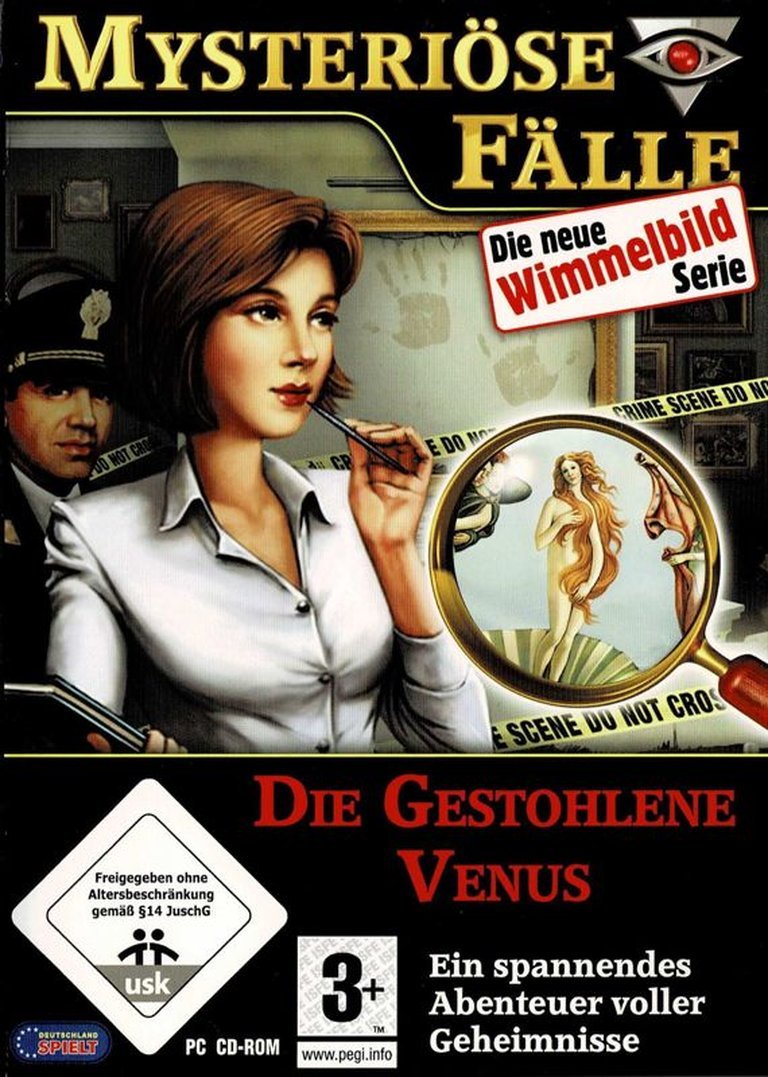
Insider Tales: The Stolen Venus is an adventure game set in the Italian village of Castiglionbasso, where players assume the role of detective Francesca DiPorta to investigate the theft of Botticelli’s masterpiece ‘The Birth of Venus’. The gameplay revolves around finding hidden objects in detailed scenes, complemented by puzzle mini-games like jigsaws and memory challenges, as Francesca uncovers clues to recover the stolen artwork.
Gameplay Videos
Insider Tales: The Stolen Venus Guides & Walkthroughs
Insider Tales: The Stolen Venus Reviews & Reception
metacritic.com (50/100): It all feels rather easy and uninspired.
metacritic.com (50/100): It all feels rather easy and uninspired.
Insider Tales: The Stolen Venus: A Competent but Forgettable Entry in the Hidden Object Pantheon
Introduction: A Theft of Ambition
In the crowded marketplace of late-2000s casual gaming, the hidden object genre (HOG) was a dominant force, a reliable engine of disposable comfort for a broad audience. Against this backdrop, Insider Tales: The Stolen Venus (2009) emerges not as a revolutionary caper, but as a meticulously assembled, yet ultimately unmemorable, case file. From Intenium GmbH—a studio that carved a niche in this very space—the game presents the familiar premise: a priceless artwork, Botticelli’s The Birth of Venus, is stolen, and the player, as Inspector Francesca DiPorta, must scour the picturesque Italian village of Castiglionbasso for clues. Its legacy is that of a procedural police procedural, a game that executes the genre’s formula with technical proficiency but without the narrative spark, innovative mechanics, or artistic flair that would elevate it beyond a competent routine. This review argues that The Stolen Venus is a pivotal example of the genre’s mid-period stagnation—a game that prioritizes quantity of tasks over quality of experience, revealing the structural tensions within casual adventure design.
Development History & Context: The Intenium Assembly Line
Intenium GmbH, the developer and publisher, was a specialist in the “casual” space, primarily distributing games through portals like Big Fish Games and WildTangent. Their model was one of efficient, scalable production. The Stolen Venus was not a passion project but a product line entry, designed to meet a specific market demand: a hidden object game with a light mystery narrative, a female protagonist, and a European aesthetic. The technological constraints of the era (2009) shaped its design profoundly. With system requirements listed as a mere 1GHz Pentium III, 256MB RAM, and DirectX 8, the game was engineered for maximum accessibility on low-end家庭 PCs. This resulted in pre-rendered, static 2D scenes—a common cost-saving measure—rather than any attempt at dynamic environments. The gaming landscape was saturated with titles from competitors like Big Fish’s own Mystery Case Files and Adventure Academy, which were pushing boundaries in visual fidelity and puzzle integration. Intenium’s approach was conservative: deliver a familiar package reliably. The game’s release on Windows in February 2009, followed by iPhone/iPad ports in 2012, shows a strategy of targeting the dominant casual platform first, then migrating to the ascendant mobile market, albeit without significant adaptation.
Narrative & Thematic Deep Dive: A Plot as a Checklist
The narrative框架 is paper-thin but functional. Inspector Francesca DiPorta, an archetypal “clever inspector” character, is tasked with recovering The Birth of Venus from the fictional Italian village of Castiglionbasso. The story is delivered through brief text pop-ups, case notes collected during hidden object scenes, and sporadic dialogue with a handful of NPCs like the suspicious shopkeeper. There is no character arc for Francesca; she is an avatar, a cursor with a badge. Thematic depth is absent. Unlike the best HOGs that weave their objects into a coherent story (e.g., Mystery Case Files’s * Huntsville*), here the items feel arbitrarily plucked from a “miscellaneous” bucket: keys, screws, pieces of a valve, random postcards. The “twist” of conspiracy and prosecution mentioned in marketing blurbs never materializes into meaningful player agency or revelation. The plot is a literal scavenger hunt: the thief hid the painting, and you must find the tools and fragments to access the hiding spots. It’s a narrative justification for gameplay, not an integrated experience. The Italian setting is merely a skin, evoked by named locations (Palermo, Crete—a geographical misstep) and generic “picturesque” backdrops, lacking any authentic cultural texture or historical resonance that could have enriched the art theft premise.
Gameplay Mechanics & Systems: The Grind and the Glimmers
The core gameplay loop is the quintessential HOG cycle: enter a static scene, find a list of objects (or their fragments), click to collect, repeat. The game introduces several standard variations:
* Silhouette Hints: Clicking a list item shows a Polaroid-style silhouette, a helpful but standard feature.
* Spot-the-Differences: Split-screen comparisons, a frequent palate cleanser.
* Fragmented Objects: Objects broken into 2-3 pieces, requiring spatial assembly after collection.
* Image-Based Lists: Finding pieces of an object depicted as a single icon.
The critical flaw, identified succinctly in the sole critic review from GameZebo (2.5/5), is the profound imbalance between hidden object sequences and mini-games. The HOG scenes are “relatively lengthy” and constitute the bulk of playtime, described as “annoying” or “dull.” In contrast, the mini-games—which are often the most engaging part of hybrid HOGs—are “all-too-short.” This inverts the ideal design, making the player endure tedium for fleeting moments of diversion.
The mini-game variety is impressive in theory, exposing the game’s “kitchen sink” design philosophy:
1. Classic Puzzles: Jigsaw puzzles, concentration (matching pairs), Pipe Dream (connecting pipes), Simon (sequence memory).
2. Logic & Slider Puzzles: Block-sliding puzzles (like a 2D Rush Hour), tetromino fitting, stained glass rotation puzzles, combination locks based on numeric patterns.
3. Scene-Based Puzzles: Finding specific rocks in dark basins, using tools like a lobster to cut a rope, lighting candles with a torch.
4. Collection Mechanics: Gathering postcards to match stamps, collecting zodiac statues for an astrological fountain.
However, their implementation is hampered by randomization and opacity. As the walkthroughs note, solutions to puzzles like the “Find the Odd Key” or the “Weight Lock” in Crete are randomized per playthrough, negating the value of memorization and sometimes leading to frustrating trial-and-error. The UI is functional but clunky. The hint system recharges slowly, and mis-clicks can temporarily paralyze the cursor. Inventory management is simple but often requires backtracking across expansive, multi-scroll “double-width” screens (like the museum and Palermo fountain), which becomes a chore.
The game’s structure is episodic, divided into chapters (Museum, Palermo, Liner, Crete). Each chapter follows a predictable pattern: HOG scenes to collect tools/tools, a longer puzzle to unlock a new area or item, another HOG scene. This creates a rhythmic but ultimately monotonous experience. The “puzzle” elements rarely feel integrated into the detective narrative; they are obstacles, not deductions.
World-Building, Art & Sound: Functional Postcards
The world of The Stolen Venus is a series of beautifully painted, static tableaux. The visual direction aims for a warm, sun-drenched Italianate aesthetic. Locations like a museum, a fountain plaza, a cruise ship kitchen, and Cretan ruins are competently rendered with a soft, illustrated style. However, they lack dynamism and detail that encourage exploration. Objects are often placed with a “busy” clutter that prioritizes hiding spots over environmental storytelling. The first-person perspective is standard for the genre but feels passive; there is no sense of being in a space, only of looking at it from a fixed viewpoint.
The sound design is minimalist and unobtrusive—a common trait in casual games to avoid annoyance. A light, traveloguish soundtrack underscores the “vacation” vibe, and sound effects for clicks and item collection are clear but generic. There is no voice acting, a significant cost-cutting measure that further distances the player from the narrative. The atmosphere is one of quiet solitude, not suspense or intrigue. This audio-visual presentation is perfectly adequate for its purpose—to provide a pleasant, low-stimulus backdrop for object hunting—but it does nothing to elevate the artistic or emotional stakes of the stolen masterpiece premise.
Reception & Legacy: The Definition of Mediocrity
Insider Tales: The Stolen Venus arrived to a tepid response. Its Metacritic user score sits at a user-calculated average of 50%, based on scant data (one critic review, one user review on MobyGames at the time of writing). The GameZebo review is a precise summation: the game is not broken, but it is uninspired. The user review on Metacritic (slider1983) echoes this, placing it firmly in the “mediocre” category: “Everything is here… yet it all feels rather easy and uninspired… when it feels like half a boring journey the player will begin to question why bother playing when there are lots of better examples in the genre.”
Its commercial life was that of a typical digital casual title: sold via download portals for ~$9.99, later bundled in compilations like Mega Wimmelbild Box 3 (2011). It did not spawn a significant fan following or critical reappraisal. Its primary legacy is as the first entry in the “Insider Tales” series, which continued with The Secret of Casanova and Vanished in Rome later in 2009, and a direct sequel, The Stolen Venus 2, in 2011. The sequel’s existence, with its own detailed walkthrough, confirms Intenium’s formula: use a thematic hook (art theft, historical figure) and recycle the same hybrid of HOG and mini-game puzzles.
In the broader industry context, The Stolen Venus represents the commodification of the hidden object genre. It is a game that understands the components of the formula but not the soul. It contributed to the genre’s reputation as a factory of interchangeable content, a perception that would later fuel the rise of more narratively ambitious hybrids (like Enigmatis or Grim Legends) that sought to break the mold. It has no notable technical innovations or direct influences on major titles; its influence is in demonstrating the market viability of a low-budget, high-volume production model.
Conclusion: A Closed Case with No Mysteries
Insider Tales: The Stolen Venus is a perfectly preserved artifact of its time and business model. It is technically sound, humorlessly competent, and creatively sterile. It delivers exactly what its box promises: a hidden object game with some puzzles, set in Italy, involving a stolen painting. For a player seeking a zero-stress, mindless time-killer, it would have served its purpose in 2009. For anyone seeking engaging narrative, atmospheric world-building, or thoughtfully integrated puzzles, it is a profoundly forgettable experience. Its greatest achievement is in demonstrating the ceiling of the genre’s lowest common denominator design. In the vast, crowded museum of hidden object games, The Stolen Venus is a painting that is perfectly executed but utterly devoid of the life, mystery, or beauty its central MacGuffin represents. It is not a bad game; it is a casualty of its own lack of ambition, a case where the real theft was of the player’s time, which could have been spent on far richer investigations. Its verdict in the annals of history is a quiet, damning “adequate.”