
- Release Year: 2013
- Platforms: Windows
- Publisher: Childish Things Ltd.
- Developer: Childish Things Ltd.
- Genre: Sports
- Perspective: Menu structures
- Game Mode: Single-player
- Gameplay: Cricket
- Setting: Sports
- Average Score: 80/100
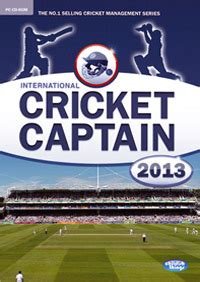
Description
International Cricket Captain 2013 is a cricket management simulation game where players take on the role of a team manager, overseeing an English County Cricket squad or an international team. The game challenges players to lead their team to victory in domestic and international competitions by managing player skills, scouting opponents, and making strategic decisions. With features like player coaching, transfer markets, and detailed statistics, the game offers a comprehensive management experience inspired by the Championship Manager series.
Gameplay Videos
International Cricket Captain 2013 Cracks & Fixes
International Cricket Captain 2013 Patches & Updates
International Cricket Captain 2013 Guides & Walkthroughs
International Cricket Captain 2013 Reviews & Reception
sportskeeda.com (80/100): While new editions of ICC seldom change much from the previous editions other than the packaging, this time there are quite a few new features to take note of. For a cricket fan, this is one of the best game you’ll get your hand on in the sports management genre.
International Cricket Captain 2013 Cheats & Codes
PC
Enter codes or perform actions as described.
| Code | Effect |
|---|---|
| Alec | Become England’s Captain |
| Enter | Always win the toss and choose to bat |
| Escape | Always win the toss and choose to bowl |
International Cricket Captain 2013: A Masterclass in Cricket Management Simulation
Introduction
International Cricket Captain 2013 (ICC 2013) stands as a pivotal entry in the long-running Cricket Captain series, a franchise that has meticulously carved its niche in the sports management genre. Released on June 29, 2013, by Childish Things Ltd., this iteration refined the formula established by its predecessors while introducing innovative features that deepened the strategic and immersive qualities of cricket management. For fans of the sport, ICC 2013 offered an unparalleled opportunity to step into the shoes of a cricket captain, navigating the complexities of team selection, tactics, and long-term strategy across domestic and international competitions.
This review will dissect International Cricket Captain 2013 in exhaustive detail, exploring its development history, narrative and thematic elements, gameplay mechanics, artistic and auditory design, reception, and lasting legacy. By the end, we will determine whether this title is a mere statistical update or a genuine evolution in cricket simulation.
Development History & Context
The Legacy of the Cricket Captain Series
The International Cricket Captain series traces its origins to 1998, when Chris Child, then a university student, developed the original game engine as part of an academic project. The concept was simple yet ambitious: create a management simulation that allowed players to take control of an English County Cricket team, with the ultimate goal of ascending to the role of England manager. Inspired by the success of Championship Manager, the game emphasized deep statistical analysis, player development, and tactical decision-making.
Over the years, the series evolved under the stewardship of Empire Interactive before transitioning to Childish Things Ltd. following Empire’s financial troubles. By 2013, the franchise had established itself as the premier cricket management simulator, though it faced criticism for incremental updates rather than revolutionary changes.
The Vision Behind ICC 2013
International Cricket Captain 2013 was developed with a clear mission: to refine the core experience while introducing features that enhanced realism and player agency. The development team, led by Chris Child and Brian Walker, focused on three key areas:
- Enhanced Match Engine: Improving the algorithmic calculations governing player performances to reflect real-world cricket dynamics more accurately.
- Expanded Game Modes: Introducing new ways to engage with the game, including historical scenarios and online multiplayer.
- User Interface and Accessibility: Overhauling the interface to make the game more intuitive without sacrificing depth.
The game was built on the foundation of its predecessors but incorporated feedback from the passionate ICC community, which had long clamored for features like online play and greater customization options.
Technological Constraints and Innovations
In 2013, the gaming landscape was dominated by visually stunning titles leveraging advanced 3D engines. However, ICC 2013 remained firmly rooted in its identity as a management simulator rather than a graphical showcase. The game’s 3D match engine, introduced in International Cricket Captain III (2007), was refined but not revolutionized. Instead, the focus was on under-the-hood improvements:
- Improved AI: The match engine’s AI was tweaked to produce more realistic outcomes, particularly in close fielding and run-scoring scenarios.
- Online Multiplayer: A long-requested feature, online play was finally implemented, allowing players to compete in Test, ODI, and T20 matches globally.
- Database and Statistics: The game’s database was expanded to include over 4,000 players, with separate statistics for domestic and international competitions.
Despite these advancements, ICC 2013 faced criticism for its lack of graphical innovation. However, this was a deliberate choice—the game’s appeal lay in its depth of simulation rather than its visual fidelity.
Narrative & Thematic Deep Dive
The Story of a Cricket Captain
At its core, International Cricket Captain 2013 is a story of ambition, strategy, and perseverance. The game places players in the role of a cricket captain, tasked with guiding a team through the rigors of domestic and international competition. The narrative unfolds across multiple seasons, with each decision—whether in team selection, player development, or tactical adjustments—shaping the trajectory of the player’s career.
The game’s structure is divided into several key phases:
- Domestic Campaign: Players begin by managing an English County team (or an Australian state side in later iterations), navigating the challenges of the County Championship, limited-overs tournaments, and T20 competitions.
- International Ascension: Success in domestic cricket can lead to an invitation to manage the national team, where players must balance the demands of Test matches, ODIs, and T20 internationals.
- Legacy Building: Over time, players cultivate a legacy, developing young talent, making shrewd transfers, and adapting to the evolving landscape of international cricket.
Themes of Leadership and Strategy
ICC 2013 explores several themes central to sports management:
- Leadership Under Pressure: The game simulates the high-stakes environment of cricket captaincy, where every decision can have far-reaching consequences. Players must balance short-term results with long-term development, often making tough calls on player selection and tactics.
- The Evolution of Cricket: The inclusion of historical scenarios (such as the “All-Time Greats” mode) allows players to engage with cricket’s rich history, contrasting the styles of different eras and understanding how the sport has evolved.
- The Global Nature of Cricket: While the game’s primary focus is on English and Australian domestic cricket, the inclusion of international teams and competitions underscores cricket’s status as a global sport, with each nation bringing its unique strengths and challenges.
Characters and Dialogue
Unlike narrative-driven RPGs, ICC 2013 does not feature traditional characters or dialogue. Instead, the “characters” are the players themselves—both the virtual cricketers under the player’s management and the real-world legends featured in historical scenarios. The game’s depth lies in its statistical representation of these players, with attributes like batting average, bowling economy, and fielding prowess defining their roles.
The commentary, provided by Jonathan Agnew, adds a layer of authenticity, offering insights into the unfolding action and enhancing the immersive quality of the simulation. While not a narrative in the traditional sense, the commentary serves as a dynamic storytelling device, reacting to the ebb and flow of matches.
Gameplay Mechanics & Systems
Core Gameplay Loop
International Cricket Captain 2013 is built around a cyclical gameplay loop that mirrors the real-world structure of cricket seasons:
- Pre-Season Preparation: Players assess their squad, negotiate contracts, and scout potential transfers. This phase is crucial for long-term success, as astute signings can bolster a team’s prospects for years to come.
- In-Season Management: During the season, players must juggle multiple competitions, adjusting tactics and team selections based on form, injuries, and opposition strengths.
- Match Simulation: Matches are simulated rather than played in real-time, with the game’s engine calculating outcomes based on player attributes, tactical settings, and random variables. Players can influence these simulations through pre-match instructions, such as batting order, bowling rotations, and field placements.
- Post-Season Review: At the end of the season, players evaluate performance, identify areas for improvement, and plan for the next campaign.
Tactical Depth and Customization
One of ICC 2013’s greatest strengths is its tactical depth. Players have granular control over every aspect of their team’s performance:
- Batting and Bowling Orders: Players can set the batting lineup and bowling rotations, tailoring their approach based on match conditions and opposition weaknesses.
- Field Placements: The game allows for detailed field settings, with options to adjust close catching positions and boundary coverage.
- Player Development: Through coaching and training, players can improve their squad’s skills, nurturing young talent into world-class performers.
The introduction of separate squads for Test, ODI, and T20 formats added another layer of strategic complexity, forcing players to consider the unique demands of each format when selecting their teams.
Innovations in ICC 2013
While ICC 2013 retained much of the core gameplay from its predecessors, it introduced several notable innovations:
- “All-Time Greats” Mode: This feature allowed players to assemble teams of legendary cricketers from different eras, pitting icons like Don Bradman against modern greats like Sachin Tendulkar. It was a fan-favorite addition that added a historical dimension to the game.
- Classic Ashes Scenarios: Players could relive five iconic Ashes series, attempting to rewrite history or replicate famous victories.
- Online Multiplayer: The inclusion of online play was a significant milestone, enabling players to compete against others in international matches. This feature was particularly praised for its improved detection of edited teams, ensuring fair competition.
- Enhanced Match Engine: The game’s engine was refined to produce more realistic outcomes, particularly in close fielding and run-scoring scenarios. This made matches feel more dynamic and unpredictable.
Flaws and Limitations
Despite its strengths, ICC 2013 was not without its flaws:
- Graphical Stagnation: The game’s visuals remained largely unchanged from previous iterations, which was a point of criticism in an era where graphical fidelity was increasingly prioritized.
- Limited Domestic Structures: While the game included English and Australian domestic cricket, it lacked representation of other major cricketing nations’ domestic leagues, such as India’s Ranji Trophy or South Africa’s Sunfoil Series.
- Repetitive Gameplay Loop: For some players, the cyclical nature of the gameplay could become monotonous, particularly in long career modes where the lack of narrative variety was apparent.
World-Building, Art & Sound
Setting and Atmosphere
International Cricket Captain 2013 excels in creating an authentic cricketing atmosphere, despite its relatively modest visual presentation. The game’s world is grounded in the real-world structures of cricket, with meticulously researched fixtures, player statistics, and competition formats. The inclusion of real-world stadiums (albeit with generic names due to licensing constraints) adds to the immersion, as does the dynamic commentary from Jonathan Agnew.
The game’s interface, while functional, was not a standout feature. However, the redesigned interface in ICC 2013 was a step forward, offering a more streamlined and intuitive experience compared to earlier iterations.
Visual Design
The visual design of ICC 2013 is utilitarian rather than flashy. The 3D match engine, introduced in International Cricket Captain III, was refined but not revolutionized. Matches are viewed from a top-down perspective, with basic animations for batting, bowling, and fielding. While this approach lacks the cinematic quality of modern sports games, it serves the game’s purpose as a management simulator.
The player profiles and statistical displays are where the game truly shines. The wealth of data available—from career averages to match-by-match performances—provides a deep dive into the analytical side of cricket, appealing to stat enthusiasts.
Sound Design and Commentary
The sound design in ICC 2013 is minimal but effective. The ambient sounds of a cricket match—crowd noise, the crack of the bat, the thud of the ball on the wicket—are present but understated. The real star of the auditory experience is the commentary by Jonathan Agnew, whose insights and analysis add a layer of authenticity to the simulation.
Agnew’s commentary is dynamic, reacting to the unfolding action and providing context for key moments. While it lacks the polish of commentary in major sports titles, it serves its purpose well, enhancing the immersive quality of the game.
Reception & Legacy
Critical and Commercial Reception
International Cricket Captain 2013 received generally positive reviews from both critics and players, though it was not without its detractors. The game was praised for its depth of simulation, tactical complexity, and the introduction of new features like the “All-Time Greats” mode and online multiplayer. However, it was criticized for its lack of graphical innovation and the incremental nature of its updates.
Positive Reception:
– GameSpot noted that while the game didn’t break new ground, its wealth of real-life statistics and solid management mechanics made it a worthwhile investment for cricket fans.
– Sportskeeda awarded the game a 4/5, highlighting its enhanced match engine, new game modes, and improved online play as standout features.
– The cricketing community appreciated the game’s attention to detail and the ability to engage with cricket’s history through the “All-Time Greats” mode.
Criticisms:
– Some reviewers felt that the game’s visuals were outdated, particularly in comparison to contemporary sports titles.
– The lack of domestic leagues beyond England and Australia was a recurring point of frustration for fans of global cricket.
– The repetitive nature of the gameplay loop was noted as a potential drawback for players seeking more narrative variety.
Evolution of the Series
ICC 2013 played a crucial role in the evolution of the Cricket Captain series. The introduction of online multiplayer and historical scenarios set a precedent for future iterations, which continued to expand the game’s scope. Subsequent titles, such as Cricket Captain 2014 and beyond, built on the foundation laid by ICC 2013, adding new domestic leagues, refined match engines, and additional game modes.
The series’ shift to annual releases with incremental updates has been a double-edged sword. While it ensures that the game remains up-to-date with real-world cricket, it has also led to criticism that the franchise is resting on its laurels rather than pushing the boundaries of sports management simulation.
Influence on the Genre
International Cricket Captain 2013 reinforced the Cricket Captain series’ position as the gold standard for cricket management simulations. Its emphasis on statistical depth, tactical complexity, and historical engagement has influenced other sports management games, demonstrating that there is a market for titles that prioritize simulation over spectacle.
The game’s success also highlighted the importance of community feedback in shaping the evolution of a franchise. Many of the features introduced in ICC 2013, such as online play and historical scenarios, were direct responses to player requests, underscoring the value of listening to the fanbase.
Conclusion: A Definitive Cricket Management Experience
International Cricket Captain 2013 is a masterclass in cricket management simulation, offering an unparalleled depth of strategy, statistical analysis, and historical engagement. While it may not have revolutionized the series in terms of graphics or gameplay innovation, its refinements to the match engine, the introduction of online multiplayer, and the addition of historical scenarios made it a standout entry in the Cricket Captain franchise.
For cricket enthusiasts, ICC 2013 provides an immersive and rewarding experience, allowing players to step into the role of a cricket captain and navigate the complexities of team management across domestic and international competitions. Its strengths lie in its attention to detail, tactical depth, and the ability to engage with cricket’s rich history.
However, the game is not without its flaws. The lack of graphical innovation and the limited representation of global domestic cricket are notable drawbacks, and the repetitive nature of the gameplay loop may not appeal to all players. Yet, for those who appreciate the analytical and strategic side of cricket, ICC 2013 remains a definitive experience.
Final Verdict: 8.5/10
International Cricket Captain 2013 is a must-play for cricket management enthusiasts, offering a deep and rewarding simulation that captures the essence of the sport. While it may not be a revolutionary leap forward, its refinements and new features make it a worthy addition to the Cricket Captain legacy. For fans of the series and cricket aficionados alike, this title is a testament to the enduring appeal of sports management simulation.