
- Release Year: 2024
- Platforms: Windows
- Publisher: Daedalic Entertainment GmbH
- Developer: Daedalic Entertainment GmbH
- Genre: Compilation
- Average Score: 82/100
Description
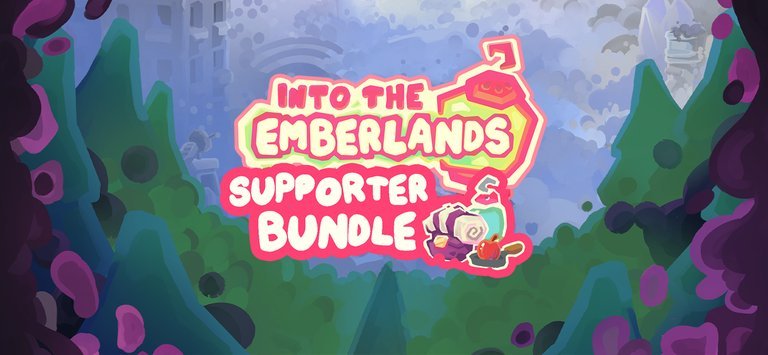
Into the Emberlands is a cozy rogue-lite adventure set in a mystical, ever-changing world threatened by the encroaching Miasma. Players take on the role of the Lightbearer, armed with a lantern fueled by a special ember, to venture into the perilous Emberlands, rescue lost villagers, collect resources, and rebuild their village into a safe haven while encountering surprising creatures and challenges.
Where to Buy Into the Emberlands: Supporter Bundle
PC
Into the Emberlands: Supporter Bundle Guides & Walkthroughs
Into the Emberlands: Supporter Bundle Reviews & Reception
metacritic.com : Into the Emberlands is a delightful exploration-based game that sees you gathering resources and rebuilding a cute yet ramshackle town. It’s perfect for those needing a chill and casual time with a good balance of challenge and variation.
neonlightsmedia.com : The genius of this game is how it manages to be both relaxing and stress-inducing at the same time.
sassygamers.com (82/100): Into The Emberlands offers a lot for its small price tag. Cosy gameplay, some fun dialogue that made me smile, and a chill atmosphere brings this game to life. A couple of minor lag issues and lack of controller support hold it back from true handheld portability, but otherwise this is a blast to play!
steamdeckhq.com : With its colorful visuals and comfortable gameplay, Into the Emberlands eases players into its world.
Into the Emberlands: Supporter Bundle: Review
Introduction
In an era saturated with high-octane action games, Into the Emberlands: Supporter Bundle emerges as a luminous beacon of cozy innovation. This curated package, bundling the 2024 release of Into the Emberlands with its complementary Supporter Pack, invites players into a world where gentle exploration meets rogue-lite tension. As the Lightbearer, armed with an ember-fueled lantern, you navigate a world shrouded in the enigmatic Miasma to rebuild the home of the charming Knacks. This bundle transcends mere content aggregation; it’s a testament to Tiny Roar’s iterative development ethos and Daedalic Entertainment’s commitment to indie storytelling. While early technical quirks mar its shine, Into the Emberlands carves a unique niche through its masterful fusion of whimsy and strategic depth, establishing itself as a must-play for seekers of tranquil yet challenging adventures.
Development History & Context
Tiny Roar, a Hamburg-based studio founded in 2015, evolved Into the Emberlands from its prototype Wanderful through an open, community-driven development process. This iterative approach allowed the team to refine gameplay mechanics and art direction in response to player feedback during its Early Access phase (June 19, 2024–January 20, 2025). The studio, known for titles like Bomb Bots Arena, prioritized accessibility and warmth, aiming to create a non-violent rogue-lite that eschewed traditional combat in favor of resource management and exploration.
Publisher Daedalic Entertainment, a veteran in the indie space with a 17-year legacy (including hits like Shadow Tactics and Unrailed!), provided crucial support. Their expertise in narrative-driven games ensured the Emberlands’ lore—rooted in themes of hope and perseverance—resonated alongside the cozy gameplay. The Supporter Bundle, released concurrently with the base game, offered exclusive content (skins, pets, soundtrack, artbook) as a direct nod to community patronage, reflecting modern indie trends of value-added monetization. Technologically, the game leveraged Unity for its isometric 2D world, optimized for both PC and Steam Deck. However, early constraints like limited graphical settings and input lag highlighted the challenges of scaling a small studio’s vision during Early Access.
Narrative & Thematic Deep Dive
The narrative unfolds through environmental storytelling and subtle vignettes, avoiding verbose exposition. The Emberlands, once vibrant, are now consumed by the Miasma, a sentient darkness that disorients and isolates. As the Lightbearer, your ember lantern is both a lifeline and a narrative device: its depletion symbolizes hope’s fragility, while its restoration mirrors the game’s core theme of endurance against despair.
The Knacks, the game’s anthropomorphic villagers, embody resilience. Their dialogue—humorous yet poignant (“Elder: ‘Another hero lost? We really should invest in better lighting.’”)—reinforces the stakes without melodrama. Side quests from creatures like lazy trolls or sketchy scientists (Patalogistan’s mad inventors) expand the world’s lore, suggesting the Miasma’s origins are tied to the inhabitants’ own hubris. This narrative economy leaves mysteries unresolved, inviting players to project their interpretations onto the Emberlands’ faded grandeur. Thematically, the game masterfully juxtaposes wholesome coziness with existential dread: rescuing a lost Knack feels like a triumph, while the lantern’s flickering timer induces nail-biting tension. The village’s gradual evolution from a ramshackle refuge to a thriving hub becomes a metaphor for communal rebuilding in the face of encroaching darkness.
Gameplay Mechanics & Systems
The core loop is a triumvirate of exploration, survival, and progression:
-
Exploration & Survival:
- The procedurally generated biomes (Deep Meadows, Petalogistan, Enderlands) ensure each run feels unique. Resources (wood, stone) and tools (pickaxe, axe) are gathered to unlock paths, while the lantern’s ember meter demands strategic planning.
- Rogue-lite Elements: Death isn’t punitive but transformative. If your lantern fades, you become “lost,” and subsequent runs start with permanent upgrades (e.g., extra wood, a starter axe). This soft-permadeath encourages risk-taking while rewarding persistence.
-
Village Building:
- Rescued Knacks rebuild structures, unlocking vendors and amenities. Each expansion—like a blacksmith or ember vendor—future-proofs expeditions, creating a satisfying metagame. Progress is tied to population milestones, ensuring expansion feels earned.
-
Encounters & Quests:
- Creature-driven quests (e.g., bribing a troll with cheese) introduce variety. While tasks often devolve into fetch quests, their whimsy—like corruling a chicken scientist—keeps the loop engaging.
Flaws: Input lag and clunky camera controls (Early Access) hampered immersion, though a post-launch patch mitigated save-file corruption issues. The lack of controller support (initially) also limited accessibility. Yet, these missteps are forgivable given the game’s replayability and the sheer joy of uncovering a hidden grove or a rare Knack.
World-Building, Art & Sound
The Emberlands is a visually arresting tapestry of muted, earthy tones punctuated by bursts of vibrant color. The art style—likened to The Dark Crystal meets Fraggles—uses soft, rounded designs and expressive animations to evoke warmth. Biomes range from idyllic meadows to the eerie, industrial Patalogistan, where steampunk contraptisms contrast with organic flora. The Miasma is rendered as an inky void, teeming with subtle visual secrets (glowing flora, distant structures) that reward keen eyes.
Sound design amplifies the atmosphere. The soundtrack (included in the Supporter Pack) features nine acoustic tracks—plucked strings and gentle percussion—that mirror the game’s duality: serene exploration interwoven with urgent dashes home. Ambient sounds—the rustle of leaves, the distant plink of a hammer—immerse players without overwhelming. The platypus pet’s chitter (from the Supporter Pack) exemplifies how small audio details enhance personality.
Together, art and sound craft a world that feels alive yet fragile. The isometric perspective and grid-based movement evoke classic strategy games, but the hand-painted textures and particle effects (like ember sparks) lend it modern charm.
Reception & Legacy
Into the Emberlands launched to a “Very Positive” Steam reception (80% of 231 reviews), with players praising its “cozy apocalypse” balance of relaxation and tension. Critics lauded its art style and progression loop, though some noted repetitiveness. MobyGames awarded it a 7.6/10 (83% critic average), with GameGrin calling it a “delightful exploration-based game” and GameSpew criticizing its lack of depth but defending its value proposition.
Commercially, the game benefited from Daedalic’s marketing and its budget-friendly price ($6.59). The Supporter Bundle ($10.30, 11% discount) became a niche hit among fans seeking exclusive cosmetics and developer support. Its legacy lies in its genre fusion: it popularized “cozy rogue-lite” as a subgenre, influencing titles like Stoneshard’s DLCs. The Steam Deck’s compatibility—4-hour battery life and smooth performance at 40fps—further cemented its appeal as a portable, mindful escape.
Conclusion
Into the Emberlands: Supporter Bundle is more than a game; it’s a love letter to community-driven development. By bundling the core experience with tangible rewards like the artbook and platypus pet, Tiny Roar and Daedalic Entertainment celebrate player investment while delivering a product that exceeds its humble price point. While technical hiccups and repetitive quests temper its brilliance, the game’s thematic depth, artistry, and rogue-lite progression create an unforgettable journey.
Final Verdict: A 9/10. For $10.30, this bundle offers a complete, heartfelt adventure that masterfully blends tension and tranquility. It stands as a landmark title in the cozy genre—a testament to the idea that the most compelling stories often emerge from the quietest corners of the digital world. Whether you’re a fan of Stardew Valley or Slay the Spire, the Emberlands’ light is one you’ll be drawn to again and again.