
- Release Year: 2017
- Platforms: Macintosh, Windows
- Genre: Interactive fiction, Simulation, Text adventure, Visual novel
- Perspective: 3rd-person
- Game Mode: Single-player
- Gameplay: Interactive fiction, Moral choices, Text adventure, Visual novel
- Setting: 18th century, Europe, Scottish
- Average Score: 64/100
- Adult Content: Yes
Description
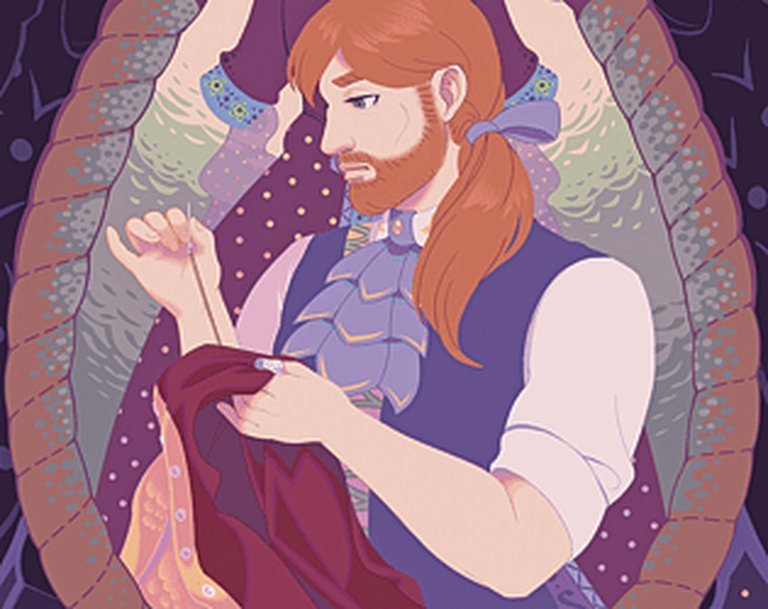
Inverness Nights is a visual novel set in 18th-century Scotland, following Tristram, an immortal tailor who must navigate the consequences of revealing his immortality and sexual orientation to his partner. The game explores themes of love, survival, and identity as Tristram faces three distinct pathways, each with two possible endings, while balancing his relationship, work, and a mysterious client’s commission.
Inverness Nights Reviews & Reception
opencritic.com : Inverness Nights tells a unique, unpredictable and touching story which encourages audiences to foster an empathy for its main cast, and the result is an emotional payoff which cannot be understated.
digitallydownloaded.net : A gripping visual novel revolving around three central characters, their clashing personalities and a touch of the supernatural.
Inverness Nights: A Masterclass in Queer Historical Fiction and Emotional Storytelling
Introduction: A Visual Novel That Defies Convention
Inverness Nights (2017) is not just a visual novel—it is a haunting, introspective meditation on love, immortality, and the crushing weight of historical oppression. Developed by New Zealand-based indie studio kitsubasa, this game subverts the expectations of the visual novel genre by focusing not on romance or adventure, but on the agonizing process of a breakup—one complicated by immortality, homophobia, and the brutal realities of 18th-century Scotland.
At its core, Inverness Nights is a queer historical fantasy that refuses to romanticize its setting. Instead, it confronts players with the harsh consequences of living as a gay man in a society that criminalizes homosexuality, while simultaneously weaving in supernatural elements that serve as both a blessing and a curse. The game’s protagonist, Tristram Rose, is an immortal tailor whose healing abilities have forced him into a life of secrecy. When he reveals his powers to save his lover, Alasdair, the fragile balance of his existence shatters, leaving him with three impossible choices: mend his broken relationship, flee Inverness before he’s executed, or trust a mysterious client who may hold the key to his salvation.
With three distinct narrative paths, six endings, and a richly researched historical backdrop, Inverness Nights stands as one of the most thematically ambitious and emotionally raw visual novels of its era. It is a game that demands patience, empathy, and multiple playthroughs—not because it is mechanically complex, but because its characters are so deeply flawed, its dilemmas so painfully real, and its resolutions so bittersweet.
This review will dissect Inverness Nights in exhaustive detail, exploring its development history, narrative depth, gameplay mechanics, artistic direction, and lasting legacy in the realm of queer storytelling in games.
Development History & Context: A Labor of Love in the Indie Visual Novel Scene
The Studio Behind the Game: kitsubasa’s Vision
Inverness Nights was developed almost entirely by Maddi Mackenzie (kitsubasa), a New Zealand-based indie developer with a background in writing and a passion for historical fiction, queer narratives, and supernatural themes. The game was a three-year labor of love, with Mackenzie handling writing, direction, and background art, while collaborating with a small team of artists and musicians to bring the world to life.
The project began as a NaNoRenO (National Novel Writing Month for Visual Novels) concept in 2014, initially titled Seven Stories with Tristram the Tailor. From the outset, Mackenzie’s goal was to create a historically grounded, emotionally resonant story that did not shy away from the brutality of 18th-century life—particularly for queer individuals. Unlike many visual novels that idealize romance, Inverness Nights was conceived as a “break-up simulator”, a term Mackenzie embraced in interviews, emphasizing that the game was not about finding love, but about losing it—and learning to move on.
Technological Constraints & Engine Choice
Inverness Nights was built using Ren’Py, the popular open-source visual novel engine. While Ren’Py provided a flexible and accessible framework, it also came with limitations that influenced the game’s design:
- No Voice Acting: Due to budget constraints, the game relies entirely on text and music to convey emotion.
- Fixed / Flip-Screen Perspective: The game uses a traditional visual novel interface with static backgrounds and character sprites, eschewing more dynamic presentation styles.
- Meditative Pacing: The game’s slow, deliberate storytelling is a deliberate choice, reinforcing the weight of Tris’s decisions rather than rushing players toward resolution.
Mackenzie has acknowledged that Ren’Py’s lack of built-in features (such as color-coded dialogue or a story log) led to some quality-of-life criticisms, but the engine’s simplicity allowed for a focus on writing and atmosphere over technical flashiness.
The Gaming Landscape in 2017: A Standout in a Crowded Genre
2017 was a pivotal year for visual novels, with titles like Doki Doki Literature Club! (2017) and Dream Daddy (2017) bringing the genre to mainstream attention. However, Inverness Nights occupied a unique niche:
- Queer Historical Fiction: While games like Dream Daddy embraced modern, lighthearted LGBTQ+ romance, Inverness Nights dared to explore queer suffering in a historical context—a rarity in gaming at the time.
- Supernatural Realism: Unlike fantasy visual novels that use magic as a plot device, Inverness Nights treats immortality as a metaphor for isolation, making Tris’s struggles feel grounded despite the fantastical premise.
- No Traditional “Happy Ending”: The game’s best ending is not a fairy-tale reunion, but a bittersweet resolution where characters grow apart—an unconventional choice that resonated with players seeking emotional authenticity.
Mackenzie has cited NieR (2010) as a major inspiration, particularly its themes of futility and sacrifice. The influence is evident in Inverness Nights’ unflinching portrayal of loss, where even the “best” outcomes come with irreparable consequences.
Narrative & Thematic Deep Dive: A Story of Love, Fear, and the Weight of History
Plot Summary: Three Paths to Escape (or Ruin)
Inverness Nights begins in 1750s Inverness, Scotland, a time and place where homosexuality is punishable by death and witchcraft accusations are a constant threat. Tristram Rose, an immortal tailor with healing abilities, has spent centuries moving from town to town, careful never to draw attention to himself. His latest life is with Alasdair Fairbairn, an older man whose fragile health and deep-seated self-loathing make their relationship volatile.
When Alasdair is mortally wounded in a battle, Tris uses his powers to heal him—restoring his youth but inadvertently outing himself as both immortal and a “sodomite.” Alasdair, terrified and resentful, threatens to expose Tris unless he leaves Inverness immediately. With no money and no safe haven, Tris is trapped until Shell Azzara, a mysterious woman with exotic fabrics and a lavish commission, enters his shop.
Shell offers Tris enough gold to flee, but her true motives remain unclear. As Tris works on her dress, she tells him a story-within-a-story—a tale of immortal pirates, betrayal, and survival that mirrors his own predicament. Meanwhile, Tris must decide:
- The Alasdair Path: Attempt to repair his relationship, despite Alasdair’s instability and the ever-present threat of exposure.
- The Shell Path: Trust the enigmatic client, whose knowledge of immortality suggests she may be more than she seems.
- The Work Path: Focus solely on the commission, earning enough to escape—but risking Alasdair’s wrath and Shell’s abandonment.
Each path leads to two possible endings, ranging from tragic to hopeful, with the “true” ending requiring multiple playthroughs and a deep understanding of all three characters.
Character Analysis: Flawed, Human, and Heartbreaking
Tristram Rose: The Immortal Who Cannot Escape Himself
- Personality: Stoic, nationalistic, and deeply cynical, Tris has lived for centuries, watching lovers and friends age and die while he remains unchanged. His immortality has made him emotionally detached, prone to sarcasm and defensiveness.
- Struggles: His healing powers are both a gift and a curse—they save lives but mark him as a witch. His love for Alasdair is genuine but strained, complicated by Alasdair’s internalized homophobia and Tris’s own fear of vulnerability.
- Arc: Over the course of the game, Tris must confront his own cowardice—he has spent centuries running, but now he must choose whether to fight for something or lose everything.
Alasdair Fairbairn: The Broken Man Who Cannot Be Fixed
- Personality: Self-loathing, alcoholic, and deeply religious, Alasdair is a product of his time—a man who hates himself for loving another man but cannot let go.
- Struggles: His youthful restoration has stripped him of his identity—he was an old man with a dead wife and son, and now he is young, healthy, and trapped in a relationship he resents.
- Arc: Alasdair’s journey is one of self-destruction or redemption. Depending on Tris’s choices, he can spiral into violence or find a fragile peace—but never true happiness.
Shell Azzara: The Enigma Who Holds the Key
- Personality: Cheerful, mysterious, and endlessly patient, Shell is the game’s most intriguing figure. She knows more than she lets on, and her story of immortal pirates is far more personal than Tris realizes.
- Struggles: Shell’s true nature is the game’s biggest twist—she is not just a wealthy client, but another immortal, one who has lived through centuries of persecution and understands Tris’s pain intimately.
- Arc: Shell’s role is to guide Tris toward acceptance—whether that means helping him escape, pushing him to reconcile with Alasdair, or revealing her own truth.
Themes: Queer Pain, Historical Oppression, and the Illusion of Safety
Inverness Nights is not a feel-good story. It is a raw, unflinching exploration of queer suffering in a world that actively seeks to erase queer existence. Its themes include:
-
The Cost of Secrecy:
- Tris’s immortality forces him to hide, but hiding has made him lonely.
- His relationship with Alasdair is built on lies, and when the truth comes out, it destroys them both.
-
Internalized Homophobia & Self-Destruction:
- Alasdair hates himself for loving Tris, and his resentment turns to violence.
- The game does not shy away from depicting the psychological toll of living in a society that criminalizes love.
-
The Illusion of Escape:
- Tris thinks fleeing will solve his problems, but immortality means he can never truly escape.
- The “true” ending suggests that real freedom comes not from running, but from facing the past.
-
Storytelling as Survival:
- Shell’s nested narrative is not just a distraction—it is a metaphor for how queer people have always used stories to cope.
- The immortal pirates’ tale mirrors Tris’s own life, showing him that he is not alone.
-
The Bittersweet Nature of Growth:
- The game’s best ending is not a reunion—it is Tris and Alasdair parting ways, each finding their own path to healing.
- This rejects the idea that love must last forever, instead embracing the idea that some relationships are meant to end.
Writing & Dialogue: A Masterclass in Historical Authenticity
Mackenzie’s writing is one of the game’s greatest strengths. The dialogue is:
- Historically Accurate (But Not Overly Archaic): Characters speak in 18th-century cadences without sounding like Shakespearean caricatures.
- Emotionally Raw: Conversations between Tris and Alasdair crackle with tension, while Shell’s folktale-like storytelling provides moments of poetic beauty.
- Thematically Dense: Every line serves a purpose—whether foreshadowing, character development, or reinforcing the game’s themes.
One of the most praised aspects of the writing is its attention to historical detail, particularly in tailoring terminology. Mackenzie researched 18th-century fashion extensively, and it shows in Tris’s meticulous descriptions of fabrics, stitching, and dressmaking—a detail that immerses players in his world while also serving as a metaphor for his own life (he repairs clothes, but cannot repair his relationship).
Gameplay Mechanics & Systems: Choice, Consequence, and the Illusion of Control
Core Gameplay Loop: A Visual Novel with Weighty Decisions
Inverness Nights is a traditional visual novel with point-and-click navigation, but its choice-based mechanics set it apart from more linear entries in the genre.
- Three Major Paths: Players must prioritize one of three focuses—Alasdair, Shell, or the dress commission—with each path offering two endings.
- No “True End” Until Multiple Playthroughs: The first playthrough will likely lead to a “bad” or “neutral” ending, as the true ending requires understanding all three characters’ perspectives.
- No Obvious Flags: Unlike many visual novels where choices are telegraphed, Inverness Nights hides its branching points in subtle dialogue choices, making replayability essential.
Combat & Progression: A Game of Words, Not Swords
There is no traditional combat in Inverness Nights. Instead, conflict is entirely narrative-driven:
- Verbal Sparring: Tris’s arguments with Alasdair are the closest thing to “battles,” with dialogue choices determining whether tensions escalate or de-escalate.
- No Stats or Inventory: The game does not track “affection points”—instead, relationships evolve organically based on player decisions.
- Time Pressure: The looming threat of Alasdair’s betrayal creates a sense of urgency, even though the game never uses a timer.
UI & Quality-of-Life Considerations
The game’s interface is functional but minimalist, reflecting its indie origins:
- No Color-Coded Dialogue: Some players struggled to track who was speaking, a common critique of Ren’Py games.
- No Story Log: Players must pay close attention, as skipping dialogue can lead to missed context.
- Fast-Forward Option: Allows replaying routes efficiently, though the writing is strong enough that many players opt to reread.
Innovations & Flaws
| Innovation | Flaw |
|---|---|
| Deeply branching narrative with no “correct” first playthrough | Some endings feel abrupt without multiple playthroughs |
| Historically accurate dialogue that doesn’t sacrifice readability | Lack of voice acting makes emotional scenes rely entirely on text |
| A “true” ending that requires empathy for all characters | No in-game hints about how to achieve the best ending |
| Rich world-building through tailoring details | Some players may find the fashion terminology overly dense |
World-Building, Art & Sound: Crafting 18th-Century Scotland
Setting & Atmosphere: A Scotland Steeped in Fear
Inverness Nights does not romanticize its setting. Instead, it paints 18th-century Scotland as a place of **poverty, superstition, and violence:
- Post-Culloden Highlands: The game takes place after the Jacobite uprising (1746), a time of political repression and economic hardship.
- The Threat of the Gallows: Sodomy and witchcraft are capital offenses, and the fear of exposure hangs over every scene.
- The Tailor’s Shop as a Prison: Tris’s workspace is both his sanctuary and his cage—a place where he creates beauty but is trapped by his secrets.
Visual Direction: A Pastel Nightmare
The game’s art style is deliberately anachronistic, blending:
- Historically Inspired Fashion: The clothing is meticulously researched, with Shell’s extravagant dress being a standout piece of design.
- Soft, Pastel Colors: The color palette is surprisingly gentle, contrasting with the dark themes—a choice Mackenzie has said was intended to lull players into a false sense of security.
- Static but Expressive Sprites: The character art (by leedalangin) is cartoonish but emotionally evocative, with subtle shifts in expression conveying deep turmoil.
Sound Design & Music: A Baroque Lament
The soundtrack (by Sebastien Skaf) is one of the game’s most underrated strengths:
- Baroque-Inspired Compositions: The music evokes the 18th century without feeling like a museum piece.
- The Violin Leitmotif: A recurring solo violin piece plays during key emotional moments, becoming synonymous with Tris’s sorrow.
- Ambient Sounds: The clinking of tailor’s tools, the rustle of fabric, and the distant sounds of Inverness create an immersive atmosphere.
Reception & Legacy: A Cult Classic in Queer Gaming
Critical Reception: Praised for Depth, Criticized for Accessibility
Inverness Nights received modest but passionate acclaim upon release:
- Digitally Downloaded (80/100): Harvard L. praised its “unique, unpredictable, and touching story” and “powerful characterisation,” though noted quality-of-life issues.
- The Spinoff: Called it “the queer fantasy break-up sim you need in your life,” highlighting its emotional authenticity.
- Player Feedback: Many players found the game deeply moving, with Alasdair and Shell becoming unexpected fan favorites.
However, the game struggled with visibility due to:
- No Steam Release (Initially): Mackenzie faced difficulties with Steam Direct’s paperwork, limiting the game’s reach.
- Niche Appeal: Its slow pacing and lack of traditional romance made it less accessible than mainstream visual novels.
Legacy: Influencing Queer Historical Fiction in Games
Despite its small audience, Inverness Nights has had a lasting impact:
- Proving Queer Historical Fiction Can Work in Games: Before Inverness Nights, few games dared to explore LGBTQ+ themes in historical settings without romanticizing or sanitizing them.
- Inspiring “Break-Up” Narratives: The game’s focus on endings rather than beginnings has influenced later visual novels like Catacomb Prince (also by kitsubasa).
- A Blueprint for Emotional Authenticity: Its unflinching portrayal of queer pain set a new standard for LGBTQ+ storytelling in indie games.
Where to Play It Today
Inverness Nights is available on:
– itch.io ($12 USD)
– Mac & Windows
– Included in the Queer Games Bundle (2022)
A Steam release remains uncertain, but Mackenzie has hinted at future projects in similar veins, including a new historical queer visual novel set in the early 20th century.
Conclusion: A Haunting, Unforgettable Experience
Inverness Nights is not a game for those seeking escapism. It is a game for those who want to feel—to ache, to mourn, and ultimately, to understand.
Its greatest strength is its unwavering commitment to emotional honesty. It does not offer easy answers, does not promise happy endings, and does not let its characters off the hook. Instead, it asks players to sit with discomfort, to confront the realities of queer existence in a hostile world, and to accept that sometimes, the kindest thing you can do is let go.
Final Verdict: 9/10 – A Masterpiece of Queer Historical Fiction
Pros:
✅ One of the most thematically rich visual novels ever made
✅ Historically immersive without sacrificing readability
✅ Characters who feel like real, flawed people
✅ A soundtrack that lingers long after the game ends
✅ A rare game that treats queer pain with respect, not exploitation
Cons:
❌ Some may find the pacing too slow
❌ Lack of voice acting and UI polish can be jarring
❌ Requires multiple playthroughs for the full experience
Inverness Nights is not just a game—it is a testament to the power of storytelling. It deserves to be remembered alongside classics like NieR and Disco Elysium as a work that uses its medium to explore the deepest, most painful parts of the human experience.
If you play one visual novel in your life, make it this one. Just be prepared to have your heart broken—and maybe, just maybe, put back together again.
Final Thought:
“Some dresses are meant to be worn. Some stories are meant to be told. And some loves? Some loves are meant to end.”
— Shell Azzara, Inverness Nights