
- Release Year: 1995
- Platforms: 3DO, Windows
- Publisher: Synergy Inc., Synergy Interactive Corp.
- Developer: Synergy Inc.
- Genre: Action
- Perspective: 1st-person
- Game Mode: Single-player
- Gameplay: Shooter
- Setting: Futuristic, Sci-fi
- Average Score: 45/100
Description
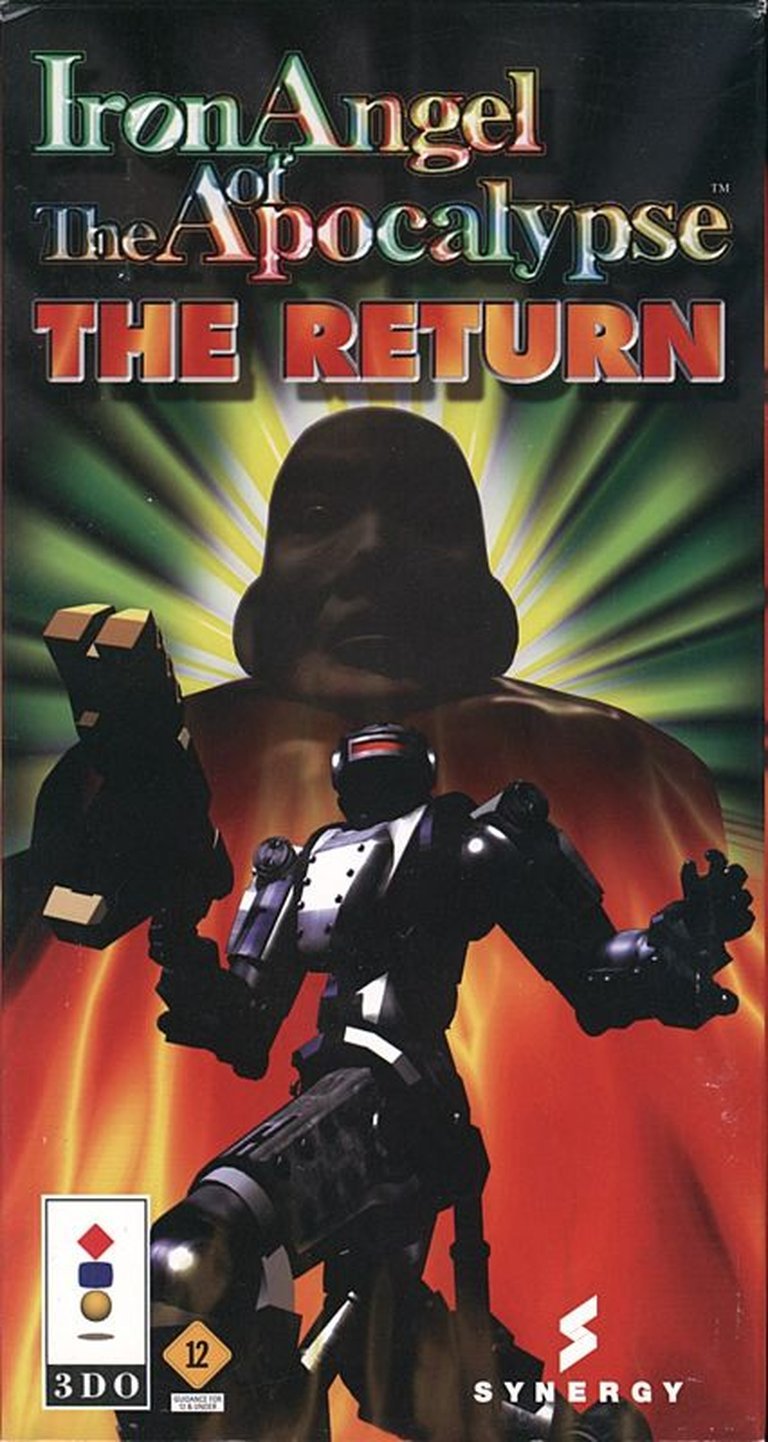
Iron Angel of the Apocalypse: The Return is a first-person shooter and sequel to the original Iron Angel of the Apocalypse. The game follows Tetsujin, who, after being disembodied following his battle with the Scientist and the Android, is given a new body by the mysterious SCR corporation. The game features improved graphics and a faster pace compared to its predecessor, with a heavy reliance on video cutscenes to advance the story. Players navigate through futuristic environments, engaging in combat and uncovering the enigmatic plans of the SCR corporation.
Gameplay Videos
Iron Angel of the Apocalypse: The Return Reviews & Reception
en.wikipedia.org (40/100): Having sacrificed a lot of the more bizarre elements that made the original worth playing, the sequel simply doesn’t offer enough improvements to make up for the loss.
Iron Angel of the Apocalypse: The Return: A Flawed but Fascinating Relic of the 3DO Era
Introduction: A Sequel Shrouded in Mystery and Mecha
Iron Angel of the Apocalypse: The Return (1995) is a game that exists in the shadow of its own ambition—a sequel that dared to refine its predecessor’s formula but ultimately stumbled under the weight of its era’s limitations. Released for the ill-fated 3DO Interactive Multiplayer and later ported to Windows, this first-person shooter (FPS) is a curious artifact of mid-90s gaming: a blend of cinematic storytelling, mecha-driven action, and the technological growing pains of a console struggling to find its identity.
For those unfamiliar, the Iron Angel series is a cult curiosity, a Japanese-developed FPS that predated the genre’s Western dominance. The original Iron Angel of the Apocalypse (1994) was a bold, if uneven, experiment—a game that married live-action cutscenes with sprite-based shooting, all wrapped in a dystopian sci-fi narrative. The Return attempts to iterate on that foundation, replacing live actors with fully CGI-rendered characters and streamlining the gameplay. Yet, as critics and players alike noted, it often feels like a step sideways rather than forward.
This review aims to dissect Iron Angel of the Apocalypse: The Return with the precision of a historian and the passion of a gamer who appreciates the oddities of the past. We’ll explore its development context, narrative depth, mechanical quirks, and the reasons why it remains a fascinating—if flawed—piece of gaming history.
Development History & Context: The Rise and Fall of the 3DO
The Studio Behind the Steel: Synergy Inc.
Iron Angel of the Apocalypse: The Return was developed and published by Synergy Inc., a Japanese studio with a penchant for ambitious, multimedia-driven projects. Synergy was no stranger to blending live-action and CGI, having worked on titles like Yellow Brick Road II and the original Iron Angel of the Apocalypse. The studio’s director, Minoru Kusakabe, helmed The Return, while the game’s story was crafted by Jirou Kaneko, with music composed by Norikazu Miura, a veteran of numerous Japanese games and anime.
Synergy’s vision for The Return was clear: to create a more polished, cinematic experience than its predecessor. The original Iron Angel had been a mix of live-action footage and CGI, a choice that lent it a unique but jarring aesthetic. For the sequel, the team opted for fully CGI-rendered characters, a decision that aligned with the industry’s growing fascination with computer-generated visuals. This shift was not just artistic but practical—the 3DO’s hardware, while powerful for its time, was better suited to pre-rendered CGI than live-action video compression.
The 3DO: A Console Ahead of Its Time (and Market)
The 3DO Interactive Multiplayer was a console born from the collaboration of industry heavyweights like Panasonic, Sega, and Electronic Arts. Marketed as a “multimedia powerhouse,” it boasted CD-ROM technology, advanced graphics for the era, and a focus on full-motion video (FMV) and cinematic gaming. However, its high price point ($699 at launch) and lack of a clear identity doomed it to commercial failure.
Iron Angel of the Apocalypse: The Return arrived in September 1995, a time when the 3DO was already gasping for air. The console’s library was a mix of experimental titles, FMV-heavy adventures, and ports of arcade games. The Return fit neatly into this ecosystem, offering a first-person shooter with heavy narrative emphasis—a rarity in an era dominated by Doom clones and 2D action games.
Technological Constraints and Design Choices
The 3DO’s hardware was capable but finicky. Developers had to work within strict memory limits, and the console’s 2.5D graphics engine (sprites over pre-rendered backgrounds) meant that true 3D movement was out of the question. The Return’s gameplay is thus a sprite-based FPS, similar to Wolfenstein 3D but with a more ambitious presentation.
Key technological challenges included:
– FMV Integration: The game relies heavily on CGI cutscenes, which were stored on the CD-ROM. Loading times and compression artifacts were inevitable.
– Control Scheme: The 3DO’s controller was not ideal for FPS games, leading to clunky movement and aiming—a common criticism in reviews.
– Localization: The Western release replaced the original Japanese voice acting with English dubs, a choice that altered the game’s tone.
Despite these hurdles, The Return pushed the 3DO’s capabilities, offering faster-paced action and more detailed environments than its predecessor. Whether these improvements were enough to justify its existence is a question we’ll revisit.
Narrative & Thematic Deep Dive: A Cybernetic Identity Crisis
Plot Summary: From Disembodiment to Corporate Intrigue
The Return picks up immediately after the events of the first game. Tetsujin, the series’ cyborg protagonist, has been disembodied following his battle with the Scientist and the Android. He is rescued by SCR (Super Cybernetic Research), a shadowy corporation that offers him a new, upgraded body. However, SCR’s motives are unclear, and Tetsujin soon finds himself entangled in a web of corporate espionage, rogue AI, and biomechanical experimentation.
The story unfolds through a mix of in-game dialogue, audio logs, and CGI cutscenes. Key plot points include:
– Tetsujin’s Reconstruction: His new body is more powerful but comes with strings attached—SCR seems to have plans for him beyond mere survival.
– The Android’s Return: The golden Android from the first game resurfaces, seeking revenge.
– Corporate Conspiracies: SCR’s research into biomoloids (cybernetic hybrids) hints at a larger, more sinister agenda.
Themes: Identity, Control, and the Cost of Immortality
At its core, The Return grapples with themes that were ahead of their time in gaming:
1. Identity in a Cybernetic Body: Tetsujin’s struggle with his new form mirrors real-world questions about transhumanism and the loss of humanity in augmentation.
2. Corporate Overreach: SCR’s manipulation of Tetsujin reflects anxieties about megacorporations controlling human evolution—a theme that would later dominate cyberpunk narratives.
3. The Ethics of Revival: The game questions whether resurrection through technology is a gift or a curse, especially when the benefactors have ulterior motives.
Characters and Dialogue: A Mixed Bag
The game’s cast is small but memorable:
– Tetsujin: The stoic, cybernetic warrior, voiced in English by Scott McCulloch. His lack of emotional range is intentional, reflecting his mechanical nature.
– The Android: A recurring antagonist, now more vengeful and calculating.
– SCR Operatives: A mix of scientists and soldiers, each with their own agendas.
The English voice acting (handled by actors like Alison Lester and Brian A. Perkins) is serviceable but lacks the gravitas of the original Japanese performances. The localized script occasionally feels stilted, a common issue in 90s Japanese-to-English translations.
Storytelling Strengths and Weaknesses
Strengths:
– Atmospheric Presentation: The CGI cutscenes, while dated, create a moody, dystopian tone.
– Environmental Storytelling: Audio logs and hidden documents flesh out the world, rewarding exploration.
– Mystery-Driven Plot: The slow unraveling of SCR’s secrets keeps players engaged.
Weaknesses:
– Pacing Issues: The game prioritizes cutscenes over gameplay, leading to moments where the action grinds to a halt.
– Underdeveloped Characters: Outside of Tetsujin, most characters lack depth.
– Predictable Twists: The story’s reveals are telegraphed early, diminishing their impact.
Gameplay Mechanics & Systems: A Shooter Caught Between Eras
Core Gameplay Loop: Shoot, Explore, Watch
The Return is, at its heart, a corridor shooter with light exploration elements. The gameplay loop consists of:
1. Navigating Linear Levels: Tetsujin moves through industrial complexes, research labs, and outdoor facilities, each rendered in the 3DO’s signature 2.5D style.
2. Combat Encounters: Enemies include moloids (mutated humans), biomoloids (cybernetic hybrids), and robotic sentinels.
3. Cutscene Triggers: Progressing through levels often unlocks CGI sequences that advance the plot.
Combat and Weaponry: A Mixed Arsenal
Tetsujin’s arsenal includes:
– Pulse Rifle: A rapid-fire standard weapon.
– Plasma Cannon: High-damage, slow-firing energy weapon.
– Grenade Launcher: Useful for crowd control.
Combat Analysis:
– Pros:
– Weapon Variety: Each gun feels distinct, offering tactical choices.
– Enemy Design: Biomoloids and robots have unique behaviors, forcing players to adapt.
– Cons:
– Clunky Controls: The 3DO’s controller makes aiming and movement imprecise.
– Unresponsive Hit Detection: Shots sometimes fail to register, leading to frustration.
– Repetitive Encounters: Enemy waves lack variety, making combat feel stale.
Progression and Upgrades: A Shallow System
Unlike modern shooters, The Return offers minimal character progression:
– Health Pickups: Scattered throughout levels.
– Weapon Upgrades: Rare and often tied to story moments.
– No RPG Elements: No skill trees or permanent upgrades—Tetsujin’s abilities remain static.
This lack of depth makes the game feel more like an interactive movie than a true FPS.
UI and Navigation: A Product of Its Time
The HUD is functional but barebones:
– Health Bar: A simple meter at the bottom of the screen.
– Ammo Counter: Displays current weapon and reserves.
– Minimap: Absent, forcing players to rely on environmental cues.
Navigation Issues:
– No Auto-Map: Players must memorize level layouts or risk getting lost.
– Poor Signposting: Objectives are often unclear, leading to aimless wandering.
Innovations and Flaws
Innovations:
– Dynamic Cutscene Transitions: Some scenes trigger as Tetsujin moves through doors, blending gameplay and narrative.
– Atmospheric Lighting: The use of flickering lights and shadows enhances the dystopian mood.
Flaws:
– Tedious Backtracking: Levels occasionally require revisiting areas with no clear guidance.
– Lack of Checkpoints: Death sends players back to the start of a level, a punishing design choice.
– Limited Enemy AI: Foes follow predictable patterns, making combat feel scripted.
World-Building, Art & Sound: A Dystopian Vision
Setting: A Cyberpunk Nightmare
The Return takes place in a dystopian future where corporations like SCR wield unchecked power. The environments reflect this:
– SCR Facilities: Sterile labs with glowing monitors and flickering lights.
– Industrial Zones: Rusty corridors and steam-filled chambers.
– Outdoor Areas: A blood-red sky looms over abandoned decks, hinting at environmental collapse.
The game’s art direction leans into cyberpunk aesthetics, with a mix of high-tech and decay. The CGI characters, while stiff by modern standards, convey a cold, mechanical tone that suits the narrative.
Visual Design: CGI and Sprites
- Character Models: Fully CGI-rendered, replacing the original’s live-action footage. While an improvement in consistency, the lack of facial expressiveness weakens emotional moments.
- Environmental Detail: Textures are pre-rendered but detailed, with dynamic lighting adding depth.
- Performance: The game runs smoothly on 3DO hardware, with minimal slowdown during combat.
Sound Design: A Haunting Score
Composer Norikazu Miura delivers a synth-heavy, atmospheric soundtrack that complements the game’s tone:
– Industrial Beats: Pulsing rhythms during action sequences.
– Ambient Drones: Eerie, low-key tracks in exploration sections.
– Voice Acting: The English dub, while not terrible, lacks the emotional weight of the original Japanese performance.
Sound Effects:
– Weapon Sounds: Satisfyingly mechanical and punchy.
– Enemy Vocals: Biomoloids emit guttural growls, while robots beep ominously.
Reception & Legacy: A Game Lost to Time
Critical Reception: A Divisive Sequel
The Return received mixed reviews upon release:
– GamePro (US): 60% – Praised the improved graphics but criticized unresponsive controls and repetitive gameplay.
– 3DO Magazine (UK): 40% – Called it “tedious” and argued that the gameplay felt like a pause between cutscenes.
– Next Generation: 2/5 Stars – Lamented the loss of the original’s “bizarre elements” without enough innovation to compensate.
Player Reception:
– MobyGames: 4/5 (Player Score) – A small but dedicated fanbase appreciated its atmosphere and story.
– Commercial Performance: Poor, in line with the 3DO’s declining market share.
Legacy: A Footnote in FPS History
The Return is rarely discussed today, but its influence can be seen in:
– Japanese FPS Experiments: Games like Tobal No. 1 and Einhandler continued the trend of narrative-driven shooters.
– Cyberpunk Aesthetics: Its dystopian corporate themes foreshadowed later works like Deus Ex.
– FMV Integration: While flawed, its blending of CGI and gameplay was a precursor to modern cinematic shooters.
Why It Faded Into Obscurity
- 3DO’s Commercial Failure: The console’s demise meant few players experienced it.
- Overshadowed by Competitors: Doom and Quake set new standards for FPS design.
- Lack of Innovation: It iterated rather than revolutionized, making it forgettable.
Conclusion: A Flawed Gem Worth Remembering
Iron Angel of the Apocalypse: The Return is not a great game by modern standards, but it is a fascinating time capsule—a snapshot of an era when developers were still figuring out how to merge cinematic storytelling with interactive gameplay. Its ambitious narrative, moody atmosphere, and cyberpunk themes make it a cult curiosity, while its clunky controls and repetitive combat remind us of the limitations of its time.
Final Verdict:
– For Historians: A must-play for those interested in 90s FPS experiments and Japanese gaming oddities.
– For Retro Enthusiasts: Worth a look for its unique blend of CGI and sprite-based shooting.
– For Modern Gamers: Skip it—unless you’re prepared for janky controls and dated design.
Score: 6/10 – A flawed but ambitious sequel that deserves its place in gaming history, if only as a cautionary tale of what happens when vision outpaces technology.
Post-Script: Where to Play Today
For those brave enough to experience The Return:
– 3DO Original: Available on eBay (expect to pay $200+ for a copy).
– Windows Port: Rare but playable via emulation (try DOSBox or PCem).
– Emulation: The 3DO can be emulated via Phoenix or FreeDO.
Iron Angel of the Apocalypse: The Return may not be a masterpiece, but it’s a testament to the creativity—and limitations—of its era. And in the annals of gaming history, that’s worth something.