
- Release Year: 2020
- Platforms: PlayStation 5, Windows
- Publisher: Daedalic Entertainment GmbH
- Developer: Action Squad Studios
- Genre: Action, RPG
- Perspective: Diagonal-down
- Game Mode: Single-player
- Gameplay: Tactical RPG, Time manipulation, Turn-based
- Setting: Fantasy, Steampunk
- Average Score: 76/100
Description
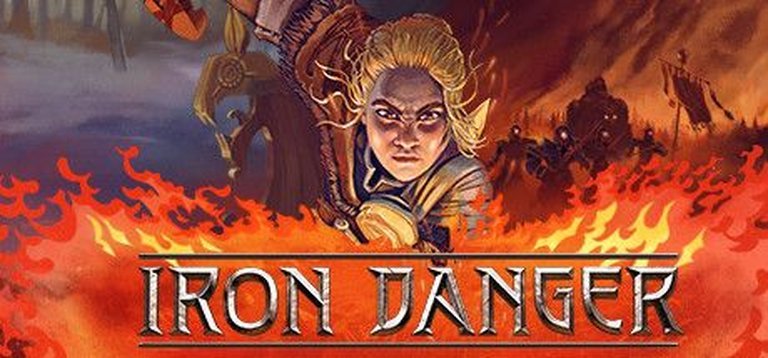
Iron Danger is a tactical role-playing game set in a fantasy steampunk world, featuring a female protagonist and a core time manipulation mechanic that allows players to rewind and refine strategies in turn-based combat. The game emphasizes challenging, strategic battles with an atmospheric visual style and sympathetic characters, focusing on intricate tactical execution over traditional RPG elements.
Gameplay Videos
Where to Buy Iron Danger
Iron Danger Free Download
Iron Danger Mods
Iron Danger Guides & Walkthroughs
Iron Danger Reviews & Reception
metacritic.com (90/100): Iron Danger is a fun game that takes us to fantasy Finland and lets us play with time.
metacritic.com (82/100): Time rewind mechanics bring a welcome spin on an otherwise tedious gameplay formula.
metacritic.com (78/100): For people who have a strong appreciation for SRPG gameplay, this is your game.
metacritic.com (74/100): Iron Danger is based on an interesting time-traveling that sometimes works great, and sometimes doesn’t. If you like the genre, though, it’s worth a try.
metacritic.com (70/100): An interesting idea with a decent production, Iron Danger could be the basis for something truly amazing in the future.
opencritic.com (65/100): relies so heavily on the time-travel combat mechanic that it doesn’t really present you with much besides that.
opencritic.com (76/100): unique and refreshing take on tactical combat
opencritic.com (79/100): quite fun and refreshing
opencritic.com (60/100): held together by its core feature, but controls frequently frustrate
opencritic.com (76/100): combat system is fresh and interesting, but RPG and narrative components not excellent
opencritic.com (83/100): I’m blown away
opencritic.com (90/100): as charming as it’s filled with environmental traps and time crimes
opencritic.com (60/100): interesting strategy game, but also somewhat tedious
opencritic.com (75/100): tactical combat and ARPG mechanics make for clever gameplay, but story ending drags it down
opencritic.com (60/100): nested frustration that killed my enjoyment
opencritic.com (60/100): looks completely unique compared to old fallout or other turn-based games
opencritic.com (80/100): interesting tactical combat experience where you can rewind time
store.steampowered.com (90/100): Iron Danger is a fun game that takes us to fantasy Finland and lets us play with time
store.steampowered.com (85/100): The creators do not only enrich the genre but also provide a lot of fun!
store.steampowered.com (90/100): a fresh and innovative take on tactical combat
titanquisitor.com : Iron Danger’s sole identity is built around its unique time rewind mechanic.
indiegamewebsite.com : Each combat encounter feels as much like a puzzle as it does a fight.
Iron Danger: A Tactical Masterpiece Buried Under Its Own Time
Introduction: Rewriting the Rules of Combat
In the crowded landscape of tactical role-playing games, where innovation often amounts to a new skill tree or a slight tweak to initiative order, Iron Danger arrived in 2020 not with a whisper but with a temporal paradox. Developed by the Finnish Action Squad Studios and published by Daedalic Entertainment, this game dared to ask: what if failure wasn’t just an option, but the intended path to mastery? Its core proposition—a tactical combat system built entirely around the player’s ability to rewind time by mere seconds—was so audacious it felt less like a new mechanic and more like a philosophical statement on game design. Iron Danger is not a traditional RPG. It is, as one review astutely noted, a “tactical combat puzzler.” This review will argue that while Iron Danger is fundamentally flawed in its execution of narrative and systemic depth, its singular, brilliant combat mechanic represents one of the most significant and influential innovations in tactical game design of the 2020s, cementing its legacy as a revered cult classic and a blueprint for future titles.
Development History & Context: Finnish Folklore Meets Indie Pragmatism
Action Squad Studios entered the scene not as wide-eyed newcomers but as seasoned veterans. The core team, including Game Director Jussi Kemppainen and Producer/Creator of the Iron Danger Universe Sami Timonen, hailed from notable Finnish studios like Rovio (Angry Birds) and Remedy Entertainment (Alan Wake). This pedigree promised a blend of accessible design and narrative ambition. Their vision was clear: to fuse the deep, deliberate planning of turn-based tactics with the visceral, dynamic flow of real-time action. The technological constraint was Unity, a capable but often unsung engine for mid-tier 3D games, which the team used to craft a distinct visual style blending steampunk machinery with the lush, primordial forests of the Kalevala, Finland’s national epic.
The gaming landscape of early 2020 was dominated by sprawling live-service titles and AAA behemoths. Against this, Iron Danger was a defiantly single-player, story-driven, and mechanically dense experience. Its ambition was counter-cultural: a 12-15 hour game with no microtransactions, no open-world bloat, and a core loop that explicitly encouraged “save scumming” as a legitimate, integrated gameplay feature. This was an indie studio betting its entire identity on a single, radical idea.
Narrative & Thematic Deep Dive: A Mythological Saga Told in Snippets
The plot of Iron Danger is both its greatest thematic strength and its most glaring structural weakness. Drawing deeply from Finnish folklore and the Kalevala, it constructs a world where the steampunk city of Kalevala—a bastion of human ingenuity that rejected the old gods—is threatened by the icy Northlands and their vengeful Witch Queen, Lowhee. This is a conflict of innovation versus ancient, primal power, of industry versus nature, wrapped in a mythic aesthetic rarely seen in games.
We follow Kipuna, a sharp-witted village girl whose journey from innocent bystander to wielder of immense power is the narrative spine. Her empowerment comes not from a heroic choice but from a traumatic accident: impaled by a mystical “shard” during an attack, she is granted dominion over time and death by an ancient entity. She is paired with Topi, the gentle giant quartermaster, whose simple warmth and loyalty provide emotional grounding. The story, penned by Lead Writer Joel Sammallahti and the Kemppainen brothers, is presented through linear chapters and scattered journal entries.
Where the narrative stumbles is in its delivery. Outside of key cutscenes, the world feels dead. The bustling city of Kalevala is a corridor with no NPC interaction. Character development is minimal, confined mostly to the banter between Kipuna and Topi (which some found endearing, others found jarringly voiced and slow). The climax arrives abruptly on a cliffhanger, leaving the central conflict with Lowhee unresolved and hinting at a larger, unseen war. This is not an epic RPG saga in the vein of Baldur’s Gate; it is a mythological fable told with the pacing of a pulp adventure serial. Its themes—the burden of power, the friction between destiny and choice, the cyclical nature of violence—are hinted at but rarely explored with the depth the setting promises. It serves primarily as a motivating force for the combat encounters, a sequential glue between the game’s true star: the battles.
Gameplay Mechanics & Systems: The Puzzle of Heartbeats
Iron Danger‘s gameplay is a masterclass in focused, iterative design. It discards nearly every conventional RPG trope:
- No Levels, No XP: Character progression is milestone-based. Completing a stage grants upgrade points for abilities. There is no grinding; the story’s pace dictates power.
- No Loot, No Inventory: Equipment is static and narrative-given. The only collectibles are health-restoring food items.
- No Free Roam: The game is a sequence of self-contained, linear combat “puzzles” within larger level maps.
The Combat Loop: A Symphony in Heartbeats
This is where genius lies. Combat is semi-real-time. A universal “timeline” runs continuously, segmented into heartbeats (0.5-second intervals). All actions—swinging a hammer, casting a fireball, an enemy drawing a bow—have a defined heartbeat cost and are recorded on this visible timeline.
The Trance Mode (time rewind) is not a special ability with a cooldown; it is an always-available system command. At any moment, you can rewind time up to ~10 seconds (20 heartbeats). You can do this infinitely. The design philosophy is explicit: “You will die, but you will not fail.”
This transforms combat from a test of reflexes or statistical superiority into a real-time puzzle. A fight against a group of Northlander warriors and a shaman becomes an exercise in temporal choreography:
1. Observe: Let your party die. Watch the timeline. Note the exact heartbeat an enemy archer looses an arrow, the moment a chieftain charges, the pattern of a spellcaster’s AoE.
2. Plan: Rewind to the start. Issue a command for Topi to Block at heartbeat 3. Issue a command for Kipuna to cast Fireball at heartbeat 5.
3. Execute & Adjust: Watch. The fireball might connect, but an enemy dodged. Rewind 2 heartbeats. Now, have Kipuna first Ignite an oil barrel before the fireball to create a larger explosion zone.
4. Synchronize: The ultimate goal is to create a sequence where both characters’ actions are perfectly timed to mitigate damage and maximize environmental interactions—kicking a burning enemy into a grain field, felling a tree on a cluster, freezing water to create barriers.
The environment is a核心 character. Every barrel, crate, puddle, cliff, and tree is a potential tool. The game encourages chaotic, creative solutions that feel uniquely your.
The Flaws in the Mechanism
For all its brilliance, the system is not without friction:
* The “Jank” Factor: Pathfinding and character collision are notoriously imprecise. Characters frequently slide as if on ice, get stuck on tiny geometry, or clip through each other. What should be a precise puzzle becomes a test of patience, forcing multiple rewinds just to get a character to stand in the correct spot. The camera is often uncooperative, especially in tight spaces.
* Pacing and Frustration: While the rewind mechanic eliminates death as a failure state, it does not eliminate frustration. Some enemy behaviors were criticized as inconsistent or unpredictable (e.g., knocked-down foes recovering instantly). Solving a particularly brutal encounter can devolve into a tedious, repetitive loop of trial-and-error over 30+ in-game minutes, draining the initial thrill.
* Limited Agency: You control only Kipuna and Topi (later joined by one more ally). You cannot pause to issue complex, layered commands like in Frozen Synapse. Your control is direct and immediate, which can feel overwhelming during large-scale fights. The tactical depth comes from the puzzle of timing, not from a broad commands interface.
World-Building, Art & Sound: A Stunning, Underutilized Stage
Iron Danger presents a steampunk-fantasy Finland that is immediately captivating. The art direction, led by Lead Artist Jukka-Pekka Lyytinen, uses a bright, saturated color palette that contrasts the grimdark norms of the genre. Lush green forests, crystalline lakes, and the brass-and-steam architecture of Kalevala feel both mythical and tangible. The character designs, inspired by Kalevala figures (Kipuna’s aesthetic echoes the heroine’s resilience), are expressive and memorable.
The sound design is a standout. Composer Santeri Lehto created a soundtrack that perfectly mirrors the game’s dual nature: sweeping, melodic themes for exploration that shift into tense, rhythmic pulses during combat. The clang of Topi’s hammer, the crackle of Kipuna’s fire, the satisfying thunk of a log hitting an enemy—the audio feedback is crucial to the combat puzzle’s satisfaction.
The profound tragedy is how little you get to inhabit this world. Exploration is strictly linear corridor-based. There are no towns to explore, no merchants, no side quests. The beauty is a backdrop for combat stages, not a place to live in. This aesthetic richness feels like an unexploited asset, a world crying out for a game with more systemic interactivity and less linear focus.
Reception & Legacy: The Cult of the Time Rewind
Critical Reception: Metacritic’s PC score of 73 (“Mixed or Average”) accurately reflects the polarized response. Critics universally celebrated the core time-manipulation mechanic.
* Praise: PCGamesN‘s landmark headline—”Save scumming is not only okay – it’s now an elegant puzzle-solving game mechanic”—captured the zeitgeist. Reviews from PC Invasion (90/100), Gamer’s Palace (81%), and Video Chums (80% on PS5) celebrated its fresh, “packing” combat and clever puzzles.
* Criticism: The recurring complaints were a trifecta: weak RPG systems (no meaningful progression or choices), linear, empty world-building, and technical jank (clunky controls, pathfinding, camera). RPG Site‘s 60% review lamented its lack of lasting impression, while PC Games noted the story “dümpelt vor sich hin” (plods along).
Commercial & Cultural Impact: Sales were modest, propelled by deep discounts (as low as $1.99 on Steam) and the “Daedalic” name. Its true impact is niche but profound. It won the Creative Achievement Of The Year at the Finnish Game Awards 2021, a testament to its national cultural resonance.
Legacy and Influence: Iron Danger has not spawned a wave of direct clones, but its DNA is visible:
1. Legitimizing “Save Scumming”: It formally integrated a quintessential player habit into the core gameplay loop, influencing how designers think about failure and trial-and-error.
2. Puzzle-Combat Hybrid: It presaged and influenced a small sub-genre of tactical games where time manipulation is a central puzzle element. Games like Omensight (2018, slightly earlier but similar) and later titles experimenting with “groundhog day” combat loops owe a conceptual debt.
3. The “Niche Brilliance” Template: It stands as a prime example of a highly ambitious, mechanically innovative game that cannot overcome its scope limitations. It is frequently cited in discussions about “games with great ideas but poor execution” and is a beloved case study in game design courses for its rewind mechanic.
4. Cult Following: On Steam (Mostly Positive, 73% of 527 reviews), it has a dedicated fanbase that champions its unique feel. User reviews often clash: “The best combat system in any game” vs. “The most clunky, frustrating controls I’ve ever endured.” This divisiveness is a hallmark of a game with a strong, uncompromising identity.
Conclusion: A Flawed, Foundations-Shaking Experiment
Iron Danger is not a great RPG. It is not a great action game. By conventional metrics of narrative depth, player agency, and technical polish, it falls short. However, to judge it only by these standards is to miss its historic importance.
It is a great combat puzzle game and a groundbreaking design experiment. The “heartbeat” timeline and the always-available rewind created a new language for tactical interaction—one where every micro-movement is a variable in an equation of survival. This mechanic is so potent it single-handedly justifies the game’s existence, turning frustrating failure into compelling, iterative problem-solving.
Its legacy is that of a foundational text. It proved that integrating “save scumming” as a primary mechanic could create deep, satisfying gameplay. It demonstrated the power of extreme linearity when married to a singular, brilliant systemic core. Its failures—the thin RPG shell, the unused world, the persistent jank—are cautionary tales about scope and polish for indie developers.
For the historian, Iron Danger is a timestamp: a moment when a small Finnish studio, unburdened by franchise expectations,风险 everything on a single, elegant idea. It is a game that asks you to manipulate time not to change the story, but to perfect the fight. In doing so, it may not have rewritten the rules of the RPG, but it irrevocably bent the fabric of tactical combat design. Its place in history is secure: a flawed, fascinating, and profoundly influential gem, forever remembered as the game that made rewinding time a tactical art form.
Final Verdict: 7.5/10 – A niche masterpiece. Its combat innovation is essential experience for any student of game design, but its surrounding weaknesses make it a recommendation only for the mechanically curious and the patient puzzle-solver.