
- Release Year: 2016
- Platforms: Windows
- Publisher: Strategy First, Inc.
- Developer: Totem Games
- Genre: Strategy, Tactics
- Perspective: Real-time
- Game Mode: Single-player
- Gameplay: Naval, Wargame, watercraft
- Setting: Industrial Age, South America, War
- Average Score: 70/100
Description
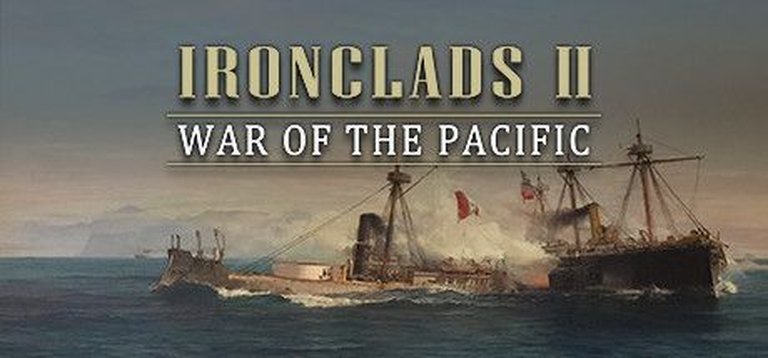
Ironclads II: War of the Pacific is a turn-based and real-time naval strategy game set during the 19th-century War of the Pacific, where Chile and its British allies clash with Peru and its American allies over control of the nitrate-rich Atacama Desert. Players command historically accurate ironclad warships, manage fleets, and engage in tactical sea battles, blockades, and amphibious assaults, blending strategic planning with realistic naval combat simulations.
Where to Buy Ironclads II: War of the Pacific
PC
Ironclads II: War of the Pacific Cracks & Fixes
Ironclads II: War of the Pacific Guides & Walkthroughs
Ironclads II: War of the Pacific Reviews & Reception
steambase.io (63/100): Ironclads 2: War of the Pacific has earned a Player Score of 63 / 100.
store.steampowered.com (62/100): All Reviews: Mixed (62% of 37)
moddb.com (85/100): Community Rating Average 8.5
Ironclads II: War of the Pacific – A Deep Dive into a Niche Naval Strategy Masterpiece
Introduction: The Forgotten Gem of Naval Warfare Simulation
In the vast ocean of strategy games, Ironclads II: War of the Pacific (2016) stands as a quiet titan—a meticulously crafted homage to 19th-century naval warfare that has, unfortunately, drifted into obscurity. Developed by Totem Games and published by Strategy First, this title is the third installment in the Ironclads II series, a sub-franchise dedicated to recreating pivotal naval conflicts of the Industrial Age. While it may lack the polish or mainstream appeal of contemporaries like Total War or Ultimate General, War of the Pacific offers something far rarer: an authentic, hard-edged simulation of ironclad combat, where the fog of war isn’t just a mechanic—it’s a historical reality.
This review will dissect Ironclads II: War of the Pacific with the precision of a naval broadside, examining its development context, narrative depth, gameplay systems, technical execution, and legacy. By the end, we’ll determine whether this game is a hidden classic deserving of rediscovery or a niche curio best left to the most devoted grognards.
Development History & Context: A Labor of Love in a Crowded Market
The Studio Behind the Ironclads
Totem Games, a Russian developer with a long-standing reputation for historical wargames, has been charting the waters of naval strategy since the early 2000s. Their Ironclads series began in 2010 with Ironclads: American Civil War, followed by several standalone expansions covering conflicts like the Schleswig War (1864) and the Anglo-Russian War (1865). The Ironclads II sub-series, launched in 2015, represented a technological and design evolution, refining the formula with improved graphics, deeper mechanics, and a modular approach to historical scenarios.
War of the Pacific arrived in November 2016, sandwiched between Ironclads II: American Civil War (2015) and Ironclads II: Boshin War (2017). Unlike its predecessors, which focused on more widely documented conflicts, this installment tackled the War of the Pacific (1879–1884)—a brutal, often overlooked struggle between Chile (backed by Britain) and the alliance of Peru and Bolivia (supported by the U.S.) over control of the nitrate-rich Atacama Desert.
Technological Constraints & Design Philosophy
Developed on an unknown proprietary engine, War of the Pacific was constrained by the technological standards of its time. The game’s system requirements (Pentium 4, 2GB RAM, DirectX 9.0c) reflect a title optimized for mid-2010s hardware, prioritizing functionality over flash. This was a deliberate choice—Totem Games has always favored simulation depth over graphical spectacle, a philosophy that aligns with their core audience: hardcore strategy enthusiasts and history buffs.
The gaming landscape in 2016 was dominated by grand strategy titans (Civilization VI, Hearts of Iron IV) and real-time tactics hybrids (XCOM 2, Total War: Warhammer). War of the Pacific carved out its niche by eschewing accessibility in favor of historical authenticity. It didn’t compete for the mainstream; instead, it catered to players who craved a cerebral, slow-burning naval chess match where every broadside and torpedo run carried the weight of real-world naval doctrine.
The War of the Pacific: Why This Conflict?
The choice of the War of the Pacific was both bold and obscure. Unlike the American Civil War or the Russo-Japanese War, this conflict is rarely covered in Western media, making it a fresh canvas for Totem Games. The war’s naval dimension was decisive—Chile’s dominance at sea allowed it to project power ashore, blockade Peruvian ports, and ultimately secure victory despite being outnumbered.
Key historical elements woven into the game:
– The Nitrate Rush: Control of the Atacama’s guano and sodium nitrate deposits (critical for fertilizers and explosives) fueled the war.
– The Naval Arms Race: After Peru lost its flagship Huáscar and Independencia in 1879, both sides scrambled to modernize their fleets, introducing breech-loading rifles, torpedo boats, and armored cruisers.
– British & American Involvement: The game subtly acknowledges the geopolitical chessboard, with Chile backed by British industrial might and Peru receiving U.S. support.
By focusing on this conflict, Totem Games delivered not just a game, but a history lesson—one that rewards players who take the time to understand the strategic and technological nuances of late 19th-century warfare.
Narrative & Thematic Deep Dive: A War of Iron, Steam, and Nitrate
Plot & Campaign Structure
War of the Pacific eschews a traditional linear campaign in favor of a sandbox-style strategic layer where players assume the role of either Chile or the Peru-Bolivia alliance. The game is divided into two primary modes:
1. Turn-Based Strategic Mode: A risk-style map of the Pacific coast, where players manage fleet movements, blockades, amphibious landings, and port sieges.
2. Real-Time Tactical Mode: When fleets engage, the game shifts to a 3D naval battle simulator, where players directly control ship formations, broadsides, and torpedo attacks.
There is no overarching cinematic narrative—no voice-acted cutscenes, no dramatic monologues. Instead, the story emerges from historical context and player decisions. The game’s text-based briefings and mission objectives are dry but rich in historical detail, reinforcing the documentary-like tone.
Characters & Factions: The Admirals and Their Fleets
While the game lacks individual character arcs, the ships themselves become the protagonists. Each vessel is a meticulously researched historical unit, with stats reflecting its armor thickness, gun caliber, crew experience, and speed. Key ships include:
– Chilean Navy:
– Almirante Cochrane (central battery ironclad)
– Blanco Encalada (wooden corvette, later armored)
– Huáscar (captured Peruvian monitor, a prize of war)
– Peruvian Navy:
– Manco Cápac (torpedo ram)
– Unión (protected cruiser)
– Pilcomayo (gunboat)
The crew experience system adds a layer of role-playing depth—veteran sailors fight more effectively, but losses are permanent, forcing players to weigh the cost of every engagement.
Themes: Industrialization, Imperialism, and the Cost of War
War of the Pacific is steeped in 19th-century geopolitical themes:
1. The Rise of Industrial Warfare: The transition from wooden sailing ships to steam-powered ironclads is central. Players must adapt to new technologies (breech-loading cannons, torpedoes) or risk obsolescence.
2. Economic Imperialism: The war was fundamentally about resource control—nitrate deposits that would fuel European industry. The game’s blockade mechanics highlight how economic strangulation could be as decisive as naval battles.
3. The Fog of War: Unlike modern strategy games with omniscient maps, War of the Pacific embraces uncertainty. Enemy fleets can evade detection, and intelligence is limited, forcing players to make educated guesses—much like real admirals of the era.
Dialogue & Writing: Functional, Not Florid
The game’s writing is utilitarian—mission briefings are concise and factual, devoid of poetic flourish. This is not a criticism; the tone suits the military simulation ethos. However, the lack of immersive storytelling may alienate players accustomed to narrative-driven strategy games like Crusader Kings or Battle Brothers.
Gameplay Mechanics & Systems: A Masterclass in Naval Strategy
Core Gameplay Loop: Strategy Meets Simulation
War of the Pacific operates on a dual-layered structure:
1. Strategic Layer (Turn-Based):
– Players move fleets across a hex-based map of the Pacific coast.
– Blockade enemy ports to cripple their economy.
– Launch amphibious assaults to capture key territories.
– Upgrade ships with new guns, armor, and torpedoes.
– Manage crew morale and experience.
2. Tactical Layer (Real-Time):
– When fleets clash, the game shifts to a 3D battlefield.
– Players direct ship formations, adjust sailing speed and angle, and time broadsides for maximum effect.
– Torpedo boats can be used for hit-and-run attacks, while ironclads serve as floating fortresses.
This hybrid approach ensures that no two playthroughs are alike—strategic decisions in the turn-based layer directly impact the real-time battles.
Combat: The Art of the Broadside
Naval combat in War of the Pacific is methodical and punishing. Unlike arcade-style naval games (World of Warships), success depends on:
– Positioning: Flanking an enemy fleet to rake their broadside (firing along the length of the ship) is devastating.
– Ammunition Management: Armor-piercing vs. explosive shells must be chosen based on enemy armor.
– Torpedo Tactics: Fast, fragile torpedo boats can sink capital ships if used wisely.
– Morale & Crew Fatigue: A demoralized crew fires slower and less accurately.
The ballistics model is highly realistic—shells ricochet off armor, and critical hits can disable rudders or boilers, leaving ships dead in the water.
Progression & Customization
Players can upgrade their fleet between battles:
– New Guns: Transition from muzzle-loaders to breech-loaders for faster reload times.
– Armor Plating: Reinforce weak points to survive longer in battle.
– Torpedo Tubes: Add underwater weapons for surprise attacks.
– Crew Training: Improve accuracy, reload speed, and morale.
However, resources are limited, forcing tough choices—do you invest in a single super-ship or a balanced fleet?
UI & UX: A Mixed Bag
The game’s user interface is functional but dated:
– Strategic Map: Clear but lacking in visual flair.
– Tactical Battle UI: Cluttered—ship status icons can be hard to read in the heat of battle.
– Controls: Keyboard-heavy, with no modern QoL features like radial menus or controller support.
The learning curve is steep—new players will struggle with the lack of tutorials, and the manual is essential reading.
Innovations & Flaws
Innovations:
✅ Hybrid Turn-Based/Real-Time Gameplay: A rare and effective blend.
✅ Historical Accuracy: Ships, weapons, and tactics are faithfully recreated.
✅ Economic Warfare: Blockades matter—starving the enemy of resources is a viable strategy.
Flaws:
❌ Steep Learning Curve: No in-game tutorials or tool-tips.
❌ Outdated UI: Feels clunky by modern standards.
❌ Limited Replayability: Once the historical scenarios are exhausted, there’s little randomness to encourage replays.
World-Building, Art & Sound: The Aesthetic of Iron and Steam
Setting & Atmosphere
The game’s visual design is unapologetically functional:
– Ship Models: Detailed but not photorealistic—textures are low-res, but the silhouettes are historically accurate.
– Environment: The Pacific coast is rendered as a static backdrop—waves, weather, and time of day do not affect gameplay.
– Battlefield Scale: Ships are proportionally sized, making positioning and range feel authentic.
The atmosphere is gritty and industrial—the clanking of steam engines, the boom of cannons, and the creaking of wood and iron immerse players in the age of mechanized warfare.
Sound Design: The Symphony of War
The audio experience is understated but effective:
– Cannon Fire: Deep, resonant booms that shake the virtual deck.
– Torpedo Hits: A metallic crunch followed by splashing water.
– Ambient Noise: Waves, wind, and distant gunfire create a tense, immersive battlefield.
However, the lack of voice acting and minimal music (mostly period-appropriate martial tunes) means the game relies heavily on environmental sound.
Music: A Missed Opportunity
The score is sparse—mostly looping orchestral pieces that fade into the background. A more dynamic soundtrack (e.g., swelling music during critical battles) could have elevated the tension.
Reception & Legacy: A Cult Classic in the Making?
Critical & Commercial Reception
Ironclads II: War of the Pacific received mixed reviews upon release:
– Steam: 62% Positive (37 reviews) – Praised for depth and realism, criticized for clunky UI and steep learning curve.
– Metacritic: No critic reviews – A sign of its niche appeal.
– ModDB: 8.5/10 (Community Rating) – Hardcore fans appreciated its historical fidelity.
Commercially, it was not a blockbuster—selling ~2,300 copies (per Steam data), but it found a dedicated audience among:
– Naval history enthusiasts
– Grognards (hardcore wargamers)
– Strategy players seeking depth over accessibility
Legacy & Influence
While War of the Pacific didn’t revolutionize the genre, it refined the naval wargame formula:
– Proved there’s a market for historically accurate ironclad simulators.
– Influenced later titles like Ultimate Admiral: Age of Sail (though that game focuses on an earlier era).
– Demonstrated that hybrid turn-based/real-time gameplay can work for naval strategy.
However, its lack of mainstream success means it remains overshadowed by more accessible titles.
Conclusion: A Flawed Masterpiece for the Patient Strategist
Ironclads II: War of the Pacific is not for everyone. It is:
✅ A must-play for naval history buffs and hardcore strategy fans who crave authenticity over accessibility.
✅ A fascinating historical simulator that teaches as much as it entertains.
✅ A rare example of a game that respects its subject matter without dumbing it down.
❌ Not recommended for casual players or those who prefer fast-paced, arcade-style naval combat.
❌ Frustrating for those who expect modern UI/UX standards.
❌ Limited in replay value—once the historical scenarios are exhausted, there’s little left to explore.
Final Verdict: 7.5/10 – “A Niche Triumph”
Ironclads II: War of the Pacific is the digital equivalent of a meticulously researched history book—dense, rewarding, but not always engaging. It doesn’t reinvent the wheel, but it perfects a very specific kind of naval strategy experience.
For the right player, it’s a hidden gem—a game that demands patience, study, and strategic thinking, but rewards with some of the most satisfying naval battles in gaming. For everyone else, it’s a curio, a relic of a time when games dared to be unapologetically complex.
If you’re willing to embrace its flaws and dive into its depths, War of the Pacific offers a naval warfare experience unlike any other—one where every broadside, every torpedo run, every blockade feels like a piece of history brought to life.
Anchors aweigh, admiral. The Pacific awaits. 🚢⚓