
- Release Year: 2022
- Platforms: Macintosh, Nintendo Switch, Windows
- Publisher: Mens Sana Interactive
- Developer: Mens Sana Interactive
- Genre: Puzzle
- Perspective: Diagonal-down
- Game Mode: Single-player
- Average Score: 89/100
Description
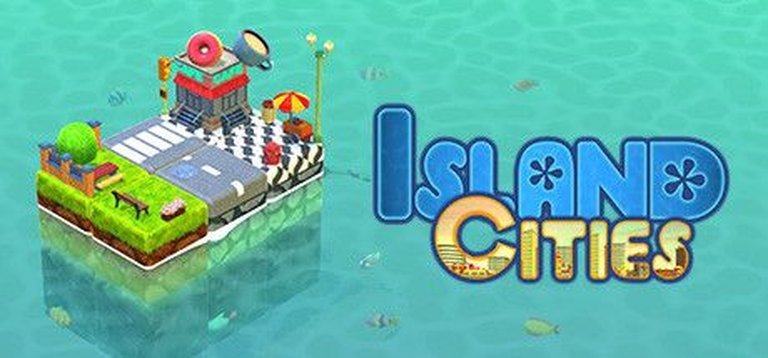
Island Cities is a casual 3D puzzle game where players re-orient floating city tiles to recreate their natural state, progressing through increasingly complex puzzles with a relaxing, accessible gameplay experience.
Where to Buy Island Cities
PC
Island Cities Patches & Updates
Island Cities Guides & Walkthroughs
Island Cities Reviews & Reception
store.steampowered.com (95/100): A triumphant return to form for the series.
ageekgirlsguide.com : If you enjoy relaxing puzzles, you’ll enjoy Island Cities.
raijin.gg (94/100): broad critical acclaim
opencritic.com (80/100): After reviewing Island Farmer and then playing Island Cities – Jigsaw Puzzle for this review, I think Island Cities is a step up from the previous game.
gameslushpile.com : Island Cities is a nice, relaxing casual puzzle game that doesn’t ask too much by design but is very likable.
Island Cities: A Soothing Puzzle Experience
In an industry dominated by sprawling epics and adrenaline-fueled action, Island Cities emerges as a tranquil oasis—a minimalist puzzle game that invites players to slow down, breathe, and find satisfaction in the simple act of rearrangement. Developed by Mens Sana Interactive, this unassuming title proves that sometimes the most profound gaming experiences come in the smallest packages.
Development History & Context
Mens Sana Interactive, an independent studio known for their minimalist puzzle games, crafted Island Cities as part of their growing portfolio of accessible, casual experiences. Released on August 30, 2022, for Windows and Macintosh (with a Nintendo Switch port following in 2023), the game arrived during a period when the industry was increasingly recognizing the value of “cozy” games—experiences designed to reduce stress rather than elevate heart rates.
Built using Unity, Island Cities represents the studio’s evolution from their earlier works like Floating Farmer and Instant Farmer. The development team appears to have refined their formula: taking the core mechanic of block-swapping puzzles and applying it to an urban theme. The game’s modest 400 MB size and minimal system requirements (Windows 10, 2GB RAM, DirectX 9.0c support) demonstrate a deliberate focus on accessibility over technical spectacle.
Narrative & Thematic Deep Dive
While Island Cities doesn’t feature traditional storytelling, it presents a subtle narrative through environmental design. The game’s premise—cities built on islands over calm water—creates a fantasy where urban planning exists in perfect harmony with nature. This juxtaposition of concrete jungles and serene waters suggests a commentary on humanity’s relationship with urban spaces: even our most chaotic environments can be reimagined as orderly, peaceful places.
Each completed island tells its own micro-story. As players arrange blocks correctly, buildings rise from the ground, cars begin to drive along newly formed roads, and people emerge to populate the spaces. These animations transform static puzzles into living dioramas, suggesting themes of creation, community, and the organic emergence of life from careful planning.
The game’s visual language—clean lines, bright colors, and simplified architecture—evokes the aesthetic of children’s building blocks or architectural models. This design choice reinforces the game’s accessibility while also suggesting a nostalgic connection to childhood creativity and the universal human impulse to build and organize.
Gameplay Mechanics & Systems
At its core, Island Cities employs a straightforward swapping mechanic: click two blocks to exchange their positions until the island matches its intended configuration. The genius lies in its elegant simplicity. Players can rotate the camera freely, zoom in and out, and preview the completed arrangement at any time. There are no timers, no scoring systems, no penalties for mistakes—only the gentle satisfaction of watching a puzzle resolve itself.
The game introduces complexity gradually across 20+ islands. Early puzzles feature small, manageable grids, while later challenges present larger, multi-layered islands that require more careful spatial reasoning. The difficulty curve is masterfully balanced—never frustrating, but always engaging enough to maintain interest.
What elevates the gameplay beyond simple block-matching is the reward system. As players complete sections of an island, they witness the immediate transformation of their work into animated life. A completed residential area suddenly fills with pedestrians. A finished road network sees toy-like cars begin their routes. This visual feedback creates a powerful sense of accomplishment and investment in the puzzle-solving process.
World-Building, Art & Sound
The visual design of Island Cities deserves particular praise. Each island features distinct architectural styles and color palettes, creating a sense of traveling through different urban environments—from quaint European villages to modern metropolises. The isometric perspective and free camera movement allow players to appreciate the intricate details of each completed scene.
The art style strikes a perfect balance between realism and stylization. Buildings are recognizable but simplified, rendered in bright, cheerful colors that prevent the urban environments from feeling oppressive. The water surrounding each island reflects the sky and structures, adding depth and tranquility to the scenes.
Sound design plays a crucial role in establishing the game’s meditative atmosphere. The soundtrack features gentle, looping melodies that never intrude but always enhance the experience. Ambient sounds—the distant hum of traffic, the gentle lapping of water against shores—create an immersive soundscape that makes each completed island feel alive.
Reception & Legacy
Upon release, Island Cities received overwhelmingly positive reviews, earning a “Very Positive” rating on Steam with 95% of 201 user reviews being favorable. Critics and players alike praised its accessibility, relaxing nature, and polished execution. The game’s modest price point ($1.99, often discounted to $1.39) positioned it as an impulse purchase with significant replay value.
The game’s success speaks to a broader trend in gaming: the growing appreciation for experiences that prioritize mental well-being over challenge or competition. In an era where many games demand dozens of hours and intense focus, Island Cities offers a guilt-free 15-minute session of pure satisfaction.
While it may not have revolutionized the puzzle genre, Island Cities has secured its place as a modern classic of the “cozy game” movement. Its influence can be seen in subsequent titles that blend simple mechanics with atmospheric presentation, proving that accessibility and depth are not mutually exclusive.
Conclusion
Island Cities stands as a testament to the power of restraint in game design. It doesn’t attempt to be everything to everyone—it simply offers a beautifully crafted, thoroughly polished puzzle experience that anyone can enjoy. In doing so, it achieves something remarkable: it transforms the potentially stressful concept of urban planning into a source of relaxation and satisfaction.
The game’s legacy lies not in innovation but in execution. It takes familiar mechanics and elevates them through thoughtful design, creating an experience that feels both timeless and perfectly suited to its moment. For players seeking a moment of calm in their busy lives, Island Cities offers a digital sanctuary where the only goal is to create something beautiful, one block at a time.
In the grand tapestry of video game history, Island Cities may not be remembered as a groundbreaking masterpiece, but it will undoubtedly be remembered as a perfect example of what happens when a development team understands exactly what they want to create—and executes that vision with precision, care, and heart.