
- Release Year: 2023
- Platforms: Windows
- Publisher: Tim Rachor
- Developer: Tim Rachor
- Genre: Adventure, Strategy, Tactics
- Perspective: 1st-person
- Game Mode: Single-player
- Gameplay: Graphic adventure, Time management, Turn-based strategy
- Setting: North America
- Average Score: 94/100
Description
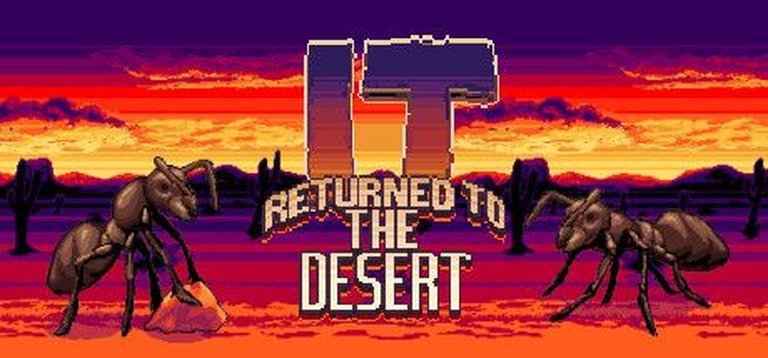
It Returned to the Desert is a first-person graphic adventure blending turn-based tactics and time management, set in the vibrant North American town of Glint Rock. Players defend against radioactive giant ants by recruiting townsfolk in a non-linear campaign filled with detective mystery, horror, and hidden secrets for high replay value.
Gameplay Videos
Where to Buy It Returned to the Desert
PC
It Returned to the Desert Guides & Walkthroughs
It Returned to the Desert Reviews & Reception
steambase.io (94/100): Player Score of 94 / 100 from 32 total reviews, rated Positive.
store.steampowered.com (94/100): 94% of the 19 user reviews for this game are positive.
It Returned to the Desert Cheats & Codes
PC (Steam)
Type the code any time in combat.
| Code | Effect |
|---|---|
| winner | Instantly win the fight |
It Returned to the Desert: Review
Introduction
Imagine a meteor streaking across the night sky over a dusty American Southwest town, crashing into the earth and unleashing horrors straight out of a 1950s B-movie—radioactive giant ants bent on devouring everything in their path. This is the pulpy premise that defined It Came from the Desert, Cinemaware’s 1989 cult classic on the Amiga, blending action-adventure with arcade flair in a way that captured the era’s love for Hollywood schlock and emergent horror. Fast-forward to 2023, and enter It Returned to the Desert, solo developer Tim Rachor’s affectionate spiritual successor that swaps frenetic action for meticulous turn-based tactics and branching narrative adventure. In an indie scene bloated with pixel-art nostalgia, this game stands out as a masterclass in homage done right: a lively, replayable tribute that modernizes its inspiration without diluting the campy charm. My thesis is unequivocal—It Returned to the Desert is a triumphant indie gem that not only revives the spirit of a forgotten Amiga legend but elevates it into a tightly designed experience deserving of broader recognition in gaming history.
Development History & Context
It Returned to the Desert emerged from the passion project of Tim Rachor, a prolific solo indie developer whose ninth Steam release (as of launch) showcases his evolution from smaller titles to this ambitious hybrid. Rachor handled all programming and design himself, leveraging Unity as the engine—a choice that allowed for cross-platform support on Windows and Linux from day one, with modest system requirements ensuring accessibility even on older hardware (minimum Intel Core i3 or equivalent, 2GB RAM). He augmented his work with licensed third-party assets, including a eclectic soundtrack sourced from Pixabay contributors like Charles Shomo’s bluegrass stomps and Patrick de Arteaga’s horror-tinged tracks from the Malign Chords pack, blending country twang with cosmic dread.
The game’s context is deeply rooted in retro revivalism. Released on February 14, 2023, amid a post-pandemic indie boom favoring bite-sized retro experiences, it directly nods to Cinemaware’s It Came from the Desert—a 1989 Amiga standout that fused point-and-click exploration, top-down shooting, and strategy in a B-movie wrapper inspired by films like Them!. Rachor’s vision was explicit: recreate that “giant ants from a meteor” vibe but adapt it to modern sensibilities, ditching the original’s arcade twitchiness for turn-based depth and non-linear storytelling. Technological constraints of the Amiga era (limited RAM, disk swaps) forced Cinemaware into hybrid gameplay; Rachor, unburdened by such limits, emphasized player agency with free saving, multiple difficulties, and no dead ends—a deliberate rejection of 80s/90s trial-and-error frustration.
The 2023 gaming landscape was saturated with pixel-art adventures (Celeste-likes, Sea of Stars), but few tackled tactical horror-mystery hybrids. Priced at a humble $4.99 (later discounted to $2.49), it targeted niche audiences via Steam tags like “Turn-Based Tactics,” “Retro,” and “Perma Death,” while itch.io offered Linux builds. Pre-launch buzz from sites like Indie Retro News and Generation Amiga positioned it as an Amiga homage, building hype among retro enthusiasts. Rachor’s active community engagement—fixing bugs like hospital turbo-runs or head injury glitches via Steam forums—exemplifies modern solo-dev sustainability, turning potential flaws into strengths through post-launch patches (e.g., Big Update 1.2 in 2025).
Narrative & Thematic Deep Dive
At its core, It Returned to the Desert is a detective-mystery horror tale set in Glint Rock, a vibrant North American desert town evoking sun-baked California outposts like the original’s Lizard Breath. You play Dr. Mill, a geologist investigating a recent meteor crash that has mutated local ants into radioactive behemoths (pugonomyrmex rugosus-style giants, per the homage). The plot unfolds non-linearly across time-managed days: gather evidence (photos, samples), convince skeptical townsfolk of the threat, recruit allies, and culminate in ant-nest assaults, including a queen showdown. Failure states loom via perma-death, where companion losses trigger ripple effects—new dialogues, secrets unlocked post-mortem, and branching endings that reward experimentation.
Characters are the narrative’s beating heart, a diverse ensemble of quirky archetypes ripe for replayability. Recruitable townsfolk include nurses, pharmacists, festival-goers, and enigmatic figures tied to Rachor’s lore (hints of connections to his games like Party Host or Arkham Nightmares). Dialogue shines in its B-movie flair: pithy, humorous exchanges laced with 80s/90s retro references, supernatural undertones (Zo-Kalar entities, cosmic horrors via tracks like “Old Cosmic Entity”), and dynamic narration that shifts based on party composition or deaths. Themes probe isolation versus community—Dr. Mill’s outsider status mirrors Cold War paranoia films—interwoven with horror tropes (body horror from injuries, eerie “unnatural encounters”) and subtle satire on denialism (authorities dismissing ant evidence until too late).
Deeper layers emerge in mini-games and secrets: Ouija-style events, pharmacy ownership reveals, or “not so happy” festivals post-death. Permadeath isn’t punitive but thematic, emphasizing consequences in a “lively town” where every NPC has backstory. No voice acting, but point-and-click interactions deliver branching trees that feel organic, avoiding exposition dumps for emergent storytelling. It’s a love letter to interactive fiction, where horror builds not from jumpscares but creeping dread and moral choices.
Gameplay Mechanics & Systems
The core loop masterfully blends graphic adventure exploration with turn-based tactics, creating addictive time pressure. Days tick forward via a management system: explore Glint Rock’s 1st-person pixel vistas (point-and-select interface), collect resources (arms, consumables like meds), recruit via persuasion mini-games, then deploy in grid-based ant battles. Combat is the star—position units on tactical maps, manage action points for attacks, movement, or items, with environmental hazards (radiation, nests) adding strategy. Ants swarm intelligently, forcing retreats or ambushes; perma-death raises stakes, as fallen allies alter future recruits and dialogues.
Progression is non-linear and party-driven: larger teams unlock synergies (e.g., nurse healing), but injuries (head trauma persisting across fights) demand management. UI is clean retro-futurism—crisp inventories, portrait arrows for selection, keyboard/mouse shortcuts—eschewing clutter for readability. Innovations include time compression (skip safe days), evidence-based authority sway, and surprises like shooting-range mini-games. Flaws are minor: early bugs (fixed via updates) like turbo-glitches or persistent debuffs, but modern principles shine—no grinding, scalable difficulties, Steam Achievements (20 total) for completionists.
Replayability soars with 10+ hours per run, variable parties yielding fresh paths. It’s flawed in scale (solo-dev limits scope), but excels in tight loops without bloat.
World-Building, Art & Sound
Glint Rock pulses with life: a sandbox of sun-scorched streets, saloons, hospitals, and outskirts teeming with secrets—election posters (once AI-suspect, patched), hidden lore tying to Rachor’s universe. Atmosphere drips B-movie authenticity: 90s pixel art (charming sprites, parallax scrolling) evokes Amiga limitations lovingly recreated in HD, with dynamic lighting (meteor glows, ant bioluminescence) heightening tension.
Sound design amplifies immersion—an atmospheric OST mixing bluegrass romps (“Bluegrass Stomp”) for town jaunts with dread synths (“Desert Horror,” “They Are Already Here”). Tracks like “The Ninth Crewman” underscore cosmic horror, while fiddler country bands ground the Americana. No SFX overload; subtle ant skitters and Geiger-counter ticks build paranoia. Together, they forge a cohesive retro vibe: visually nostalgic yet crisp, aurally eclectic yet thematic, transforming a niche premise into a enveloping world.
Reception & Legacy
Launch reception was quietly stellar for an indie niche title: 94% positive on Steam (19 reviews, 32 total counting non-Steam), lauded for replayability, homage fidelity, and dev responsiveness. No major critic scores (MobyGames/Metacritic blanks), but curator nods and community guides (e.g., PB’s comprehensive Steam guide) highlight depth. Forums buzz with secrets—post-death dialogues, lore crossovers—fostering cult status. Commercially modest (3 MobyGames collectors), price drops sustained sales.
Legacy evolves as a spiritual successor benchmark: reviving It Came from the Desert‘s DNA for modern tacticians, influencing indie hybrids (pixel-tactics like Into the Breach echoes). Rachor’s updates (1.1/1.2) ensure longevity, positioning it amid Amiga revivals (Turrican 2 AGA). Its influence? Subtle but potent—proving solo devs can honor 80s/90s without pandering, inspiring bug-movie tactics in a sea of roguelites.
Conclusion
It Returned to the Desert distills the chaotic joy of its Amiga progenitor into a polished, player-respecting package: non-linear adventure, permadeath tactics, and B-movie heart, all wrapped in pixel perfection. Tim Rachor’s solo triumph overcomes indie constraints, delivering exhaustive replay value without frustration. In video game history, it carves a niche as essential retro revivalism—a must-play for Amiga faithful and tactics fans alike. Verdict: 9/10. Buy it, recruit your party, and let the ants return—history remembers those who fight back.