
- Release Year: 2013
- Platforms: Windows
- Publisher: Hempuli
- Developer: Hempuli
- Genre: Adventure, Horror
- Perspective: Top-down
- Game Mode: Single-player
- Gameplay: Graphic adventure
- Setting: Horror
Description
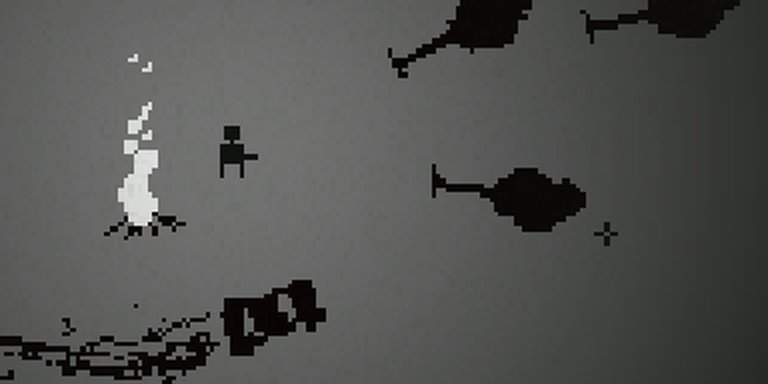
It’ll End Tonight is a top-down 2D graphic adventure game with horror elements, developed by Arvi Teikari (Hempuli) and released in 2013. The game follows a mysterious narrative set in a surreal, crumbling world, blending psychological horror with exploration. Players navigate through eerie environments, uncovering cryptic lore and confronting unsettling themes, all while piecing together the enigmatic story behind the protagonist’s journey.
It’ll End Tonight Cheats & Codes
PC (2013)
From the main menu, go into the Options menu and enable Console. Press the Tilde key (`) in-game to open the console. Type ‘dipstick’ to enable cheat mode for the current level.
| Code | Effect |
|---|---|
| dipstick | Enables cheat mode for the current level |
| God | Grants invulnerability |
| Fly | Enables free flight |
| Walk | Disables Fly mode |
| Gunfinity | Grants infinite ammunition for missile and special weapons |
| Chojin | Grants God mode, Gunfinity, and spawns an Excalibat |
| Shootme | Grants Bulletproof Armor |
| Burnme | Grants Fireproof Armor |
It’ll End Tonight: A Masterclass in Minimalist Horror and Existential Dread
Introduction: A Game That Lingers Like a Bad Dream
It’ll End Tonight is a game that defies easy categorization. Released in 2013 by Finnish developer Arvi “Hempuli” Teikari, this tiny, experimental horror-adventure game is a haunting exploration of isolation, despair, and the fragility of the human psyche. Clocking in at just over a minute to complete, it is a masterclass in how to convey profound emotional weight in an astonishingly short runtime. Despite its brevity—or perhaps because of it—It’ll End Tonight has left an indelible mark on those who have experienced it, serving as a cult classic in the indie horror scene and a testament to the power of atmospheric storytelling.
This review will dissect It’ll End Tonight in exhaustive detail, examining its development, narrative depth, gameplay mechanics, and the ways in which it subverts expectations to deliver an experience that is as unsettling as it is unforgettable. We will also explore its place in the broader context of video game history, its influence on subsequent titles, and why it remains a fascinating artifact of early 2010s indie game design.
Development History & Context: The Birth of a Nightmare
The Creator: Arvi “Hempuli” Teikari
It’ll End Tonight was developed by Arvi Teikari, a Finnish game designer known for his work under the pseudonym “Hempuli.” Teikari is a prolific figure in the indie game scene, having contributed to over 115 games, including notable titles like Baba Is You (2019), a critically acclaimed puzzle game that redefined the genre with its innovative rule-based mechanics. However, It’ll End Tonight stands as one of his earliest and most enigmatic works, created during the Nordic Game Jam 2013.
Teikari’s approach to game design is often characterized by experimentation, minimalism, and a deep understanding of how to evoke emotion through simplicity. It’ll End Tonight is no exception. The game was built using Multimedia Fusion / Clickteam Fusion 2.5, a tool known for its accessibility and flexibility, which allowed Teikari to rapidly prototype and refine his vision.
The Nordic Game Jam and the Indie Revolution
The early 2010s were a golden age for indie game development, fueled by the rise of digital distribution platforms like Steam, itch.io, and the Humble Bundle. Game jams—short, intensive development sprints—became a breeding ground for innovation, allowing developers to experiment with bold ideas without the pressure of commercial success. The Nordic Game Jam, where It’ll End Tonight was conceived, was one such event, bringing together creators from across Scandinavia to push the boundaries of what games could be.
In this context, It’ll End Tonight emerged as a product of its time: a game that embraced the ethos of indie development by prioritizing atmosphere and emotional resonance over traditional gameplay mechanics. It was a reaction against the bloated, AAA titles of the era, proving that a game could be deeply affecting without needing hundreds of hours of content or photorealistic graphics.
Technological Constraints and Creative Freedom
The game’s technical limitations—2D scrolling, top-down perspective, and direct control—were not obstacles but rather tools that Teikari wielded with precision. The constraints of Clickteam Fusion 2.5 forced a focus on core mechanics and narrative, stripping away any superfluous elements. The result is a game that feels deliberate in every aspect, where every pixel and line of dialogue serves a purpose.
The decision to use a top-down perspective was particularly significant. Unlike the first-person or side-scrolling views common in horror games, the top-down perspective creates a sense of detachment, as if the player is an omniscient observer rather than an active participant. This choice amplifies the game’s themes of helplessness and inevitability, reinforcing the idea that the protagonist’s fate is sealed from the outset.
Narrative & Thematic Deep Dive: A Descent into Madness
Plot Summary: What Happens in It’ll End Tonight?
At its core, It’ll End Tonight is a story about loneliness, despair, and the inescapability of fate. The game follows an unnamed protagonist (often interpreted as a stand-in for the player) who finds themselves trapped in a surreal, nightmarish world. The narrative unfolds through sparse dialogue, environmental storytelling, and a series of cryptic, dreamlike sequences.
The game begins with the protagonist waking up in a dimly lit room, their surroundings shrouded in darkness. As they explore, they encounter fragments of a broken narrative: notes scribbled on walls, flickering lights, and the distant echoes of a voice that may or may not be their own. The further they progress, the more the environment distorts, reflecting the protagonist’s deteriorating mental state.
The climax of the game is as abrupt as it is devastating. Without spoiling the exact details, the ending leaves the player with a sense of inescapable dread, as if the protagonist’s fate was predetermined from the moment they began. The game’s title, It’ll End Tonight, is both a promise and a threat—an acknowledgment that whatever horrors await, they are inevitable.
Themes: Isolation, Mental Health, and Existential Horror
It’ll End Tonight is a game that thrives on subtext. Beneath its minimalist surface lies a rich tapestry of themes that resonate deeply with players:
-
Isolation and Loneliness
The protagonist is utterly alone, both physically and emotionally. The game’s world is devoid of other characters, reinforcing the sense of solitude. The only “companion” the protagonist has is their own fractured psyche, which manifests in the form of hallucinations and distorted memories. -
Mental Health and Psychological Horror
The game can be interpreted as a metaphor for depression, anxiety, or even psychosis. The protagonist’s journey mirrors the experience of someone trapped in a cycle of negative thoughts, unable to escape their own mind. The surreal, shifting environments reflect the instability of a mind in crisis, where reality and illusion blur together. -
Existential Dread and the Inevitability of Fate
It’ll End Tonight is, at its heart, a game about the futility of resistance. No matter what the player does, the outcome is predetermined. This theme is reinforced by the game’s mechanics, which offer no traditional “win” condition—only the inevitability of the ending. The game forces the player to confront the idea that some struggles are unwinnable, and that acceptance may be the only path forward. -
The Unreliable Narrator
The protagonist’s perception of reality is unreliable, calling into question everything the player experiences. Are the events of the game real, or are they the delusions of a broken mind? This ambiguity is central to the game’s horror, as it leaves the player questioning their own interpretation of events.
Dialogue and Environmental Storytelling
It’ll End Tonight is a masterclass in show, don’t tell. The game’s narrative is conveyed almost entirely through environmental storytelling and subtle audio cues, with minimal dialogue. The notes scattered throughout the world hint at a larger story, but they are deliberately vague, leaving much to the player’s imagination.
For example:
– A note might read: “I can’t sleep. The walls are whispering.”
– Another might say: “It’s always night here. I don’t remember the sun.”
These fragments are open to interpretation, allowing players to project their own experiences and fears onto the narrative. The lack of explicit explanation makes the horror more personal, as each player’s interpretation will differ based on their own life experiences.
The Ending: A Masterstroke of Ambiguity
The ending of It’ll End Tonight is one of the most talked-about aspects of the game. Without spoiling it, the conclusion is deliberately ambiguous, leaving players with more questions than answers. Some interpretations suggest that the protagonist:
– Dies by suicide, unable to escape their despair.
– Is trapped in a loop, doomed to relive their suffering eternally.
– Never existed at all, and the entire game is a manifestation of someone else’s guilt or trauma.
The beauty of the ending lies in its refusal to provide closure. Instead, it lingers in the player’s mind, haunting them long after the game is over. This ambiguity is a testament to Teikari’s skill as a storyteller, as it invites players to engage with the game on a deeper, more personal level.
Gameplay Mechanics & Systems: Simplicity as a Weapon
Core Gameplay Loop: Exploration and Despair
It’ll End Tonight is not a game about challenge in the traditional sense. There are no enemies to fight, no puzzles to solve, and no skills to upgrade. Instead, the gameplay is centered around exploration and atmosphere, with the player guiding the protagonist through a series of interconnected rooms.
The controls are intentionally clunky and unresponsive, reinforcing the protagonist’s sense of helplessness. Movement is slow, and the protagonist’s animations are stiff, as if they are struggling against an unseen force. This design choice is crucial to the game’s horror, as it makes the player feel as though they are fighting against the game itself.
The Role of Sound and Silence
Sound design plays a pivotal role in It’ll End Tonight. The game’s audio is sparse, with long stretches of unsettling silence punctuated by sudden, jarring noises. The absence of a traditional soundtrack forces the player to focus on the ambient sounds—dripping water, distant echoes, the protagonist’s labored breathing—which heighten the sense of isolation.
When sound does occur, it is often distorted or inverted, creating a sense of unease. For example, the protagonist’s footsteps might suddenly sound as though they are walking on glass, or a distant voice might whisper something unintelligible. These audio cues are designed to disorient the player, making them question what is real and what is a hallucination.
The User Interface: Minimalism as a Narrative Tool
The game’s UI is almost nonexistent, with no health bar, inventory, or objectives displayed on-screen. This minimalism serves two purposes:
1. Immersing the player in the protagonist’s perspective, where there are no clear goals or indicators of progress.
2. Reinforcing the theme of futility, as the player has no way to measure their success or failure.
The only UI element present is a flickering cursor, which the player uses to interact with objects. Even this is unreliable, as the cursor occasionally disappears or behaves erratically, mirroring the protagonist’s deteriorating grip on reality.
Innovative (or Flawed?) Systems
While It’ll End Tonight is not a game that innovates in terms of mechanics, it does experiment with narrative delivery in ways that were ahead of its time. Some of its most notable (and divisive) systems include:
-
The “No-Save” Mechanic
The game does not allow the player to save their progress. Once started, the game must be completed in a single sitting. This design choice is deliberate, as it forces the player to experience the game’s horror in one uninterrupted session, mirroring the protagonist’s inability to escape their situation. -
The Illusion of Choice
The game occasionally presents the player with false choices, such as doors that lead to the same room or notes that seem to offer clues but ultimately provide no useful information. These moments reinforce the theme of inevitability, as the player realizes that their actions have no meaningful impact on the outcome. -
The “Glitch” Aesthetic
It’ll End Tonight occasionally breaks its own rules, with visual glitches, sudden crashes, or unexplained jumps in the narrative. These “glitches” are intentional, serving as a metaphor for the protagonist’s fractured psyche. They also create a sense of unpredictability, keeping the player on edge.
World-Building, Art & Sound: Crafting a Nightmare
Setting: A World of Shadows and Echoes
The world of It’ll End Tonight is a surreal, dreamlike landscape, where reality is constantly shifting. The game takes place in a series of interconnected rooms, each more distorted than the last. The environments are rendered in monochromatic tones, with heavy use of shadows and negative space to create a sense of emptiness.
Key locations include:
– The Starting Room: A bare, dimly lit space with a single bed and a flickering lightbulb. This room serves as the protagonist’s “safe space,” though it offers no real safety.
– The Hallway of Doors: A long, narrow corridor lined with doors that lead to identical rooms. This area reinforces the theme of futility, as the player quickly realizes that no door leads to escape.
– The Final Chamber: A vast, empty space where the game’s climax unfolds. The room is devoid of any distinguishing features, symbolizing the protagonist’s complete loss of identity.
Visual Direction: Less Is More
The game’s art style is deliberately minimalist, using simple shapes and a limited color palette to create a sense of dread. The protagonist is represented as a small, faceless figure, further emphasizing their insignificance in the grand scheme of the narrative.
The use of light and shadow is particularly effective. The game’s environments are often shrouded in darkness, with only a few sources of light (such as flickering bulbs or distant windows) illuminating the protagonist’s path. This creates a sense of claustrophobia and uncertainty, as the player is never quite sure what lies beyond the edges of the screen.
Sound Design: The Language of Fear
As mentioned earlier, sound is one of the most critical elements of It’ll End Tonight. The game’s audio design is sparse but deliberate, with every sound serving a specific purpose.
Key audio elements include:
– Silence: The absence of sound is often more unsettling than any noise. The game frequently employs long stretches of silence, forcing the player to listen intently for any hint of what might come next.
– Distorted Voices: The protagonist occasionally hears whispers or muffled voices, which are often reversed or pitch-shifted to create an eerie effect.
– Ambient Noise: Dripping water, creaking floorboards, and distant echoes are used to create a sense of an unseen presence, as if the protagonist is being watched.
The game’s lack of a traditional soundtrack is a bold choice, as it forces the player to rely on their own imagination to fill in the gaps. This makes the horror more personal, as each player’s experience will be shaped by their own fears and anxieties.
Reception & Legacy: A Cult Classic is Born
Critical Reception: A Game That Divides
It’ll End Tonight was released to little fanfare in 2013, as it was overshadowed by larger indie darlings like The Stanley Parable and Papers, Please. However, those who did play it were deeply affected by its atmosphere and themes.
The game’s MobyGames score is listed as “n/a”, indicating that it was not widely reviewed by mainstream critics. However, player reactions on forums and social media suggest that it resonated strongly with a niche audience. Many players described it as “haunting,” “unsettling,” and “unforgettable,” with some even reporting that it left them with a sense of genuine unease long after playing.
Commercial Performance: A Hidden Gem
Given its extremely short runtime (just over a minute), It’ll End Tonight was never intended to be a commercial success. Instead, it served as a proof of concept for Teikari’s ability to craft a deeply emotional experience in a minimalist package. The game was distributed for free on platforms like itch.io and the TIG Forums, where it gained a small but devoted following.
Influence on Subsequent Games
While It’ll End Tonight did not spawn a direct sequel or franchise, its influence can be seen in later indie horror games that prioritize atmosphere and psychological horror over traditional gameplay mechanics. Some notable examples include:
– Lone Survivor (2012): A survival horror game that explores themes of isolation and mental illness, with a similar focus on environmental storytelling.
– The Cat Lady (2012): A psychological horror game that deals with depression and suicide, using a minimalist art style to convey its themes.
– Pony Island (2016): A meta-horror game that plays with the idea of the player’s agency, much like It’ll End Tonight.
Teikari’s later work, particularly Baba Is You, also reflects the lessons learned from It’ll End Tonight. While Baba Is You is a puzzle game rather than a horror title, it shares a similar philosophy of minimalism and player interpretation, proving that the ideas explored in It’ll End Tonight have had a lasting impact on Teikari’s design sensibilities.
The Game’s Place in Video Game History
It’ll End Tonight is a cult classic—a game that may not have achieved widespread recognition but has left an indelible mark on those who experienced it. It stands as a testament to the power of indie game development in the early 2010s, a time when creators were free to experiment with bold, unconventional ideas.
In the broader context of video game history, It’ll End Tonight is a reminder that games do not need to be long or complex to be meaningful. It proves that a game can be deeply affecting with nothing more than a strong atmosphere, a compelling narrative, and a willingness to take risks.
Conclusion: Why It’ll End Tonight Still Matters
It’ll End Tonight is not a game for everyone. Its bleak themes, minimalist design, and lack of traditional gameplay will undoubtedly alienate some players. However, for those willing to engage with it on its own terms, it offers an experience that is unlike anything else in gaming.
The game’s greatest strength lies in its ambiguity and emotional resonance. It does not seek to provide answers or closure but instead invites the player to confront their own fears and interpretations. In this way, It’ll End Tonight transcends its status as a mere “game” and becomes something closer to interactive art.
Final Verdict: A Haunting Masterpiece
Rating: 9/10 – A Cult Classic That Lingers Long After the Credits Roll
It’ll End Tonight is a short but devastating experience that proves the power of minimalism in game design. It is not a game to be “beaten” but rather experienced, and its themes of isolation, despair, and inevitability will stay with you long after you’ve finished playing.
While it may not have the polish or scope of modern horror games, its raw emotional honesty and uncompromising vision make it a standout title in the indie horror genre. If you are a fan of psychological horror, environmental storytelling, or games that challenge conventional design, It’ll End Tonight is an essential play.
In the pantheon of video game history, It’ll End Tonight may not be as well-known as Silent Hill or Resident Evil, but it deserves to be remembered as one of the most effective and affecting horror experiences ever created. It is a game that does not end when the screen fades to black—it ends when you finally stop thinking about it. And for many players, that may be never.
Post-Script: Where to Play It’ll End Tonight
Given its status as a free, experimental title, It’ll End Tonight can be difficult to track down. However, it is occasionally available on:
– itch.io (search for “Hempuli” or “Arvi Teikari”)
– TIG Forums (where it was originally posted)
– Indie game preservation sites
If you are a fan of short, atmospheric horror experiences, it is well worth seeking out. Just be prepared—it’ll end tonight, but it may haunt you for much longer.