
- Release Year: 2019
- Platforms: Macintosh, Windows
- Publisher: GRüN STUDIO
- Developer: Alexander Ignatov, Ilya Mazo
- Genre: Adventure
- Perspective: 1st-person
- Game Mode: Single-player
- Gameplay: Meditative, Zen
- Setting: Contemporary
- Average Score: 55/100
Description
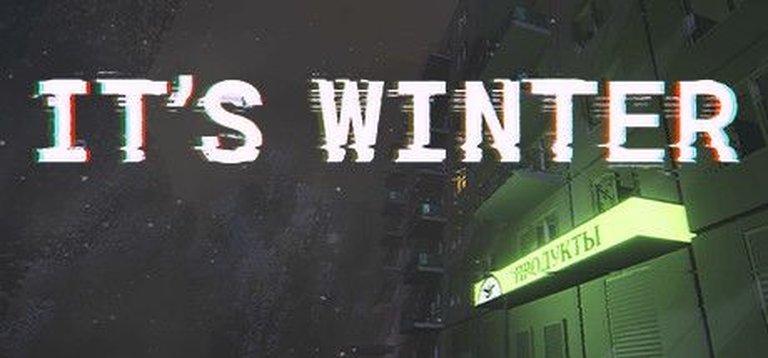
It’s Winter is a meditative first-person adventure game set in a nondescript Russian suburb, where players explore a melancholic, snow-covered environment devoid of traditional gameplay mechanics. Created by poet and artist Ilia Mazo, the game immerses players in a quiet, introspective experience, evoking themes of loneliness, ennui, and post-Soviet melancholy through its detailed, poetic setting.
Where to Buy It’s Winter
PC
It’s Winter Guides & Walkthroughs
It’s Winter Reviews & Reception
rockpapershotgun.com : A short while spent in this bad life is good.
metacritic.com (70/100): It’s Winter is very specifically about nothingness – by which I mean, though its blood is rich with walking simulator platelets, it is not about dreamy escapism, but rather about feeling purposeless, even trapped, by one’s situation.
opencritic.com : It’s Winter is short and without much to ‘do’, which is clearly a problem for some folks who want to feel they’ve wrung the most value out of their spending money, but I wouldn’t want it more complex and I certainly wouldn’t want it longer: that would break the spell.
mobygames.com (40/100): Nothing awaits you: there is no chance to get out, no room for adventures and breathtaking plot.
It’s Winter: A Haunting Ode to Post-Soviet Melancholy
Introduction: The Loneliness of the Long Winter Night
It’s Winter is not a game for those seeking escapism, action, or even traditional narrative. It is, instead, a digital poem—a haunting, interactive meditation on isolation, futility, and the quiet despair of post-Soviet life. Released in 2019 by poet and artist Ilya Mazo in collaboration with developer Alexander Ignatov, It’s Winter defies conventional gaming expectations. There are no goals, no enemies, no progression systems—just an apartment, a courtyard blanketed in snow, and an overwhelming sense of stagnation. Yet, within this apparent emptiness lies a profound, almost unsettling resonance. The game’s power lies in its refusal to entertain, instead offering a mirror to the player’s own existential ennui.
Development History & Context: The Birth of “Post-Soviet Sad 3D”
It’s Winter emerged from a period of personal and creative turmoil for Mazo. Struggling with illness, unemployment, and a sense of artistic failure, he found solace in documenting the mundane beauty of his daily walks—a practice that evolved into a multimedia project encompassing poetry, music, film, and, finally, this game. Developed in Unity by Ignatov (known in indie circles as “sad3d”), the game is a deliberate rejection of mainstream gaming tropes. It is part of a broader cultural movement in Russia that embraces melancholy as both an aesthetic and a political statement—a response to the disillusionment of a generation raised in the shadow of a collapsed empire.
The gaming landscape of 2019 was dominated by open-world epics and competitive multiplayer experiences, making It’s Winter an anomaly. Its minimalist design and lack of traditional gameplay mechanics align it more closely with experimental art games like Dear Esther or The Stanley Parable, but its cultural specificity sets it apart. This is not just a walking simulator; it is a Russian walking simulator, steeped in the architectural dreariness of khrushchyovka apartment blocks and the existential weight of endless winter.
Narrative & Thematic Deep Dive: The Poetry of Futility
It’s Winter has no plot in the traditional sense. The player awakens in a cramped apartment, surrounded by the detritus of a life barely lived: a broken radio, half-eaten food, scattered pills, and cryptic notes scrawled in Cyrillic. The outside world is a snow-choked courtyard, its playgrounds empty, its shops closed. The only “characters” are the distant, mechanical tractors that patrol the snow, their orange glow a silent reminder of the player’s confinement.
The game’s themes are universal—loneliness, depression, the search for meaning—but its setting is unmistakably Russian. The khrushchyovka (a type of prefabricated Soviet apartment building) is more than just a backdrop; it is a symbol of the failed utopian promises of the USSR, now reduced to a prison of concrete and cold. The snow, too, is not merely a seasonal detail but a metaphor for the suffocating inertia of post-Soviet life. As Mazo himself has said, the game is an “anthem to the beauty of everyday things,” but it is a beauty tinged with sorrow.
The lack of explicit narrative forces the player to project their own stories onto the environment. Why is the protagonist alone? Are the tractors real, or figments of a fractured psyche? The game’s refusal to answer these questions is its greatest strength, leaving the player to grapple with their own interpretations.
Gameplay Mechanics & Systems: The Art of Doing Nothing
It’s Winter is, mechanically, a walking simulator with a twist: there is nowhere to go. The player can explore their apartment, interact with objects (microwaving cheese, flushing a toilet, tossing trash down a chute), and venture into the courtyard, but every path leads back to the same place. The game’s boundaries are invisible but unyielding—attempts to leave the courtyard result in the player being subtly redirected, as if by an unseen force.
This lack of agency is deliberate. The game’s systems are designed to evoke the feeling of being trapped in a loop, a “groundhog night” of futility. The interactable objects are not puzzles to solve but distractions to occupy time. The radio, when fixed, plays only static and Mazo’s own poetry, reinforcing the sense of isolation. Even the act of cooking—grilling toast, microwaving a tomato—feels hollow, a ritual performed out of habit rather than necessity.
The game’s brevity (most playthroughs last under an hour) is essential to its impact. A longer experience would risk diluting its emotional potency, turning melancholy into monotony. As Rock, Paper, Shotgun’s Alec Meer noted, “Take too long to pose its questions and it would helplessly begin to answer them.”
World-Building, Art & Sound: The Aesthetics of Despair
Visually, It’s Winter is a masterclass in atmospheric design. The apartment is a claustrophobic maze of peeling wallpaper and dim lighting, while the courtyard is a vast, desolate expanse of snow and concrete. The game’s color palette is muted—greys, whites, and sickly yellows—evoking the bleakness of a Russian winter. The attention to detail is remarkable: cigarette butts litter the stairwell, the fridge contains only the barest essentials, and the playground’s rusted swings creak ominously in the wind.
The sound design is equally immersive. The howl of the wind, the distant hum of the tractors, the clatter of dishes in the sink—all contribute to a sense of oppressive quiet. Mazo’s own music, a mix of industrial drones and haunting chants, plays sporadically, further blurring the line between diegesis and commentary.
Reception & Legacy: The Cult of the Sad Simulator
It’s Winter was met with confusion and fascination in equal measure. Western critics praised its atmospheric depth but struggled with its lack of traditional gameplay. Russian players, meanwhile, recognized it as a painfully accurate simulation of their own lives. Some dismissed it as “not a game,” while others hailed it as a work of interactive art.
Its legacy lies in its influence on the “sad 3D” genre—a loose category of games that prioritize mood and atmosphere over mechanics. Titles like The Longing and A Short Hike owe a debt to It’s Winter’s willingness to embrace emotional ambiguity. It also stands as a testament to the power of indie games to explore themes and settings ignored by mainstream developers.
Conclusion: A Game That Feels Like Life
It’s Winter is not for everyone. It is slow, depressing, and deliberately unsatisfying. But for those willing to engage with it on its own terms, it offers something rare in gaming: a genuine emotional experience. It is not about escaping reality but confronting it—about sitting with the discomfort of loneliness and finding meaning in the mundane.
In the end, It’s Winter is less a game than a feeling—a cold, quiet, and profoundly human one. It may not be fun, but it is unforgettable.
Final Verdict: 8.5/10 – A haunting, essential experience for those who seek games as art.