
- Release Year: 2022
- Platforms: Macintosh, Nintendo Switch, PlayStation 4, Windows, Xbox One, Xbox Series
- Publisher: HypeTrain Digital, LLC
- Developer: So Romantic
- Genre: Role-playing (RPG)
- Perspective: 3rd-person (Other)
- Game Mode: Single-player
- Gameplay: Japanese-style RPG, Turn-based combat
- Setting: Cyberpunk, dark sci-fi
- Average Score: 70/100
Description
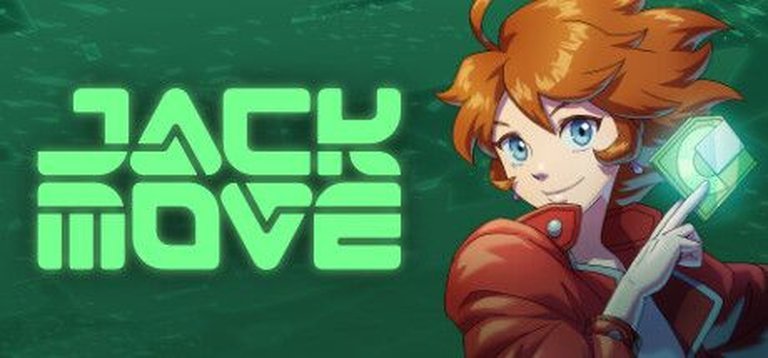
Jack Move is a cyberpunk-themed JRPG that combines turn-based combat with real-time elements, set in a dystopian future where players control Noa, a skilled hacker seeking revenge and uncovering corporate conspiracies. With its anime-inspired visuals and engaging storyline, the game features strategic battles, a deep hacking mechanic, and a richly detailed world where players navigate through neon-lit cities and shadowy networks to expose the truth.
Gameplay Videos
Where to Buy Jack Move
Jack Move Free Download
Jack Move Guides & Walkthroughs
Jack Move Reviews & Reception
rpgamer.com (60/100): Jack Move is a cyberpunk RPG inspired by several Final Fantasy games and ’80s computer interfaces.
metacritic.com (75/100): Generally Favorable Based on 7 Critic Reviews
Jack Move: A Cyberpunk Ode to Retro JRPGs
Introduction
In an era dominated by sprawling open-world epics, Jack Move emerges as a defiant love letter to the bite-sized JRPGs of the 16-bit era. Developed by So Romantic and published by HypeTrain Digital, this cyberpunk adventure blends sleek pixel art, tactical turn-based combat, and a neon-drenched narrative into a compact 7–10 hour experience. While its brevity may disappoint those craving a marathon, Jack Move proves that greatness can come in small packages—even if its ambitions occasionally outpace its execution.
Development History & Context
Studio Vision & Origins
Jack Move began as a passion project in 2012, spearheaded by indie developer Edd Parris. Drawing inspiration from Golden Sun, Final Fantasy VII, and the film Hackers, Parris sought to merge retro JRPG sensibilities with cyberpunk’s biting social commentary. The game’s development was a labor of love, with Parris handling programming and direction alongside collaborators like lead artist Joe Williamson and writer Amalie Kae.
Technological Constraints & Innovations
Built in Unity, Jack Move employs clever post-processing and forced-perspective techniques to emulate 2D pixel art while utilizing 3D environments—a nod to the aesthetic limitations of the SNES era. This “Hi-Bit” style enhances the game’s nostalgic charm while allowing modern flourishes, such as fluid battle animations. Despite its small team, So Romantic crafted a dense world dripping with personality, though budget constraints limited narrative scope and mechanical depth.
The Gaming Landscape
Released in September 2022, Jack Move entered a market saturated with cyberpunk titles following Cyberpunk 2077’s rocky launch. However, its retro appeal and concise runtime carved a niche among time-starved players and JRPG purists. Critics noted its refreshing contrast to bloated AAA titles, though some questioned its $19.99 price tag for such a short experience.
Narrative & Thematic Deep Dive
Plot Summary
Players assume the role of Noa Solares, a vigilante hacker thrust into a conspiracy after her estranged father, Dr. Abner Solares, is kidnapped by the dystopian mega-corporation Monomind. The story explores themes of corporate exploitation, digital consciousness, and familial bonds, with Noa navigating monochrome slums and cyberspace dungeons to uncover her father’s research on brain uploading.
Characters & Dialogue
Noa shines as a snarky yet vulnerable protagonist, supported by Ryder, her wheelchair-bound strategist, and Guin Blakely, a martini-swilling ex-spy. Antagonists like the unhinged Dr. Qadir and the calculating executive Krall add flair, though their motivations often veer into cliché (e.g., Krall’s quest to upload her paralyzed daughter’s mind). Dialogue crackles with wit (“Hold your Trojans!”) but occasionally stumbles into predictable cyberpunk tropes.
Underlying Themes
The game critiques corporate hegemony and technological decay, framed by an alternate history where a 1997 solar flare (“The Dark”) enabled corporations to replace governments. While it lacks the nuance of Deus Ex or Ghost in the Shell, its exploration of digital immortality and resistance resonates—especially in its bittersweet ending, where Krall’s Pyrrhic victory sparks a potential sequel hook.
Gameplay Mechanics & Systems
Core Combat Loop
Battles occur in cyberspace, blending traditional turn-based mechanics with cyberpunk jargon:
– Hack: Basic attacks.
– Execute: Elemental skills (Cyberware, Electroware, Wetware) governed by a rock-paper-scissors system.
– Jack Moves: Limit Break-style abilities powered by a gauge filled through combat.
– RAM Management: Players install software mid-battle, sacrificing turns to swap abilities—a novel but underutilized feature.
Character Progression
Noa’s Cyber Deck can be upgraded with hardware for stat boosts or passive abilities (e.g., counterattacks). However, progression feels linear, with skill tiers gated by level requirements instead of player creativity.
Innovations & Flaws
The game’s adjustable encounter rate is a standout QoL feature, letting players tailor grinding to their preference. Yet balance issues plague late-game battles: The final boss’s 30–60 minute health sponge design clashes with the otherwise brisk pacing. Critics also noted the lack of party members as a missed opportunity for tactical depth.
World-Building, Art & Sound
Setting & Atmosphere
Jack Move’s world, Monocity-1, evokes Final Fantasy VII’s Midgar with its stratified society and neon-lit slums. While explorable areas are limited, NPCs inject life through side quests (e.g., retrieving a child’s toy or hacking corporate billboards). The river area’s Beef Gate—a late-game zone accessible early—showcases the team’s sly humor, warning players via an NPC about overpowered enemies.
Visual Direction
Pixel art dazzles with meticulous detail: rain-slick streets glow under holographic ads, while cyberspace battlegrounds pulse with CRT-filtered grids. Battle animations, particularly the Rapid-Fire Fisticuffs skill, blend SNES-era charm with modern fluidity.
Sound Design
Composer Charlie “Fracture” Fieber’s synth-heavy soundtrack channels Streets of Rage and Persona, with tracks like the combat theme “Glitch City” amplifying the cyberpunk vibe. Sound effects, from the metallic clang of attacks to the hum of idle terminals, ground the game’s digital abstraction.
Reception & Legacy
Critical Response
Jack Move earned a 78% average from critics (via MobyGames) and a Metascore of 75/100. Praise centered on its:
– Tight combat and pixel art (Nintendo Life: 9/10).
– Sharp dialogue and protagonist (Rock Paper Shotgun: “Winsome characters”).
Critics critiqued its:
– Short length and lack of narrative ambition (RPGamer: 3/5).
– Underdeveloped mechanics (Finger Guns: “Too simplistic for genre veterans”).
Player Reception
User reviews were mixed (Metacritic: 7.4/10), with some lauding its retro appeal and others lamenting its brevity. The Steam community debated its value, with playtimes ranging from 5 to 12 hours.
Industry Impact
While not a commercial blockbuster, Jack Move demonstrated the viability of niche, retro-inspired JRPGs. Its success may inspire smaller studios to prioritize focused design over bloated runtimes—a legacy underscored by its BitSummit 2021 award for indie excellence.
Conclusion
Jack Move is a diamond in the rough—flawed yet fiercely original. Its vibrant pixel art, snappy combat, and endearing protagonist make it a must-play for cyberpunk enthusiasts and retro JRPG fans, even as its short length and mechanical simplicity leave room for growth. As a testament to indie ingenuity, it secures its place in gaming history not as a revolution, but as a heartfelt homage to the classics that inspired it.
Final Verdict: A brisk, beautifully crafted cyberpunk romp that punches above its weight—albeit with a few glitches in the matrix.