
- Release Year: 2004
- Platforms: Windows
- Publisher: Anuman Interactive SA, DreamCatcher Interactive Inc., MC2-Microïds
- Developer: Galiléa
- Genre: Adventure
- Perspective: 1st-person
- Game Mode: Single-player
- Gameplay: Puzzle elements
- Setting: Historical events, North America
- Average Score: 61/100
Description
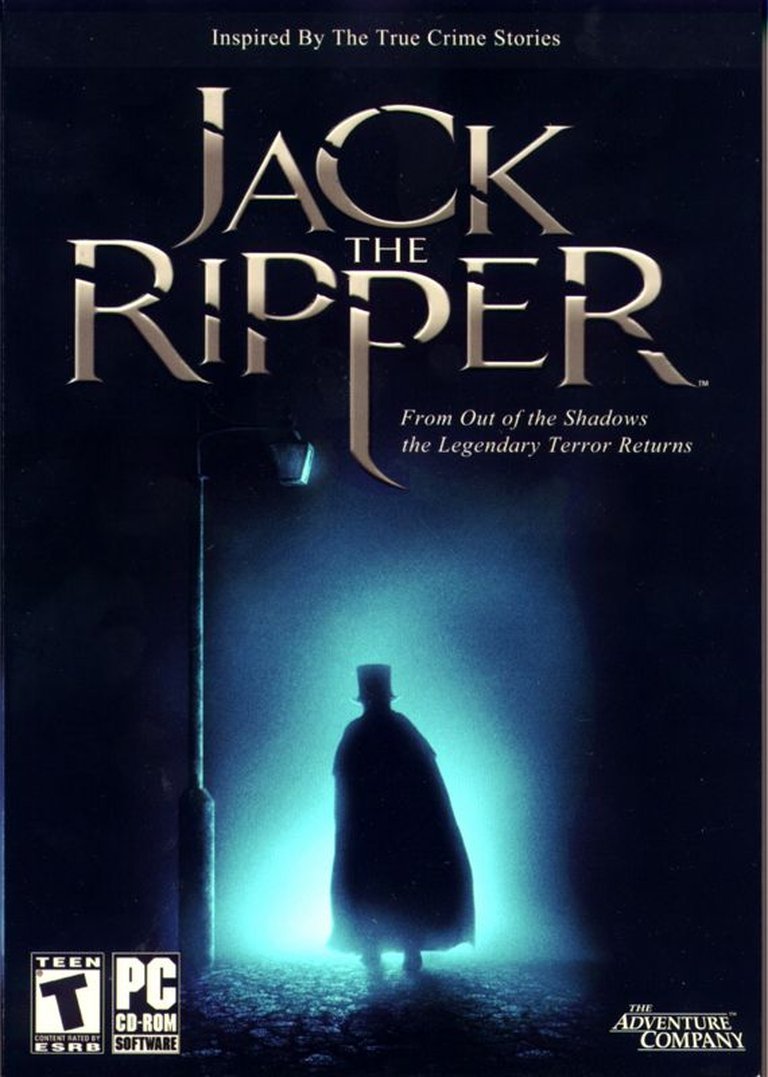
In Jack the Ripper, players control journalist James ‘Jimmy’ Palmer in 1901 New York City, investigating a series of grotesque murders on the city’s seedy ‘Low Side’ that mirror the unsolved Jack the Ripper killings from London in 1888. This first-person adventure game involves exploring crime scenes in brothels, cabarets, and alleyways, interviewing witnesses from all walks of life including prostitutes, police, and bookies, solving puzzles, and using inventory items amid 360-degree views and 3D graphics.
Gameplay Videos
Where to Buy Jack the Ripper
PC
Jack the Ripper Free Download
Jack the Ripper Cracks & Fixes
Jack the Ripper Patches & Updates
Jack the Ripper Guides & Walkthroughs
Jack the Ripper Reviews & Reception
metacritic.com (58/100): Mixed or Average
en.wikipedia.org (58/100): The game received “mixed” reviews according to the review aggregation website Metacritic.
imdb.com (50/100): Basically just far too buggy and dull to be worth playing through
adventuregamers.com : a decidedly mediocre game capped off with a despicable, embarrassing ending
ign.com (78/100): good
Jack the Ripper: Review
Introduction
Imagine the fog-shrouded alleys of 1901 New York City, where the echo of horse-drawn carriages mingles with the whispers of terror: Jack the Ripper, the phantom of London’s Whitechapel murders from 1888, has crossed the Atlantic to resume his grisly spree. Jack the Ripper (2004), developed by the French studio Galilea and published by The Adventure Company, thrusts players into this audacious “what if?” scenario as Jimmy Palmer, a plucky reporter for the New York Today. This first-person point-and-click adventure promised to blend historical intrigue with immersive detective work, but delivers a tale more tantalizing in concept than execution. As a game historian, I view it as a microcosm of early-2000s adventure gaming—a genre grappling with post-Myst node-based exploration amid shifting industry tides toward narrative-driven experiences. My thesis: Jack the Ripper shines as a atmospheric mystery with Ripperology flair, yet stumbles under technical bugs, linearity, and an infamously unsatisfying ending, cementing it as a flawed footnote rather than a landmark.
Development History & Context
Galilea, a modest French developer known for titles like The Cameron Files: Secret at Loch Ness and Pharaoh’s Curse, crafted Jack the Ripper using the Virtools 3D engine, enabling 360° panoramic views and pseudo-3D navigation on modest Windows hardware (Pentium III 500MHz minimum, 64MB RAM). Led by creative forces like Jérôme Antona and producer Annette Béchamp (from The Adventure Company), the team aimed to capitalize on the Ripper’s enduring mystique, relocating the action to New York’s “Low Side” district for a fresh twist. Publishers DreamCatcher Interactive (NA) and Microïds (EU) targeted the adventure niche, shipping on dual CDs (Disc 2 for install only) in January 2004 (NA: Jan 29; EU: March 4).
The era’s gaming landscape was transitional: point-and-click adventures lingered post-Sierra/LucasArts golden age, competing with rising 3D action titles amid the PS2/Xbox boom. Technological constraints favored static pre-rendered backgrounds with overlaid animations—efficient but limiting interactivity. Galilea’s vision echoed French adventures like Post Mortem (2002), prioritizing story over puzzles, but budget woes showed in QA lapses (e.g., buggy triggers). With 94 credits including voice talent like Matthew Géczy (Jimmy Palmer) and Patrick Floersheim, it reflected indie ambition in a market favoring spectacle. Historical research infused authenticity—real Ripper letters, Dr. Rees Ralph Llewellyn references, Edison Kinetograph footage—yet anachronisms (e.g., fingerprints pre-1901, “Pinkerten” misspelling) betrayed haste. Patches were promised but scarce, underscoring the era’s patch culture infancy.
Narrative & Thematic Deep Dive
Plot Synopsis and Structure
Spanning 12 in-game days/nights starting November 17, 1901, the story unfolds as Jimmy Palmer, assigned by ambitious editor Mr. Bur, chases scoops on prostitute murders echoing Ripper savagery: mutilated bodies minus organs, surgical precision. Palmer interviews Low Side denizens—prostitutes, bums like Jason (a opium-addled Greek chorus), newsboy Patrick, colleague Paul—visiting brothels (Blue Velvet), cabarets (Red Chapel), police stations, hospitals, and alleys. Clues mount: Ripper taunts via newspaper riddles; murders escalate, endangering Abigail (“Irish Nightingale” singer/crush) and Palmer. Daily “chronicles” at the cluttered newsroom advance time, culminating in a predicted final kill.
Characters and Dialogue
A strength lies in its ensemble: Abigail’s lilting ballads humanize romance; Jason’s insights pierce tragedy; Chief Carter’s skepticism grounds realism; suspects (e.g., Tumbletwo, riffing on real Dr. Francis Tumblety) tease Ripperology. Voiced convincingly (praised by IGN, GameBoomers), dialogues branch modestly but feel scripted—subtitles mismatch audio, riddled with errors (“newsie” loops endlessly). Palmer’s blank-slate narration fosters immersion, though his underdevelopment alienates.
Themes and Historical Integration
Thematically, it probes journalism’s ethics (headlines fuel killings?), urban decay (Belle Époque underbelly), vengeance against vice. Ripper docs/photos, autopsy nods (e.g., left-handed killer via Dr. Llewen/Llewellyn), ravens (“Nevermore” motif) weave fact-fiction. Yet linearity betrays agency: events domino rigidly, echoing Victorian determinism. The ending—abrupt, revelation-free cop-out—betrays buildup, likened to a “slap” (Terrence Bosky). No closure mirrors real case, but frustrates interactively.
Gameplay Mechanics & Systems
Core Loops and Controls
Mouse-driven point-and-click reigns: context cursor (arrow/move, hand/interact, ear/overhear, speech/talk) navigates 360° nodes (Myst-like hotspots). Right-click map warps to Low Side spots (brothel, cabaret, etc.), displaying inventory/clippings. Daily cycle: explore, converse, inventory-tweak (e.g., combine clues), typewriter chronicle to night. Puzzles sparse (2-3 “real” ones per reviews): code telegrams, mark calendars with pencils, weighted doors/timing. Inventory drag-drop clunky; no volume slider.
Progression and Innovation/Flaws
Linear scripting dominates—exhaust dialogues, revisit for triggers (map-warps bypass, hanging game). No progression tree; pixel-hunting minimal, hotspots obvious (animated characters “stick out”). Short (7-10 hours sans walkthrough; 20+ blind per Adventurearchiv). Bugs plague: cursor fails, audio loops, subtitles illegible/spellcheck fails, event skips (e.g., show photo to editor pre-police). Save-often manual urges “challenging” facade over instability. Options (resolutions, shadows, AA, subtitles) help, but no disc-swaps. Casual-friendly, veterans decry tedium (“eye candy” screens).
| Mechanic | Strengths | Weaknesses |
|---|---|---|
| Navigation | Intuitive map, 360° immersion | Node-based rigidity, warp-bypass bugs |
| Puzzles | Story-integrated, observational | Few/simple, timing quirks (game-overs) |
| Inventory/Dialogue | Logical combos, character depth | Clunky UI, mismatched subs, loops |
| Progression | Daily structure paces narrative | Hyper-linear, trigger frustration |
World-Building, Art & Sound
Setting and Atmosphere
Low Side evokes 1901 NYC grit: cluttered newsroom, opium dens, morgues, alleys. Day bustle (elevated trains, wagons) yields to eerie nights—silence, shadows, raven cries. Research shines: Edison films (real? footage), Ripper letters, era garb. Emptiness aids dread (sparse crowds focus unease), but limits vibrancy.
Visuals
Virtools yields blurry panoramas, strong character models (elongated arms noted comically). Static BGs with animations: obvious hotspots aid accessibility, but scream artifice. Cutscenes sparse/poorly integrated; no player homebase detaches. Resolutions/AA toggle performance.
Audio Design
Standout: ambient effects (clatters, murmurs) build paranoia; eerie music swells tension. Abigail’s Irish ballads enchant (Red Chapel highlight). VO solid, though uneven accents/dialogue. Looping issues mar, but overall elevates mood—headphones advised for immersion.
These craft a “gruseliges” (Adventurespiele) fog of fear, Low Side a character itself, amplifying Ripper’s menace.
Reception & Legacy
Launched to mixed fanfare: Metacritic 58/100, MobyGames critics 59% (highs: GamersHell 82%, IGN 78%; lows: Adventure Gamers 30%, CGW 40%). Players: 3/5 (13 ratings), praising story/voice, slamming brevity/bugs/ending (“crap,” “insult”—Bosky/Just Adventure). Casual appeal noted (GameBoomers B), but puzzle fans fled (“no chills”—UHS).
Commercially modest (#8,195 Windows rank), it epitomized The Adventure Company’s mid-tier output amid genre decline. Influenced? Negligible—spawned no direct sequels, but paralleled Sherlock Holmes vs. Jack the Ripper (2009), Real Crimes (2009). Legacy: Ripper games footnote (cf. 1987 text adventure, 1995 DOS), critiquing narrative-over-gameplay pitfalls. Patched sporadically; abandonware now, preserved via GOG/eBay. For historians, a window into 2000s French adventures’ ambition vs. polish gap.
Conclusion
Jack the Ripper tantalizes with Ripper relocation, vivid Low Side, compelling cast, and atmospheric audio, distilling historical horror into 10-hour detective yarn. Yet bugs, linearity, scarce puzzles, subtitle woes, and gut-punch ending undermine it—a “weekend diversion” (Jeanne) destined for obscurity. In adventure history, it ranks low-tier: intriguing curiosity for Ripper fans/casuals, skippable for purists. Verdict: 6.1/10—play for story chills after dark, but temper expectations. A missed classic, echoing unsolved canon: tantalizing, ultimately elusive.