
- Release Year: 2020
- Platforms: NES, Nintendo Switch, PlayStation 4, Windows, Xbox One, Xbox Series
- Publisher: Interabang Entertainment, Limited Run Games, Inc., The Media Indie Exchange
- Developer: Interabang Entertainment, Spoony Bard Productions
- Genre: Action
- Perspective: Side view
- Game Mode: Co-op, Single-player
- Gameplay: Beat ’em up, brawler
- Setting: Contemporary
- Average Score: 71/100
Description
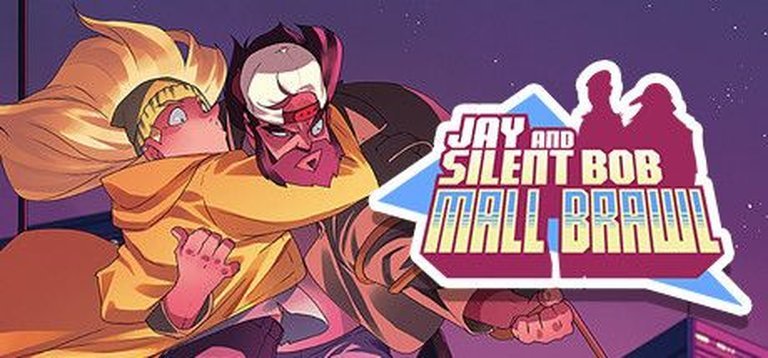
Jay and Silent Bob: Mall Brawl is a comedic, side-scrolling beat ’em up game set in a contemporary mall environment, featuring the iconic duo from Kevin Smith’s films. Players take on the roles of Jay and Silent Bob as they battle through waves of enemies in classic arcade-style gameplay, complete with retro 2D visuals and cooperative multiplayer options. The game blends humor, nostalgia, and fast-paced action, offering both local and online co-op for up to two players.
Gameplay Videos
Where to Buy Jay and Silent Bob: Mall Brawl
Jay and Silent Bob: Mall Brawl Cracks & Fixes
Jay and Silent Bob: Mall Brawl Patches & Updates
Jay and Silent Bob: Mall Brawl Guides & Walkthroughs
Jay and Silent Bob: Mall Brawl Reviews & Reception
metacritic.com (68/100): A substantial improvement over an already great classic-style beat ’em up.
nintendolife.com : It’s a genuinely impressive piece of programming.
nintendoworldreport.com (75/100): A loving tribute to Jay and Silent Bob and old beat-’em-ups.
geeksandgamers.com : The gameplay is retro in the worst possible way.
brokencontrollerclub.com : I really want to like this game more than I do.
Jay and Silent Bob: Mall Brawl Cheats & Codes
Nintendo Entertainment System (USA)
Enter codes using Game Genie.
| Code | Effect |
|---|---|
| AESTXZZZ | Hit Anywhere For Both |
| AEOVNUYP | Hit Anywhere For Both |
| AVESAOSZ | Invincibility For Both |
| AVVIGOSZ | Invincibility For Both |
Switch (Build ID: 9fa43604f9ee9343)
| Code | Effect |
|---|---|
| JAY Moon Jump | Moon Jump for Jay |
| JAY Invincible | Invincibility for Jay |
| JAY Inf Health | Infinite Health for Jay |
| BOB Moon Jump | Moon Jump for Bob |
| BOB Invincible | Invincibility for Bob |
| BOB Inf Health | Infinite Health for Bob |
Jay and Silent Bob: Mall Brawl: A Retro Love Letter with a Few Rough Edges
Introduction
In the pantheon of licensed video games, Jay and Silent Bob: Mall Brawl stands as a curious artifact—a game that is both a loving homage to the golden age of beat ’em ups and a niche celebration of Kevin Smith’s View Askewniverse. Released in 2020 by Interabang Entertainment and Spoony Bard Productions, Mall Brawl is not merely an “NES-style” game; it is a bona fide NES game, complete with the technical limitations and design philosophies of the era. This dual identity—both a retro throwback and a modern indie title—makes Mall Brawl a fascinating case study in game development, nostalgia, and the challenges of balancing fan service with accessible gameplay.
At its core, Mall Brawl is a side-scrolling beat ’em up that draws heavily from classics like Double Dragon and River City Ransom. Players take on the roles of Jay and Silent Bob as they battle their way through a mall overrun by security guards, delinquents, and a rogue’s gallery of enemies plucked straight from Smith’s films. The game’s premise is simple: after sabotaging a dating show in the mall, the duo must fight their way to freedom, encountering familiar faces and references along the way.
The thesis of this review is that Jay and Silent Bob: Mall Brawl is a game of contradictions. It is a labor of love for both retro gaming enthusiasts and Kevin Smith fans, yet its adherence to the punishing difficulty and design quirks of 8-bit era beat ’em ups may alienate modern players. Its strengths lie in its authenticity, humor, and nostalgic charm, but its flaws—particularly in its controls and a notoriously frustrating level—highlight the limitations of its retro inspirations. Ultimately, Mall Brawl is a game that succeeds more as a novelty and a tribute than as a standout entry in the beat ’em up genre.
Development History & Context
The Studio and Creators’ Vision
Jay and Silent Bob: Mall Brawl was developed by Interabang Entertainment and Spoony Bard Productions, with Justin Woodward serving as creative director and producer. The game was conceived as a bonus for backers of Jay and Silent Bob: Chronic Blunt Punch, a modern beat ’em up that was crowdfunded in 2016 but has yet to see release. Mall Brawl was intended as a stopgap—a retro-inspired companion piece that would tide fans over while the larger project gestated.
The decision to create an authentic NES game rather than a modern title with retro aesthetics was a bold one. The developers embraced the technical constraints of the NES hardware, including its limited color palette, sprite flicker, and 8-bit sound capabilities. This commitment to authenticity extended to the game’s physical release: Limited Run Games produced a limited run of NES cartridges, making Mall Brawl one of the few modern games playable on original NES hardware.
Technological Constraints and Design Choices
Developing within the confines of the NES presented both challenges and opportunities. The game’s visuals and audio are faithfully rendered in 8-bit, with pixel art that mimics the style of late-era NES titles like Mighty Final Fight. The developers avoided the sprite flicker and slowdown that plagued many NES games, a testament to their technical prowess. However, the constraints of the hardware also meant that certain modern conveniences—such as precise hit detection and fluid animation—were sacrificed in the name of authenticity.
The game’s controls are deliberately simplistic, with only a few buttons dedicated to punching, kicking, and jumping. This design choice was intentional, as the developers sought to replicate the feel of classic NES brawlers. However, as many reviews note, this simplicity sometimes leads to frustration, particularly in the game’s more demanding sections.
The Gaming Landscape at Release
Mall Brawl arrived at a time when retro-inspired games were experiencing a renaissance. Titles like Shovel Knight, Blasphemous, and Streets of Rage 4 had proven that there was a market for games that evoked the aesthetics and gameplay of the 8-bit and 16-bit eras while incorporating modern design sensibilities. Mall Brawl, however, took a different approach by fully committing to the NES’s limitations, for better or worse.
The game’s release in 2020 also coincided with a resurgence of interest in physical media, particularly among collectors. Limited Run Games’ NES cartridge release was a savvy move, capitalizing on the nostalgia-driven demand for tangible gaming artifacts. For many players, the appeal of Mall Brawl was as much about owning a piece of gaming history as it was about the gameplay itself.
Narrative & Thematic Deep Dive
Plot and Setting
Jay and Silent Bob: Mall Brawl takes place immediately after the events of Mallrats, Kevin Smith’s 1995 cult classic. The game’s premise is straightforward: after crashing the filming of a dating show called Truth or Date, Jay and Silent Bob find themselves hunted by mall security and must fight their way to freedom. The setting—a sprawling mall—provides a perfect backdrop for the game’s beat ’em up action, with levels that include food courts, arcades, and department stores.
The narrative is minimal, serving primarily as a vehicle for the game’s combat and references. There are no cutscenes or dialogue sequences; instead, the story is conveyed through level transitions and enemy designs. This approach is in keeping with the NES era’s emphasis on gameplay over storytelling, but it also means that the game’s plot is little more than a thin justification for its action.
Characters and Dialogue
The game’s cast is drawn entirely from the View Askewniverse, with Jay and Silent Bob as the playable protagonists. Jay, the loudmouthed, fast-talking half of the duo, is the more aggressive of the two, with a move set that includes rapid punches and a spinning kick. Silent Bob, by contrast, is slower but hits harder, with a lariat attack that can clear out groups of enemies.
The game’s roster of enemies is a who’s who of Smith’s films, including:
– LaFours, the mall’s head of security and a recurring antagonist in Mallrats.
– The Easter Bunny, a nod to the infamous scene in Mallrats where Brody is attacked by a man in a bunny suit.
– The Golgothan (Poop Demon), a boss lifted straight from Dogma.
– Patrick Swayze on a horse, a deep-cut reference to the Clerks animated series.
– Adoughbo, a pretzel-headed enemy who serves as the game’s answer to Double Dragon‘s Abobo.
The dialogue in Mall Brawl is sparse, limited to the occasional quip from Jay or a reference scrawled on a bathroom wall (e.g., “Finger Cuffs,” a nod to Clerks). The game’s humor is firmly rooted in the View Askewniverse’s brand of stoner comedy, with jokes that will resonate most with longtime fans of Smith’s work.
Themes and Fan Service
At its heart, Jay and Silent Bob: Mall Brawl is a celebration of nostalgia. The game is packed with references to Smith’s films, from the obvious (Mallrats, Clerks) to the obscure (Dogma, Jay and Silent Bob Strike Back). These references are not merely cosmetic; they are central to the game’s identity, serving as both fan service and a testament to the developers’ love for the source material.
The game’s themes are similarly nostalgic. The mall setting evokes a bygone era of American culture, a time when malls were social hubs rather than relics of a fading retail landscape. The game’s retro aesthetics—from its pixel art to its chiptune soundtrack—further reinforce this sense of nostalgia, creating a experience that feels like a time capsule of both the NES era and the mid-’90s indie film scene.
However, the game’s reliance on nostalgia is also its greatest limitation. For players unfamiliar with Kevin Smith’s work, many of the references will fall flat, and the game’s humor may come across as insular or even incomprehensible. This is not necessarily a flaw—Mall Brawl was clearly designed with Smith’s fans in mind—but it does limit the game’s appeal to a broader audience.
Gameplay Mechanics & Systems
Core Gameplay Loop
Jay and Silent Bob: Mall Brawl is, at its core, a classic side-scrolling beat ’em up. Players progress through a series of levels, each culminating in a boss fight. The game’s combat is simple but effective, with a focus on chaining together punches, kicks, and special moves to defeat waves of enemies.
The game’s most innovative mechanic is its character-swapping system. In single-player mode, players can switch between Jay and Silent Bob at the press of a button. This system serves multiple purposes:
– Health Management: When one character is low on health, switching to the other allows the injured character to regenerate health over time.
– Strategic Depth: Jay and Silent Bob have different move sets, encouraging players to switch between them based on the situation. Jay is faster and better suited for crowd control, while Silent Bob is slower but hits harder.
– Revive Mechanic: If one character is knocked out, the other can continue fighting, and the fallen character will eventually revive with half health.
This mechanic adds a layer of strategy to the game, particularly in its later levels where enemy waves become more relentless. However, the system is not without its flaws. The health regeneration is slow, and the revive mechanic can feel punishing if both characters are knocked out in quick succession.
Combat and Controls
The combat in Mall Brawl is deliberately simplistic, with only a few buttons dedicated to attacks. Players can punch, kick, jump, and perform special moves by collecting stars dropped by defeated enemies. The controls are responsive, but the game’s hit detection can be finicky, particularly in crowded scenes where multiple enemies surround the player.
The game’s difficulty is another point of contention. Mall Brawl is unapologetically challenging, with enemies that can quickly overwhelm the player if they are not careful. This difficulty is in keeping with the NES era’s reputation for punishing gameplay, but it may frustrate modern players accustomed to more forgiving design.
The Infamous Shopping Cart Level
No discussion of Mall Brawl‘s gameplay would be complete without addressing its most notorious level: the shopping cart sequence. Inspired by the infamous Turbo Tunnel level in Battletoads, this section tasks players with navigating a speeding shopping cart through a grocery store, dodging obstacles like banana peels, nuns, and elderly shoppers.
The level has been widely criticized for its frustrating controls and punishing difficulty. Unlike the Turbo Tunnel, which gradually increases in speed and complexity, the shopping cart level throws players into the deep end from the start. The controls are imprecise, and the obstacles are placed in a way that often feels unfair. Many reviewers have noted that this level alone is enough to sour the experience, particularly given its placement early in the game.
Multiplayer and Co-op
Mall Brawl supports both single-player and local co-op modes. In co-op, one player controls Jay while the other controls Silent Bob, eliminating the need for character swapping. This mode is widely regarded as the superior way to experience the game, as it allows for more strategic teamwork and reduces the frustration of managing two characters alone.
However, the co-op mode is not without its issues. The game’s difficulty remains high, and the shopping cart level is just as punishing with two players as it is with one. Additionally, the game’s lack of online multiplayer limits its appeal in an era where local co-op is increasingly rare.
Progression and Replayability
Mall Brawl is a relatively short game, with most players completing it in under two hours. There is little in the way of progression or unlockables; the game’s appeal lies in its moment-to-moment combat and its nostalgic references rather than in long-term goals.
The game’s replayability is similarly limited. While the co-op mode adds some variety, the lack of difficulty settings or additional content means that there is little incentive to replay the game once it has been completed. This is not necessarily a flaw—Mall Brawl was clearly designed as a short, nostalgic experience—but it does mean that the game’s longevity is limited.
World-Building, Art & Sound
Visual Design and Aesthetics
Jay and Silent Bob: Mall Brawl is a visual love letter to the NES era. The game’s pixel art is meticulously crafted, with character sprites that evoke the chunky, expressive designs of late-era NES titles. The mall setting is rendered in vibrant colors, with detailed backgrounds that include references to Smith’s films (e.g., the Rug Munchers store, a nod to Mallrats).
The game’s visuals are not without their limitations, however. The NES’s limited color palette and resolution mean that some details are lost, and the game’s sprites can appear muddy or indistinct at times. Additionally, the game’s adherence to NES aesthetics means that it lacks the fluid animations and detailed environments of modern retro-inspired titles like Shovel Knight or Streets of Rage 4.
Sound Design and Music
The game’s soundtrack is a highlight, featuring a chiptune score that perfectly captures the sound of the NES era. The music is catchy and energetic, with tracks that evoke the upbeat, fast-paced action of classic beat ’em ups. The sound effects are similarly authentic, with punches, kicks, and enemy grunts that sound like they were lifted straight from an 8-bit cartridge.
However, the game’s sound design is not without its flaws. The NES’s limited audio channels mean that the soundtrack can feel repetitive, and the lack of voice acting—while in keeping with the era—means that the game’s humor is conveyed primarily through visual gags and text.
Atmosphere and Immersion
Mall Brawl excels in creating a sense of atmosphere, particularly for players familiar with Kevin Smith’s work. The mall setting is rich with references and Easter eggs, from the Mooby’s restaurant (a staple of the View Askewniverse) to the Easter Bunny boss fight. The game’s humor is similarly immersive, with jokes and callbacks that will resonate with longtime fans.
However, the game’s atmosphere is also its greatest limitation. For players unfamiliar with Smith’s films, the references will likely go unnoticed, and the game’s humor may feel insular or even confusing. Additionally, the game’s punishing difficulty and frustrating level design can break immersion, particularly in sections like the shopping cart level.
Reception & Legacy
Critical Reception
Jay and Silent Bob: Mall Brawl received mixed reviews upon release, with critics praising its authenticity and humor while criticizing its punishing difficulty and frustrating level design. The game holds a Metascore of 68 on Metacritic, with reviews ranging from glowing to dismissive.
Positive Reviews:
– Video Chums (80%): Praised the game as a “substantial improvement over an already great classic-style beat ’em up,” particularly in its Arcade Edition update.
– GameGrin (80%): Called it a “really nice stop gap title” for fans of the View Askewniverse, noting its faithful recreation of NES-era gameplay.
– Cubed3 (80%): Highlighted the game’s tactical depth and nostalgic charm, calling it a “riot with a hat-wearing friend.”
Mixed Reviews:
– NintendoWorldReport (75%): Noted that the game is “a run-of-the-mill retro beat-’em-up” without the Kevin Smith references, but still a fun experience for fans.
– GamingTrend (70%): Praised the game’s authenticity but criticized its difficulty, calling it “a game which few but the most dedicated will finish.”
– ScreenRant (70%): Acknowledged the game’s appeal to retro enthusiasts but noted that it “doesn’t come close to modern favorites like Streets of Rage 4.”
Negative Reviews:
– Player Assist (30%): Dismissed the game as “an awful game riding on the Jay and Silent Bob name,” with “no redeeming qualities.”
– PLAY (UK) (40%): Called it “often difficult and frustrating,” with gameplay that is “too simplistic to have much fun with.”
Commercial Reception
Mall Brawl was a modest commercial success, particularly among collectors. The Limited Run Games NES cartridge release sold out quickly, and the game found a niche audience on platforms like Steam and the Nintendo Switch. However, the game’s limited appeal—both in terms of its retro aesthetics and its reliance on Kevin Smith references—meant that it never achieved mainstream success.
Evolution of Reputation
In the years since its release, Mall Brawl has developed a cult following among retro gaming enthusiasts and Kevin Smith fans. The game’s authenticity and humor have been praised, and its flaws—particularly the shopping cart level—have become a point of dark humor among players. The game’s reputation has been bolstered by updates like the Arcade Edition, which addressed some of the original release’s issues with improved graphics and rebalanced difficulty.
Influence and Legacy
Mall Brawl is unlikely to be remembered as a landmark title in the beat ’em up genre, but it has carved out a niche as a unique experiment in retro game design. The game’s commitment to authenticity—both in its NES aesthetics and its faithful recreation of Kevin Smith’s world—has made it a standout example of how modern indie developers can pay homage to the past while creating something new.
The game’s legacy is also tied to its role as a companion piece to Jay and Silent Bob: Chronic Blunt Punch. While Chronic Blunt Punch has yet to see release, Mall Brawl has served as a testament to the passion of its developers and the enduring appeal of the View Askewniverse.
Conclusion
Jay and Silent Bob: Mall Brawl is a game of contradictions—a loving tribute to both the NES era and Kevin Smith’s films, yet one that is often undermined by its own adherence to retro design philosophies. The game’s strengths lie in its authenticity, humor, and nostalgic charm, but its flaws—particularly its punishing difficulty and the infamous shopping cart level—highlight the limitations of its inspirations.
For fans of retro gaming and the View Askewniverse, Mall Brawl is a delightful curiosity, a game that captures the spirit of its sources with remarkable fidelity. For others, it may feel like a relic of a bygone era, a game that is more interesting as a historical artifact than as a modern experience.
Ultimately, Jay and Silent Bob: Mall Brawl is a game that succeeds more as a novelty than as a standout entry in the beat ’em up genre. It is a testament to the passion of its developers and the enduring appeal of nostalgia, but it is also a reminder of how far game design has come since the days of the NES. For those willing to embrace its flaws, Mall Brawl offers a unique and often hilarious journey through a mall filled with references, challenges, and a healthy dose of stoner humor. For everyone else, it may be a game best left to the collectors and the die-hard fans.
Final Verdict: 7/10 – A flawed but fascinating tribute to retro gaming and the View Askewniverse, best enjoyed by those who can appreciate its nostalgic charm and overlook its frustrations.