
- Release Year: 2020
- Platforms: Windows
- Publisher: astragon Sales & Services GmbH, Grey Alien Games
- Developer: Suricate Software
- Genre: Puzzle
- Perspective: Top-down
- Game Mode: Single-player
- Gameplay: Hidden object, Tile matching puzzle
Description
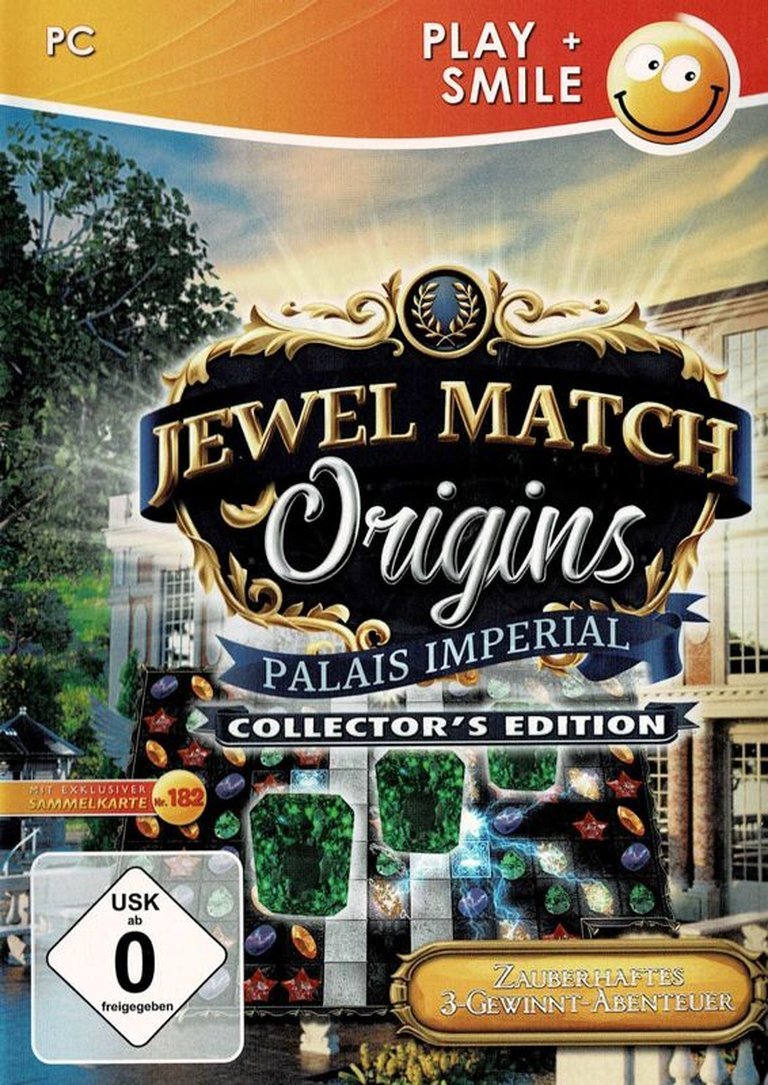
Jewel Match Origins: Palais Imperial (Collector’s Edition) is a puzzle adventure set in the opulent Baroque Era, where players traverse 180 Match-3 levels to collect resources and reconstruct a stunning palace. This special edition includes extra content and digital bonuses, combining classic tile-matching mechanics with a historical building narrative.
Gameplay Videos
Where to Buy Jewel Match Origins: Palais Imperial (Collector’s Edition)
PC
Jewel Match Origins: Palais Imperial (Collector’s Edition): Review
Introduction
In the crowded landscape of casual Match-3 games, few franchises boast the longevity and iterative refinement of Jewel Match. With over a dozen titles spanning 15 years, the series has perfected accessible, jewel-swapping gameplay while periodically reinventing its aesthetic and scope. Jewel Match Origins: Palais Imperial (Collector’s Edition), released by Suricate Software in 2020 and published by Grey Alien Games on Steam in 2021, stands as a pinnacle of this evolution. It eschews fantastical escapades for a meticulously researched Baroque setting, transforming the familiar match-3 loop into an architectural odyssey. This review argues that while Palais Imperial excels in content depth and thematic cohesion, its technical quirks and narrative limitations underscore the inherent challenges of scaling a niche genre without sacrificing player engagement. As both a love letter to 17th-century design and a testament to the Jewel Match formula’s adaptability, it occupies a unique space in the annals of puzzle history.
Development History & Context
Suricate Software, the developer behind Jewel Match Origins, has helmed the series since its inception in 2007. Their vision—consistent across titles—has been to deliver polished, accessible Match-3 experiences enriched by thematic narratives. For Palais Imperial, the team pivoted to historical grandeur, aiming to “transport players to the Baroque Era” (Grey Alien Games, 2021). Technically, the game adheres to the series’ low-barrier accessibility: modest system requirements (1GHz CPU, 1GB RAM, 64MB VRAM) and a DirectX 9.0 foundation ensure broad compatibility, though this budgetary constraint results in dated visuals. Released during the peak of the casual game renaissance on platforms like Big Fish Games and Steam, Palais Imperial arrived amidst a saturated market. Its differentiation came not from innovation but from execution: 240 levels (180 main + 60 bonus), three playmodes (timed, relaxed, moves-limited), and dual difficulty settings offered unprecedented variety, positioning it as a definitive “journey” experience for dedicated players. Grey Alien Games’ publishing role on Steam further solidified its indie credibility, aligning with the studio’s reputation for championing mid-tier casual developers.
Narrative & Thematic Deep Dive
The narrative of Palais Imperial is a masterclass in thematic restraint, prioritizing atmosphere over plot complexity. Players assume the role of Daniel van Arras, a young architect tasked by an unnamed French emperor with constructing a “breathtaking palace” (Steam, 2021). The plot unfolds through brief, text-driven interludes between level clusters, focusing on Daniel’s ambition to earn the title of “Royal Architect.” Dialogue is minimal and functional—primarily task-oriented (“Collect gold for the grand staircase!” or “Gather marble for the facade”)—yet it effectively contextualizes the gameplay loop. The underlying theme is artistic legacy: Daniel’s journey mirrors the Baroque era itself, where opulence served as a testament to power and permanence. The absence of antagonists or subplots creates a meditative tone, framing the match-3 puzzles not as challenges but as creative acts. This thematic cohesion elevates the game beyond mere time-passing; each matched jewel feels like a contribution to cultural history, even if the narrative itself remains a thin veneer for the gameplay core.
Gameplay Mechanics & Systems
Palais Imperial’s gameplay is a symphony of interconnected systems, all anchored by the Match-3 foundation. The core loop involves swapping adjacent gems to form lines of three or more, generating resources (gold, wood, marble) that fuel the palace’s construction. Levels are structured as grids, often with obstacles like locked tiles or bombs requiring strategic clearing. The game distinguishes itself through three playmodes:
– Timed: Race against a clock for high-score pressure.
– Relaxed: No time limits, ideal for immersion.
– Moves-Limited: Counted swaps penalize inefficiency.
Two difficulty settings (Normal/Advanced) adjust resource scarcity and puzzle complexity, catering to both casual and veteran players. The Building System is the crown jewel: resources are allocated across palace blueprints, unlocking new rooms (ballrooms, libraries) and guest houses as progress accumulates. This progression provides tangible rewards, transforming abstract points into visible structures. The Shop introduces RPG-lite elements, offering power-ups (hammers, bombs, lightning strikes) and decorative upgrades purchased with earned currency.
Innovation lies in the integration of minigames—hidden object scenes and jigsaw puzzles—which break up the Match-3 monotony and provide supplementary resources. However, flaws persist. User reports on Steam highlight glitches, such as level 135’s navigation arrow pointing incorrectly or a hammer failing to upgrade, hindering “perfect score” achievement (Huggybaby, 2025). The UI, while functional, lacks polish: non-interactive dialog boxes and inconsistent cursor feedback occasionally disrupt flow. These issues, though not pervasive, remind players of the genre’s budget-conscious limitations.
World-Building, Art & Sound
The Baroque setting is rendered with surprising fidelity, creating a world that feels both opulent and inviting. Levels are framed as architectural blueprints, with gem designs mirroring Baroque motifs: gold-leaf patterns, marble veining, and crystalline facets that evoke Versailles’ grandeur. Environments transition from construction sites (scaffolding, tools) to finished interiors (gilded mirrors, frescoes), celebrating the era’s excess. The Art Direction prioritizes clarity—gems are color-coded and distinct—while backgrounds feature subtle details like cherubs and tapestries, enriching immersion without cluttering the puzzle space.
Sound design completes the atmosphere. The ethereal soundtrack (iWin) blends harpsichords, violins, and choral whispers, evoking the era’s theatricality without distraction. Sound effects are crisp: gem clicks echo like chandeliers tinkling, and power-up bursts crescendo with satisfying drama. This synergy between visuals and audio transforms Match-3 into an almost sensory experience, where even “simple” gems feel like artifacts of a lost world.
Reception & Legacy
Palais Imperial’s reception reflects its dual identity as both a critical darling and a flawed gem. On Steam, it maintains a 93% positive rating from 49 reviews, with players lauding its “relaxing” gameplay and “massive” content (Steam, 2021). Critics, notably absent from MobyGames’ archives, likely overlooked it due to its genre niche. Commercially, its multi-platform launch (Big Fish, GameHouse, iWin) and inclusion in Grey Alien’s “Jewel Match Majestic” bundle suggest strong sales, cementing Suricate Software’s market dominance.
Legacy-wise, Palais Imperial exemplifies the Jewel Match series’ adaptability. Its historical approach influenced sequels like Origins 2: Bavarian Palace and Origins 3: Camelot Castle, which similarly borrow from real-world architecture. It also expanded the genre’s possibilities, proving that Match-3 could sustain thematic depth and player investment. However, its technical issues and narrative thinness prevent it from transcending the genre, leaving it as a benchmark for quality rather than a revolutionary work. Still, its 240 levels and seamless blend of puzzle-building mechanics ensure its place in the pantheon of “must-play” casual games.
Conclusion
Jewel Match Origins: Palais Imperial (Collector’s Edition) is a towering achievement in the casual Match-3 genre—lavishly detailed, mechanically robust, and thematically resonant. Suricate Software’s dedication to historical authenticity, combined with an unprecedented level of content, transforms a familiar formula into an architectural pilgrimage. While technical hiccups and a sparse narrative hold it back from perfection, its strengths—gorgeous Baroque aesthetics, satisfying progression, and clever integration of minigames—far outweigh its flaws. For players seeking a relaxing yet substantial experience, Palais Imperial remains unmatched. As a testament to the Jewel Match series’ enduring legacy, it stands not just as a game, but as a digital monument to creativity and history. Its place in video game history is secure: a polished, ambitious cornerstone of the casual gaming renaissance.