
- Release Year: 1998
- Platforms: Windows
- Publisher: TimSoft
- Developer: UHO Software
- Genre: Educational
- Perspective: Top-down
- Game Mode: Single-player
- Gameplay: Typing
- Setting: Space
- Average Score: 60/100
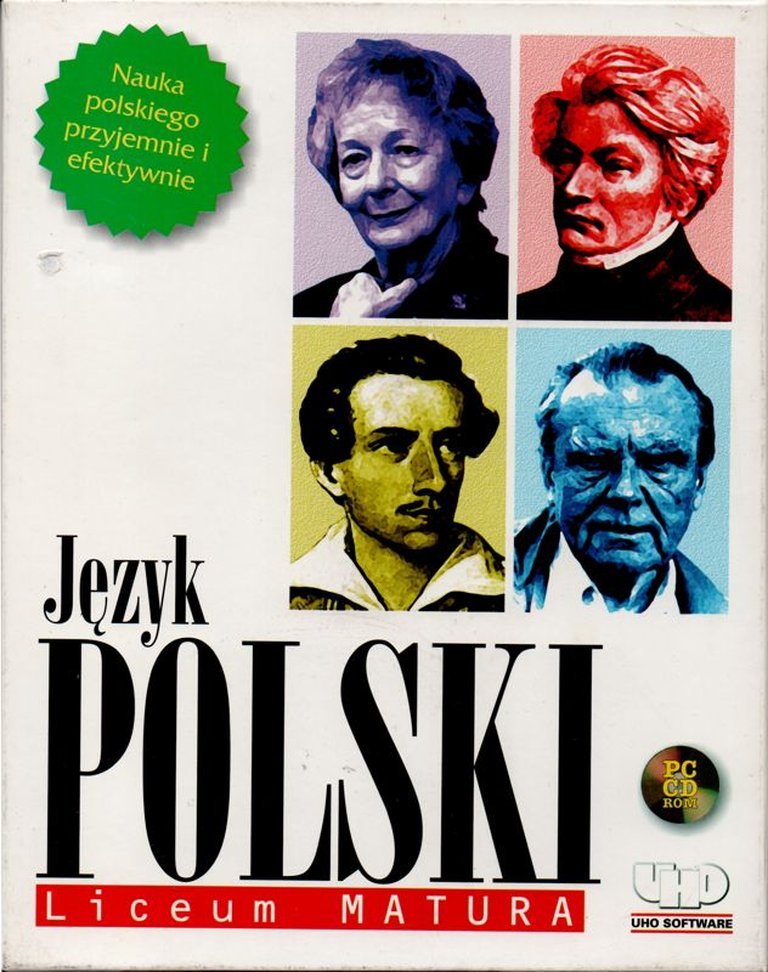
Description
Język Polski: Liceum matura, released in 1998 for Windows, is an educational program aimed at high school students preparing for the Polish matura exam, featuring the mini-game AstroOrto 2 that teaches spelling in a space setting. Players pilot a spacecraft where an incomplete word appears on the dashboard, requiring them to launch a missile at the correct option out of two possibilities to complete it, across 25 tasks per session, with incorrect attempts repeated afterward and progress tracked on a bottom panel.
Język Polski: Liceum matura: Review
Introduction
Imagine hurtling through the cosmos in a rickety spacecraft, where the fate of your mission hinges not on dodging asteroids or battling aliens, but on correctly spelling Polish words for your high school matura exam. Released in 1998, Język Polski: Liceum matura (also known as AstroOrto 2) is a quirky artifact from Poland’s golden age of edutainment, blending rudimentary space simulation with language drills. As a game historian, I’ve pored over forgotten CD-ROMs from Eastern Europe’s PC boom, and this title stands out as a testament to how developers gamified rote learning amid post-communist market freedoms. My thesis: While mechanically simplistic and narratively barren, Język Polski: Liceum matura exemplifies innovative pedagogy in resource-constrained 1990s gaming, carving a niche legacy in Polish educational software that prioritizes engagement over entertainment, influencing a wave of localized edutainment that democratized exam prep for a generation.
Development History & Context
Developed by the modest Polish studio UHO Software and published by TimSoft, Język Polski: Liceum matura emerged in 1998 during Poland’s rapid transition to Windows dominance following the Commodore 64 and Amiga eras. UHO Software, a small outfit focused on educational titles, leveraged the talents of a lean team: Rafał Janus handled substantive content (ensuring alignment with matura spelling curricula), Łukasz Knasiecki programmed and created all graphics (a dual role common in indie Eastern European dev), Maciej Parfianowicz composed the music, and Studio ADAM managed design and composition. This four-person core (plus collaborations) reflects the era’s constraints—Poland’s gaming scene was burgeoning post-1989, with studios like UHO filling gaps left by Western giants uninterested in localized Polish-language tools.
Technologically, it targeted entry-level Windows 95 PCs: Intel DX4 CPU, 8MB RAM, 2X CD-ROM drive, mouse input, and resolutions up to 800×600 or 1024×768 with textured polygons. This was amid a Polish edutainment renaissance; related titles like Seria Edukacyjna: Język Polski (1993, C64), Program Edukacyjny w Pigułce: Język Polski (1995, C64), and Geografia Polski (1993-95, DOS/Amiga) show a lineage of homegrown learning software. The gaming landscape? Global hits like Half-Life loomed, but Poland’s market favored affordable CD-ROM edutainment for schools and families, competing with pirated Western games. Knasiecki’s multi-game portfolio (8 titles) and Parfianowicz’s (4) underscore UHO’s efficiency, with AstroOrto 2 as the hook in a broader program, visionary in using space theming to combat spelling tedium amid matura pressures documented in 1998 exam topics (e.g., orthography-focused drills echoing themes from Sciaga.pl archives).
Narrative & Thematic Deep Dive
Don’t expect epic sagas here—Język Polski: Liceum matura is an educational program masquerading as a mini-game, with narrative as thin as a comet’s tail. The “story” unfolds in a top-down spacecraft cockpit, where you’re an astronaut-pupil tasked with completing incomplete Polish words on the dashboard to “launch” your vessel successfully. No characters, no dialogue, no branching plots; it’s pure procedural learning disguised as a mission. The underlying theme? Linguistic patriotism in a cosmic wrapper: spelling mastery as interstellar heroism, reinforcing Polish identity (Język Polski) for liceum (high school) students facing matura rigor.
Thematically, it taps 1990s Polish anxieties—post-communist youth prepping for EU integration via standardized exams (1998 matura topics from Sciaga.pl emphasize orthography, grammar, and cultural analysis). Words likely draw from matura-level vocabulary (e.g., complex nouns, exceptions like “rz” vs. “ż”), turning drudgery into “space adventure.” Substantive content by Janus ensures accuracy, with themes of persistence: incorrect spellings repeat post-25 tasks, symbolizing exam retry resilience. No deep characters, but the player embodies the archetypal Polish student—methodical, under pressure. Dialogue? Absent, save instructional prompts. This minimalist approach critiques edutainment’s limits: it prioritizes utility over immersion, yet innovates by framing language as a “universal” tool for exploration, echoing broader Polish lit themes (e.g., Norwid’s philosophy or Piłsudski’s national moods from 1998 matura prompts).
Gameplay Mechanics & Systems
At its core, AstroOrto 2 distills spelling into a tight loop: 25 tasks per session, top-down view of a dashboard displaying an incomplete word (e.g., “k_si” for “kosmos”). Two options flank it; mouse-launch a missile at the correct letter/subject to complete it. Success propels your craft; failure tallies on the bottom score panel, with misses cycled back after completion—drill-sergeant style reinforcement.
Core Loop Deconstruction:
– Input & Pacing: Mouse-only, intuitive for 1998 kids. Top-down perspective evokes Asteroids-lite, but static—no movement, just selection. Tasks ramp implicitly via complexity, building to matura-grade orthography (e.g., homophones, digraphs).
– Progression: No levels, unlocks, or RPG elements; score-based (bottom panel tracks hits/misses). Repetition of errors fosters mastery, innovative for retention without grind fatigue.
– UI/UX: Clean cockpit HUD—dashboard central, options left/right, score below. Flawed? Binary choices limit depth (no typing), risking guesses over learning. No tutorials, assuming Polish fluency.
– Innovations/Flaws: Missile-launch gamifies choice (visual feedback via launch animation). Single-player only, no multiplayer. Strengths: Bite-sized (25 tasks ~10-15 mins), adaptive repetition. Weaknesses: Repetitive, no variety (all space-static), punishing for dyslexics without accessibility.
Overall, systems excel pedagogically—operant conditioning via scores/missiles—but falter as “game,” lacking depth amid 1998’s arcade evolutions.
World-Building, Art & Sound
The “world” is a singular cockpit: top-down, sparse space vista (stars, perhaps planets via textured polygons). Art by Knasiecki screams 1998 Polish indie—functional vectors, basic sprites (missiles, dashboard gauges), 800×600 full-screen. Atmosphere? Clinical sci-fi sterility, evoking Soviet-era simulators but with capitalist polish; contributes immersion by making spelling feel “mission-critical,” dashboard glows implying urgency.
No expansive lore—space as metaphor for linguistic voids to fill. Visual direction prioritizes readability: bold fonts for words/options, color-coded success (green launches?). Sound design by Parfianowicz: Likely chiptune synths (AstroOrto music credit), launch pew-pew, success chimes, failure buzzers—looping ambient hum for tension. CD-ROM audio enables MIDI-like tracks, enhancing loop without overwhelming low-spec PCs. Collectively, elements forge a cohesive, no-frills edutainment vibe: Art/sound serve learning, not spectacle, creating hypnotic focus akin to Number Munchers but spacier. On modern emulators, pixelated charm shines, but aliasing betrays age.
Reception & Legacy
Launch reception? Nonexistent in mainstream—obscure Polish CD-ROM, no Metacritic/MobyGames critic scores (tbd/unranked). MobyGames logs one player rating: 2.0/5 (no review), collected by 2, played by 1. Sockscap64 hints 8.0 editor/user tease (unverified). Forums like Old-Games.RU note searches sans discussion; UVList tags it edutainment obscurity.
Commercially, modest: Poland’s edutainment niche for matura prep (1998 exams stressed spelling per Sciaga.pl). Legacy evolves positively in historiography—part of AstroOrto series, influencing Polish titles like Matmania, Edukacja. UHO/TimSoft contributed to democratization: Pre-internet, CD-ROMs like this bridged school gaps, precursors to Duolingo gamification. Industry impact? Niche but pivotal—spawned localized edutainment (e.g., Historia Polski ports), inspiring Eastern Europe’s budget learning games. Today, Moby ID 96980 preserves it; emulation revives for retro/pedagogy studies. Reputation: From forgotten to cult curiosity, highlighting edutainment’s unsung role.
Conclusion
Język Polski: Liceum matura is no Doom, but a masterful microcosm of 1990s Polish ingenuity: Lean dev turns spelling into space duels, blending matura utility with playful mechanics amid tech limits. Strengths—adaptive drills, thematic hook—outweigh flaws (repetition, shallowness), cementing its place as edutainment pioneer. In video game history, it resides in the pantheon of pedagogical unsung heroes, a 7/10 relic deserving emulation for its cultural snapshot. Polish students owe it a cosmic salute; historians, deeper archival digs.