
- Release Year: 2011
- Platforms: Android, iPad, iPhone, Windows
- Publisher: Winterdust
- Developer: Winterdust
- Genre: Puzzle
- Perspective: Top-down
- Game Mode: Single-player
- Gameplay: Area containment, Atom avoidance, Wall building
- Average Score: 70/100
Description
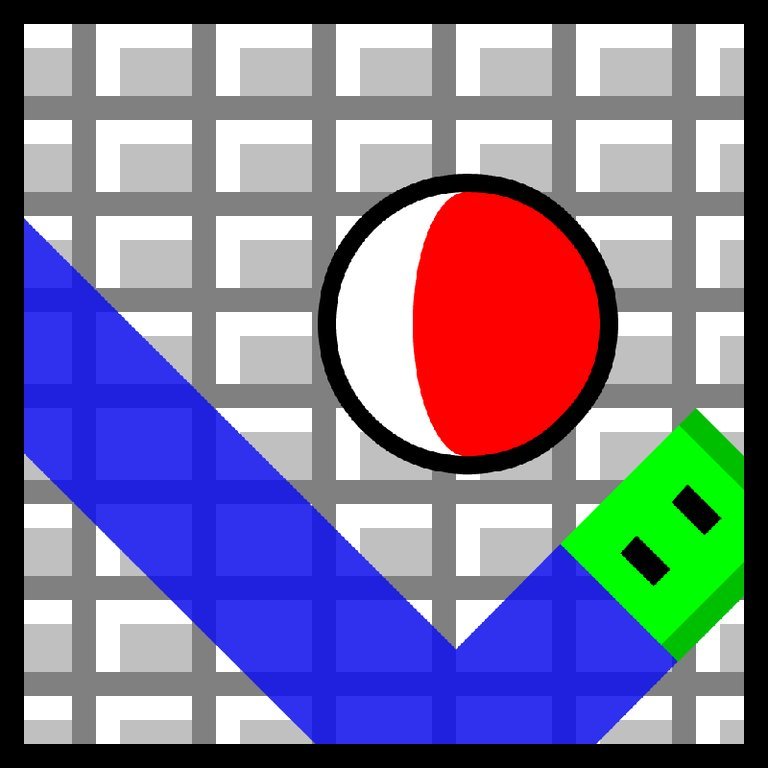
JezzBall Classic is an enhanced remake of the 1992 puzzle game set in a capture chamber where two bouncing Jezz atoms roam freely, and players must deploy vertical or horizontal wallbuilders to fill over 75% of the area with solid walls while avoiding collisions that destroy walls and cost lives. As levels progress up to 50, more atoms join, with features like customizable mods, missions, high scores, and extensive graphics/sound options enhancing the faithful high-resolution experience.
Where to Buy JezzBall Classic
PC
JezzBall Classic Reviews & Reception
metacritic.com (70/100): It’s a fine title to pick up for action puzzle goodness.
JezzBall Classic Cheats & Codes
PC
During the game.
| Code | Effect |
|---|---|
| Lives | Infinite lives |
| Hold Ctrl + Shift and press F12 | Skip to the next level |
JezzBall Classic: Review
Introduction
Imagine the late-night glow of a CRT monitor in 1992, the cursor hovering like a predator over a chaotic chamber of bouncing red-and-white atoms—your heart racing as you dare to deploy a wall, only for one errant particle to shatter your progress and steal a precious life. This was JezzBall, the unassuming puzzle gem from Microsoft’s Entertainment Pack that ensnared office workers, students, and gamers alike in its hypnotic grip of precision and peril. JezzBall Classic, released in 2011 by indie developer Winterdust, isn’t just a remake—it’s a resurrection, meticulously recreating the original’s physics, scoring, tempo, and addictive torment while layering on modern enhancements for a new era. My thesis: In an age of bloated blockbusters, JezzBall Classic stands as a triumphant testament to minimalist mastery, preserving a cornerstone of PC gaming history while evolving it into the definitive edition that honors its roots and demands rediscovery.
Development History & Context
JezzBall Classic emerged from the passion of Winterdust, a solo developer (real name Martin Edmaier) driven by reverence for the 1992 original JezzBall, created by Dima Pavlovsky of Marjacq Micro Ltd. The progenitor was born in the dawn of consumer Windows gaming, bundled into Microsoft’s Entertainment Pack 4 and later The Best of Microsoft Entertainment Pack (1995), collections that popularized casual titles like Chip’s Challenge and SkiFree on millions of PCs running Windows 3.1 and 95. Pavlovsky’s vision was simple yet ingenious: adapt the territorial conquest of 1981 arcade hit Qix—where players drew lines to claim screen space amid hazards—into a mouse-driven PC puzzle, naming it after contemporary Jez San for a cheeky nod to the industry.
Winterdust’s remake launched on October 3, 2011, for iPhone and iPad, targeting the mobile boom where touchscreens promised intuitive control over the original’s mouse-only setup. Android followed in 2012, and a Windows port arrived in 2016 via itch.io, DRM-free and priced at $4.99. Development adhered to a “just like the original” mantra, fixing glitches (e.g., physics quirks), boosting resolution to 7168×3840, and cranking frame rates to 120 FPS—leaps from the 1990s tech constraints of 256-color VGA and sluggish 16-bit rendering. Yet fidelity ruled: scoring, atom bounce physics, and tempo mirror the source pixel-for-pixel.
The era’s gaming landscape was ripe for revival. By 2011, nostalgia fueled browser clones and open-source tributes like KBounce and IceBreaker, but none captured the essence amid iOS’s puzzle surge (Monument Valley, The Room). Technological limits shaped both originals—Pavlovsky optimized for low-end PCs with grid-based collision detection—but Winterdust exploited Adobe AIR for cross-platform scalability, adding Java utilities for custom assets. This context underscores JezzBall Classic‘s role: bridging abandonware archives and app stores, resurrecting a title Microsoft abandoned in 1996 amid a fanbase sustained by shareware clones across desktops and PDAs.
Narrative & Thematic Deep Dive
JezzBall Classic eschews traditional storytelling—no protagonists, no cutscenes, no lore beyond a sparse official description of “Jezz atoms” in a “capture chamber.” Yet, in its abstraction lies profound thematic depth, elevating a mechanic to metaphor. The player’s silent role as an omnipotent architect—deploying wallbuilders to corral faceless, relentless atoms—evokes existential dread, as one retrospective poignantly frames it: a Sisyphean grind where success begets escalation. Levels begin with two atoms; each completion summons another, shrinking free space to 25% or less (75% walled), mirroring life’s cruel progression from manageable chaos to overwhelming frenzy.
No dialogue pierces the void, but “characters” emerge in atom variants via mods: red-white classics, blue-white inverses, medkits granting lives, bonus atoms for points, freeze atoms halting motion, missiles stunning builders, dashes lunging at walls, adrenaline speedsters accelerating peers. Presets like “The Prison” (trap each atom solo) or “The Shepherd” (separate colors) personify conflict—atoms as unruly prisoners or sheep, player as warden or herder. Themes of containment vs. entropy dominate: atoms bounce predictably yet mercilessly, their 90-degree rebounds symbolizing futile resistance. A blog retrospective casts it as “the pain of existence”—no victory screen, just failure and a black void, mocking perseverance like Mario or Mega Man. Subtle humor shines in mods like “The Bear Cave” (angry bears as atoms) or “The Caretakers” (eccentric atoms calmed by isolation), transforming sterility into whimsy. Ultimately, the “narrative” is player-imposed: a chronicle of hubris, timing, and inevitable downfall, deeper than many scripted tales.
Gameplay Mechanics & Systems
At its core, JezzBall Classic refines a flawless loop: deploy wallbuilders via left-click (origin at cursor), right-click toggles horizontal/vertical. Builders extend bidirectionally as energy rays (red/blue), solidifying on contact with walls/borders; atoms colliding mid-build destroy a ray (losing a life, equal to atom count per level), but the other may persist for “stovepipes”—intentional partial walls key to high-level survival. Fill 75%+ to advance (up to level 50), earning bonuses for 80%/90% clears, time/lives left. Atoms accelerate predictably, paths analyzable for safe windows.
Innovations elevate it: 83 mods (combinable, scores segregated) spawn 23 presets like “Original,” “Arcadium” (medkits, freezes), “Wallcrawler” (Qix-style direct control), “Drawing Walls” (freehand paths). Missions mimic achievements (e.g., personal bests), 100 rooms offer puzzles. UI shines—customizable controls (touch/mouse, finger gestures: reposition, boost speed), profiles (4, incl. guest) track high scores, level records, stats (duration, clears). Flaws? Mod overload risks overwhelming newcomers, touch precision demands practice (though superior to clones), no multiplayer. Progression is infinite-looping escalation, rewarding “divide and conquer”: corner-traps early, stovepipes later. UI feedback is crisp—percentage tracker, lives timer, end-level fills. No combat, but “battles” via timing yield mastery, flaws minimal in faithful execution.
World-Building, Art & Sound
The “world” is abstract: a grid chamber, black walls vs. open void, atoms as stark red/white spheres. Classic preserves pixel art—fortified ends, destruction sparks—but adds 700+ backgrounds (real photos, random per level), scalable visuals (anti-alias, fade effects), destruction animations. Atmosphere builds tension: minimalist void amplifies atom menace, escalating density evokes claustrophobia. Mods enrich: lava in “Inferno,” militarized “War.”
Sound design immerses: 60 SFX (customizable volume/sample from 300 retro pool), 8 MIDI tracks (SoundBlaster 16-recorded classics). Events granular—deploy pings, collisions cracks, clears chimes—volume-per-event, PC custom music. Contributes masterfully: beeps underscore precision, builds crescendo with atoms, freezes silence for catharsis. On mobile, haptics implied; overall, evokes 90s nostalgia while modern (120 FPS smooths bounces).
Reception & Legacy
Launch reception was muted—no MobyGames critic scores, one 70/100 from 148Apps (“fine action puzzle”). itch.io boasts 4.7/5 (3 ratings), user praise for fidelity amid Norton false positives. Original JezzBall? Cult icon—addictive “first addiction” per Reddit, “5/7” existential horror in blogs, inspired 8+ clones (IceBreaker, KBounce, Jezz Cubed 3D). Commercial: Bundled ubiquity, abandonware staple. Evolution: Classic as pinnacle remake, influencing JezzBall Galaxy, Atomic. Industry impact: Pioneered casual PC puzzles, spatial division in Xonix-likes, touch revivals. Fanbase endures via emulators (ClassicReload), speedruns, mods—proving timeless design amid mobile deluge.
Conclusion
JezzBall Classic distills gaming’s essence: elegant mechanics birthing infinite depth, from novice traps to stovepipe virtuosity. Winterdust’s enhancements—mods, customs, presets—don’t dilute; they amplify, fixing era scars while enshrining Pavlovsky’s genius. In video game history, it cements JezzBall as a 90s pillar alongside Solitaire, influencing casuals to infinity. Verdict: Essential masterpiece—9.5/10. Download, deploy, descend into atoms’ abyss; your high score awaits, but victory? That’s the joke.