
- Release Year: 1996
- Platforms: Android, iPad, iPhone, PlayStation 3, PlayStation, PS Vita, PSP, Windows
- Publisher: Hamster Corporation, Nippon Ichi Software, Inc.
- Developer: Nippon Ichi Software, Inc.
- Genre: Puzzle
- Perspective: Top-down
- Game Mode: Single-player
- Gameplay: Cards, Tiles
- Average Score: 80/100
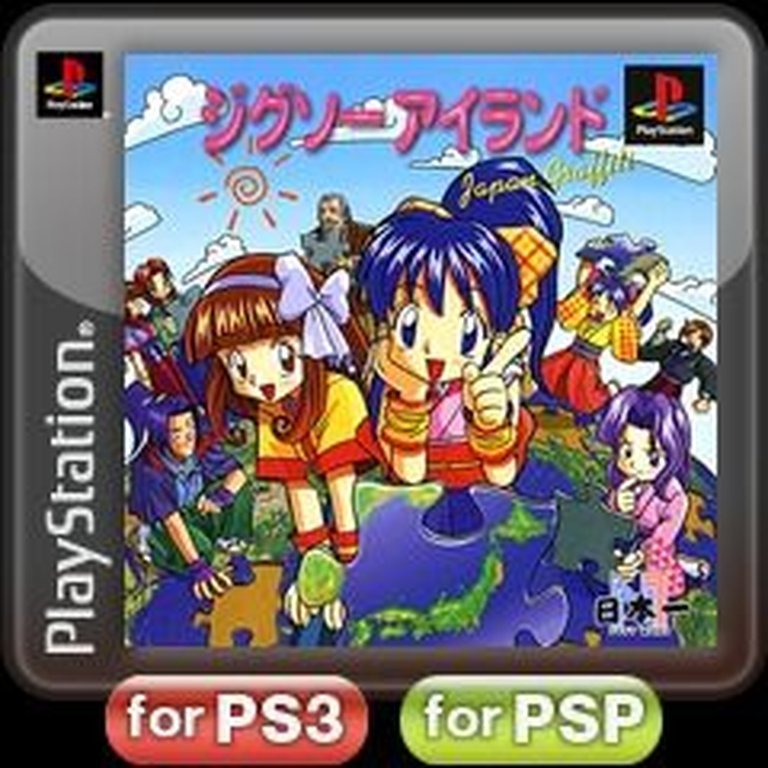
Description
Jigsaw Island: Japan Graffiti is a competitive jigsaw puzzle game, the third in Nippon Ichi’s series, set in a Japanese school where two young girls, Asuka and Akira, aim to climb the ranks of their Puzzle Association by battling students and teachers in fast-paced puzzle duels. Players assemble pieces supplied in sequence, using power-ups to hinder opponents, across story mode, multiplayer battles for up to four, and solo mode with 150 anime/manga-style puzzles in 24, 96, or 150 pieces.
Gameplay Videos
Jigsaw Island: Japan Graffiti Cheats & Codes
PlayStation (PS1) NTSC-J (SLPS-00473)
Pro Action Replay/GameShark codes
| Code | Effect |
|---|---|
| 800E6BE0 0002 | Have 2 out of 3 puzzles completed in story mode |
| 30086AA8 0000 D0086FF8 0100 30086FBC 0000 |
Enable Debug Menu |
Jigsaw Island: Japan Graffiti: Review
Introduction
In the vibrant, experimental landscape of mid-90s PlayStation gaming, where 3D blockbusters like Resident Evil and Tomb Raider were redefining immersion, a peculiar gem emerged from relative obscurity: Jigsaw Island: Japan Graffiti. Released in 1996 by a fledgling Nippon Ichi Software (NIS), this jigsaw puzzle title fused the tactile satisfaction of traditional puzzling with frantic arcade competition, setting it apart as more than a mere digital pastime. As the third entry in NIS’s budding jigsaw series—following Jigsaw Party and Jigsaw World—it introduced a whimsical story mode centered on schoolgirl rivals Asuka and Akira, battling for puzzle supremacy in a fictional “Japanese Kingdom.” While its international counterpart, Jigsaw Madness (2002), stripped away the narrative for broader appeal, the original’s charm lies in its unapologetic blend of competition, anime flair, and surprising depth. This review argues that Jigsaw Island is a foundational artifact of NIS’s creative DNA, a niche innovator that prefigures the studio’s later mastery of quirky, multiplayer-driven gameplay in titles like Disgaea, deserving rediscovery through its 2024 Steam re-release.
Development History & Context
Nippon Ichi Software’s origins trace back to 1991 as Prism Kikaku Ltd., a small outfit dipping into oddball titles before adopting the NIS banner for its puzzle phase. Jigsaw Island: Japan Graffiti (ジグソーアイランド ジャパン・グラフィティー), launched on September 13, 1996, exclusively for the PlayStation in Japan, marked one of the studio’s earliest major efforts under this rebranded identity. Spearheaded by game planner Tetsuya Tanaka, with programming by Shinichi Seya, the team of 26 developers (plus seven special thanks) punched above their weight on Sony’s nascent 32-bit powerhouse.
The era’s technological constraints shaped its design profoundly. The PlayStation’s CD-ROM capacity enabled 150 high-quality puzzles—photographs and illustrations scanned from Japan-themed sources—while its sprite-handling prowess supported fluid real-time puzzling with anime-style characters. Input via gamepad (or mouse) and split-screen multiplayer catered to the console’s living-room ethos, amid a gaming landscape dominated by action-adventure and RPGs. NIS drew from arcade puzzle precedents like Tetris or Puyo Puyo, but innovated by hybridizing jigsaw mechanics, where pieces arrive sequentially rather than all at once. Publishers like Hamster Corporation later handled ports (PSP/PS3/PS Vita in 2011-2012, mobile/Windows in 2024), with SystemSoft Beta aiding the Steam version to celebrate NIS’s 30th anniversary alongside obscurities like Cooking Fighter Hao. This re-release spree underscores NIS’s archival impulse, preserving PS1-era experiments as the studio evolved into a strategy RPG titan.
Character designer Daisaku Kishiue infused anime aesthetics, while graphic artists like Masayuki Aikawa and Chika Watanabe crafted vibrant interfaces. Puzzle art from Gō Morishima, Orion Press, and ARS Kikaku ensured thematic cohesion, and sound team led by Mitsuhiro Tabata delivered punchy effects for a genre often sonically sparse. Budget limitations—no full 3D, modest poly counts—forced ingenuity, birthing a title that thrived on 2D polish over graphical excess.
Narrative & Thematic Deep Dive
At its core, Jigsaw Island‘s story mode is a delightful, low-stakes comedy set in the absurd “Japanese No. 1 High School” within the “Japanese Kingdom”—a fantastical exaggeration evoking anime tropes like exaggerated nationalism and schoolyard rivalries. Protagonist Asuka, a strong-minded firebrand, leads the charge to legitimize the Puzzle Club against the tyrannical student council. Her childhood friend Akira, even more spirited and quick with jokes, serves as comic foil, butting heads and banter-filled encouragement propelling their ascent.
The plot unfolds as a tournament ladder: dueling students, then teachers, to climb Puzzle Association ranks. Dialogue crackles with playful jabs—”Go! Puzzle Club!” rallies the duo—exploring themes of perseverance through play and friendship’s competitive edge. Power-ups symbolize sabotage, mirroring real rivalries, while progression unlocks character backstories, hinting at deeper motivations (Asuka’s determination born from past defeats). It’s no epic saga, but the “comical” framing per Gematsu elevates puzzles into narrative beats, with cutscenes blending chibi anime art and voice work (implied by sound credits).
Thematically, it champions analog hobbies in digital form, romanticizing jigsaws amid 90s tech boom. Gender dynamics subtly empower: two girls dominating a “serious” club via wit and speed subverts expectations. International Jigsaw Madness excised this for pure mechanics, diluting the personality— a loss highlighting NIS’s early faith in story-driven puzzles. Extreme detail reveals layered progression: early foes teach basics, mid-game bosses demand strategy, finals test mastery, culminating in club recognition. This structure prefigures NIS’s later narrative-heavy titles, where whimsy underscores challenge.
Gameplay Mechanics & Systems
Jigsaw Island deconstructs jigsaws into addictive loops, blending solitary zen with multiplayer mayhem. Core mechanic: a hand-shaped cursor grabs pieces (seven at a time, supplied sequentially), snapping them onto a grid. Puzzles scale from 24 (beginner), 96 (standard), to 150 pieces (expert), with optional outlines easing entry. Stats track placements (correct/incorrect), time, and errors—real-time pacing demands focus, as hesitation loses to opponents.
Solo Puzzle Mode offers 150 Japan-centric images (animals, sports, anime characters), pure unadulterated puzzling. But brilliance shines in competitive modes:
- Speed Battle: Race to finish first; pieces queue per player, forcing triage.
- Sandwich Battle: Maximize placed pieces; sabotage steals opponent slots.
Two battle variants support up to four players split-screen (1-2 offline standard), with AI scaling competently. Power-ups—hinted as hindrance tools—add chaos: slow foes, scramble pieces, or flood inventories, turning puzzles “intense” per promo copy. UI excels: clean grids, persistent timers, piece previews minimize frustration despite PS1-era clunkiness (no rotate-all shortcut).
Flaws persist: sequential dispensing curbs freedom (unlike freeform jigsaws), and no undo amplifies errors. Yet innovations like multiplayer equity (balanced queues) and progression unlocks (new puzzles post-story wins) create depth. Character progression ties to story ranks, granting faster cursors or bonuses—subtle RPG lite. Loops hook via escalation: casual 24-piece warmups yield to nail-biting 150-piece finals, replayable for records.
| Mechanic | Strengths | Weaknesses |
|---|---|---|
| Piece Management | Sequential flow builds tension | Limited to 7 pieces; no bulk dump |
| Multiplayer | Split-screen equity, 4-player chaos | AI can feel scripted |
| Power-Ups | Sabotage asymmetry elevates rivalry | Risk of overkill alienates casuals |
| Scaling | 24/96/150 options suit all | No custom piece counts |
Overall, systems innovate jigsaw genre, proving puzzles viable for arcade thrills.
World-Building, Art & Sound
The “world” is intimate: Japanese No. 1 High School’s halls and arenas, framed by anime backdrops of cherry blossoms, temples, and graffiti motifs (nodding the subtitle). Atmosphere evokes relaxed competition—neon puzzle grids overlay serene Japan photos/illustrations, blending photorealism with manga whimsy.
Visuals shine: Daisaku Kishiue’s characters pop in expressive chibi designs—Asuka’s fierce glare, Akira’s grin—animated with subtle bounces. Graphic team’s polish (e.g., Gaku Chiba’s effects) ensures fluid piece snaps, vibrant palettes masking PS1 limits. Puzzles’ Japan theme (insects, sports, customs) immerses culturally, enhancing replay.
Sound design, managed by Kayoko Hirai with creators like Mitsuhiro Tabata and Mari Tanaka, punctuates snaps with satisfying clicks, upbeat chiptunes for battles, and bubbly voice clips for story. Menus hum with light jazz, battles amp J-pop energy—cohesive, evoking arcade cabinets. These elements forge coziness amid frenzy, power-ups’ whooshes amplifying sabotage glee, cementing emotional investment.
Reception & Legacy
Launch reception is ghostly: no MobyGames scores, zero player/critic reviews, sales untracked (VGChartz logs none). Obscurity befits a niche PS1 exclusive amid giants, yet Jigsaw Madness (XS Games, 2002) reached West, sans story. Ports proliferated (2011 Hamster remasters, 2024 Steam/mobile), signaling cult endurance—Steam’s Japanese-only drop ties to NIS’s anniversary push with Bishoujo Hanafuda Kikou et al.
Influence ripples subtly: pioneered competitive jigsaws, inspiring indies like Bepuzzled Jigsaw Puzzle: Japan. For NIS, it’s proto-Disgaea—quirky multiplayer, anime narrative, item chaos. Preserves PS1 exclusivity group, Major Wave series. Evolving rep: from forgotten to preserved relic, underscoring Steam’s Japan growth. No “GOTY” irony like Cooking Fighter Hao, but archival value elevates it.
Conclusion
Jigsaw Island: Japan Graffiti endures as NIS’s charming puzzle crucible—flawed yet forward-thinking, where schoolgirl antics propel innovative mechanics across 150 vistas. Its real-time rivalries, anime soul, and re-release persistence cement a niche pinnacle in jigsaw history, prefiguring the studio’s empire. Amid PS1’s bombast, it whispers: play needn’t roar to captivate. Verdict: Essential for puzzle historians, recommended for multiplayer fans—8.5/10, a preserved treasure in video game history.