
- Release Year: 2006
- Platforms: Windows
- Publisher: Kloonigames
- Developer: Kloonigames
- Genre: Puzzle
- Perspective: Side view
- Game Mode: Single-player
- Gameplay: Tile matching puzzle
- Average Score: 70/100
Description
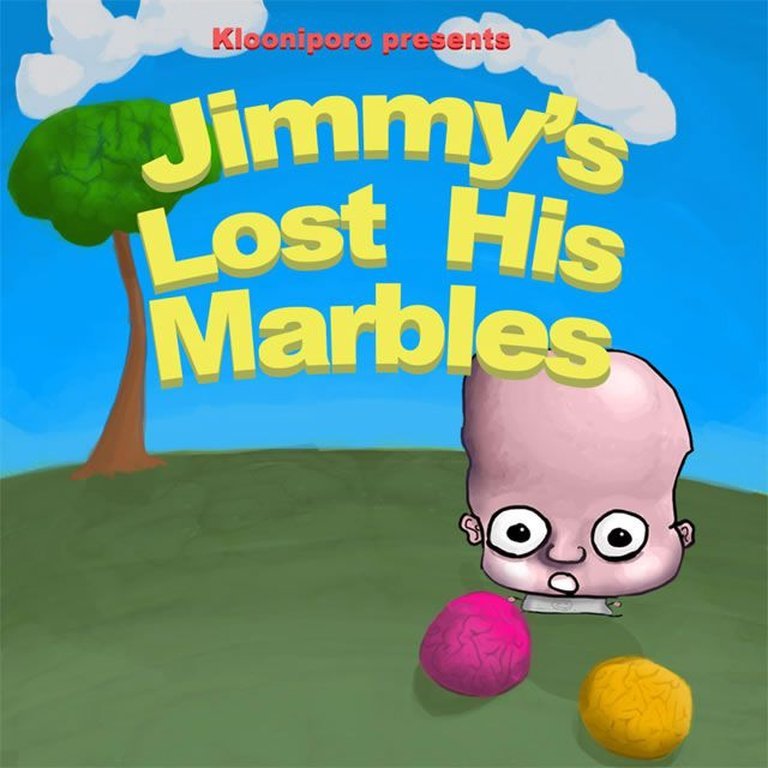
In this freeware puzzle game, players help Jimmy think straight by reorganizing the marbles inside his head, visually represented as a cut-open playfield filled with colorful marbles. The goal is to click three adjacent marbles of the same color to make them disappear, causing others to shift positions as they move to fill the gaps. Levels regenerate once all marbles are cleared, requiring strategic thinking while allowing quick reactions to escape dead ends.
Jimmy’s Lost His Marbles Reviews & Reception
sockscap64.com (60/100): This Game has no review yet, please come back later…
freegamearchive.com:8080 (81/100): Do you like The Experimental Gameplay? So there is next logical game with very original idea, good playability and solid gamedesign.
Jimmy’s Lost His Marbles: A Puzzle Gem from the Experimental Gameplay Era
Introduction
In the sprawling landscape of indie puzzle games, few titles stand out as boldly as Jimmy’s Lost His Marbles (2006). Developed by Petri Purho under the banner of Kloonigames, this freeware title is a testament to the power of rapid prototyping and experimental design. At its core, Jimmy’s Lost His Marbles is a match-3 puzzle game with a twist—literally. The player must help Jimmy “think straight” by reorganizing the marbles inside his head, a concept that blends whimsy with strategic depth. This review will dissect the game’s development history, narrative, gameplay mechanics, and lasting legacy, arguing that Jimmy’s Lost His Marbles is a hidden gem that deserves recognition in the annals of puzzle game history.
Development History & Context
The Studio and Creators’ Vision
Jimmy’s Lost His Marbles was born from the experimental ethos of the Experimental Gameplay Project (EGP), a community of developers focused on rapid, innovative game design. Petri Purho, the sole developer behind the game, challenged himself to create a complete game in just seven days—a daunting task for even the most seasoned developers. Purho’s goal was to test whether a polished prototype could be developed within a tight timeframe, a philosophy that would later influence his approach to game development.
The game’s development was documented in a detailed postmortem on Kloonigames’ blog, where Purho reflected on the successes and pitfalls of the project. He emphasized the importance of time management, using a timelog to track his progress and ensure efficiency. The game was built using SDL, SDLImage, and SDLMixer, with graphics and physics models inspired by tutorials from Markus Ilmola.
Technological Constraints and the Gaming Landscape
Released in 2006, Jimmy’s Lost His Marbles arrived during a transitional period for indie game development. The mid-2000s saw the rise of digital distribution platforms like Desura and the Independent Games Festival, which provided indie developers with new avenues to share their work. However, technical constraints were still a significant hurdle. Purho noted that creating graphics and sound effects within the seven-day deadline was particularly challenging, as he lacked access to pre-made assets or a dedicated team.
The gaming landscape at the time was dominated by AAA titles, but the indie scene was beginning to gain traction. Games like Dwarf Fortress (2006) and World of Goo (2008) demonstrated that small teams could create compelling experiences with limited resources. Jimmy’s Lost His Marbles fit into this emerging trend, offering a unique twist on the match-3 genre that had been popularized by titles like Bejeweled (2001).
Narrative & Thematic Deep Dive
Plot and Characters
The narrative of Jimmy’s Lost His Marbles is minimalist but effective. The game’s premise is straightforward: Jimmy has lost his marbles—literally. The player’s objective is to help Jimmy reorganize the multicolored marbles inside his head by matching three adjacent marbles of the same color. Each level presents a new configuration of marbles, requiring the player to think strategically to clear the board.
While the story is lighthearted, it touches on themes of mental clarity and problem-solving. The act of “helping Jimmy think straight” can be interpreted as a metaphor for organizing one’s thoughts or overcoming mental clutter. The game’s simplicity allows players to focus on the core mechanics without being distracted by a complex narrative.
Dialogue and Themes
There is no dialogue in Jimmy’s Lost His Marbles, but the game’s visual design conveys its themes effectively. The playfield is a cut-open view of Jimmy’s head, with marbles floating in a void. This surreal imagery reinforces the game’s whimsical tone while also hinting at the psychological aspects of puzzle-solving. The absence of sound or music (a noted limitation in Purho’s postmortem) means that the player’s focus remains solely on the visual and tactile experience of matching marbles.
Gameplay Mechanics & Systems
Core Gameplay Loop
The core gameplay of Jimmy’s Lost His Marbles is a variation of the classic match-3 puzzle mechanic. Players must click on three adjacent marbles of the same color to remove them from the board. When marbles are removed, the remaining marbles “wobble” into new positions, creating new matching opportunities. The goal is to clear all marbles from the board to advance to the next level.
One of the game’s innovative features is its use of physics-based movement. Unlike traditional match-3 games, where marbles simply drop into place, Jimmy’s Lost His Marbles employs a physics model that allows marbles to roll and settle into new positions. This adds an element of unpredictability, as players must anticipate how the marbles will move after each match.
Combat and Character Progression
There is no traditional combat or character progression in Jimmy’s Lost His Marbles. Instead, the game’s challenge lies in the increasing complexity of the marble configurations. As players progress through the levels, the layouts become more intricate, requiring careful planning and quick reflexes to clear the board efficiently.
User Interface and Innovative Systems
The user interface is minimalistic, with the playfield taking up most of the screen. Controls are straightforward: players use the mouse to click on marbles, and the “R” key can be pressed to reset the level. The game’s simplicity extends to its scoring system, which is absent—players are judged solely on their ability to complete each level.
One of the game’s flaws, as noted by Purho, is the level-based structure. While levels provide a sense of progression, they also require significant time and effort to design and balance. Purho acknowledged that this was a misstep, as level design ate into the limited development time. He suggested that future iterations could focus more on arcade-style gameplay, with a high-score system based on completion time.
World-Building, Art & Sound
Setting and Atmosphere
The setting of Jimmy’s Lost His Marbles is a surreal, cartoonish representation of Jimmy’s mind. The playfield is a void filled with floating marbles, and the background features a cut-open view of Jimmy’s head. This whimsical design creates a playful atmosphere that contrasts with the game’s strategic depth.
Visual Direction
Given the game’s rapid development cycle, the visuals are surprisingly polished. Purho’s artwork is simple but effective, with bright colors and clear, recognizable shapes. The marbles are rendered in a variety of hues, making them easy to distinguish. The physics-based movement of the marbles adds a dynamic element to the visuals, as players watch the marbles roll and settle into new positions.
Sound Design
One of the game’s notable omissions is sound design. Purho admitted in his postmortem that he had intended to include music and sound effects but ran out of time. The absence of audio is a missed opportunity, as sound effects could have enhanced the tactile feedback of matching marbles. However, the game’s silence also allows players to focus entirely on the visual and strategic aspects of the gameplay.
Reception & Legacy
Critical and Commercial Reception
Jimmy’s Lost His Marbles received limited critical attention upon its release, likely due to its freeware status and niche appeal. However, it garnered praise from players who appreciated its innovative twist on the match-3 genre. The game’s physics-based mechanics were particularly noted for adding a layer of unpredictability and challenge.
Commercially, the game was a success in the sense that it achieved its primary goal: proving that a complete, polished game could be developed in a short timeframe. Purho’s postmortem highlights the game’s impact on his development philosophy, emphasizing the importance of rapid prototyping and iterative design.
Influence on Subsequent Games and the Industry
While Jimmy’s Lost His Marbles may not have had a direct influence on major AAA titles, it contributed to the growing trend of experimental indie games that prioritized innovation over polish. The game’s physics-based mechanics and minimalist design influenced later puzzle games, such as Lost Marbles (2014) and Lost Your Marbles (2022), which expanded on the match-3 genre with unique mechanics.
The game also highlighted the potential of rapid game development, inspiring other developers to experiment with tight deadlines and small teams. Purho’s success with Jimmy’s Lost His Marbles paved the way for his later projects, including Crayon Physics Deluxe (2008), which further explored physics-based puzzle gameplay.
Conclusion
Jimmy’s Lost His Marbles is a testament to the power of experimentation and rapid prototyping in game development. Despite its modest origins as a seven-day project, the game offers a fresh take on the match-3 genre with its physics-based mechanics and whimsical design. While it may not have achieved widespread recognition, its influence can be seen in the indie puzzle games that followed.
In the grand tapestry of video game history, Jimmy’s Lost His Marbles stands as a hidden gem—a reminder that innovation and creativity can thrive even under the most constrained circumstances. Its legacy lies not in its commercial success but in its impact on the developers who followed, proving that great games can be born from humble beginnings. For puzzle enthusiasts and indie game historians alike, Jimmy’s Lost His Marbles is a title worth revisiting and celebrating.