
- Release Year: 2011
- Platforms: Android, BlackBerry, iPad, iPhone, Macintosh, Windows Apps, Windows Phone, Windows
- Publisher: 10tons Ltd.
- Developer: 10tons Ltd.
- Genre: Puzzle
- Perspective: Side view
- Game Mode: Single-player
- Gameplay: Logic puzzle, Matching, Tile matching puzzle
- Average Score: 86/100
Description
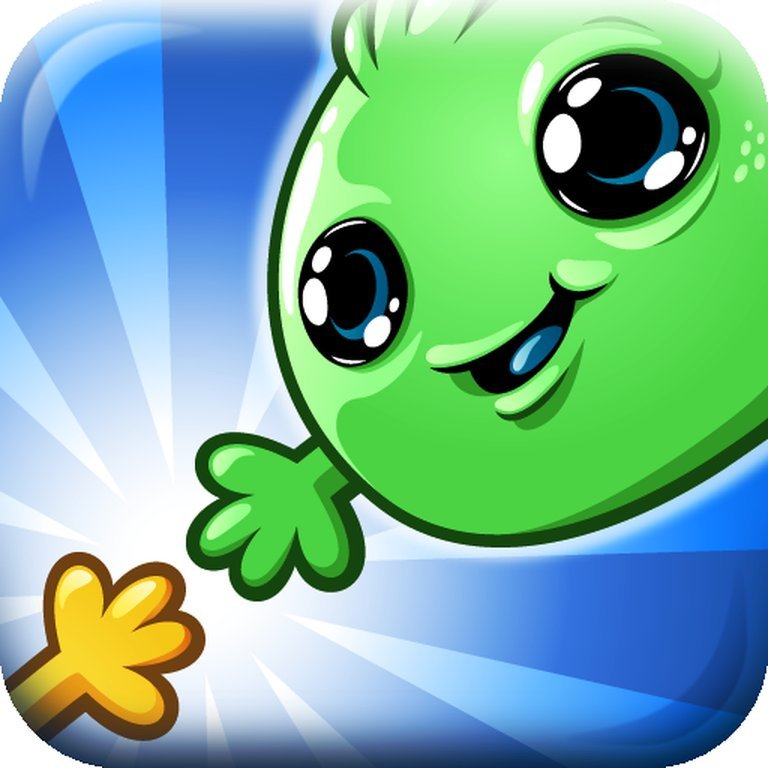
Joining Hands is a puzzle game where players place creatures called ‘peablins’ on a hexagonal board. Each peablin has between 1 to 6 hands, and the goal is to place them so that all hands are joined with adjacent peablins, making them ‘happy.’ The game features over 150 boards with various shapes and restrictions, and different types of peablins with unique behaviors, adding layers of complexity and challenge. The game was released in 2011 and is available on multiple platforms, including Android, iOS, and Windows.
Joining Hands Free Download
Joining Hands Guides & Walkthroughs
Joining Hands Reviews & Reception
metacritic.com (80/100): It’s a rewarding and satisfying puzzle game whose cute look and increasingly hard solutions make it a good fit for casual and hardcore puzzle game fans alike.
pocketgamer.com : Polished, addictive, and disarmingly sweet, Joining Hands is the perfect puzzling pick-me-up
gamezebo.com (90/100): It’s a rewarding and satisfying puzzle game whose cute look and increasingly hard solutions make it a good fit for casual and hardcore puzzle game fans alike.
Joining Hands: Review
Introduction
In the crowded landscape of mobile puzzle games, Joining Hands (2011) stands out as a quietly revolutionary gem. Developed by Finnish studio 10tons Ltd., this deceptively simple title marries tactile strategy with heartwarming whimsy, asking players to unite adorable creatures called “peablins” by linking their hands across hexagonal grids. Beneath its charming veneer lies a labyrinth of logic puzzles that demand precision, patience, and creative problem-solving. This review argues that Joining Hands is not just a puzzle game but a masterclass in minimalist design, leveraging its core mechanics to explore themes of unity, anxiety, and cooperation—all while cementing its legacy as a cult classic in the mobile gaming canon.
Development History & Context
Studio Vision & Technological Constraints
10tons Ltd., founded in 2003, was already known for polished mobile titles like Azkend and Sparkle by the time Joining Hands entered development. The team, led by core designers Ville Morkki and Petteri Mutanen, sought to create a puzzle game that emphasized “pure logic” over frantic action, inspired by hex-based board games and graph theory. The studio leveraged the touchscreen capabilities of early smartphones (launching first on Android and iOS) to create intuitive drag-and-drop controls, though the limited processing power of early mobile hardware necessitated a streamlined visual style.
The 2011 Mobile Gaming Landscape
Released amid the rise of Angry Birds and Cut the Rope, Joining Hands carved a niche by rejecting time limits and microtransactions. Instead, it offered a premium, ad-free experience with over 150 levels—a rarity in an era dominated by freemium models. Its deliberate pace and cerebral focus contrasted sharply with the kinetic energy of contemporaries, appealing to players seeking a meditative challenge.
Narrative & Thematic Deep Dive
The Whispering Woods: A Tale of Fear and Friendship
The game’s loose narrative frames the peablins as timid forest dwellers who believe holding hands wards off the mythical “Bogeyman.” This folkloric premise—delivered through subtle environmental storytelling—serves as a metaphor for communal resilience. Each chapter introduces new peablin variants, such as the reclusive Poeglins (who panic when near others) and spectral Whisprins (whose presence terrifies neighbors), deepening the allegory of social anxiety and interdependence.
Characters & Dialogue
Though devoid of explicit dialogue, the peablins communicate through expressive animations: wide-eyed fear when isolated, jubilant dances when connected. Their designs—rounded, pastel-colored bodies with varying numbers of hands—reflect a playful yet purposeful art direction. The absence of text allows the mechanics themselves to tell the story, reinforcing the theme that actions (and connections) speak louder than words.
Gameplay Mechanics & Systems
Core Puzzle Loop
Players arrange peablins on hexagonal boards, ensuring each creature’s hands are fully linked to adjacent peers. The goal is straightforward, but the complexity escalates with peablin subtypes:
– Brufflins: Fixed hand positions requiring rotation.
– Glooblins: Only bond with their own kind.
– Grimmlins: Immobile and reliant on neighbors.
– Whisprins: Scare nearby peablins unless isolated.
Innovations & Flaws
The game’s standout feature is its emergent complexity. Solutions are rarely linear, encouraging experimentation. However, late-game puzzles suffer from occasional ambiguity—peablins sometimes auto-connect hands in counterintuitive ways, leading to trial-and-error frustration. The star-collection system (rewarding optimal placements) adds replayability but can feel arbitrary in tightly designed levels.
UI & Accessibility
The interface is minimalist, with pinch-to-zoom and smooth touch controls. Yet the lack of undo/redo options and limited hint systems (outside of skipping levels) may alienate casual players.
World-Building, Art & Sound
Visual Design
Art director Ville Morkki crafted a whimsical, storybook aesthetic. Boards resemble forest clearings dappled in twilight hues, with peablins’ exaggerated expressions evoking Studio Ghibli-esque charm. The hex grids—often shaped like flowers or constellations—subtly reinforce the interconnected themes.
Soundscape & Music
Jonathan Geer’s melancholic piano score contrasts with the peablins’ chirpy vocalizations, creating a bittersweet tone. Ambient sounds (rustling leaves, distant bird calls) deepen the woodland immersion, while the celebratory fanfare upon solving a puzzle feels genuinely rewarding.
Reception & Legacy
Critical & Commercial Reception
Joining Hands earned a 90% average from critics, with GameZebo praising its “rewarding and satisfying” design and Pocket Gamer calling it “disarmingly sweet.” Though not a blockbuster, it found a dedicated audience, spurring a sequel (Joining Hands 2, 2013) and inspiring indie titles like Happy Dead Friends.
Industry Influence
The game’s hex-based mechanics and focus on emotional resonance prefigured later hits like Monument Valley and Grindstone. Its refusal to monetize via ads or in-app purchases also set a precedent for premium mobile experiences.
Conclusion
Joining Hands is a puzzle game that transcends its genre. By weaving taut logical challenges into a narrative about fear and solidarity, 10tons Ltd. crafted an experience that feels both intellectually stimulating and emotionally resonant. While its difficulty spikes and occasional UI quirks may deter some, the game’s inventive design and heartfelt presentation secure its place as a milestone in mobile gaming—a testament to the power of simplicity, creativity, and, above all, connection.
Final Verdict: A timeless classic for puzzle enthusiasts and a poignant reminder that even in darkness, we’re stronger together.