
- Release Year: 2024
- Platforms: Windows
- Publisher: KudPlay Games
- Developer: KudPlay Games
- Genre: Adventure
- Perspective: 1st-person
- Game Mode: Single-player
- Gameplay: Puzzle elements
- Setting: Contemporary, Fantasy
- Average Score: 73/100
Description
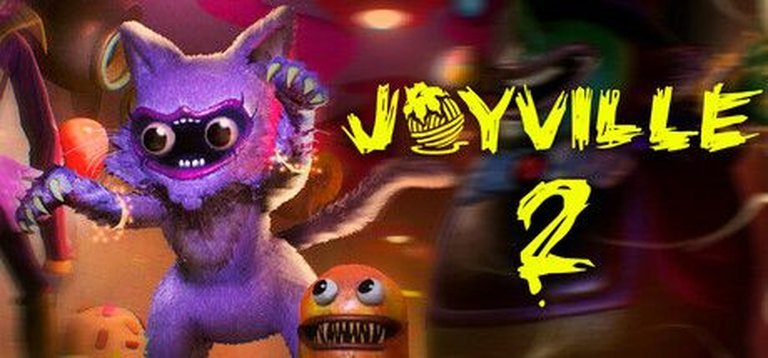
Joyville 2 is a first-person horror puzzle-adventure game set in an abandoned children’s camp, blending contemporary and fantasy elements. Players explore two parallel worlds, uncovering dark secrets and facing magical yet dangerous creatures while piecing together the camp’s haunting past. The story follows the protagonist’s quest to find their missing sister after surviving a catastrophic elevator crash, continuing the eerie narrative from the first game.
Gameplay Videos
Where to Buy Joyville 2
PC
Joyville 2 Free Download
Joyville 2 Guides & Walkthroughs
Joyville 2 Reviews & Reception
steambase.io (74/100): A triumphant return to form for the series.
store.steampowered.com (72/100): Mostly Positive reviews highlight its engaging horror puzzle-adventure experience.
Joyville 2 Cheats & Codes
General
Redeem codes in the game.
| Code | Effect |
|---|---|
| uIR7yMqozGoL | Unknown reward |
| BJhJ0Ghxp5bX | Unknown reward |
| fqy9NUGas8aW | Unknown reward |
| 50M5CJn8TN7p | Unknown reward |
| 3aJnpEy4imqs | Unknown reward |
| phkxm22VMbdL | Unknown reward |
| 3ByhypOBKow9 | Unknown reward |
| TkpoyVC2OMza | Unknown reward |
| HuBHsE5CuML5 | Unknown reward |
| 25hcFAMKnGKq | Unknown reward |
| ZWp1bLsX1eOM | Unknown reward |
| wwgswGYMvyFc | Unknown reward |
| zkvnxwdS1N1b | Unknown reward |
| 9EkbfGKbC0FN | Unknown reward |
| J1ZLNiEGDWVy | Unknown reward |
Joyville 2: A Haunting Masterpiece of Duality and Despair
Introduction: The Weight of Childhood Shadows
Few horror games dare to tread the delicate line between nostalgia and nightmare as boldly as Joyville 2. Released in December 2024 by KudPlay Games, this first-person horror puzzle-adventure is not merely a sequel—it is a descent into the fractured psyche of a place where joy once thrived, now rotting under the weight of forgotten sins. The game’s premise is deceptively simple: return to the abandoned Joyville children’s camp, uncover the truth behind your sister’s disappearance, and confront the monstrous remnants of a magical world gone horribly wrong. Yet, beneath its surface lies a labyrinth of psychological horror, time-bending mechanics, and a narrative so densely layered that it demands—no, requires—multiple playthroughs to fully unravel.
Joyville 2 is a game about duality. It is a love letter to childhood wonder and a eulogy for its loss. It is a puzzle box of grief, guilt, and the desperate hope that some wounds can still be healed. And, most importantly, it is a testament to how indie horror can innovate within a genre often dominated by jump scares and shallow lore. This is not just a game about surviving horrors—it is about understanding them.
Development History & Context: The Birth of a Nightmare
The Studio Behind the Shadows
KudPlay Games, a relatively small but ambitious studio, first entered the horror scene with Joyville in 2023. The original game, while rough around the edges, established a foundation of eerie atmosphere and environmental storytelling that resonated with fans of psychological horror. Joyville 2, however, represents a quantum leap in scope, polish, and narrative depth. Spearheaded by Nikita Kudlasevich (who served as concept creator, game director, and designer), the sequel was built with a clear vision: to craft a horror experience that was as emotionally devastating as it was mechanically engaging.
The development cycle was not without its challenges. Originally slated for a summer 2024 release, the game faced delays, likely due to the ambitious dual-world mechanics and the need to refine its intricate puzzle design. The team, consisting of just 23 developers, wore multiple hats—Andrei Shimko handled general, animation, and UI/UX programming, while artists like Max Koshelev and Alexandra Botvinova brought the game’s unsettling aesthetic to life. The result is a game that feels meticulously crafted, despite its modest budget and team size.
The Gaming Landscape: Standing Out in a Crowded Genre
Joyville 2 arrived at a time when the horror genre was saturated with indie titles drawing inspiration from Poppy Playtime, Five Nights at Freddy’s, and Outlast. Yet, rather than relying on tired tropes, KudPlay Games carved its own niche by blending:
– Dual-world exploration (reminiscent of The Legend of Zelda: A Link to the Past but with a horror twist).
– Time manipulation mechanics (evoking Life is Strange’s emotional weight but with higher stakes).
– A deeply personal narrative (akin to What Remains of Edith Finch in its focus on family tragedy).
The game’s Steam tags—“Time Travel,” “Story Rich,” “Survival Horror,” and “1980s”—hint at its ambitions. It doesn’t just want to scare players; it wants to make them feel.
Narrative & Thematic Deep Dive: The Horror of Memory
Plot Summary: A Sister’s Ghost and a Brother’s Guilt
Joyville 2 opens with the protagonist—an unnamed adult—waking up in the wreckage of an elevator, the same one that crashed at the end of the first game. The immediate objective is clear: find your sister. But as the game progresses, the truth becomes far more complicated.
The camp, once a haven of joy under the guidance of Harrison Vanderbilt, is now a decaying husk of its former self. Vanderbilt, a brilliant but troubled inventor, created toys that could transport children to a magical world. However, a catastrophic event led to the camp’s closure, Vanderbilt’s imprisonment, and the disappearance of your sister. The game’s central mystery revolves around what really happened that day—and whether your sister is still alive, trapped in the past, or something far worse.
Themes: Grief, Time, and the Corruption of Innocence
-
The Illusion of Childhood Joy
- The game’s dual-world mechanic isn’t just a gameplay gimmick—it’s a metaphor for memory. The “joyful” world is a distorted, idealized version of the past, while the “horror” world represents the brutal reality. The farther you progress, the more these worlds bleed into each other, mirroring how trauma warps recollection.
-
The Burden of Guilt
- Community theories (such as those from Steam user Just a smol cat) suggest that the protagonist may have unwittingly caused their sister’s death as a child. The ending, where a door reveals a younger version of your sister with the message “hello future me,” implies a time loop of regret. You are not just searching for her—you are trying to undo what you did.
-
The Legacy of Harrison Vanderbilt
- Vanderbilt’s fall from grace is a cautionary tale about unchecked ambition and the cost of creation. His toys, meant to bring joy, became vessels for his own trauma, corrupting the camp’s mascots (like Lumina, the sadistic cat-like antagonist) into monstrous reflections of his past.
Characters: Mascots of Madness
- The Protagonist: A silent, traumatized adult returning to a place they once loved. Their silence speaks volumes—this is a person drowning in guilt.
- Lumina: The game’s primary antagonist, a white cat with a sadistic, faux-affable demeanor. She taunts the player, calling them “Harrison” in some interpretations, suggesting she may be a manifestation of Vanderbilt’s sister. Her graffiti (“Do you miss me, brother?”) hints at a deeper, familial connection.
- Tidey, The Star, Seini, Ronny: Other corrupted mascots, each representing a different facet of Vanderbilt’s fractured psyche. Their designs are uncanny valley nightmares, blending childlike innocence with grotesque horror.
Gameplay Mechanics & Systems: Puzzles, Peril, and Parallel Worlds
Core Gameplay Loop: Survival Through Memory
Joyville 2 is, at its heart, a puzzle-adventure game with survival horror elements. The player must:
1. Navigate two parallel worlds (past and present) using a magical rabbit toy, which acts as a time-manipulation device.
2. Solve environmental puzzles that often require switching between worlds to progress.
3. Evasion-based survival segments, where mascots like Lumina chase the player through claustrophobic corridors.
Innovations & Flaws
✅ Dual-World Puzzles
– The game’s standout feature. Switching between the decaying present and the warped past isn’t just a visual trick—it’s essential for progression. A locked door in one world might be open in the other, or an object needed to solve a puzzle may only exist in the past.
✅ Time Travel as a Narrative Device
– The rabbit’s ability to rewind time isn’t just a mechanic—it’s a storytelling tool. The ending’s implication that the protagonist has been planning this return for years adds layers of tragedy.
❌ Clunky Chase Sequences
– While tense, some chase segments suffer from imprecise controls and unclear escape routes, leading to frustration rather than fear.
❌ Underutilized Toy Mechanics
– The game introduces two toy mechanics (the rabbit and another unnamed device), but their potential is not fully explored. More creative uses could have elevated the puzzle design.
World-Building, Art & Sound: A Symphony of Dread
Visual Design: Beauty in Decay
Joyville 2’s art direction is a masterclass in contrast:
– The past world is bathed in warm, saturated colors, evoking a 1980s children’s show aesthetic—think Pee-wee’s Playhouse meets Twin Peaks.
– The present world is a grayscale nightmare, with peeling paint, rusted metal, and the ever-present glow of flickering lights.
The mascots are deliberately uncanny—Lumina’s mouth-eyed design and exaggerated feminine form make her simultaneously alluring and repulsive.
Sound & Music: The Soundtrack of Madness
Composer Kim Bazykin and sound designer Alexey Iordanskiy craft an aural nightmare:
– Ambient drones create a sense of dreadful anticipation.
– Childlike melodies warp into dissonant horror when switching worlds.
– Lumina’s voice acting (by Ashley Crossman) is chillingly playful, dripping with malice.
Reception & Legacy: A Cult Classic in the Making?
Critical & Commercial Reception
- Steam Reviews: 72% Positive (174 reviews), with praise for its atmosphere, story, and dual-world mechanics, but criticism for technical issues and short length.
- Metacritic: No critic reviews yet, but user reception suggests a divisive but passionate fanbase.
- Community Theories: The game’s ambiguous ending has sparked endless debate, with players dissecting every graffiti message and environmental clue.
Influence & Future Potential
Joyville 2 may not have the mainstream appeal of Poppy Playtime, but its bold narrative choices and mechanical innovations set it apart. If KudPlay Games continues to refine its formula, the series could evolve into a defining voice in psychological horror.
Conclusion: A Haunting, Flawed Masterpiece
Joyville 2 is not a perfect game. Its chase sequences can frustrate, its puzzles occasionally underwhelm, and its narrative relies heavily on player interpretation. But its ambition, atmosphere, and emotional depth elevate it far above most indie horror titles.
This is a game about the ghosts we carry—not just the literal ones haunting Joyville’s halls, but the regrets, guilts, and lost innocences that shape us. It is a love letter to the idea that some wounds can never fully heal, but that doesn’t mean we stop trying to stitch them back together.
Final Verdict: 8.5/10 – A Must-Play for Horror Aficionados
Joyville 2 is not for everyone. It demands patience, attention to detail, and a willingness to sit with discomfort. But for those who crave horror with substance, it is an unforgettable experience—one that lingers long after the credits roll.
“The past is never truly gone. It just waits for you to remember.”