
- Release Year: 2020
- Platforms: Windows
- Publisher: W & H Game Systems
- Developer: W & H Game Systems
- Genre: Adventure
- Perspective: 1st-person
- Game Mode: Single-player
- Setting: Futuristic, Japan, Modern
- Average Score: 65/100
Description
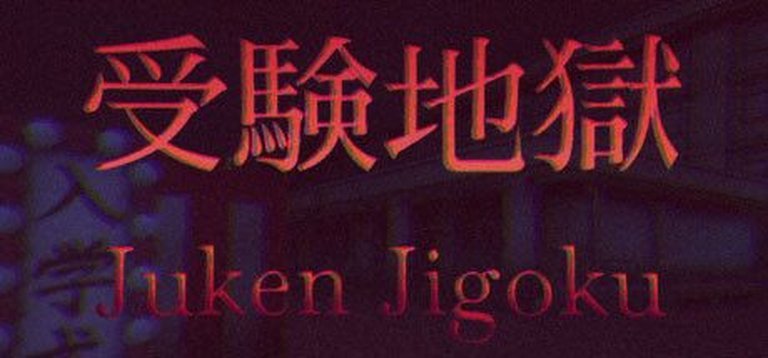
Juken Jigoku is a horror adventure game set in modern/futuristic Japan, where players take on the role of a student forced to break into their school at night to retrieve exam answers after losing a bet. Presented in a first-person perspective with retro analog aesthetics, the game immerses players in an eerie atmosphere filled with unsettling environments, psychological tension, and school-related mysteries. Inspired by the anxieties of academic life, it features branching narratives with multiple endings determined by the player’s choices, alongside optional content that extends the 30-45 minute core experience.
Gameplay Videos
Where to Buy Juken Jigoku
PC
Juken Jigoku Guides & Walkthroughs
Juken Jigoku Reviews & Reception
steambase.io (65/100): Juken Jigoku has earned a Player Score of 65 / 100.
store.steampowered.com (66/100): 66% of the 45 user reviews for this game are positive.
Juken Jigoku: A Microcosm of Academic Anguish in Indie Horror Form
Introduction
In the crowded landscape of indie horror, Juken Jigoku (受験地獄, “Examination Hell”) carves out a distinct niche by weaponizing a universal trauma: the existential dread of academic failure. Released on January 16, 2020, by Madrid-based micro-studio W&H Game Systems, this first-person horror experiment transforms the fluorescent-lit corridors of a Japanese school into a claustrophobic temple of anxiety. At $2.99 and clocking in under an hour, Juken Jigoku is less a sprawling epic than a concentrated dose of pedagogical nightmare fuel — flawed yet fascinating in its commitment to theme. Its legacy lies not in commercial success but as a psychological artifact of educational pressure culture, rendered through lo-fi aesthetics and student folklore.
Development History & Context
The Studio & Vision
W&H Game Systems emerged from Madrid’s indie scene with a résumé of frivolous mobile apps (Waifu Run, Husbando AR) before pivoting abruptly into horror. As stated in their Games Press announcement, Juken Jigoku was conceived as their first commercial PC title—a deliberate foray into “Japanese horror stories and the new wave of retro-themed horror games” like Nightshift and Stigmatized Property. The studio’s shift from AR fluff to psychological horror suggests an ambition to leverage Japan’s juken (university entrance exam) trauma—a cultural lightning rod—as a universal metaphor for institutional oppression.
Technological Constraints & Era
Built in Unity, Juken Jigoku betrays its indie roots through economical design: minimal system requirements (2GB RAM, integrated GPU), static environments, and a runtime of 30–45 minutes. This brevity was both practical (for a small team) and philosophical, mirroring the intensity of exam “cramming.” The 2020 release placed it mid-pandemic, when lockdowns amplified academic anxiety globally—a coincidental yet potent context. Unlike AAA horror titles like Resident Evil, W&H embraced constraints, using low-poly models and VHS-filtered visuals to amplify unease, a tactic reminiscent of P.T.’s lo-fi dread.
Narrative & Thematic Deep Dive
Plot as Parable
The premise is razor-focused: a student, after losing a bet, breaks into their school at midnight to steal exam answers. What begins as a delinquent caper spirals into surreal horror as the building morphs into a liminal space haunted by institutional ghosts. While overtly simple, the narrative layers metaphor: locked classrooms symbolize unreachable academic expectations; ghostly whispers echo parental pressure; and scattered test papers form environmental lore about past student suicides. The absence of explicit backstory for the protagonist—referred to only as “the student”—makes them an everyman cipher for player projection.
Characters as Manifestations of Trauma
NPCs are spectral reflections of academic anguish:
205
– The “Silhouetted Teacher”: A shadowy monitor who stalks halls, embodying authoritarian scrutiny.
– The “Weeping Examinee”: A looping ghost sobbing over a failed test, evoking cyclical despair.
– The “Betting Ring Leader”: A distorted voice on a retro phone, representing peer-pressure temptation.
No character receives elaborate development—because they are not individuals. They are archetypes of a system that reduces identity to test scores.
Themes: Institutional Horror
Juken Jigoku weaponizes Japan’s infamously brutal education system to critique globalized academic burnout. The school isn’t haunted by demons but by the specter of measurement:
– Clock Imagery: Stopwatches and frozen clocks litter the environment, symbolizing time pressure.
– Algorithmic Grading: One hidden document reads, “Your worth = (Score × Diligence) – Errors.”
– Multiple Endings: Achievement titles like “Eternal Cramming” (bad end) and “Escaped the Cycle” (true end) reframe success as escape from the system itself.
This is nihilistic existential horror disguised as a ghost story.
Gameplay Mechanics & Systems
Core Loop: Tension Through Restriction
Gameplay revolves around exploration, light puzzle-solving, and hide-from-entity sequences. The loop:
1. Search deserted classrooms for exam fragments (key items).
2. Evade patrolling horrors (e.g., the teacher’s flashlight gaze triggers insta-fail).
3. Piece Together test answers/backstory via documents.
Movement is deliberately sluggish—running drains stamina—heightening vulnerability. There are no combat options, only flight and concealment in lockers (a direct homage to Clock Tower).
Innovations & Flaws
- Retro UI Diegesis: The HUD mimics a ’90s camcorder display, with static interference increasing near enemies.
- Analog Aesthetics: CRT scanlines, chromatic aberration, and grainy film filters amplify unease (though criticized as overused).
- Flawed Pacing: The 45-minute runtime undermines stakes; one Steam review notes, “It builds dread… then just stops.”
- Jank: Clunky collision detection and AI pathing issues occasionally break immersion.
Progression & Replayability
Seven Steam achievements incentivize replays:
– “Researcher”: Interact with 30 environmental objects (e.g., bulletin boards, discarded uniforms).
– “Curious”: Discover all school emblems hidden in backgrounds.
– Three endings, tied to answer-stealing efficiency and optional lore collection.
Yet, with limited environmental variety, repeat playthroughs feel repetitive.
World-Building, Art & Sound
A School as Purgatory
The setting—a nondescript Japanese high school—is rendered with sterile realism: genkan shoe lockers, faded club posters, and soulless math-class equations scribbled on blackboards. By night, these spaces twist into liminal nightmares: hallways stretch unnaturally, locker colors bleed into grayscale, and windows reveal void-like fog. This juxtaposition mirrors the student psyche: mundane by day, monstrous under pressure.
Visual Dissonance
Art direction merges retro horror and anime/manga tropes:
– Character Design: Ghosts blend Junji Ito-esque distortion (elongated limbs, featureless faces) with Corpse Party’s school-uniform gore.
– Lighting: Flickering fluorescents cast jaundiced hues, while total darkness is sparingly used for jump scares.
– Textural Suffocation: Walls plastered with exam schedules and “Gambare!” (Hang in there!) posters create oppressive visual noise.
Sound as Psychological Needle
The soundscape weaponizes discomfort:
– Ambience: Dripping taps, distant desk creaks, and whispered equations (e.g., “y = mx + b…”) in corrupted Japanese.
– Stinger Cues: Violin screeches punctuate enemy sightings, though some critiqued them as overplayed.
– Silence: The absence of music during exploration amplifies isolation.
The overall effect is a sensory homage to Silent Hill’s industrial malaise, condensed into academia.
Reception & Legacy
Launch Reception
Juken Jigoku debuted to muted fanfare. Steam reviews settled at “Mixed” (66% positive)—praised for atmosphere but criticized for brevity and jank. Positive notes highlighted:
– “Analog visuals are perfect for exam-triggered PTSD.”
– “Made me afraid of a fucking math textbook.”
Negatives focused on technical issues: “Got stuck on a desk hitbox for 10 minutes. Felt like my hell.”
No critic reviews appeared on Metacritic or MobyGames, cementing its niche status.
Evolution & Influence
Despite limited exposure, Juken Jigoku found a cult audience among:
1. Academic Horror Aficionados: As a thematic cousin to White Day: A Labyrinth Named School.
2. Lo-Fi Horror Devs: Its retro filters and diegetic UI inspired micro-projects like Chillas’ Art games.
3. Educational Critics: Cited in deep dives on gamifying academic anxiety.
Its true legacy lies in reframing horror’s locus—from fantastical monsters to real-world systemic dread.
Conclusion
Juken Jigoku is a paradox: a game both slight and thematically weighty. Its technical shortcomings—brief runtime, occasional jank—clash with its potent dissection of academic dehumanization. As a horror artifact, its power derives not from jumpscares but from shared cultural trauma: every creaking desk and spectral sob resonates with formative dread. While not revolutionary, it exemplifies indie horror’s strength—turning intimate fears into universal language. For those who survived exam hell, this game is a haunting validation; for others, an anthropological curiosity. At $2.99, it remains a provocative—if flawed—meditation on meritocracy’s toll. In the canon of academic horror, Juken Jigoku earns a B-: passable, memorable, but not quite top marks.