
- Release Year: 2017
- Platforms: Linux, Macintosh, Windows
- Publisher: OtakuMaker SARL
- Developer: XiNFiNiTY Games
- Genre: Action
- Perspective: Side view
- Game Mode: Single-player
- Gameplay: Platform
- Setting: Fantasy
Description
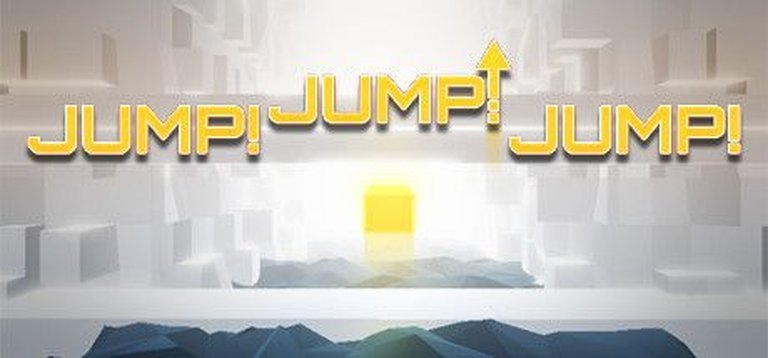
Jump! Jump↑ Jump! is a fast-paced, score-based platformer set in a minimalist fantasy world where players control a jelly-like cube character. The goal is to escape rising floodwaters while navigating moving barriers that close from both sides of the screen, requiring quick reflexes and precise timing. Players can collect coins to unlock new characters, compete on Steam leaderboards, and enjoy a simple yet challenging gameplay experience designed for short, intense sessions.
Where to Buy Jump! Jump↑ Jump!
PC
Jump! Jump↑ Jump!: A Minimalist Masterpiece or a Forgotten Gem?
Introduction: The Rise of the Minimalist Platformer
In the vast, ever-expanding universe of indie games, Jump! Jump↑ Jump! (2017) emerges as a curious artifact—a game that embraces simplicity in an era of increasingly complex and narratively dense experiences. Developed by XiNFiNiTY Games and published by OtakuMaker SARL, this title is a score-based platformer that strips the genre down to its most basic, almost primal elements: jump, avoid, survive, repeat. At first glance, it might seem like just another entry in the crowded “endless runner” subgenre, but beneath its minimalist exterior lies a game that challenges reflexes, tests patience, and—perhaps unintentionally—raises questions about the very nature of gaming addiction and the appeal of high-score chasing.
This review will dissect Jump! Jump↑ Jump! from every conceivable angle—its development, its mechanics, its place in gaming history, and its cultural resonance (or lack thereof). We’ll explore whether it’s a hidden gem, a forgettable footnote, or something more intriguing: a game that, despite its obscurity, encapsulates the essence of what makes platformers so enduring.
Development History & Context: The Birth of a Niche Experiment
The Studio Behind the Game: XiNFiNiTY Games
Little is known about XiNFiNiTY Games, the developer behind Jump! Jump↑ Jump!. The studio appears to be a small, independent team, likely operating with limited resources. Their portfolio is sparse, with Jump! Jump↑ Jump! being one of their few notable releases. This obscurity is telling—it suggests that the game was born not from a grand vision or a well-funded development cycle, but from the kind of experimental, passion-driven creativity that thrives in the indie scene.
The game was released on December 28, 2017, a time when the indie market was already saturated with platformers of all stripes. Titles like Celeste (2018) and Hollow Knight (2017) were redefining what the genre could achieve in terms of storytelling and mechanical depth. In this landscape, Jump! Jump↑ Jump! made no pretenses about competing on narrative or visual spectacle. Instead, it carved out a niche for itself as a pure, unadulterated test of reflexes and endurance.
Technological Constraints and Design Philosophy
The game’s Steam description proudly declares:
“This game is not for everyone: it required dexterity, concentration, reflexes… and the need to beat the highest score!”
This statement is more than just marketing hyperbole—it’s a mission statement. Jump! Jump↑ Jump! is a game that embraces its limitations. Built in Unity, it leverages simple 2D physics and a side-scrolling perspective to create a game that is easy to pick up but fiendishly difficult to master. The protagonist is a jelly-physics cube, a design choice that adds a layer of unpredictability to the gameplay. Unlike the tight, pixel-perfect controls of a Super Meat Boy or Celeste, Jump! Jump↑ Jump! introduces a deliberate wobbliness to movement, making each jump feel slightly less precise and more chaotic.
This design philosophy is reminiscent of early mobile platformers like Doodle Jump (2009), which also relied on simple mechanics and addictive high-score chasing. However, Jump! Jump↑ Jump! distinguishes itself by introducing rising water as a constant, relentless threat. The player isn’t just jumping for the sake of it—they’re escaping, and the tension of the encroaching floodwaters adds a layer of urgency that many endless runners lack.
The Gaming Landscape in 2017
2017 was a pivotal year for indie games. The success of Cuphead (2017) proved that hand-drawn animation and brutal difficulty could captivate audiences, while Hollow Knight demonstrated the appeal of meticulously crafted Metroidvanias. Meanwhile, the roguelike platformer subgenre was gaining traction, with games like Dead Cells (2017) blending permadeath with tight platforming.
Jump! Jump↑ Jump! didn’t attempt to compete with these titles. Instead, it occupied a different space—one that harkened back to the arcade era, where games were designed to be addictive, punishing, and endlessly replayable. In many ways, it’s a throwback to the days of Donkey Kong (1981) and Space Panic (1980), where the goal wasn’t to tell a story but to test the player’s skill and perseverance.
Narrative & Thematic Deep Dive: The Story of a Cube in Peril
Plot: Minimalism as a Statement
Jump! Jump↑ Jump! has no traditional narrative. There are no cutscenes, no dialogue, no lore. The game’s premise is delivered in a single sentence:
“The purpose of the game is to escape from the flooding water coming from under and try to reach the best score.”
This lack of narrative is not a flaw—it’s a deliberate choice. The game strips away all distractions, leaving only the core gameplay loop. In doing so, it invites players to project their own meanings onto the experience. Is the cube a desperate survivor fleeing a catastrophic flood? A lab rat in an endless experiment? A metaphor for the human condition? The game doesn’t say, and that’s part of its charm.
Themes: Survival, Futility, and the Addiction of Progress
While Jump! Jump↑ Jump! may lack a traditional story, it is rich in thematic resonance. Several key themes emerge from its gameplay:
-
The Illusion of Progress
- The game is endless—there is no final level, no boss fight, no true victory. The only goal is to survive longer than your last attempt. This creates a sense of Sisyphean futility, where the player is condemned to repeat the same actions forever, chasing a high score that can never truly be “beaten.”
-
The Relentless Threat of Failure
- The rising water is an ever-present danger, a ticking clock that forces the player to keep moving. This mechanic taps into a primal fear—drowning, being overwhelmed, losing control. The game’s tension comes not from enemies or complex puzzles, but from the inescapable pressure of time.
-
The Addiction of High-Score Chasing
- Jump! Jump↑ Jump! is designed to be addictive. The inclusion of Steam Leaderboards and Achievements encourages players to keep trying, to beat their friends, to prove their skill. This taps into the same psychological hooks that made Pac-Man (1980) and Tetris (1984) so enduring.
-
The Absurdity of the Protagonist
- The player character is a jelly cube, a deliberately absurd choice that undermines any attempt at seriousness. This self-aware silliness is a refreshing contrast to the often overly earnest narratives of modern indie games. The cube’s wobbly physics make it feel vulnerable and unpredictable, reinforcing the game’s theme of struggle against chaos.
Characters and World-Building: The Absence of Both
There are no characters in Jump! Jump↑ Jump! beyond the jelly cube and the moving barriers that threaten to crush it. The world is a featureless void, with only the rising water and the occasional coin to break the monotony. This minimalism is both a strength and a weakness:
- Strength: It forces the player to focus entirely on the gameplay, creating a pure, unfiltered experience.
- Weakness: It lacks the charm and personality of games like Doodle Jump, which at least had thematic variety (Easter, Halloween, Space, etc.).
The game’s fantasy setting (as listed on MobyGames) is purely nominal—there’s nothing overtly “fantastical” about a cube jumping over barriers. If anything, the game feels more like a dystopian survival simulator than a fantasy adventure.
Gameplay Mechanics & Systems: The Art of Simplicity
Core Gameplay Loop: Jump or Die
At its heart, Jump! Jump↑ Jump! is a one-button game. The player controls the jelly cube with simple left/right movement and a jump button. The goal is to ascend as high as possible while avoiding two primary obstacles:
-
Moving Barriers
- These are the game’s main hazard. They slide in from the left and right, forcing the player to time their jumps carefully. The barriers move at different speeds, and some close in unpredictable patterns, adding a layer of chaos.
-
Rising Water
- The water rises slowly but relentlessly, creating a soft fail-state. If the player lingers too long, they’ll be swallowed by the flood, ending their run.
Progression and Unlockables
The game features a coin-collecting mechanic, where players can gather coins to unlock new characters. These characters are purely cosmetic—different-colored cubes—but they provide a sense of progression in an otherwise endless game.
The inclusion of Steam Achievements and Leaderboards adds replay value, encouraging players to compete against themselves and others. However, the lack of meaningful unlockables (e.g., new abilities, power-ups, or levels) means that the gameplay remains static—the challenge comes from mastering the same mechanics, not from discovering new ones.
Physics and Control: The Jelly Cube’s Struggle
The game’s most defining (and potentially divisive) feature is its jelly physics. Unlike traditional platformers, where characters have tight, responsive controls, Jump! Jump↑ Jump!’s cube wobbles and deforms mid-air. This creates a sense of unpredictability—players must adapt to the cube’s momentum, making split-second adjustments to avoid barriers.
This design choice is polarizing:
– Pros: It adds depth and challenge, forcing players to think dynamically rather than relying on muscle memory.
– Cons: It can feel unfair, especially when the cube gets stuck on a barrier due to its physics.
UI and Feedback: Minimalist to a Fault?
The game’s UI is stripped down to the essentials:
– A score counter (tracking height reached).
– A coin counter.
– A water level indicator.
There is no health bar, no lives system, no pause menu. This minimalism reinforces the game’s arcade-like intensity, but it also means that feedback is limited. Players must rely on visual and auditory cues (e.g., the sound of the cube bouncing, the sight of the water rising) to gauge their performance.
World-Building, Art & Sound: The Aesthetics of Nothingness
Visual Design: A Void with Purpose
Jump! Jump↑ Jump!’s art style is deliberately sparse:
– The background is a featureless gradient, with no environmental details.
– The cube is a simple, low-poly shape with a jelly-like texture.
– The barriers are geometric slabs that slide in and out.
This minimalist aesthetic serves a purpose—it eliminates distractions, forcing the player to focus entirely on the gameplay. However, it also means that the game lacks visual personality. There are no thematic variations (e.g., space levels, jungle levels), no enemy designs, no world-building. The game’s fantasy setting is purely abstract.
Sound Design: The Rhythm of Survival
The game’s audio is equally minimalist:
– A simple, upbeat soundtrack plays in the background.
– Jumping sounds are cartoonish and bouncy.
– The rising water has a subtle, ominous hum.
The sound design is functional—it provides feedback (e.g., the cube’s bounce sound) and tension (e.g., the water’s hum). However, it lacks the memorable melodies or atmospheric depth of games like Celeste or Hollow Knight.
Atmosphere: The Horror of the Endless Climb
Despite its bright, colorful visuals, Jump! Jump↑ Jump! has an underlying sense of dread. The rising water, the relentless barriers, and the endless climb create a feeling of inevitability—no matter how high the player goes, failure is always looming.
This atmosphere is unintentional but effective. The game doesn’t try to be scary or oppressive, but the mechanical design creates a psychological tension that keeps players engaged.
Reception & Legacy: The Game That Few Remember
Critical Reception: A Game Without a Voice
Jump! Jump↑ Jump! received almost no critical attention. As of 2024:
– Metacritic: No critic reviews.
– OpenCritic: No listings.
– MobyGames: No user reviews.
The game’s Steam page has only 5 user reviews, with a mixed reception. Some players praise its addictive gameplay, while others criticize its lack of depth and frustrating physics.
This lack of reception is telling. Jump! Jump↑ Jump! was released into a crowded market, where even exceptional indie games struggle to stand out. Without a strong marketing push, a unique hook, or a compelling narrative, it was doomed to obscurity.
Commercial Performance: A Niche Within a Niche
The game is cheap ($0.99 on Steam), suggesting that it was not a major commercial endeavor. It likely sold a few thousand copies, mostly to platformer enthusiasts and achievement hunters.
Legacy: A Footnote in Platformer History
Jump! Jump↑ Jump! will not be remembered as a classic or a genre-defining title. However, it serves as an interesting case study in minimalist game design. It proves that:
– A game can be engaging without narrative.
– Simple mechanics can create deep challenge.
– High-score chasing remains a powerful motivational tool.
In this sense, Jump! Jump↑ Jump! is a spiritual successor to arcade classics like Donkey Kong and Space Panic. It may not have redefined the platformer, but it honored the genre’s roots.
Conclusion: The Verdict on Jump! Jump↑ Jump!
The Good:
✅ Pure, unfiltered platforming – No distractions, just jump and survive.
✅ Addictive high-score chasing – The Steam Leaderboards and Achievements provide replay value.
✅ Unique jelly physics – The cube’s wobbly movement adds challenge and unpredictability.
✅ Minimalist design – The lack of clutter forces focus and skill.
The Bad:
❌ Lack of depth – No power-ups, abilities, or level variety.
❌ Frustrating physics – The cube can get stuck unfairly.
❌ No narrative or personality – The game feels sterile and repetitive.
❌ Obscurity – No critical or commercial impact.
Final Verdict: 6.5/10 – A Flawed but Fascinating Experiment
Jump! Jump↑ Jump! is not a great game, but it is an interesting one. It succeeds in what it sets out to do—provide a pure, challenging platforming experience—but it fails to elevate itself beyond its mechanics.
For hardcore platformer fans and high-score chasers, it offers a unique, if frustrating, challenge. For casual players, it may feel too repetitive and unforgiving.
Ultimately, Jump! Jump↑ Jump! is a time capsule of indie minimalism—a game that embraces its limitations rather than trying to hide them. It won’t be remembered alongside Celeste or Hollow Knight, but it deserves a place in the conversation about what makes platformers enduring.
Should you play it?
– Yes, if you love punishing, high-score-driven platformers.
– No, if you prefer narrative, variety, or polished controls.
In the grand tapestry of gaming history, Jump! Jump↑ Jump! is a small, oddly shaped thread—easily overlooked, but essential to the fabric of indie experimentation.
Final Score: 6.5/10 – “A Minimalist Marathon”