
- Release Year: 2023
- Platforms: Windows
- Publisher: Chuyu Games
- Developer: Simple Touch
- Genre: Action
- Perspective: Side view
- Game Mode: Single-player
- Gameplay: 2D, Platform
- Setting: Fantasy
- Average Score: 73/100
Description
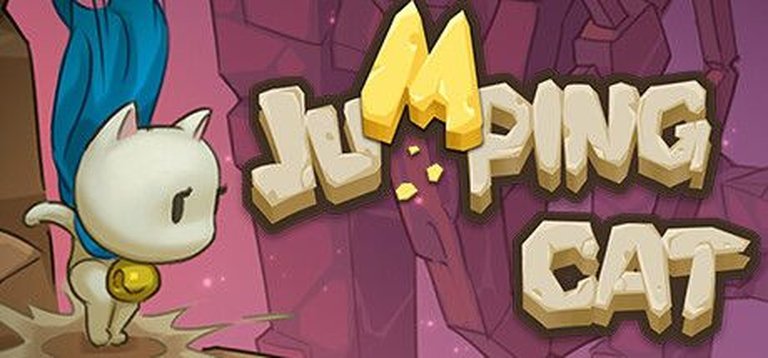
Jumping Cat is an action platformer set in a fantasy world, presented in a 2D side-scrolling perspective with direct controls. Players navigate through vibrant levels as a cat, utilizing jumping and climbing mechanics to overcome obstacles and enemies in a fantastical environment.
Where to Buy Jumping Cat
PC
Jumping Cat Patches & Updates
Jumping Cat Guides & Walkthroughs
Jumping Cat Cheats & Codes
Mobile (iOS/Android/LINE Games)
Redeem codes in the game’s redemption menu
| Code | Effect |
|---|---|
| v9mnbXCZlORV | Redeem for In-Game Bundle |
| FhrxqoIZiBrP | Redeem for In-Game Bundle |
| CjXd3auKlGQo | Redeem for In-Game Bundle |
| TkE1G90vNm0u | Redeem for In-Game Bundle |
| 1bKGKS5bmAva | Redeem for In-Game Bundle |
| OTTUEhhPlOWm | Redeem for In-Game Bundle |
| B9k3N42anrKD | Redeem for In-Game Bundle |
| 6Jb3lyqVV8E7 | Redeem for In-Game Bundle |
| Hew2NMq8eupb | Redeem for In-Game Bundle |
| HtolvHzB7wSq | Redeem for In-Game Bundle |
| 0fwrq5yiWaKs | Redeem for In-Game Bundle |
Jumping Cat: Review
Introduction
In the vast and often derivative landscape of indie platformers, Jumping Cat emerges as a modest but earnest challenger. Developed by Simple Touch and published by Chuyu Games, this 2023 title tasks players with guiding a caped feline through perilous dungeons to revive a lost kingdom. Though its ambitions are humble, Jumping Cat carves out a niche through its charming aesthetic and precise core mechanics. Yet, beneath its cute facade lies a game that struggles to balance accessibility with challenge, often undermined by technical hiccups and a narrative that feels more like a afterthought. This review dissects Jumping Cat as a product of its time and genre, examining its design philosophy, execution, and place in the lineage of feline-themed platformers.
Development History & Context
Jumping Cat was crafted by Simple Touch, an indie studio operating with constrained resources, as evidenced by its reliance on the ubiquitous Unity engine. Released on January 16, 2023, for Windows PC, it arrived in a market saturated with 2D platformers—both nostalgic indie darlings and minimalist mobile ports. The developers positioned the game as a “simple and straightforward” experience, aiming for accessibility while incorporating a key feline ability: wall jumping and sliding. This choice reflects a deliberate nod to the enduring appeal of animal protagonists in platformers, from Super Mario Bros. to Stray, though Jumping Cat lacks the latter’s narrative sophistication or technical polish.
The gaming landscape of early 2023 saw players increasingly demanding polished indie experiences post-Hades and Celeste. While Jumping Cat captures the casual and cozy zeitgeist with its cute cat protagonist and colorful traps, it arrives without the marketing push or critical buzz of its peers. Its existence feels like a response to a specific, underserved niche: players seeking bite-sized platforming challenges without the steep learning curves of hardcore “precision platformers.” The use of Unity hints at both rapid development and inherent limitations, which manifest in the game’s technical execution and sparse content.
Narrative & Thematic Deep Dive
The narrative of Jumping Cat is its most significant casualty of simplicity. The premise, lifted directly from the Steam store description, is bare-bones: a cat hero dons a cape to traverse dungeons, collect Gold Coins and Paw Gems, and revive a “lost kingdom.” There is no dialogue, no character development, and no world-building beyond the dungeon walls. The themes of renewal and perseverance are present but unexplored—merely serving as a justification for the gameplay loop. This minimalism is arguably intentional, aligning with the game’s “straightforward” ethos, but it results in a world devoid of personality or emotional resonance.
The cat protagonist, while visually endearing with its cape, functions purely as a gameplay avatar. Its “stray” nature is never contextualized; it lacks the backstory or environmental storytelling of Stray‘s feline lead. The dungeons themselves are abstract spaces filled with traps rather than locations with history. Players seeking narrative depth or thematic richness will find none here. The narrative is a functional placeholder, illustrating how Jumping Cat prioritizes mechanical purity over storytelling—a choice that will delight some and disappoint others.
Gameplay Mechanics & Systems
The core gameplay loop of Jumping Cat revolves around precision platforming, wall jumping, and trap avoidance. Players navigate through nearly 100 levels divided into chapters, each demanding mastery of timing and spatial awareness. The central innovation—wall jumping and sliding—is well-implemented, allowing players to scale vertical surfaces and bypass hazards like saws, thorns, and hidden spears. This mechanic creates satisfying “parkour” moments, though it can feel inconsistent due to the game’s physics. Wall jumps sometimes lack the expected responsiveness, leading to frustrating deaths that feel unfair rather than player-error.
Trap design is both predictable and occasionally inspired. Saws, lava drops, and spikes are standard platforming fare, but some sections introduce clever environmental hazards, like walls that shift or traps triggered by proximity. The “Paw Gems” serve as collectibles, encouraging exploration of hidden paths, though the reward is purely cosmetic. Levels often feature “hidden” areas, but their discovery lacks the thrill of Celeste or Hollow Knight due to minimal incentive.
However, Jumping Cat falters in execution. The difficulty curve is erratic, with early levels feeling too easy followed by abrupt spikes in challenge. Bugs reported in the Steam community—such as Chapter 4 failing to unlock or Chapter 2 Level 10 becoming unplayable—mar the experience. Controls, while functional, lack the polish of genre benchmarks; keyboard controls are particularly clunky, as noted in discussions. The game’s “learn from failure” ethos is commendable, but poor checkpoint placement and inconsistent hit detection often turn persistence into tedium.
World-Building, Art & Sound
Visually, Jumping Cat adopts a vibrant, cartoonish aesthetic reminiscent of mobile platformers. The cat protagonist is designed with broad appeal—large eyes, a flowing cape, and expressive animations that emphasize cuteness over realism. Dungeons feature a fantasy motif with colorful hazards (e.g., bubbling lava, glowing spikes), though the environments lack distinctiveness. Levels are repetitive, relying on trap variations rather than unique settings. The art style is functional but unmemorable, failing to create a cohesive world beyond its immediate platforms.
Sound design is equally minimalist. Background music is absent from available descriptions, implying a reliance on simple sound effects for jumps, deaths, and coin collection. While this aligns with the game’s “simple” design, it contributes to a flat audio experience. The lack of ambiance or dynamic audio fails to heighten tension during platforming sequences. Overall, the art and sound prioritize accessibility over immersion, reinforcing Jumping Cat as a lightweight, disposable experience rather than a richly realized world.
Reception & Legacy
Upon release, Jumping Cat received a mixed reception, reflected in its “Mostly Positive” (70%) rating on Steam based on 40 reviews. Player feedback highlights the game’s charming visuals and satisfying wall-jumping mechanics but also criticizes its technical flaws and inconsistent difficulty. Community discussions reveal recurring complaints about bugs (e.g., save game issues, progression blockers) and a lack of polish. The game’s modest impact is evident in its low player count and minimal presence in gaming discourse—unlike Stray, which became a cultural phenomenon.
In the broader context of feline platformers, Jumping Cat occupies a lower rung than titles like Stray or Cat Quest. It lacks the innovation of the former and the charm of the latter, serving instead as a competent but forgettable entry. Its legacy will likely be as a cautionary tale about the challenges of delivering a polished indie title with limited resources. For developers, it underscores the importance of thorough QA and player-friendly progression systems. For players, it represents a time-waster rather than a must-play experience.
Conclusion
Jumping Cat is a game of two halves: its core mechanics offer moments of genuine satisfaction, particularly with well-executed wall-jumping sequences, but these are consistently undermined by technical shortcomings and a lack of ambition. It succeeds as a lightweight, accessible platformer for casual players but fails to engage those seeking depth, polish, or narrative richness. Its cute aesthetic and simple premise are its strongest assets, yet they cannot compensate for buggy execution and a repetitive structure.
In the pantheon of video game history, Jumping Cat will not be remembered as a landmark title. It stands as a competent but forgettable indie platformer, overshadowed by its more innovative or emotionally resonant contemporaries. For developers, it offers lessons in scope management and technical polish; for players, it serves as a reminder that accessibility must be balanced with consistency. Ultimately, Jumping Cat is a purr-fectly average game—charming in moments but ultimately destined to be overlooked, much like the stray cat it features.