
- Release Year: 1999
- Platforms: Windows
- Publisher: Jordan Freeman Group, LLC, Knowledge Adventure, Inc.
- Developer: Knowledge Adventure, Inc.
- Genre: Educational
- Perspective: Fixed / flip-screen
- Game Mode: Single-player
- Gameplay: Educational, Pre-school, toddler
- Setting: Fantasy
Description
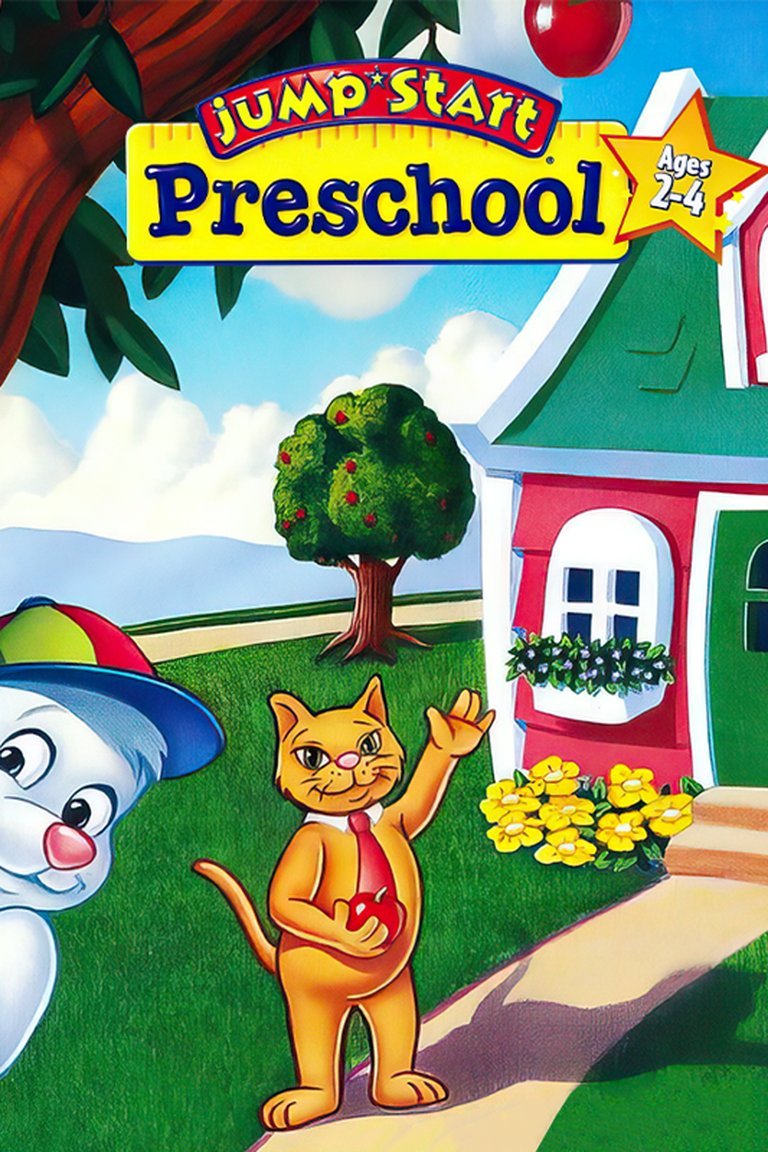
JumpStart Preschool is a 1995 educational video game in the JumpStart franchise designed for preschool-aged children. Set in a whimsical fantasy world, the game teaches foundational skills including reading readiness, numeral recognition, memory development, and auditory discrimination through engaging activities. It features adaptive learning technology that adjusts difficulty based on the child’s progress, along with a Parent Resource Center and Progress Reports to track developmental milestones.
Gameplay Videos
JumpStart Preschool Free Download
JumpStart Preschool Patches & Updates
JumpStart Preschool Reviews & Reception
forums.lostmediawiki.com : The cartoon is poorly animated, dull, and fails to engage.
JumpStart Preschool: Review
In the pantheon of educational software, few titles have left as indelible a mark as “JumpStart Preschool.” Released in 1999 by Knowledge Adventure, this game was not just a product of its time but a pioneering effort to blend education and entertainment in a way that captivated young minds. This review delves into the multifaceted aspects of “JumpStart Preschool,” examining its development history, narrative depth, gameplay mechanics, and enduring legacy.
Development History & Context
Studio and Creators’ Vision
Knowledge Adventure, the studio behind “JumpStart Preschool,” was a trailblazer in the edutainment genre. The game was developed under the direction of preschool teachers and parents, ensuring that its educational content was both accurate and engaging. The vision was clear: create an interactive environment that would make learning fun and accessible for preschoolers.
Technological Constraints and Gaming Landscape
The late 1990s was a period of rapid technological advancement. “JumpStart Preschool” was released for Windows, a platform that was becoming increasingly accessible to households. The game utilized fixed/flip-screen graphics, a common technique at the time, to create an immersive and interactive experience. The gaming landscape was dominated by titles that focused on either pure entertainment or dry educational content. “JumpStart Preschool” aimed to bridge this gap, offering a product that was both fun and educational.
Narrative & Thematic Deep Dive
Plot and Characters
“JumpStart Preschool” revolves around a group of anthropomorphic animal characters—Casey Cat, Eleanor Elephant, Kisha Koala, and Pierre Polar Bear—who guide players through various educational activities. The game is set in an interactive schoolhouse, where each character has a distinct personality and role. Casey is hyperactive, Eleanor loves to read, Kisha is artistic, and Pierre enjoys food and jokes. This diversity in character traits helps to engage different types of learners.
Dialogue and Educational Concepts
The dialogue in “JumpStart Preschool” is designed to be simple and engaging, using repetitive phrases and rhymes to reinforce learning. The game covers a range of educational concepts, including reading readiness, memory development, numeral recognition, and auditory discrimination. Each activity is carefully crafted to align with preschool curriculum standards, ensuring that children are learning while having fun.
Themes
The overarching theme of “JumpStart Preschool” is the joy of learning. The game encourages curiosity and exploration, presenting educational concepts in a way that is both accessible and enjoyable. The use of a magical schoolhouse setting adds a layer of fantasy, making the learning experience more engaging for young players.
Gameplay Mechanics & Systems
Core Gameplay Loops
The core gameplay of “JumpStart Preschool” revolves around point-and-click interactions. Players navigate through various locations within the schoolhouse, each offering different educational activities. These activities range from memory match games to cooking mechanics, all designed to teach foundational concepts in a fun and interactive way.
Character Progression and UI
The game features a progress report system that allows preschool teachers and caregivers to track the player’s improvement. JumpStart’s Adaptive Learning Technology adjusts the difficulty based on the player’s success-to-attempt ratio, ensuring that the game remains challenging but not frustrating. The user interface is intuitive, with clear visual cues and simple controls that are easy for young children to understand.
Innovative and Flawed Systems
One of the innovative features of “JumpStart Preschool” is its use of educational songs. These songs are integrated into the gameplay, reinforcing learning through repetition and melody. However, the game’s reliance on fixed/flip-screen graphics can feel dated by today’s standards, and some activities may seem simplistic compared to modern educational software.
World-Building, Art & Sound
Setting and Atmosphere
The setting of “JumpStart Preschool” is a magical schoolhouse filled with whimsical characters and interactive elements. The atmosphere is bright and colorful, designed to appeal to young children. The schoolhouse serves as a hub, with various rooms and locations each dedicated to different educational activities.
Visual Direction
The visual style of “JumpStart Preschool” is characterized by its use of fixed/flip-screen graphics. While this technique was common in the late 1990s, it can feel limiting compared to modern 3D graphics. However, the game’s art direction is charming, with cute characters and vibrant colors that capture the imagination of young players.
Sound Design
The sound design of “JumpStart Preschool” is integral to its educational goals. The game features 17 sing-and-learn songs that are catchy and memorable. These songs are used to teach various concepts, from the alphabet to numeracy. The sound effects and voice acting are also well-executed, adding to the overall immersive experience.
Reception & Legacy
Critical and Commercial Reception
“JumpStart Preschool” received widespread acclaim upon its release. Critics praised the game’s cute characters, amusing activities, and magical worlds. The Chicago Tribune noted the surreptitious learning opportunity, highlighting how the game disguised education as fun. The re-release in 1998 was deemed superior due to improved graphics, motivational rewards, and assessment technology that customized for a child’s individual needs.
Commercially, “JumpStart Preschool” was a massive success. According to PC Data Interactive, it was the best-selling preschool software program from January 1996 through March 1998. The game won the Interactive Achievement Award for Computer Educational Title of the Year (0–8 years) in 1999, further cementing its status as a groundbreaking educational tool.
Influence on Subsequent Games and the Industry
The legacy of “JumpStart Preschool” is evident in the numerous sequels and spin-offs that followed. The game’s success paved the way for other edutainment titles, demonstrating that educational software could be both fun and effective. The franchise expanded into other age groups and media, including workbooks, direct-to-video films, mobile apps, and online virtual worlds. The innovative approach to integrating education and entertainment continues to influence the educational media landscape.
Conclusion
“JumpStart Preschool” stands as a testament to the power of edutainment. Its blend of engaging narrative, innovative gameplay mechanics, and charming visuals created an educational experience that was both fun and effective. The game’s enduring legacy is a testament to its impact on the industry and its ability to captivate young minds. For those looking to relive the timeless experience of “JumpStart Preschool,” the game remains available for purchase on the ZOOM Platform, a fitting tribute to its pioneering spirit.