
- Release Year: 2018
- Platforms: Windows
- Publisher: Seven Sails Comunicacao e Desenvolvimento Ltda.
- Developer: Seven Sails Comunicacao e Desenvolvimento Ltda.
- Genre: Strategy, Tactics
- Perspective: Top-down
- Game Mode: Single-player
- Gameplay: Tower defense
- Setting: Jungle
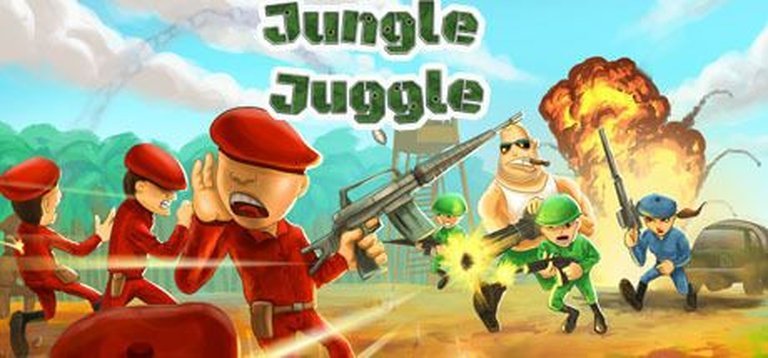
Description
Jungle Juggle is a reversed tower defense strategy game set across diverse hazardous terrains like jungles, deserts, mountains, rain, and blazing winds, where players must deploy six unique troops and special items to clear paths, protect a convoy truck, and battle through 40 enemy-filled levels to reach the evil dictator’s final resistance.
Where to Buy Jungle Juggle
PC
Jungle Juggle: Review
Introduction
In the vast, often unforgiving wilderness of Steam’s indie strategy scene, Jungle Juggle emerges as a peculiar artifact—a 2018 release that flips the tower defense genre on its head with “reversed” mechanics, tasking players with escorting a vulnerable truck through hostile terrains teeming with enemies. Developed and published by the obscure Brazilian studio Seven Sails Games, this real-time tactics title promised a thrilling campaign of strategic deployment amid jungles, deserts, and mountains, all set against an “evil dictator’s” last stand. Yet, its legacy is one of quiet obscurity, with zero user reviews on Steam and MobyGames alike. This review argues that Jungle Juggle, while innovative in concept and built on accessible tools like Clickteam Fusion 2.5, ultimately stumbles under technical simplicity and a lack of polish, cementing it as a forgotten footnote in indie strategy history rather than a genre innovator.
Development History & Context
Seven Sails Comunicacao e Desenvolvimento Ltda., a small Brazilian outfit operating under the name Seven Sails Games, single-handedly developed and published Jungle Juggle in May 2018 (with Steam listing May 5 and MobyGames noting May 28). This was the era of Steam’s indie explosion, where tools like Clickteam Fusion 2.5 (formerly Multimedia Fusion) empowered solo developers or tiny teams to create 2D games without AAA budgets. Fusion’s drag-and-drop event system was ideal for real-time strategy prototypes, allowing rapid iteration on mechanics like unit deployment and pathfinding—perfect for a “reversed tower defense” where players protect a mobile asset rather than a static base.
The gaming landscape in 2018 was dominated by polished tower defense staples like Bloons TD 6 and MOBAs, but reversed variants were niche, echoing earlier experiments like Orcs Must Die!‘s escort elements or Anomaly: Warzone Earth‘s reverse tower offense. Seven Sails’ vision, per the Steam blurb, was a military-themed gauntlet: escort a truck through 40 levels of escalating chaos, battling environmental hazards and enemy waves. Technological constraints were minimal—DirectX 9 support, 1GHz CPU, and 1GB RAM made it accessible—but this low bar reflected indie realities. No patches are documented on MobyGames, and PCGamingWiki notes basic config files in Steam’s compatdata folder, hinting at unfinished edges like unremappable controls or absent widescreen tweaks. In Brazil’s burgeoning scene (amid hits like Horizon Chase Turbo), Jungle Juggle aimed for global appeal with English-only localization, but its $0.89-$2.99 price and lack of marketing doomed it to Steam’s “no user reviews” void.
Narrative & Thematic Deep Dive
Jungle Juggle‘s story is a bare-bones military pulp thriller, distilled into its ad blurb: “The mission has been assigned! Your strategy skills are required to open the way and protect the truck to safe passage! Fight your way out of jungle, desert, mountains, rain and blazing wind to reach the last resistance of the evil dictator!” There’s no dialogue, cutscenes, or named characters—just an anonymous commander deploying troops to safeguard a convoy against faceless foes. This setup evokes Cold War-era jungle warfare tropes (think Platoon meets Command & Conquer), with the truck as a symbolic lifeline piercing enemy territory.
Thematically, it grapples with escalation and vulnerability: the truck’s slow, linear path mirrors a Vietnam-esque slog, where players juggle troop placement amid dynamic threats like rain-slicked paths or wind-whipped dunes. The “evil dictator” antagonist looms as a shadowy overlord, his “last resistance” implying imperial decay, but without voiced narrative or lore dumps, themes feel emergent rather than deliberate. Levels progress from humid jungles (teeming with ambushes) to arid deserts and storm-lashed mountains, symbolizing a hero’s journey through nature’s fury and human tyranny. Subtle undertones of resource scarcity emerge in troop limits and item usage, critiquing overextension in warfare. Yet, the absence of plot twists or character arcs—unlike narrative-rich strategies like Desperados III—renders it a mechanical sketch, prioritizing action over emotional investment. In extreme detail, one imagines the truck as a MacGuffin for regime change, with 40 levels building to a fortress siege, but without media like screenshots, this remains speculative poetry atop skeletal prose.
Gameplay Mechanics & Systems
At its core, Jungle Juggle deconstructs tower defense by reversing roles: enemies assault a moving truck along fixed paths, forcing players to dynamically deploy defenses. Real-time pacing demands split-second decisions, blending RTS micro-management with arcade shoot ’em ups.
Core Loop: Scout via “binocular mode” (a top-down sneak-peek for planning), then deploy one of 6 troops with unique abilities near the truck—perhaps a machine gunner for crowds, sniper for range, engineer for repairs, medic for sustain, grenadier for AoE, and scout for vision. Protect against waves of infantry, vehicles, and traps across 40 campaign levels. 4 special items (e.g., airstrikes, shields) can be dropped anywhere, adding tactical depth. Victory hinges on truck survival to extraction; failure restarts the level.
Innovations & Flaws:
– Reversed TD Brilliance: Unlike static TD (Plants vs. Zombies), the truck’s momentum creates urgency—troops must “juggle” positions as paths curve through biomes.
– Progression: No deep meta; 12 Steam achievements likely reward clears, no-lose runs, or speed. UI is full-screen HD, but PCGamingWiki implies basic mouse/keyboard (no controller remapping noted).
– Pacing & Balance: Real-time tags suggest frantic top-down shooting, with user tags like “Score Attack” hinting at high-score chases. Traps and weather (rain, wind) modify enemy AI or truck speed, forcing adaptation.
– Flaws: Clickteam engine limits likely yield pathfinding jank or pop-in enemies. No multiplayer, cloud saves basic, and minimal RAM needs suggest shallow systems—no upgrades, just level-specific starts.
| Mechanic | Strength | Weakness |
|---|---|---|
| Troop Deployment | Versatile abilities enable creative “juggling” | Limited numbers strain late waves |
| Binocular Scout | Strategic foresight shines in planning | Clunky if zoomed poorly |
| Special Items | Versatile screen-wide utility | Cooldowns unconfirmed, potential overuse |
| Level Variety | 40 stages across biomes | Linear paths limit replayability |
Overall, mechanics innovate modestly but lack depth for longevity.
World-Building, Art & Sound
The game’s world is a stylized military fantasia: jungle choked with vines, scorching deserts, rugged mountains, all battered by rain and blazing wind. Immersive levels use full-screen HD art (2D top-down, per tags), evoking retro arcade vibes with modern polish—think pixel-sharpened sprites amid particle effects for sandstorms or foliage sway. No screenshots mar its mystery, but Steam promises “stylized” visuals, likely vibrant greens fading to ochre dunes, heightening tension as the truck grinds forward.
Atmosphere builds through environmental interactivity: wind scatters shots, rain slows movement, crafting a lived-in battlefield. Sound design elevates it—an “awesome military soundtrack” of pounding drums and orchestral swells underscores urgency, with SFX for gunfire, explosions, and truck rumbles immersing players. English audio/subtitles are sole-supported, fitting its global indie ethos. Collectively, these forge a cohesive, adrenaline-fueled experience, where art and sound compensate for narrative thinness, making each level a visceral gauntlet.
Reception & Legacy
Launch reception was nonexistent: Steam shows “No user reviews,” MobyGames echoes with n/a MobyScore and zero critic/player input, Metacritic lacks scores. Priced at impulse-buy levels ($0.89-$2.99), it sold modestly (Steam app ID 844580, no sales data), buried in 2018’s 10,000+ releases. No forums buzz, patches, or community (empty Steam discussions).
Its reputation hasn’t evolved—added to MobyGames in 2022 by contributor Alaka, it’s a preservation curiosity. Influence is nil; reversed TD evolved via They Are Billions or Bad North, but Jungle Juggle predates neither in impact. As a Clickteam title, it exemplifies indie accessibility, inspiring micro-studios, but no direct successors cite it. In history, it’s a ghost: Brazilian indie’s unsung experiment, overshadowed by flashier peers.
Conclusion
Jungle Juggle is a bold indie swing—reversing tower defense into a truck-escort frenzy across 40 punishing levels, buoyed by HD art, thumping soundtrack, and clever scouting. Yet, its bare narrative, unproven balance, and zero reception relegate it to obscurity. As a Clickteam Fusion relic from 2018’s indie gold rush, it earns a niche nod for mechanical curiosity but falters as enduring strategy. Verdict: 5/10—a historical footnote for genre historians, worth a sub-$1 dive for reversed TD fans, but no pantheon placer. Play it to preserve the past, not redefine the future.