
- Release Year: 2022
- Platforms: Windows
- Publisher: Piece Of Voxel
- Developer: Piece Of Voxel
- Genre: Action
- Perspective: Third-person
- Game Mode: Single-player
- Gameplay: Platform
- Setting: Jungle
- Average Score: 69/100
Description
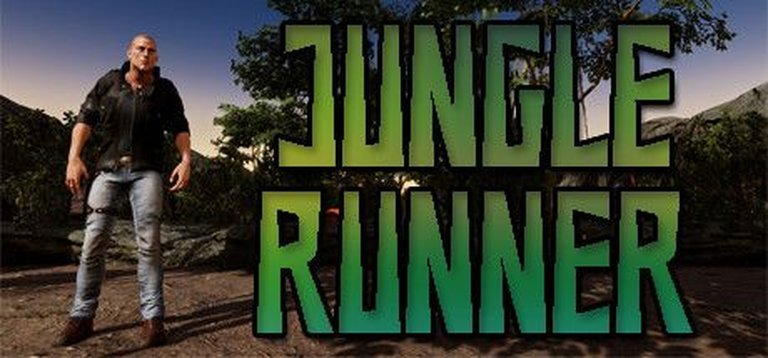
Jungle Runner is a fast-paced action platformer where players sprint through procedurally generated jungles and abandoned futuristic laboratories, avoiding deadly obstacles like pits, rivers, and environmental hazards. With cinematic graphics and power-ups like protective gear and speed-enhancing boots, players must survive as long as possible in these dangerous, visually striking environments that blend natural wilderness with industrial decay.
Gameplay Videos
Where to Buy Jungle Runner
PC
Jungle Runner Guides & Walkthroughs
Jungle Runner Reviews & Reception
steambase.io (63/100): JUNGLE RUNNER has earned a Player Score of 63 / 100.
store.steampowered.com (75/100): Mostly Positive (75% of the 12 user reviews for this game are positive).
Jungle Runner: Review
An Ambitious Stumble Through Procedural Jungles
Introduction
In the oversaturated landscape of indie runner games, Jungle Runner (2022) by Piece Of Voxel positions itself as a cinematic evolution of the genre, boasting procedural generation and high-end visuals. Yet, beneath its lofty promises lies a game grappling with identity and execution. This review dissects Jungle Runner’s legacy as a technically modest yet creatively uneven experiment—a title that captures the essence of retro runners but falters in its leap toward modernity.
Development History & Context
Vision Amid Constraints
Developed and published by the obscure studio Piece Of Voxel, Jungle Runner emerged in February 2022—a time when procedural generation and roguelike elements dominated indie design. The studio’s vision, as stated on Steam, was to marry “classic runner” mechanics with “cinematic graphics,” evoking the thrill of escape across hazardous jungles and abandoned laboratories.
Technologically, the game targeted accessibility, with minimal system requirements (e.g., NVIDIA GeForce 9600 GSO) revealing ambitions constrained by budget and scope. The decision to prioritize procedural worlds over handcrafted levels echoed trends seen in titles like Dead Cells, yet Jungle Runner’s execution lacked the polish of its contemporaries. Its Steam release at $24.99 (frequently discounted to $2.49) underscored its niche appeal in a market flooded with premium indies.
Narrative & Thematic Deep Dive
A Thin Veil of Urgency
Jungle Runner’s narrative is skeletal, leaning on environmental tropes rather than scripted storytelling. The player embodies an unnamed protagonist fleeing through biomes oscillating between lush jungles and dystopian labs—a duality nodding to Indiana Jones and Portal but devoid of their narrative depth.
Thematic urgency is conveyed through obstacle design: crocodile-infested rivers, collapsing platforms, and explosive hazards echo a “run or die” ethos. However, the absence of characters, dialogue, or lore reduces the experience to a mechanical sprint. As the game’s Steam description admits, “there is no more time to explain”—a telling acknowledgment of its prioritize gameplay over storytelling.
Gameplay Mechanics & Systems
The Loop of Survival
At its core, Jungle Runner is a behind-view platformer where players dodge procedurally generated obstacles while collecting power-ups like speed-boosting boots and death-defying equipment. The gameplay loop hinges on three pillars:
1. Procedural Generation: Levels shift dynamically, but erratic obstacle placement often feels unfair, undermining replayability.
2. Power-Ups: Temporary buffs add tactical depth, yet their rarity and inconsistent spawns frustrate progression.
3. Perma-Death Mechanics: A single misstep resets progress, amplifying tension but exacerbating repetition.
The behind-view perspective, while novel, frequently obscures incoming hazards, leading to cheap deaths. UI elements are minimalistic to a fault, with no map or progression metrics beyond distance counters—a design choice that heightens immersion but sacrifices clarity.
World-Building, Art & Sound
Cinematic Aspirations vs. Technical Reality
Jungle Runner’s aesthetic oscillates between two extremes: vibrant jungles teeming with foliage and sterile industrial complexes reminiscent of sci-fi horror. The “cinematic graphics” touted in promotional materials—particularly fire particles and lighting—stand at odds with the game’s modest visuals, which resemble early Unity asset flips more than AAA polish.
Sound design is functional but forgettable. Ambient jungle noises and mechanical hums establish atmosphere, yet the lack of a dynamic soundtrack or voice acting leaves the world feeling hollow. The procedural generation, while ambitious, often creates dissonant landscapes (e.g., rivers abruptly cutting through labs), shattering immersion.
Reception & Legacy
A Whimper in the Indie Landscape
Critically, Jungle Runner flew under the radar, garnering zero professional reviews on MobyGames and OpenCritic. Player reception was mixed: Steam reviews settled at “Mostly Positive” (75% of 12 reviews), praising its chaotic fun, while Steambase’s aggregate score of 63/100 highlighted janky controls and repetitive design. User comments like “TAKE OFF THE UNDERWEAR” and “anyone actually buy these games?” underscored its reputation as a bargain-bin curiosity.
Legacy-wise, the game’s influence is negligible. Its procedural approach mirrored trends in indie roguelikes, but its lack of innovation failed to inspire successors. A 2025 mobile spin-off by Pawel Kłaczyński (Jungle Runner – Apps on Google Play) expanded access but diluted the brand further, cementing its status as a footnote in runner history.
Conclusion
An Echo, Not a Revolution
Jungle Runner embodies the paradox of ambition without execution. Its procedural jungles and cinematic aspirations flirt with greatness but collapse under technical and creative limitations. While its frenetic moments capture the adrenaline of classic runners like Pitfall!, the game ultimately feels like a proof-of-concept rather than a polished product.
For genre enthusiasts, it offers fleeting entertainment at a discount. For historians, it serves as a case study in indie overreach. Piece Of Voxel’s debut isn’t a catastrophe—it’s a cautionary tale. In the ever-evolving jungle of game design, Jungle Runner didn’t just stumble; it failed to leave footprints.
Final Verdict: A middling sprint through procedural clichés—worth $2.49, but not a penny more.