
- Release Year: 2023
- Platforms: Windows, Xbox One, Xbox Series
- Publisher: Persona Theory Games
- Developer: Persona Theory Games
- Genre: Adventure
- Perspective: 1st-person
- Game Mode: Single-player
- Gameplay: Visual novel
- Setting: Asia, Fantasy
- Average Score: 70/100
Description
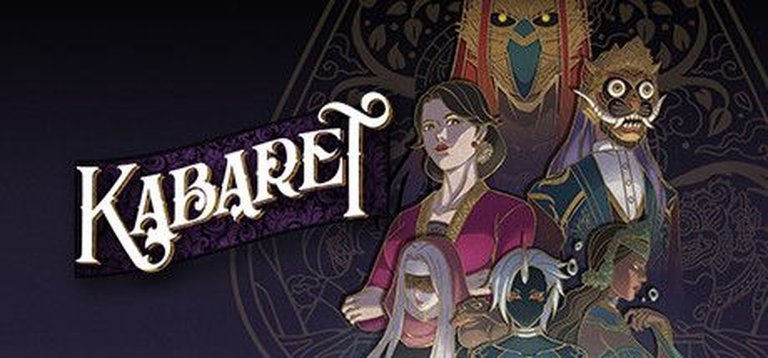
Kabaret is a narrative-driven visual novel game set in a mystical world inspired by Southeast Asian folklore, where players assume the role of Jebat, a cursed protagonist navigating a supernatural kabaret filled with mythical beings. Through emotionally charged storytelling and moral choices, players explore themes of self-discovery, humanity, and cultural identity, all while experiencing richly layered characters and striking anime-inspired visuals rooted in regional mythology.
Gameplay Videos
Where to Buy Kabaret
PC
Kabaret Free Download
Kabaret Patches & Updates
Kabaret Guides & Walkthroughs
Kabaret Reviews & Reception
opencritic.com (70/100): The simple gameplay of Kabaret is rescued by a beautiful artstyle buttressed against a fascinating narrative that is rooted richly in Southeast Asian folklore and mythology.
checkpointgaming.net (60/100): Kabaret has ambition, but that ambition gets in its own way.
kakuchopurei.com (80/100): Kabaret is a quintessential experience for the best that the region’s games industry has to offer right now.
Kabaret: Review
In the pantheon of visual novels, few titles stand out as boldly as Kabaret. Developed by the Malaysian studio Persona Theory Games, this dark fantasy narrative adventure is a deep dive into Southeast Asian mythology and folklore, wrapped in a compelling and thought-provoking package. Released on April 4, 2023, Kabaret has quickly garnered attention for its unique blend of cultural authenticity, challenging themes, and innovative gameplay mechanics. This review will delve into the intricate layers of Kabaret, examining its development history, narrative depth, gameplay mechanics, world-building, and lasting impact on the gaming landscape.
Development History & Context
Persona Theory Games, the brainchild behind Kabaret, is a relatively young studio that burst onto the scene with their debut title, Fires At Midnight. This initial foray into the visual novel genre established the studio’s penchant for tackling mature and controversial subjects, setting the stage for their more ambitious follow-up. Kabaret represents a significant leap in scale and scope, showcasing the studio’s growth and commitment to pushing the boundaries of narrative-driven gaming.
The gaming landscape in 2023 was ripe for a title like Kabaret. The visual novel genre had seen a resurgence, with games like Steins;Gate and Doki Doki Literature Club gaining mainstream attention. However, Kabaret differentiated itself by drawing deeply from Southeast Asian cultural heritage, a move that was both bold and necessary. The studio’s decision to focus on local myths and legends was not just a nod to their roots but a deliberate effort to bring underrepresented narratives to a global audience.
Technologically, Kabaret was developed using the Unity engine, which allowed for a high degree of artistic freedom and flexibility. The game’s hand-drawn, stylized art direction is a testament to the studio’s artistic vision, blending traditional Southeast Asian aesthetics with modern design sensibilities. The sound design, featuring collaborations with local bands like Hello Universe and SambaSunda, further enriches the game’s cultural authenticity.
Narrative & Thematic Deep Dive
At its core, Kabaret is a story about Jebat, a young man cursed to become a monster and transported to the Alam Bunian, a realm inhabited by mythical creatures from Southeast Asian folklore. Taken in by the enigmatic Caretaker, Jebat is tasked with performing tea ceremonies for the dwellers of the Kabaret, a place where monsters go to unwind and unburden themselves. Through these interactions, Jebat seeks to understand his own curse and the true nature of the monsters he encounters.
The narrative is rich and multilayered, exploring themes of existentialism, mental health, racism, and corruption. Each character, drawn from various Southeast Asian myths, brings a unique perspective and backstory, adding depth to the game’s world-building. The dialogue is often heavy and introspective, challenging players to confront their own beliefs and biases. This thematic depth is one of Kabaret‘s strongest suits, making it a game that lingers in the mind long after the credits roll.
One of the most striking aspects of Kabaret‘s narrative is its refusal to shy away from difficult topics. The game tackles issues like suicide, sexual assault, and xenophobia with unflinching honesty, using these themes to drive its storytelling forward. This raw and unfiltered approach to narrative is both a strength and a potential stumbling block, as it may be too intense for some players. However, for those willing to engage with its darker elements, Kabaret offers a deeply rewarding experience.
Gameplay Mechanics & Systems
Kabaret blends traditional visual novel gameplay with innovative minigames, creating a unique and engaging experience. The core gameplay loop revolves around Jebat’s interactions with the various monsters in the Kabaret, with dialogue choices and tea ceremonies serving as the primary means of progression. The tea ceremony minigame, in particular, is a standout feature, requiring players to brew specific teas based on the needs and desires of the monsters they encounter. This mechanic adds a layer of strategy and immersion, as players must carefully consider the ingredients and their effects.
In addition to the tea ceremonies, Kabaret features several traditional Southeast Asian minigames, including Congkak and Guli. These games, while fun and culturally significant, sometimes feel tacked on, serving more as distractions than integral parts of the narrative. The stage performance minigame, where Jebat manages a musical stage performance from behind the scenes, is a highlight, offering a satisfying challenge and showcasing the game’s impressive soundtrack.
The user interface in Kabaret is clean and intuitive, with a journal system that provides valuable information about characters, tea recipes, and minigame lore. However, the lack of manual saves and the reliance on auto-saves can be frustrating, especially for players who like to experiment with different choices. This design choice may limit replayability, as players may be hesitant to explore alternate endings due to the time investment required.
World-Building, Art & Sound
Kabaret‘s world-building is nothing short of extraordinary. The Alam Bunian is a richly imagined realm, filled with mythical creatures and steeped in Southeast Asian cultural references. The game’s art direction, inspired by local art styles like batik and wayang kulit, gives the world a distinctive and vibrant aesthetic. The monsters, each drawn from different Southeast Asian folklore, are beautifully designed and imbued with unique personalities and backstories.
The sound design in Kabaret is equally impressive, with a traditional musical soundtrack that perfectly complements the game’s dark and melancholy fantasy tone. The use of local bands and traditional instruments adds an authentic touch, immersing players in the game’s cultural milieu. The voice acting, while not extensive, is well-executed, adding depth to the characters and their interactions.
Reception & Legacy
Upon its release, Kabaret received a mixed but generally positive reception. Critics praised the game’s unique cultural perspective, challenging themes, and innovative gameplay mechanics. However, some reviewers noted that the game’s ambition sometimes got in the way of its execution, with the narrative becoming too complicated and the minigames feeling unnecessary. Despite these criticisms, Kabaret has left a lasting impact on the gaming landscape, showcasing the potential of Southeast Asian narratives in the visual novel genre.
The game’s influence can be seen in subsequent titles that have sought to incorporate more diverse cultural perspectives into their storytelling. Kabaret has also sparked conversations about the importance of representation in gaming, highlighting the need for more games that reflect the rich cultural heritage of underrepresented regions.
Conclusion
Kabaret is a bold and ambitious title that pushes the boundaries of the visual novel genre. With its deep dive into Southeast Asian mythology, challenging themes, and innovative gameplay mechanics, it stands out as a unique and thought-provoking experience. While it may not be perfect, Kabaret‘s strengths far outweigh its weaknesses, making it a must-play for fans of narrative-driven games and those interested in exploring diverse cultural narratives. In the annals of video game history, Kabaret will be remembered as a pioneering title that paved the way for more authentic and culturally rich storytelling in the medium.