
- Release Year: 2006
- Platforms: Windows
- Publisher: 1C Company, Merscom LLC, Vestel A.Ş.
- Developer: Son Işık
- Genre: Action
- Perspective: Third-person
- Game Mode: Single-player
- Gameplay: Puzzle elements, Survival horror
- Setting: Futuristic, Sci-fi
- Average Score: 51/100
Description
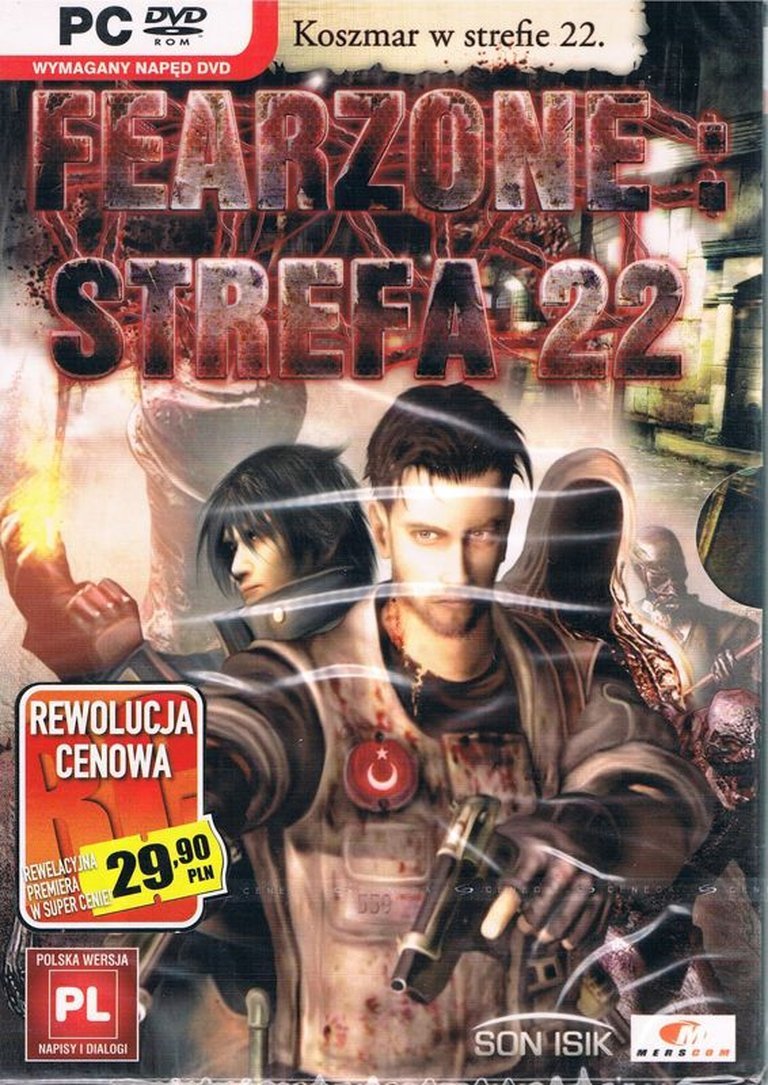
Set in the year 2000, ‘Kabus 22’ plunges players into a dystopian Turkey where a mysterious cult led by the enigmatic Messiah enslaves humanity while supernatural creatures terrorize the world. Players alternate between three protagonists—Demir and Ebru, who rely on melee combat and hand weapons, and Inzar, a magic-wielding martial artist with wrist blades—to uncover the link between the cult and the invading monsters. The survival horror gameplay blends Resident Evil-inspired puzzles, key-fetching objectives, and combat against grotesque foes across claustrophobic environments.
Gameplay Videos
Kabus 22 Cracks & Fixes
Kabus 22 Mods
Kabus 22 Reviews & Reception
en.wikipedia.org (51/100): The game was released to mixed reception, scoring an average of 51% based on 10 reviews.
mobygames.com (51/100): Average score: 51% (based on 10 ratings)
Kabus 22 Cheats & Codes
Trainer v1.0
Use trainer keys during gameplay.
| Code | Effect |
|---|---|
| trainer | Password to unpack trainer archive |
| Numpad 1 | Infinite health |
| Numpad 2 | Infinite ammo |
| Numpad 3 | Instant kill |
| Numpad 4 | Infinite health |
| Num 1 | Health |
| Num 2 | Ammunition |
| Num 3 | Easy eliminations |
| Num 4 | Companion’s health |
Kabus 22: Review
In the annals of survival horror, few games stand out as uniquely as Kabus 22. Released in 2006, this Turkish-developed title carved a niche for itself amidst a sea of Resident Evil clones, offering a blend of atmospheric dread and mechanical intricacies that, while flawed, remain compelling to this day. As we delve into the legacy of Kabus 22, we’ll explore its development history, narrative depth, gameplay mechanics, world-building, and enduring influence on the genre.
Development History & Context
The Studio and Creators’ Vision
Kabus 22 was the brainchild of Son Işık, a small Turkish game studio founded in 2004. The team, composed of young and relatively inexperienced developers, was inspired by the survival horror genre, particularly the Resident Evil series. Their vision was to create a game that captured the essence of Resident Evil’s atmospheric storytelling and puzzle-solving while adding a unique Turkish flavor.
The development process was fraught with challenges. The team had to navigate a limited budget, restricted internet access, and a lack of local game development infrastructure. Moreover, the Turkish tax code at the time did not recognize video games as a distinct product category, making it difficult for the developers to legally sell their game. They had to categorize Kabus 22 as a film to obtain a tax stamp, highlighting the nascent state of the Turkish gaming industry.
Technological Constraints and Gaming Landscape
Kabus 22 was developed using Gamestudio, a 3D game development engine that, while powerful for its time, had its limitations. The game’s visuals and mechanics reflect these constraints, with textures and models that, while serviceable, lack the polish of contemporary titles. The gaming landscape in 2006 was dominated by the likes of Resident Evil 4, which had raised the bar for survival horror with its cinematic presentation and over-the-shoulder camera. Kabus 22, released the same year, had to contend with these high expectations.
Narrative & Thematic Deep Dive
Plot and Characters
The narrative of Kabus 22 is set in an alternate near future where a mysterious cult, led by a figure known as the Messiah, has taken control of the world. The story unfolds in Turkey, specifically the Kadıköy district of Istanbul, which has been designated as Zone 22. The protagonists—Demir, a Turkish soldier; Ebru, his girlfriend; and Inzar, a mysterious figure with magical abilities—must unravel the connection between the cult and the monstrous creatures known as Maduns.
The plot is a blend of religious fervor, political intrigue, and supernatural horror. The cult’s teachings promise wealth and happiness, but at the cost of one’s soul. The protagonists’ journey is one of resistance against this oppressive regime, with each character bringing a unique perspective to the narrative.
Dialogue and Themes
The dialogue in Kabus 22 is serviceable but often stilted, reflecting the developers’ limited experience with narrative design. However, the game’s themes are compelling. It explores the dangers of unquestioning faith, the corrupting influence of power, and the struggle for individual freedom in the face of totalitarianism. These themes are woven into the fabric of the game, providing a rich subtext to the horror and action.
Gameplay Mechanics & Systems
Core Gameplay Loops
Kabus 22’s gameplay is a mix of survival horror and action elements. The core loop involves exploring environments, solving puzzles, and engaging in combat with the Maduns. The game switches between three playable characters, each with their unique abilities:
- Demir and Ebru are primarily combat-focused, using hand weapons and melee attacks to dispatch enemies.
- Inzar excels in magic and martial arts, employing dual blades and magical abilities to fight the Maduns.
Combat and Character Progression
Combat in Kabus 22 is straightforward but often frustrating. The game’s mechanics, such as the inability to shoot while moving, can make encounters feel clunky. Character progression is minimal, with health restoration primarily achieved through med kits and magical meditation for Inzar.
UI and Innovative/Flawed Systems
The user interface in Kabus 22 is functional but uninspired. The heads-up display (HUD) provides essential information, such as health and ammunition, but lacks the polish of contemporary survival horror games. One of the game’s more innovative systems is the use of a beating heart to represent health, adding a visceral element to the gameplay.
World-Building, Art & Sound
Setting and Atmosphere
Kabus 22’s setting in the Kadıköy district of Istanbul provides a unique backdrop for the game’s horror. The developers did an admirable job of recreating the district’s architecture and atmosphere, despite the technological limitations. The game’s environments are dark and foreboding, with a sense of dread that permeates every corner.
Visual Direction
The visual direction of Kabus 22 is a mix of strengths and weaknesses. The game’s textures and models are often low-resolution, reflecting the constraints of the Gamestudio engine. However, the developers made up for this with clever use of lighting and shadows, creating a moody and atmospheric experience.
Sound Design
The sound design in Kabus 22 is one of its strongest aspects. The game’s soundtrack is haunting and evocative, complementing the visuals and narrative perfectly. The sound effects are equally impressive, with the Maduns’ eerie cries and the clanging of weapons adding to the game’s immersive experience.
Reception & Legacy
Critical and Commercial Reception
Kabus 22 received mixed reviews upon its release, with an average critic score of 51% based on 10 reviews. Critics praised the game’s atmospheric storytelling and unique setting but criticized its clunky mechanics and lackluster visuals. The game’s commercial performance was similarly mixed, with a modest but dedicated following in Turkey and Eastern Europe.
Influence on Subsequent Games and the Industry
Despite its flaws, Kabus 22 holds a special place in the history of Turkish game development. It was one of the earliest commercially-sold video games developed in Turkey, paving the way for future titles. The game’s unique blend of survival horror and Turkish culture has influenced subsequent games, both in Turkey and abroad. Its legacy serves as a testament to the power of independent game development and the importance of cultural diversity in the gaming industry.
Conclusion
Kabus 22 is a flawed but fascinating entry in the survival horror genre. Its unique setting, compelling narrative, and atmospheric design make it a standout title, despite its mechanical shortcomings. The game’s legacy as one of the first commercially-sold Turkish video games is a testament to the vision and perseverance of its developers. As we look back on Kabus 22, we see not just a game, but a milestone in the evolution of the gaming industry. Its place in video game history is secure, and its influence will continue to be felt for years to come.