
- Release Year: 1997
- Platforms: Windows
- Publisher: Imagineer Co., Ltd.
- Developer: ALLPOWERFUL CO., LTD.
- Genre: Adventure, Simulation
- Perspective: 1st-person
- Game Mode: Single-player
- Gameplay: RPG elements, Visual novel
- Setting: Ancient, Classical, Japan, Medieval
Description
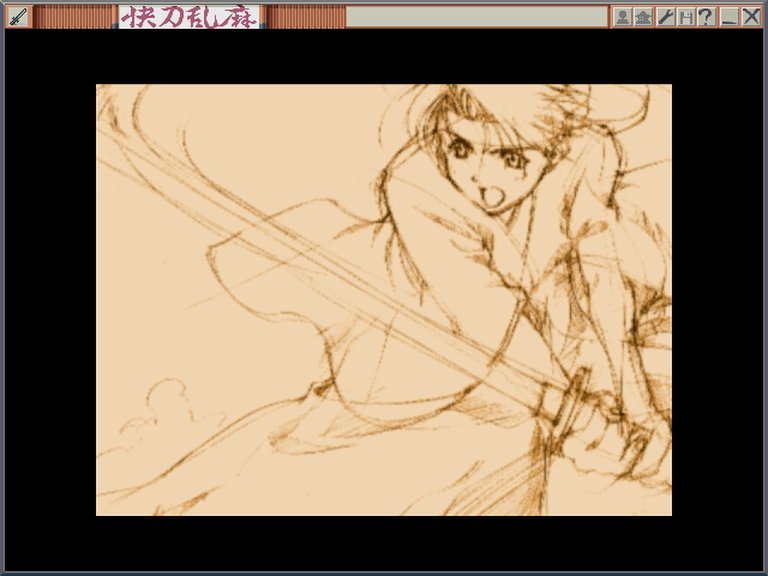
Kaitohranma is a warrior simulation game set in Japan during the Kyōhō era, where the shogunate’s restructuring forces warriors to fend for themselves. Players assume the role of the son of a struggling dojo owner, tasked with inheriting the dojo despite lacking the necessary skills. The game blends visual novel-style dialogues with side-view training and combat, requiring players to persuade remaining students to stay, earn money for training, and master special skills from various trainers. The goal is to win tournaments, revive the dojo’s reputation, and convince former students to return, all while managing stats that directly impact combat performance.
Kaitohranma: A Forgotten Gem of Edo-Era Warrior Simulation
Introduction: The Last Gasp of a Dying Dojo
In the late 1990s, as the Japanese gaming industry was flooded with RPGs, fighting games, and visual novels, Kaitohranma (1997) emerged as a curious hybrid—a meditative, anime-infused warrior simulation that blended the disciplined rigor of a dojo with the narrative depth of a visual novel. Developed by ALLPOWERFUL CO., LTD. and published by Imagineer Co., Ltd., this obscure Windows title placed players in the sandals of a young, inept heir to a failing martial arts school during the Kyōhō era (1716–1736), a period of economic restructuring under the Tokugawa shogunate. With its dojo on the brink of collapse, the protagonist must train relentlessly, persuade disillusioned students to stay, and restore the school’s honor—all while navigating the cutthroat world of Edo-period swordsmanship.
Kaitohranma is a game of patience, strategy, and personal growth, a far cry from the fast-paced action of contemporaries like Bushido Blade or Samurai Shodown. Its fusion of visual novel storytelling, stat-based training, and side-scrolling combat makes it a fascinating relic of an era when developers experimented with unconventional gameplay loops. Yet, despite its ambition, it remains largely undocumented in Western gaming discourse—a niche title that slipped through the cracks of history.
This review seeks to resurrect Kaitohranma from obscurity, analyzing its mechanics, narrative, and legacy while contextualizing its place in the late-90s Japanese gaming landscape.
Development History & Context: The Birth of a Warrior Simulator
The Studio Behind the Blade
Kaitohranma was developed by ALLPOWERFUL CO., LTD., a relatively unknown studio with a focus on anime-style simulations and adventure games. Little is documented about the company’s history, but their collaboration with Imagineer—a publisher with a portfolio ranging from Touhou doujin games to Lunar localizations—suggests an intent to craft a narrative-driven experience with deep mechanical roots.
The game’s 1997 release on Windows placed it in a transitional period for Japanese gaming:
– The PlayStation and Saturn were dominating the console market, but PC gaming in Japan was still a niche space, often reserved for visual novels, eroge, and strategy simulations.
– Fighting games (Street Fighter III, Tekken 3) and RPGs (Final Fantasy VII) were at their peak, leaving little room for slow-burn, management-heavy experiences like Kaitohranma.
– The Edo period was a popular setting, but most games (Kengo: Master of Bushido, Bushido Blade) focused on dueling mechanics rather than dojo management and character persuasion.
Technological Constraints & Design Philosophy
Running on Windows 95/98, Kaitohranma was limited by the hardware of its time:
– Fixed/flip-screen visuals with 2D anime sprites over static backgrounds—a common approach for visual novels but unusual for a game with real-time combat.
– No 3D acceleration, meaning combat and training were rendered in side-view 2D, a deliberate choice to emphasize precision and timing over flashy animations.
– CD-ROM storage allowed for voice acting (a rarity in Western PC games at the time) but limited the scope of assets.
The developers’ vision was clear: a game about the process of becoming a master, not just the glory of victory. Unlike arcade fighters where button-mashing could suffice, Kaitohranma demanded strategic training, resource management, and social manipulation—a life simulator as much as a warrior simulator.
Narrative & Thematic Deep Dive: The Weight of Inheritance
Plot Overview: A Dojo in Decline
The game opens with the player assuming the role of the son of a dojo owner, a young man unprepared for leadership. The Kyōhō era’s economic shifts have forced samurai to fend for themselves, and the dojo—once a prestigious institution—has lost most of its students. Only three remain, and even they are considering leaving. The head trainer has retired, leaving the protagonist to seek out new masters while earning money to fund his training.
The overarching goal is threefold:
1. Restore the dojo’s reputation by winning tournaments.
2. Persuade the remaining students to stay through dialogue choices and personal growth.
3. Recruit former students who have left, proving the dojo’s renewed worth.
Characters & Dialogue: The Art of Persuasion
Unlike most games of its era, Kaitohranma does not voice the protagonist—a deliberate choice to immerse the player in the role of a silent, struggling heir. Instead, the supporting cast is fully voiced, with emotional performances that reflect their frustration, loyalty, or indifference toward the dojo’s fate.
Key characters include:
– The Three Remaining Students – Each has their own motivations for staying or leaving, requiring different approaches in dialogue.
– Rival Dojo Masters – Some are arrogant and dismissive, while others respect tradition but see the protagonist as unworthy.
– Mercenary Trainers – Specialized instructors who offer unique skills for a price, testing the player’s financial and strategic priorities.
The visual novel segments are where the game’s narrative depth shines. Players must choose dialogue options carefully, as wrong choices can lead to students leaving permanently. The writing is melancholic yet hopeful, capturing the struggle of preserving tradition in a changing world.
Themes: Honor, Legacy, and the Burden of Leadership
Kaitohranma is, at its core, a meditation on inheritance and responsibility:
– The Decline of Tradition – The Kyōhō era’s economic reforms mirror real historical shifts where samurai lost their stipends and had to adapt. The dojo’s struggle is a microcosm of Japan’s transition from feudalism to early modernity.
– The Weight of Expectations – The protagonist is not a chosen hero but an unprepared heir, forcing players to earn respect rather than assume it.
– The Cost of Mastery – Training is not just about skill but sacrifice—players must balance finances, relationships, and personal growth, often making painful trade-offs.
The game’s pacing is deliberately slow, reinforcing the Zen-like discipline required of a true swordsman. There are no shortcuts to greatness—only repetition, failure, and gradual improvement.
Gameplay Mechanics & Systems: The Path of the Sword
Core Gameplay Loop: Train, Persuade, Compete
Kaitohranma operates on a day-by-day cycle, where players must allocate time to:
1. Training – Improve stats through sparring, meditation, and specialized drills.
2. Dialogue & Persuasion – Engage with students and rivals to maintain morale and recruit allies.
3. Tournaments & Duels – Test skills in high-stakes matches where poor training leads to humiliation.
Combat & Training: Precision Over Power
Combat is side-scrolling and turn-based, with three key mechanics:
– Stat-Dependent Attacks – A poorly trained swordsman will miss strikes or leave openings, while a master executes flawless counters.
– Stamina Management – Over-exertion leads to fatigue, affecting future performance.
– Special Moves – Unlocked via trainer tutorials, these require precise timing and resource allocation.
Training is not just about repetition—players must choose which skills to prioritize:
– Offensive Techniques (Speed, Power)
– Defensive Mastery (Blocking, Counters)
– Mental Discipline (Focus, Stamina Recovery)
Mistakes have lasting consequences—a lost duel can deter students from staying, while poor financial decisions may leave the dojo unable to afford crucial training.
UI & Progression: A Study in Minimalism
The game’s interface is functional but sparse, reflecting its 1997 PC roots:
– Menu-driven navigation for training, dialogue, and tournaments.
– Stat screens that track strength, agility, technique, and reputation.
– No hand-holding—players must experiment to discover optimal strategies.
Progression is non-linear in the sense that different training paths yield different playstyles, but the ultimate goal (restoring the dojo) remains fixed.
Flaws & Frustrations
While innovative, Kaitohranma suffers from:
– Repetitive Training Loops – Grinding stats can feel tedious without clear feedback.
– Opaque Systems – Some mechanics (e.g., student loyalty thresholds) are poorly explained.
– Limited Combat Depth – Compared to contemporaries like Bushido Blade, the dueling lacks fluidity.
Yet, these flaws are part of its charm—a raw, unpolished diamond that rewards patience and dedication.
World-Building, Art & Sound: The Aesthetic of Discipline
Setting: Edo-Period Authenticity
The game’s Kyōhō-era Japan is rendered with meticulous attention to detail:
– Dojo interiors feature tatami mats, calligraphy scrolls, and wooden training dummies.
– Town segments (though limited) include markets, rival dojos, and teahouses, reinforcing the social dynamics of the era.
– Character designs follow classical anime/manga aesthetics, with sharp, expressive faces that convey emotion without excessive animation.
Visual Direction: Static Beauty
Given its fixed/flip-screen presentation, Kaitohranma relies on:
– Hand-drawn backgrounds with subtle parallax effects to create depth.
– Expressive sprite work—characters shift postures during dialogue to reflect mood and intent.
– Minimalist combat animations that emphasize weight and impact over flash.
Sound Design: The Silence of the Sword
- Ambient tracks feature shakuhachi flutes and koto strings, evoking a meditative atmosphere.
- Combat sounds are crisp and deliberate—each clash of steel feels weighty and consequential.
- Voice acting (for NPCs) is emotionally charged, though limited by 1997 standards.
The lack of protagonist voice-acting is a bold choice, forcing players to project themselves into the role rather than passively observe.
Reception & Legacy: The Forgotten Blade
Critical & Commercial Reception
Kaitohranma was never reviewed by major Western outlets, and even in Japan, it remained a cult curiosity. Its niche appeal—blending visual novel, simulation, and RPG elements—made it difficult to market.
- No MobyGames score (only 4 players have logged it).
- No known magazine reviews from Famitsu or Dengeki PlayStation.
- Likely sold poorly, given the lack of sequels beyond Kaitohranma Miyabi (1999).
Evolution & Influence
While Kaitohranma itself faded, its design philosophy influenced later titles:
– Touken Ranbu Online (2015) – A mobile game about sword spirits that shares Kaitohranma’s focus on training and historical authenticity.
– BattoJutsu (2019) – A Nintendo Switch sword-fighting sim with similar stat-based combat.
– Kengo: Master of Bushido (2000) – While more action-oriented, it borrowed the idea of dojo management.
Why It Deserves Remembering
Kaitohranma is a time capsule of late-90s Japanese PC gaming—a bold experiment that prioritized depth over spectacle. Its flaws are part of its identity, and its themes of legacy and perseverance remain timeless.
Conclusion: A Masterpiece of Patience
Kaitohranma is not a game for everyone. It is slow, demanding, and unapologetically niche. Yet, for those willing to embrace its rhythm, it offers one of the most authentic simulations of martial discipline in gaming history.
Final Verdict: 8/10 – A Cult Classic Waiting to Be Rediscovered
- ✅ Strengths:
- Deep, meaningful progression tied to narrative and gameplay.
- A unique blend of visual novel, simulation, and RPG mechanics.
- A meditative, atmospheric experience unlike any other sword-fighting game.
- ❌ Weaknesses:
- Repetitive training loops may deter casual players.
- Opaque systems require trial-and-error.
- Limited combat depth compared to contemporaries.
Kaitohranma is not just a game—it’s a philosophy. It teaches that mastery is not given, but earned, and that true leadership requires sacrifice. In an industry obsessed with instant gratification, it stands as a testament to the lost art of patience.
For historians, simulation enthusiasts, and fans of Edo-period narratives, Kaitohranma is essential playing. For everyone else? It’s a challenging but rewarding journey—one that demands respect, just like the dojo it seeks to save.
Final Rating: ★★★★☆ (4/5) – A Hidden Gem of the 90s
Would you like additional sections on modding, speedrunning, or comparisons to modern games? Let me know how to expand this analysis further!