
- Release Year: 2006
- Platforms: Nintendo Switch, PlayStation 2, PlayStation 4, Windows
- Publisher: Acquire Corp., NIS America, Inc.
- Developer: Acquire Corp.
- Genre: Action
- Perspective: Behind view
- Game Mode: Single-player
- Gameplay: Action, Open World, Stealth, Thievery
- Setting: Ancient, Classical, Japan, Medieval
- Average Score: 56/100
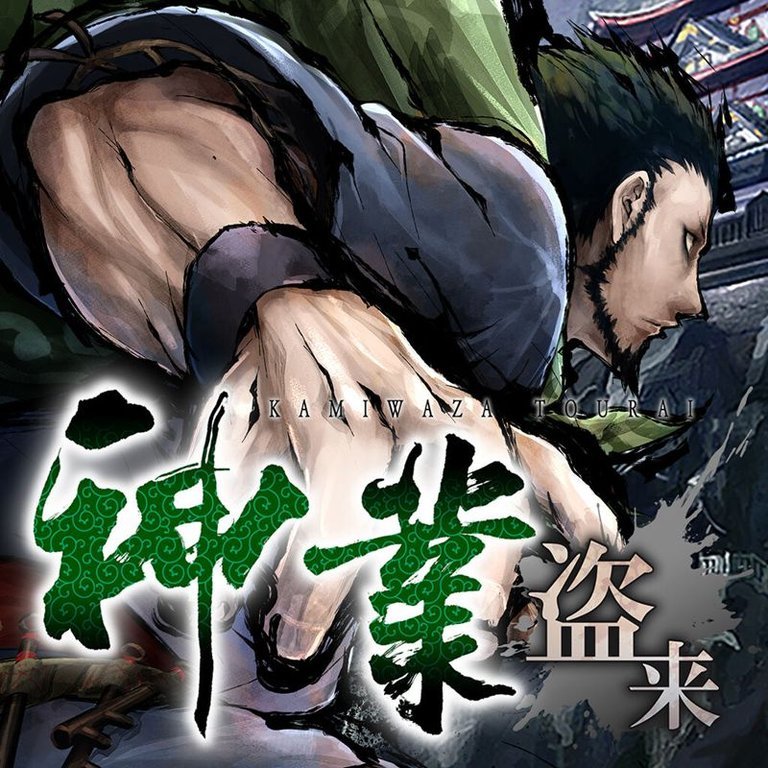
Description
Kamiwaza: Way of the Thief is an action-stealth game set in medieval Japan, where players take on the role of a skilled thief using stealth tactics to infiltrate locations, steal valuable items, and evade guards in a historically inspired environment.
Gameplay Videos
Where to Buy Kamiwaza: Way of the Thief
PC
Kamiwaza: Way of the Thief Guides & Walkthroughs
Kamiwaza: Way of the Thief Reviews & Reception
metacritic.com (52/100): a steadfastly warm-hearted stealth yarn that satisfies so long as you can forgive its largely archaic/nostalgic design.
primagames.com : an immensely frustrating experience that I really wanted to love.
opencritic.com (61/100): a very silly stealth game that makes sneaking fun as long as you can tolerate the graphics.
nichegamer.com : so bold to make a stealth game play differently with action game mechanics.
Kamiwaza: Way of the Thief: A Study in Stealthful Ambition and Archaic Execution
Introduction: The Ghost of Stealth Past
In the grand museum of video game history, some titles are pristine, celebrated artifacts, while others are fascinating, flawed relics that tell a more complex story about the eras that birthed them. Kamiwaza: Way of the Thief, developed by Acquire and originally released for the PlayStation 2 in 2006, is firmly in the latter category. For over a decade, it existed as a cult Japanese exclusive, a whisper among fans of the studio’s legendary Tenchu and Way of the Samurai series. Its 2022 Western remaster, while finally localizing this peculiar artifact, has served less as a triumphant rediscovery and more as a stark, unfiltered excavation of a game deeply of its time—a time of ambitious experimentation that often buckled under the weight of technical constraints and opaque design. This review posits that Kamiwaza is not merely a forgotten stealth game, but a crucial, if deeply flawed, case study in the pursuit of a unique, morality-driven stealth experience. Its legacy is not one of widespread influence, but of a singular, uncompromising vision that prioritized quirky systemic depth over player-friendly polish, resulting in a title that is as frustrating as it is fascinating.
Development History & Context: Acquire’s Divergent Path
To understand Kamiwaza, one must understand its creator. Acquire Corp., under the leadership of executive producer Takuma Endo (a key figure on the first two Tenchu games), was in the mid-2000s a studio synonymous with 3D stealth-action set in feudal Japan. Kamiwaza was conceived not as a ninja sim, but as a direct thematic and mechanical evolution: a game about a thief adhering to a strict, non-lethal code. As Endo reflected in Retro Gamer, the core appeal was twofold: a unique action style “that still hasn’t been replicated to this day” and the distinct visual of its protagonist’s “arabesque-patterned furoshiki” (wrapping cloth). This was to be a “Robin Hood” story in an Edo-period setting, exploring themes of honor and familial duty through the lens of crime.
Technologically, the game was a product of the PlayStation 2’s twilight years. The MobyGames credits list a team of over 100, with key roles in programming, AI, and art direction dedicated to crafting an open-ish hub world (the city of Mikado) and complex interaction systems. The ambition was clear: a living sandbox with reputation systems, branching narratives, and a day-night cycle tied to the protagonist’s sick daughter. However, the PS2’s limitations manifested in primitive AI (guards with simple patrol routes), stiff animations, blocky visuals, and a clunky interface. These were not just aesthetic shortcomings but foundational flaws that impacted core gameplay, as numerous modern reviews attest. The game was a Japan-exclusive, its culturally specific humor and historical framing limiting its initial appeal, and it sold modestly (~50,000 units), becoming a curious footnote rather than a hit.
The 2022 remaster, handled by Acquire in partnership with NIS America, was an act of preservation rather than reinvention. As Endo stated, they “didn’t change anything from an atmospheric perspective,” focusing on texture refinement, HD upscaling, auto-save, and added tutorials. The game was ported to the Unreal Engine 4, which fixed framerate issues and improved shadows but did not rebuild models or animations. This fidelity to the source material, while respectful, meant that all the original’s jank—the confusing UI, the rough controls, the opaque systems—was preserved for a modern audience with far higher expectations. The result was a title that felt like a time capsule, opened to mixed reactions.
Narrative & Thematic Deep Dive: A Thief’s Burden
Kamiwaza‘s story is its most acclaimed and yet most misunderstood element. It is a deceptively simple premise executed with surprising emotional weight and narrative branching. The protagonist, Ebizo, is introduced not as a hardened criminal, but as a man whose defining trait is regret. The opening heist—where his mentor Ainosuke and the Silver Ravens guild slaughter innocents—shatters his idealism. His rescue of the young girl, Suzuna, and subsequent retirement to carpentry, establishes him as a man seeking redemption through honest work.
The inciting incident—Suzuna’s mysterious illness—forces him back into thievery, creating the game’s central, relentless tension: a daily cycle of stealing to buy medicine, with failure meaning her gradual decline and eventual death, resulting in a game over. This mechanic directly ties gameplay progression to narrative consequence, a powerful hook that frames every decision. Ebizo’s adopted code—stealing only from the corrupt, avoiding violence, giving to the poor—isn’t just flavor; it’s a mechanical system (Reputation) that gates access, alters city-wide alert levels, and determines the story’s path.
The supporting cast serves as thematic mirrors. The enigmatic Byakumon represents a different, perhaps more pragmatic, thief philosophy. The yakuza leader Ainosuke is a ghost from Ebizo’s past, embodying the violent path he rejected. The struggling townsfolk of Mikado justify his crusade, while the hypocritical, wealthy targets embody the systemic greed he fights. The narrative’s true depth emerges through its four distinct endings, which are not determined by a simple morality meter but by a complex web of choices: Suzuna’s health at key story points, Ebizo’s standing with the populace (influenced by donations), his notoriety with guards (wanted level), and specific decisions regarding allies like Byakumon. This creates a genuinely replayable story where players must deduce the triggers for the desired “redemptive” outcomes, though the game famously provides little explicit guidance, a major point of criticism.
Thematically, Kamiwaza blends familial duty (a father’s sacrifice) with social justice (targeted theft as redistribution) and personal honor (the “kamiwaza” or “divine technique” of non-violent thievery). Its tone is a unique Japanese cocktail of sincere drama, feudal-era economic commentary, and surreal, over-the-top comedy—a tonal juggling act that fans of the Yakuza series recognize and appreciate, but which can feel jarring to the uninitiated.
Gameplay Mechanics & Systems: The “Just Stealth” Paradox
The core gameplay loop of Kamiwaza is where its revolutionary idea and its most glaring flaws collide. It is a stealth game fundamentally opposed to the genre’s established tenets.
Innovation: The “Just Stealth” System
The masterpiece of the design is the “Just Stealth” mechanic. When an enemy’s sightline is about to lock onto Ebizo, the screen tints red and time slightly slows. Pressing the dodge button (cartwheel) at this precise moment allows Ebizo to evade sight completely, entering a “glittering” state where subsequent theft or pickpocket attempts are guaranteed successes with bonus points. This transforms stealth from a slow, crouch-walking exercise into a rhythm-based, high-risk, high-reward action game. Successfully chaining “Just Stealth” dodges feels spectacularly stylish and rewards player reflexes and spatial awareness over patience. It encourages running, rolling, and using the environment aggressively to create these opportunities, a philosophy summed up by a Niche Gamer review: “What have we been missing out on for 16 years?”
Systems and Flaws: A Web of Unfinished Ideas
This brilliant core is unfortunately surrounded by a morass of half-explained, often contradictory systems:
1. The Theft Bag: Central to everything. It has weight/capacity limits, can be kicked like a soccer ball to stun guards or scoop up loot, and must be brought home to sell/donate. Managing its space is a constant strategic concern, but the rules around overfilling (losing loot) and bag types (different stats) are poorly communicated.
2. Reputation & Wanted Level: Stealing from “good” people lowers reputation; from “corrupt” targets raises it. A high wanted level makes guards more aggressive and can lock areas. The twist: high notoriety also multiplies the monetary value of loot sold at the fence. This creates an intentional risk/reward loop where players might want to be seen to make more money, but at the cost of mission difficulty. However, the visual indicators for these states are cryptic, and the systemic impact feels inconsistent, as many reviews note that you can often “Just Stealth” your way through even max-wanted situations, undermining the threat.
3. Mission Structure: The game uses a day-based cycle. Each “day” involves taking a mission from the bathhouse informant (often vague—”steal the bladed top” with no clarification), infiltrating a location, stealing specific items (involving awkward button-mashing to extract large objects), returning to base, and deciding how to allocate loot (sell for medicine, donate for reputation). The repetition of locations and objectives becomes glaring, and the vagueness of mission targets is a chronic source of frustration highlighted in the Prima Games review.
4. Controls and Interface: The controls are serviceable but imprecise. There is no lock-on, making pickpocketing (which only works from the front) a clumsy affair. The camera is often problematic in tight corridors, especially during the famously dreadful prison escape sequence. The UI for bag management, wanted signs, and mission objectives is minimal to the point of being obstructive. The remaster added tutorials, but reviews consistently state they are insufficient.
5. New Game+ and Progression: Purchasing new “licenses” (skills/accessories) with skill points is key, but the Prima Games review devastatingly revealed that equipping a license before fulfilling its unlock condition makes it vanish until NG+. Furthermore, NG+ resets all purchased skills. The game provides zero warning about these critical, punitive mechanics, a staggering design oversight that speaks to the era’s sometimes-hostile relationship with the player.
In summary, the gameplay is a brilliant, stylish action-stealth foundation buried under layers of opaque, punishing, and poorly-explained systemic weight. The “Just Stealth” mechanic is a genius spark, but the systems meant to surround and support it are often the game’s own worst enemies.
World-Building, Art & Sound: A Charming, Crude Edo
The setting of Mikado is a fictionalized, stylized Edo-period city. It’s not a historically accurate recreation but a caricature of feudal Japan—a place of stark wealth disparity, bustling markets, arrogant samurai, and a vibrant, seedy underworld. This exaggeration serves the game’s tonal goals, making the rich visually repulsive and the poor sympathetically downtrodden.
Art Direction: The 2006 visuals were already rough, resembling a high-end PSP title. Character models are simple, with textures that look like painted papercraft. The environments, while capturing the feel of wooden machiya and stone walls, are blocky and lack detail. The 2022 Unreal Engine 4 remaster cleaned up the image (removing jaggies, improving shadows) but did not remake assets. The result is a game that looks cleaner but not modern, with its inherent crudity now in high definition. The art style’s charm lies in its exaggerated, almost manga-like character designs and the flamboyant animations for Ebizo’s cartwheels and bag-kicking.
Sound Design: The Japanese voice acting is widely praised for its energetic, over-the-top delivery that perfectly matches the game’s absurdist-dramatic tone. The soundtrack is functional, mixing traditional-sounding dendé with action cues, though some reviews note repetition and volume issues. The sound effects for “Just Stealth” (the whoosh, the glitter chime) are iconic and satisfying.
Atmosphere: The game’s greatest atmospheric success is in its tone. It seamlessly shifts from the solemn duty of funding a child’s medicine to the farce of a thief dressed as a giant radish to infiltrate a kitchen. The juxtaposition of Ebizo’s heartfelt paternal drive with the silly gizmos and disguises creates a uniquely Japanese comedic pathos that is entirely its own.
Reception & Legacy: A Cult Classic in Spite of Itself
The original 2006 release was a niche Japanese success, selling ~50,000 units and earning a cult following among Acquire faithful for its bold departure from Tenchu‘s lethal ninja fantasy. Western attention was virtually non-existent.
The 2022 remaster’s reception was disastrously mixed. Its Metacritic score of 52/100 on PS4 (and a shockingly low 70/100 on Switch) led Metacritic to name it the 9th-worst game of 2022. The critical consensus was brutal: it was an overpriced ($39.99), under-polished time capsule. Reviews like PlayStation Universe called it “a relic of its time,” while Metro dismissed it as “difficult to be nostalgic about.” The Beta Network bluntly stated it “should have stayed a Japanese exclusive.”
However, a significant minority of critics championed its spirit. Digitally Downloaded awarded it 4/5, calling it “ambitious and boundary-pushing” and “one of the most eclectic and interesting titles you’ll play.” Movies Games and Tech and Chalgyr’s Game Room gave it 8/10, praising its “addictive action gameplay” and “fun and quirky” nature. The divide is stark: one group sees a dated, janky product; the other sees a “beautiful outlier” whose experimental design transcends its flaws.
Its legacy is one of profound influence on a very small scale. It did not spawn clones or shift industry trends. Instead, it exists as a curated artifact for connoisseurs of the weird and the historically significant. It is frequently discussed in the context of Acquire’s portfolio (precursors to Shinobido and a thematic cousin to Way of the Samurai), and is cited in conversations about non-lethal stealth design. Its true victory is survival and localization, allowing a new generation to experience a game that, for all its faults, has a soul and a vision that most streamlined modern titles lack. As Endo hoped, its “fresh and interesting” core—the thief with the furoshiki, the “kamiwaza” cartwheel—has finally been seen.
Conclusion: A Flawed Artifact Worth Preserving, Not Necessarily Playing
Kamiwaza: Way of the Thief is not a good game by conventional modern standards. It is poorly explained, mechanically inconsistent, visually dated, and shockingly punitive in ways that feel arbitrary rather than purposeful. The prison escape sequence, the NG+ reset, the cryptic ending conditions—these are not hardcore challenges but design failures that disrespect the player’s time.
Yet, to dismiss it entirely is to miss its essential value. At its heart is a brave, coherent, and deeply personal vision: a stealth game about an honorable thief in love with his adopted daughter, where every stolen coin is a lifeline and every moral choice echoes through the city. Its “Just Stealth” system remains a inspired, genre-subverting mechanic that prioritizes flair and improvisation over hiding. The world of Mikado, for all its graphical limitations, is alive with a peculiar, humorous, and heartfelt identity.
In video game history, Kamiwaza deserves to be remembered not as a classic to be emulated, but as a cautionary tale and a testament to ambition. It shows what happens when a developer’s passion for a unique idea outstrips their technical resources and user-experience discipline. The 2022 remaster is a faithful but unflinching preservation of that moment. For scholars, it is a vital text on the PS2-era design psyche. For the average player, it is a demanding, often frustrating experience that requires immense patience and a willingness to engage with its archaic rules.
Its place in history is secure: a fascinating, deeply flawed, and utterly unique game that chose to be a Robin Hood fable with the mechanics of a chaotic action game, set in a cartoon Edo. It is a game that asks you to steal for love, and in doing so, steals a piece of gaming history from obscurity—warts, cartwheels, and all. It is a 6.2/10 masterpiece of audacity.