
- Release Year: 2015
- Platforms: Windows
- Publisher: Basecamp Games B.V.
- Developer: Basecamp Games B.V.
- Genre: Action, Puzzle
- Perspective: Behind view
- Game Mode: Single-player
- Gameplay: Platform
- Setting: Fantasy
Description
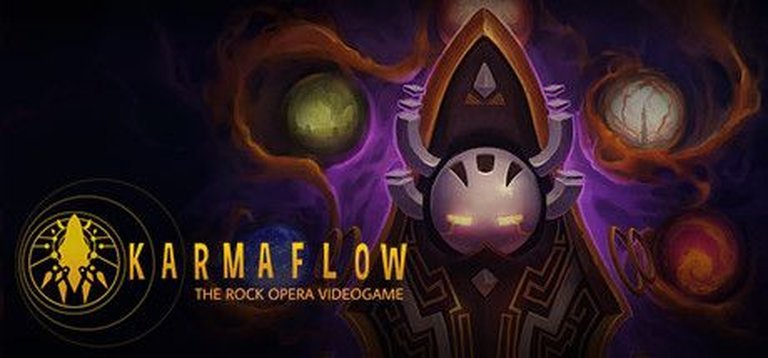
Karmaflow: The Rock Opera Videogame is a fantasy adventure game that presents its narrative through an interactive rock opera format, where players explore mystical realms and solve puzzles while the story unfolds via a symphonic rock soundtrack. Featuring vocal performances by artists from bands like DragonForce, Epica, and Arch Enemy, the game combines platforming and puzzle elements in a unique audio-driven experience set to the orchestral score of the Metropole Orkest.
Gameplay Videos
Where to Buy Karmaflow: The Rock Opera Videogame
PC
Karmaflow: The Rock Opera Videogame Guides & Walkthroughs
Karmaflow: The Rock Opera Videogame Reviews & Reception
gamegrin.com : Overall Karmaflow is a pleasant game, with some interesting puzzles, pretty landscapes and a decent soundtrack but it’s not outstanding.
Karmaflow: The Rock Opera Videogame: A Symphony of Ambition, Flawed Yet Fascinating
Introduction: The Unorthodox Concerto
In the mid-2010s, as indie game development exploded with pixel-art revivals and minimalist narratives, a Dutch studio dared to imagine something far more audacious: a video game that was not merely accompanied by music, but was itself a continuous, interactive rock opera. Karmaflow: The Rock Opera Videogame is that artifact—a bold, idiosyncratic experiment that merges the structural demands of a 3D puzzle-platformer with the narrative-through-song format of a theatrical rock opera, featuring an all-star cast of symphonic metal vocalists. This review will argue that Karmaflow is a fascinating, deeply flawed prototype: a game whose profound artistic ambition and innovative adaptive music system are perpetually at war with its makeshift development, technical instability, and occasionally cumbersome gameplay. It stands not as a masterpiece, but as a crucial, passionate footnote in the history of musical and narrative integration in games—a proof-of-concept that demonstrated the potential of treating music as the primary narrative vessel, even if its execution often stumbled over its own complexities.
Development History & Context: The Graduation Project That Grew Too Big
Karmaflow emerged from the unlikely crucible of an academic project. Initiated in 2012 by Dutch composer Ivo van Dijk as a graduation project at the Utrecht School of the Arts, it was conceived alongside 12 fellow students. This origin story is key to understanding the game’s dual nature: its concept is grandiose and professionally executed in its musical casting, while its programming and systemic polish bear the hallmarks of a stretched, resource-constrained team. The project secured crowdfunding via Indiegogo, but crucially, failed to meet its funding goal. Undeterred, Basecamp Games—composed of former staff from established Dutch studios like Guerilla Games, Ronimo Games, and Triumph Studios—pressed on regardless.
This context explains the game’s most glaring characteristics. The technological constraints are evident: it runs on the licenses-friendly Unreal Engine 3 (UDK), resulting in a visual style that is stylistically coherent but technically dated, even for 2015, with simple geometry, basic shaders, and a pervasive mist that softens draw distances. The gameplay landscape of the era was dominated by refined mascot platformers (Super Mario 3D World) and narrative adventures (The Walking Dead). Karmaflow rejected both, positioning itself in a niche between Psychonauts‘s platforming and Metal Gear Solid V‘s adaptive audio systems, but with a singular, unwavering musical focus that had no direct contemporary competitor. Its release as a commercial digital download on Windows in January 2015, split into two paid acts, was a risky move that foreshadowed its fragmented reception.
Narrative & Thematic Deep Dive: A Mythic Cycle Sung in Steel
Plot Structure & The Rock Opera Form
The narrative is not presented through dialogue but entirely through sung libretto, a commitment so total it defines the game. The story is a mythic cycle. The player is the Karmakeeper (or Protokeeper), a mute, cute robotic entity created by the Creator (Dani Filth). The Creator and the Destroyer (Simone Simons) established a cosmic cycle: the Dissonance (corruption) periodically destroys worlds, which are then reborn. The Creator, however, secretly crafted the Karmakeeper as an “Ultimate Life Form” to break this cycle. The Karmakeeper’s quest is to traverse five worlds, each protected by a Guardian who has failed to contain the Dissonance, and decide their fate.
Each world is a two-act opera:
1. World 1 (The Conductor & The Muse): A forest-temple world where the Conductor (Marc Hudson) used music to keep the Dissonance at bay, but his Muse (Alissa White-Gluz) was corrupted into the Banshee. The choice: reunite them (sacrificing the world to the Dissonance) or let the Muse die, allowing the Conductor to continue.
2. World 2 (The Guide & The Shaman): A marshy, grassy realm where the Guide (Mark Jansen) became corrupted while cleansing others. The Shaman (Lindsay Schoolcraft) and others are scattered. The choice: cure the Guide or end his suffering.
3. World 3 (The Sun Brother & The Moon Sister): A floating Tibetan-inspired continent and underwater city ruled by twins (Tony Kakko & Elize Ryd) in a feud. The choice: crown one sibling or allow them both to fail.
4. World 4 (The Heart & The Hero): A stark, Tron-like world of crab-like beings. The Heart (Daniël de Jongh) is their progenitor, driven to attack its children. The Hero (Henning Basse) seeks to destroy it. The choice: destroy the Heart (dooming the world’s gravity) or let it live.
5. World 5 (The Creator & The Destroyer): A white void assembling fragments of previous worlds. The final confrontation reveals the cycle’s truth. The choice: side with the Creator to preserve the imperfect world or with the Destroyer to continue the cycle, requiring the Karmakeeper’s sacrifice.
Themes: Balance, Sacrifice, and the Weight of Creation
Karmaflow explores profound philosophical tensions:
* Emotions vs. Stoicism: The Destroyer represents cold, cyclical balance (“starting anew is more reasonable”), while the Creator embodies passionate, flawed creation (“I only wish to have more time, to behold the beauty of what I create…”).
* The Corruption of Purpose: Every Guardian’s failure stems from their core function. The Conductor needs his Muse; the Guide’s healing corrupts him; the Heart defends itself; the twins feud over legacy.
* Mercy Kill vs. Preservation: A recurring moral dilemma. The Guide begs for release. The Muse, when temporarily cleansed, screams “My God, What Have I Done?” The game forces the player to weigh immediate peace against long-term consequence.
* The Burden of Choice: The Karmakeeper is a passive instrument. Power is not in fighting but in deciding. The narrative’s weight is carried entirely by the musical performances and the player’s binary choices at each duet’s climax.
The “Arc Words”—“And the Dissonance settled in”—serve as a leitmotif for inescapable corruption, echoing through each world.
Gameplay Mechanics & Systems: Platforming to a Different Beat
Core Loop & The Karma Mechanics
Gameplay is a third-person puzzle-platformer with a unique resource system. The Karmakeeper has two primary actions:
1. Infuse Karma (Orange): Transfer positive life-energy from sources (glowing plants, creatures) to objects, making them active (e.g., bridges, elevators, cleansing corruption).
2. Extract Dissonance (Purple): Remove negative energy from corrupted objects/beings, often required to progress or in boss choices.
This system is the engine of all puzzles. It’s conceptually elegant but sometimes imprecise. The UI is minimalist—karma levels and instructions are displayed on the Keeper’s back, fitting the diegetic, organic world.
Platforming & Exploration
The platforming is competent but not exceptional. The Karmakeeper gains abilities per world (double jump from the Protokeeper, a spring spire jump in World 4). Grind rails are abundant, especially from World 3 onward. The “Aura Vision” (Resonance), gained in World 2, turns the world grayscale to highlight interactive objects—a clever solving tool. However, the lack of a map and the often-similar, misty environments lead to frustrating disorientation, as noted by multiple reviewers.
“Boss” Encounters & Puzzle Design
There are no combat encounters. “Bosses” are interactive musical duels or platforming sequences.
* World 1: A chase sequence while the Muse/Conductor duet plays.
* World 2: An escort mission where Shamans must be led through hazards.
* World 3: A timed confrontation where the Bird Goddess attacks while you grind.
* World 4: A platforming puzzle amidst a collapsing structure.
* World 5: The final choice isn’t a puzzle but a Narrative Choice during the Creator/Destroyer duet, with time slowed.
The puzzles range from logical (using karma on correct objects in sequence) to obtuse. The “Songs in the Key of Lock” puzzle in World 3 (reproducing a music box sequence) is praised as clever but can be a stumbling block for the tone-deaf. The overarching criticism is that puzzles can be “boring” or “progress-halting” due to unclear logic, exacerbated by the repetitive musical exposition at checkpoints.
Technical & Systemic Flaws
This is the game’s Achilles’ heel. Bugs are pervasive and severe. Reviews cite “gamebreaking bugs” (e.g., a choice option in World 1 failing to register, forcing a specific outcome), framerate issues even on low settings, and checkpoint problems requiring save file deletion after patches. The adaptive music system, while revolutionary in concept, can become annoying when players die repeatedly and are forced to hear the same sung hint or musical phrase ad nauseam—a lack of a skip function is a cited design flaw. The game feels like a proof-of-concept with an unfinished sheen.
World-Building, Art & Sound: Where Vision Trumps Execution
Art Direction & Atmosphere
The aesthetic is a deliberately surreal, dreamlike fantasy. Inspired by Zelda, Journey, and Darksiders, it uses a limited, colour-coded palette per world (World 1’s gloomy greens/browns, World 3’s crimson/Tibetan motifs). The “Beautiful Void” trope is strong—empty, atmospheric spaces with ambient music. Character designs are memorable: the Vocal Dissonance of the hulking, bestial Conductor with a soaring tenor voice; the Creepy Good porcelain-doll Creator versus the rotted-tree Destroyer. The art successfully conveys a mythic, ambiguous atmosphere, even if textures are simple.
Sound Design: The Beating Heart
This is the game’s undisputed masterpiece and primary justification.
* Cast: An all-star roster of symphonic and extreme metal vocalists: Simone Simons & Mark Jansen (Epica), Dani Filth (Cradle of Filth), Marc Hudson (DragonForce), Tony Kakko (Sonata Arctica), Alissa White-Gluz (Arch Enemy), Elize Ryd (Amaranthe), and others. Their performances imbue the archetypal characters with genuine gravitas and power.
* Orchestra: The Metropole Orkest, a Grammy-winning professional pop and jazz orchestra, performs the score. This bridges the gap between metal and cinematic symphonics.
* Adaptive Music System: The score dynamically shifts based on player action—infusing karma might swell the music with hopeful strings; extracting Dissonance introduces harsh, discordant notes. This is the “Change the environment, change the music” tagline made real. The leitmotifs are strong (the Heart’s pounding percussion, the Muse’s One-Woman Wail).
* Narrative Integration: Since everything is sung—exposition, tutorials (the Protokeeper’s guidance is a song), Data Shard backstories—the music is not an overlay but the text itself. This creates an epic, cohesive, albeit occasionally verbose, opera.
The soundtrack album, released separately, is highly valued by fans and is often cited as worth the purchase price alone.
Reception & Legacy: A Cult Curiosity, Not a Classic
Critical Reception at Launch
Karmaflow was met with generally unfavorable reviews from critics. Metacritic scores 47 on PC based on 5 reviews. Common critiques were devastatingly consistent:
* CD-Action (30/100): Called it “pathetic even for early access,” “ugly, clunky, and crawling with bugs.”
* XGN, Everyeye.it, Eurogamer Poland (all 50/100): Repeated the refrain: “amazing music and interesting world” ruined by “boring puzzles,” “gamebreaking bugs,” and a “not great” start that promises continuity it can’t deliver.
* Riot Pixels (50/100): “I wish there were fewer bugs, bigger worlds, and smarter puzzles.”
The user score (6.3/10) was slightly more charitable, with some praising its uniqueness and soundtrack while acknowledging its flaws. The Steam “Mostly Positive” (73% of 97 reviews) suggests a small, dedicated fanbase that overlooks the issues for the experience.
Evolution of Reputation & Influence
Karmaflow has not achieved a significant critical rehabilitation. It remains a cult curiosity—a “what if” discussed in circles interested in musical games or experimental narrative. Its legacy is as a bold prototype:
1. Proof of Concept for Sung Narrative: It demonstrated that a full-length, branching narrative could be delivered entirely through sung libretto without losing coherence, paving the way for more musically integrated storytelling.
2. Adaptive Music as Gameplay: Its system of player action directly influencing musical texture was ahead of its time in an industry where dynamic music was often backgrounded.
3. The “Rock Opera Game” Niche: It carved a specific, unfilled space. Titles like Brütal Legend had rock themes but not opera structures; Rez or Rez Infinite used music for trance, not narrative. Karmaflow‘s specific fusion remains rare.
4. Live Adaptation: Its most successful legacy may be “Karmaflow in Concert: The Rock Opera,” a staged live performance of the score with singers and orchestra, transforming the game back into its original theatrical inspiration. This demonstrates the strength of the core musical composition independent of the game’s mechanical flaws.
Its influence on mainstream game design is negligible due to its commercial and critical stumble. However, for developers exploring diegetic music or non-dialogue narrative, it remains a cited, if cautionary, example of ambition requiring equally robust systemic support.
Conclusion: A Flawed Gem in the Archive of Gaming
Karmaflow: The Rock Opera Videogame is a paradox. It is a game where the art soars while the craft often sinks. The symphonic metal score performed by the Metropole Orkest and its constellation of star vocalists is a staggering achievement, a genuinely epic and moving work that stands on its own. The concept of an adaptive, reactive rock opera where player choice shapes both story and musical tone is one of the most innovative narrative mechanics of the 2010s.
Yet, this vision is shackled to a buggy, unpolished platformer with repetitive puzzles, poor navigation, and technical issues that disrupt immersion. The very mechanic that makes it unique—the sung, non-skippable exposition—becomes a chore upon repeated failures. It is the embodiment of the “amazing idea, flawed execution” trope.
Its place in history is not as a classic to be celebrated, but as a critical artifact. It proves that video games can be a true vessel for the opera form, that music can be more than accompaniment—it can be the author. For scholars of game narrative and musicology, Karmaflow is essential study. For the average player, it is a niche experience best enjoyed on sale, with managed expectations, and primarily for its extraordinary soundtrack. It is a testament to the passion of its creators at Basecamp Games, who, against the odds, built something truly unique. In the end, Karmaflow is not a successful game by conventional metrics, but it is a fascinating, sometimes magnificent, and fundamentally human one—a symphony where some instruments are out of tune, but the melody is unforgettable.
Final Verdict: 6.5/10 – A cult classic in the making, defined by its glorious soundscape and hampered by its janky shell. Essential for music lovers, optional for platformer fans.