
- Release Year: 2023
- Platforms: Android, iPad, iPhone, PlayStation 4, Windows, Xbox One
- Publisher: Nexon America Inc., Nexon Korea Corporation
- Developer: Nexon Korea Corporation
- Genre: Driving, Racing
- Perspective: Behind view
- Game Mode: Online PVP, Single-player
- Gameplay: Go-kart, Track racing
- Average Score: 62/100
Description
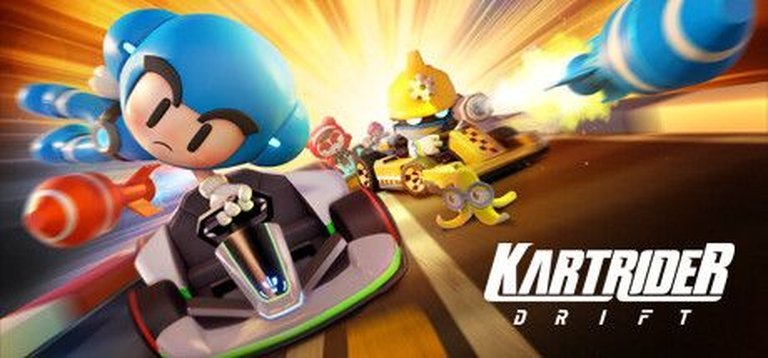
KartRider: Drift is a fast-paced, cross-platform kart racing game developed and published by Nexon Korea Corporation, featuring behind-the-view real-time track racing with customizable karts and characters. Players compete in exhilarating multiplayer races across Windows, mobile, PlayStation 4, and Xbox One, powered by Unreal Engine 4 and PhysX for dynamic drifting and physics-based action in the long-standing KartRider series.
Gameplay Videos
KartRider: Drift Guides & Walkthroughs
KartRider: Drift Reviews & Reception
metacritic.com (76/100): not only impresses with its stunning visuals and advanced graphic engines, but also inherits the smooth driving sensation developed over 18 years.
xboxera.com : KartRider: Drift is a really fun racing game. It entices players with its colourful visuals, keeps you engaged with its many modes, and hooks you with its rather difficult to master drifting system.
imdb.com (60/100): pretty entertaining at first but became pretty stale pretty fast.
thexboxhub.com (50/100): surrounded by EULAs and Nexon logins… it can be hard to find the flipping game.
completexbox.co.uk : an absolute feast of content in KartRider Drift.
KartRider: Drift: Review
Introduction
Imagine hurtling down neon-lit tracks in a pint-sized kart, dodging banana peels and lightning bolts while chaining perfect drifts to unleash nitro-fueled glory—this is the chaotic joy of kart racing, a genre immortalized by Nintendo’s Mario Kart juggernaut. Enter KartRider: Drift, Nexon’s bold 2023 revival of its venerable KartRider series, which boasted over 380 million players primarily in Asia since 2004. Born from the ashes of the original PC title’s controversial shutdown, Drift promised cross-platform mastery across PC, consoles, and mobile, powered by Unreal Engine 4. As a game historian, I see it as Nexon’s audacious bid to globalize a Korean esports phenomenon into a live-service contender. Yet, for all its technical polish and customization depth, KartRider: Drift stumbles as a “Mario Kart clone” overshadowed by its inspiration, undermined by live-service bloat and execution flaws, ultimately becoming a cautionary tale of ambition unmet.
Development History & Context
Nexon Korea Corporation, under the stewardship of Producer Jaewoo Seo and Game Director Jaeyun Cho (with Creative Directors Jongkyu Won and Doohyun Sung), spearheaded KartRider: Drift through Nitro Studio. Announced at Microsoft’s X019 in 2019 as a free-to-play cross-platform racer, it aimed to unify the fragmented KartRider ecosystem—spanning the aging 2D original, mobile spin-offs like KartRider Rush+, and esports staples in Korea. Built on Unreal Engine 4 with PhysX physics and FMOD audio, it targeted a 2020 launch but endured protracted betas (2019 closed beta, 2020 Phase 2) amid feedback on handling, content scarcity, and netcode.
The era’s gaming landscape was brutal: F2P live-service titles like Fortnite and Rocket League dominated multiplayer racing, while Mario Kart 8 Deluxe reigned supreme on Nintendo hardware. Nexon’s decision to shutter the 18-year-old original CrazyRacing KartRider in Korea—replacing it with Drift—ignited backlash, alienating veterans who cherished its depth (story modes, home tracks) over Drift‘s streamlined approach. Technological constraints? Minimal on UE4-powered PCs/consoles, but mobile optimization strained crossplay parity. Visionaries like Technical Director Sunhee Lee and Art Director Daewon Kwon emphasized “no paywalls, no P2W,” focusing on cosmetics amid monetization fatigue. Delays polished cross-progression via Nexon accounts, but launched January 2023 (PC/mobile) and March (consoles) into a saturated market, with global hype stifled by sparse Western marketing and Nexon’s tarnished rep (e.g., abrupt shutdowns like Exteel).
Narrative & Thematic Deep Dive
KartRider: Drift eschews a traditional single-player campaign for cinematic season trailers and lore tabs, weaving an episodic saga across its eight seasons. At its core: kart racing as Earth’s premier sport, orbiting the Legend Cup—a mystical trophy forged from “pure passion,” safeguarding worldly balance with otherworldly energy. Chaos erupts when Rabbit Hole, futuristic villains (revealed as Miso, Rex, and Derek), rift through time, pollute the Cup’s power, and unleash anarchy.
Protagonists hail from Boomhill Village: eight dream-chasing racers like blue-clad Dao (athletic leader), yellow Diz (tech whiz), red Bazzi (fiery competitor), and green Uni/Ethen duo (youthful dynamos). Joined by engineer Brodi (android tinkerer), witch Tiera (shrinking violet), and crossovers (MapleStory’s Lucid/Pink Bean, BT21 characters, BLACKPINK members, Porsche/Lamborghini karts), they pursue the Cup through themed arcs:
- Starting Line: Rabbit Hole raids Boomhill; rivals thwart them, but the Cup vanishes.
- New World: Android uprising at Mystpole Factory (sabotaged by Rabbit Hole); sentient Tobi saves the day.
- World Kart Championship: Crystal ball quest amid global chaos; Tiera’s magic averts disaster.
- Catch Me If You Can: Summer intrigue with performers Martin/Lena.
- Hallo-Drift: Draky’s ritual for his lost brother interrupted by shadows.
- Moonlight Race: Rabbit Hole vs. Black Company over the Cup.
- Norteille: Alien planet threat as Miso corrupts the relic.
- Pirate/Cowsie: Naval chases and pursuits climax unresolved.
Themes probe competition vs. camaraderie (team boosts symbolize unity), innovation’s peril (rogue AIs, polluted relics), and legacy (evolving OG designs like Northeu’s aliens into Sonic-esque beings). Dialogue is sparse but punchy via emotes/skills (Viktor’s time bombs, Thundercloud strikes). Character arcs evoke Crash Team Racing‘s whimsy with TV Tropes flair: Big Bad Rabbit Hole as shadowy manipulators, Came Back Wrong ghosts like Spirit Kid (Draky’s sister?). Crossovers inject meta-humor, but the vignette style—mirroring the original’s episodic roots—feels fragmented, prioritizing spectacle over cohesion. As history unfolds toward a mooted story mode (never realized), it romanticizes racing as cosmic salvation, yet villains’ opacity leaves themes underdeveloped.
Gameplay Mechanics & Systems
Drift‘s loops revolve around real-time behind-view racing for 8 players, blending arcade frenzy with skill mastery. Core: Speed Mode (drift-focused purity) vs. Item Mode (chaotic power-ups). Direct controls demand precision—accelerate, brake, drift (tap/release for nitro chains), items.
- Drifting Deconstructed: Tap drift pre-corner, counter-steer, pulse accel for bursts; chain for nitro gauges (regular/team/shared). Revolutionary yet divisive—eternal micro-drifts enable “white-knuckle” speed but frustrate casuals (e.g., “refuses to drift,” per reviews). R-key reset aids frustration.
- Modes: Item (bananas, Water Bombs, UFOs, Shields); Speed (pure skill); Team variants (shared boosts); Time Attack/Ghost races; License challenges (unlock tracks via stars: coin hunts, barriers); Grand Prix (ranked Bronze-Grandmaster); Custom (22 tracks, 6 modes).
- Progression: Lucci from dailies/races for kart upgrades (stats reset ~14k); Battle Pass (~$5, 60 days, challenges); Racing Pass cosmetics. Licenses gate content (1-3 star tracks), criticized as newbie barriers.
- Customization: Exhaustive—kart frames/colors/decals/tires/exhausts; character outfits/emotes (e.g., Liberty Bazzi). No P2W, pure cosmetics.
- UI/Systems: Cluttered menus bury races amid notifications; seamless crossplay/progression shines, but matchmaking bots pads low populations; anti-frustration (10s post-finish leeway).
Innovations like kart stats/mods elevate replayability; flaws—monotonous loops, unbalanced items teammate-hits—echo Mario Kart shadows without polish.
World-Building, Art & Sound
Tracks span 40+ across themes: World Tour (composite beaches/cities), Mystpole Factory (icy Eternal Engine), Graveyard (Dia de los Muertos haunt), Norteille (lush alien hovering roads), Pirate seas. Hazards (cannons, shortcuts) foster mastery; loops (2-3 laps) keep races ~3 mins. Atmosphere evokes vibrant chaos—lush evolutions from OG ruts to flora-filled voids.
Visuals: UE4 delivers “stunning high-definition” polish—art evolution tweaks (longer limbs, Brodi’s blue jumpsuit), cute machines (teddy-bear androids), Modesty Shorts for skirts. Color-coded cast (Dao blue, Bazzi red) pops; custom decals shine.
Sound: Bouncy EDM/BGM fuels adrenaline (Istanbul Market bops); criticized skidding loops (“Styrofoam on glass”). Voice/emotes add charm, but lacks depth.
Elements synergize for “bubbly” immersion, tracks’ variety combating staleness.
Reception & Legacy
Critics averaged 72% (MobyGames): highs (MKAU 100%: “exhilarating,” Complete Xbox 95%: “Mario Kart on Xbox”) praised addictiveness (50+ hours), crossplay, content; lows (Gamereactor 40%: “abysmal driving,” Droid Gamers 50%: “can’t compete”). Metacritic PC 76 (user 5.7). Commercial dud: peaked low (SteamDB), global shutdown Feb 2025 (KR/TW PC lingers to Sep), cited player drop, bugs, no marketing. Steam/Reddit lament F2P greed (lootboxes, $200 bundles), OG shutdown sourness, “generic clone” perception.
Influence: Minimal—reinforces kart racers’ Nintendo monopoly; highlights F2P pitfalls (dailies, gates). Legacy: Technical milestone (crossplay paragon), but “what if” for Nexon (shift to premiums like Dave the Diver). Esports roots untapped Westward.
Conclusion
KartRider: Drift dazzles with UE4 splendor, drift innovation, and cross-platform seamlessness, its Legend Cup quest and Boomhill heroes capturing kart racing’s spirited soul. Yet, live-service noise, gated progression, divisive mechanics, and Mario Kart comparisons doomed it amid F2P burnout. A flawed revival—technically triumphant, commercially tragic—it cements KartRider‘s Asian esports throne while underscoring Western challenges. Verdict: 7.2/10. Essential for genre historians as a noble failure; play KR/TW servers if you dare, but history recalls it as ambition’s drift into obscurity.