
- Release Year: 2009
- Platforms: Browser, Windows
- Developer: Simon Tatham
- Genre: Puzzle
- Game Mode: Single-player
- Gameplay: Arithmetic operations, Grid-based, KenKen, Multiplication mode, Number placement, Region-based
Description
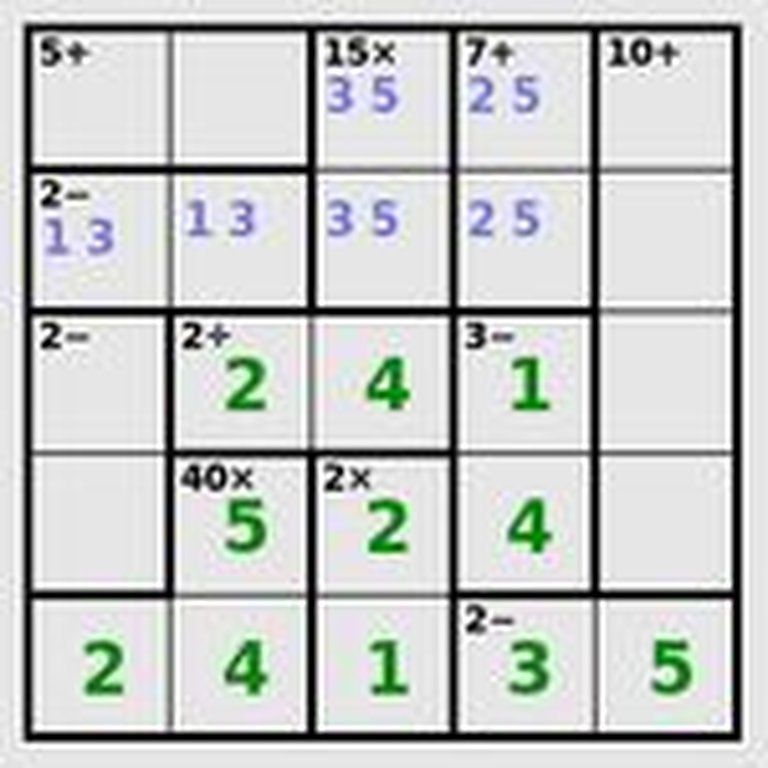
Keen is a grid-based arithmetic puzzle game where players fill a grid with unique numbers per row and column, divided into regions with target clues and operations (like addition or multiplication) that must be satisfied. It features adjustable grid sizes and a multiplication-only mode, challenging logical and mathematical reasoning in a minimalist digital format.
Where to Buy Keen
PC
Keen Cheats & Codes
Commander Keen 1-3: Invasion of the Vorticons
Press the key combinations simultaneously during gameplay.
| Code | Effect |
|---|---|
| C+T+Spacebar | Gives pogostick, all keycards, and full ammo. |
| Shift+Tab | Pass through an unplayed level on world map. |
| G+O+D | God mode and jump cheat (fly when jump). |
Commander Keen 4-5: Goodbye Galaxy!
Press [B+A+T] simultaneously for items. For debug mode and other cheats, first press [A+2+enter] to enable debug mode, then hold F10 and press the cheat key.
| Code | Effect |
|---|---|
| B+A+T | Gives 99 shots, extra life, and all gems. |
| A+2+enter | Enable debug mode. |
| F10+G | God mode |
| F10+I | Free items |
| F10+J | Jump cheat (fly) |
| F10+N | No clipping |
| F10+Y | View hidden areas |
| F10+B | Set border color (1-15) |
| F10+C | Show number of active/inactive objects in the level |
| F10+D | Record a demo |
| F10+E | End current level |
| F10+M | Display memory usage |
| F10+S | Slow motion |
| F10+T | Sprite test |
| F10+V | Add 0-8 VBLs |
| F10+W | Warp to any level |
| F10+P | Pause the game |
Commander Keen 6: Aliens Ate My Babysitter
F10 cheats may work without enabling debug mode in some versions. If not, press [A+2+enter] to enable debug mode first. Then hold F10 and press the cheat key. Note: [B+A+T] does not work.
| Code | Effect |
|---|---|
| A+2+enter | Enable debug mode (if required). |
| F10+G | God mode |
| F10+I | Free items |
| F10+J | Jump cheat (fly) |
| F10+N | No clipping |
| F10+Y | View hidden areas |
| F10+B | Set border color (1-15) |
| F10+C | Show number of active/inactive objects in the level |
| F10+D | Record a demo |
| F10+E | End current level |
| F10+M | Display memory usage |
| F10+S | Slow motion |
| F10+T | Sprite test |
| F10+V | Add 0-8 VBLs |
| F10+W | Warp to any level |
| F10+P | Pause the game |
Keen Dreams
Enter codes during gameplay by holding F10 and pressing the specified key, or as indicated.
| Code | Effect |
|---|---|
| F10+W | Warp to any level; enter level number when prompted. |
| F10+I | Free items (99 bombs and 99 keys) |
| F10+S | Slow motion |
| F10+G | God mode |
| F10+J | Jump higher |
| F10+E | Exit level |
| F10+C | Change border color |
Commander Keen: A Timeless Journey Through Platforming History
Before Doom, Quake, or even Wolfenstein 3D, there was a boy in a football helmet, flying a soup-can starship to save the Earth from alien invaders. The Commander Keen series is not merely a collection of charming 1990s platformers; it is the foundational cornerstone upon which id Software built an empire, a technical marvel that defied the limitations of its time, and a cultural touchstone whose whimsical DNA still echoes through gaming today. This review will dissect the trilogy that began it all—Invasion of the Vorticons—and its immediate sequels, exploring how a game about an eight-year-old genius fundamentally altered the trajectory of PC gaming.
1. Introduction: The Boy Who Would Be Commander
In the annals of video game history, few titles capture a specific moment of technological and cultural confluence as perfectly as Commander Keen in Invasion of the Vorticons (1990). Released at a time when side-scrolling platformers were the exclusive domain of Nintendo and Sega consoles, this shareware title from a then-unknown team working out of Softdisk’s basement brought buttery-smooth, Mario-esque gameplay to the IBM PC. It did so not through proprietary hardware, but through raw, revolutionary programming ingenuity. My thesis is this: Commander Keen is a landmark of engineering prowess that successfully married accessible, family-friendly design with a forward-thinking distribution model. Its legacy is twofold: it directly birthed id Software and the modern first-person shooter genre, and it embedded a特定 aesthetic of playful, cerebral heroism—epitomized by its protagonist Billy Blaze—that remains a cherished, if occasionally revisited, ideal in game design.
2. Development History & Context: From Softdisk Basement to id Software
The Engine That Could: Adaptive Tile Refresh
The story of Commander Keen is fundamentally the story of John Carmack’s Adaptive Tile Refresh (ATR). In 1990, MS-DOS PCs with standard EGA graphics cards were considered incapable of the smooth, multi-directional scrolling seen in Super Mario Bros. 3. Consoles achieved this via specialized hardware; PCs did not. Carmack’s breakthrough was a software trick: instead of redrawing the entire screen each frame, his engine would slide the existing visible screen buffer and only redraw the newly exposed strips on the left/right or top/bottom. This created the illusion of seamless scrolling. The proof-of-concept, Dangerous Dave in Copyright Infringement, was a clandestine overnight recreation of Mario 3’s first level using a character from a previous Softdisk game. When John Romero saw it, he recognized its potential immediately—not for Softdisk, but for themselves.
The Shareware Catalyst
Enter Scott Miller of Apogee Software, pioneer of the episodic shareware model. Miller’s genius was in bypassing retail entirely. He would distribute the first episode of a game for free on BBSs; players who loved it would mail a check for the subsequent episodes. This model was perfect for Keen: it offered a complete, high-quality experience for free, with a clear, low-cost path to more. For a team of programmers working night and weekend on Softdisk’s hardware, it was the only viable path to a full-time independent venture. The agreement with Apogee, secured in late 1990, set the stage for the December 14, 1990, release of Marooned on Mars.
Founding id and the Split Focus
The overwhelming success of the first trilogy—sales skyrocketed from Apogee’s usual $7k/month to $60k/month by mid-1991—allowed the core team (Carmack, Romero, Hall, and Adrian Carmack) to quit Softdisk and formally incorporate id Software in February 1991. However, contractual obligations to Softdisk (where they had developed Keen on company time) necessitated the creation of Commander Keen in Keen Dreams (1991). Published by Softdisk, Keen Dreams served as a creative and technical prototype for the next main series entries, testing parallax scrolling, improved sprites, and a new stun-based combat system born from parental feedback about the violence in the first trilogy. This “Gaiden Game” exists outside main continuity but is crucial for understanding the series’ evolution.
The Unraveling of a Trilogy
Development on the second trilogy, Goodbye Galaxy (Episodes 4 & 5) and Aliens Ate My Babysitter (Episode 6), was fraught with publishing strife. Apogee’s Scott Miller was dismayed when id, via new business VP Mark Rein, split Episode 6 into a standalone retail title published by FormGen. Miller believed this fractured the shareware model and hurt sales of the free episode, Secret of the Oracle. Sales for Goodbye Galaxy indeed fell to about a third of the first trilogy’s success. Plans for a third trilogy, The Universe is Toast!, were announced in the Aliens credits (Christmas 1992) but promptly cancelled. The team’s focus had irrevocably shifted to the proto-3D experiments that would become Wolfenstein 3D and Doom. The platforming hero was shelved for the immersive, violent worlds that would define id’s future.
3. Narrative & Thematic Deep Dive: Genius, Hubris, and Breakfast
Protagonist & Antagonist: Two Sides of the Same Coin
At its core, the Keen saga is a childhood rivalry writ galactic. Billy Blaze, an eight-year-old with an IQ of 314, is the ultimate “kid hero.” His motivation is pure, almost naive: he wants to finish his breakfast, go to school, or get back in time for dinner. His tool is ingenuity—building starships from “old soup cans, rubber cement and plastic tubing.” His nemesis is Mortimer McMire, his schoolmate with an IQ of 315. McMire is the Insufferable Genius and Social Darwinist; he believes intelligence alone confers the right to rule, and he seeks to exterminate all beings “lesser” than himself. Their conflict is a dark mirror: both are child prodigies, but Billy’s genius is coupled with empathy and a sense of justice, while McMire’s is coupled with omnicidal arrogance. His repeated returns—as the Vorticon “Grand Intellect,” the Shikadi “Gannalech,” and the mastermind behind the Bloogs—establish him as a persistent, childish evil, making his defeats satisfyingly petty.
Structure of a Space Opera
The narrative unfolds in clearly defined arcs:
* Invasion of the Vorticons (Ep 1-3): A tightly plotted save-the-Earth story spanning one night. It begins with a simple repair mission on Mars, escalates to an orbital superweapon, and culminates in a journey to the Vorticon homeworld. The twist reveal—that Mortimer McMire was behind it all—elevates the conflict from alien invasion to personal war.
* Keen Dreams: A dream-logic sidestory with no direct bearing on continuity. Its plot—”eat your vegetables or be enslaved by a vegetable king”—is pure, surreal Tom Hall whimsy. It’s notable for removing the raygun and introducing the “flower power” pellet, a non-lethal solution born from Hall’s desire to avoid the corpse-leaving violence of the first trilogy.
* Goodbye Galaxy! (Ep 4-5): Escalates to galaxy-saving. The revelation that the Shikadi are “shadow beings” building a planet-destroying machine raises the stakes. The narrative gains complexity with the rescue mission for the Gnostic Elders (a classic “NPC Round-Up Mission”) and the discovery that McMire has once again escaped.
* Aliens Ate My Babysitter! (Ep 6): A personal, terrestrial-scale adventure. The kidnapping of Billy’s babysitter, Molly, adds a layer of domestic stakes. Its major contribution is the reveal that Molly is McMire’s sister—tying the Bloogs directly into the overarching conspiracy—and the explicit confirmation that McMire plans to destroy the universe, setting up the never-made third trilogy.
* 2001 Game Boy Color Game: A soft reboot/sequel where a grown-up Billy’s children, Billy Jr. and Billie, take up the mantle. It amalgamates villains from all previous episodes but is considered apocryphal by series creator Tom Hall.
Themes and World-Building Through Detail
Hall’s influences—Chuck Jones cartoons, Duck Dodgers, and classic sci-fi—infuse the series with a specific brand of 1950s serial optimism. The world is one of raygun aesthetics, alien pyramids, and talking vegetables. This is reinforced through:
* The Standard Galactic Alphabet (SGA): A substitution cipher created by Hall. It decorates signs, level exits, and secret messages. It encourages exploration and decoding, making the player feel like an interstellar archaeologist. Its inclusion in Minecraft’s enchantment table is a direct, decades-long homage.
* Product Placement Parody: Levels contain Acme blueprints, and Keen’s ship runs on “Everclear” (a real brand of grain alcohol), a joke born from a George Carlin bit. These details build a world that feels both sci-fi and absurdly mundane.
* The Dopefish: This “second-dumbest creature in the universe,” a dopey green fish that eats anything and burps, is the series’ ultimate breakout character. Began as a one-level enemy in Secret of the Oracle, it became id’s first great in-joke, appearing as an Easter egg in dozens of games (from Doom to Deus Ex: Human Revolution) and spawning the phrase “Dopefish Lives!”
4. Gameplay Mechanics & Systems: The Architecture of Fun
Core Loop & Mobility
The game is a side-scrolling platformer with a focus on exploration, collection, and combat. The genius lies in its movement toolkit:
1. Walk/Jump: Standard precision platforming.
2. Pogo Stick: Introduced in Marooned on Mars (found in a shrine), the pogo is the series’ signature mechanic. It allows infinite bouncing, higher jumps, and the iconic “pogo-stomp” on certain enemies. Its timing-based usage adds a skill ceiling.
3. Climbing: Poles introduced in Keen Dreams and Goodbye Galaxy allow vertical traversal.
From Episode 4 onward, the perspective shifted slightly to a pseudo-3D “depth” view, where platforms were rendered with a side/top hybrid angle, giving a greater sense of space without compromising the 2D plane of movement.
Combat Evolution & Design Philosophy
The weapon system tracks the series’ tonal shift:
* Episodes 1-3: The Raygun kills enemies, leaving corpses (a deliberate choice by Hall to teach that “death has consequences”).
* Keen Dreams: The Flower Power Pellet temporarily stuns, then transforms enemies into flowers. Non-lethal, but consequences are still visual.
* Episodes 4-6: The Neural Stunner (or “pistol” in Aliens) permanently stuns enemies, who remain on screen with stars circling their heads. This satisfied parental feedback—enemies weren’t killed—while still removing them as threats. It also created a unique visual language of “stunned” versus “active” enemies.
* 2001 GBC Game: A regression to temporary stun, requiring a pogo jump to finish off enemies. This combined mechanics from all eras but felt less satisfying than the permanent stun of the Apogee episodes.
Progression, Puzzles, and Secrets
- Key & Gem System: Colored keycards (later gems) gate access to locked areas. The pick-up hierarchy is crucial: primary items (ship parts, council members, bombs) are mandatory; secondary items (ammo, health) are helpful; tertiary items (candy, soda) are for points/lives.
- Environmental Hazards: Spikes, fire, ice (with frictionless and slippery variants), tar pits, and electricity are constant threats. The “Eiffel Tower Effect” in Earth Explodes—levels themed around real-world landmarks—is a clever, simple way to give each Tantalus Ray level distinct visual identity.
- Secrets & Bonus Levels: Tom Hall, inspired by Super Mario Bros.’ secrets, packed levels with hidden passages, warp zones, and entire Brutal Bonus Levels (like the Pyramid of the Forbidden in Secret of the Oracle). These often required precise trigger actions (e.g., finding 12 inchworms to form a giant foot) and offered high-risk, high-reward challenges. The Galactic Alphabet itself was a meta-secret, allowing players to decipher messages in earlier episodes only after finding the translation key in a later secret level.
- Non-Linear Exploration: The world map, introduced in Vorticons, allowed players to choose their path, with some levels optional and others secret. This was a significant departure from linear Mario stages.
Flaws and Quirks
- Control Legacy: The infamous “Damn You, Muscle Memory!” issue: Episodes 1-3 used
Ctrl+Altto fire andSpacefor status; Episodes 4-6 defaultedSpaceto fire andEnterfor status. Players would die repeatedly due to ingrained habits. - Boss Scarcity: True boss fights are rare (final levels of Ep 3, Keen Dreams, and Aliens). Most “bad guys” are mooks with simple AI (like pushy Yorps or jumping Gargs).
- One-Hit Death: Keen is fragile. This is a design choice, but can feel punishing combined with the sometimes cluttered, “busy” backgrounds (especially in Goodbye Galaxy) that obscure hazards.
- Copy Protection: Aliens Ate My Babysitter required identifying an enemy from the manual to start, a frustrating barrier for shareware players.
5. World-Building, Art & Sound: A Vibrant, Quirky Universe
Visual Design: EGA as a Canvas
The graphics are a masterclass in EGA palette limitation turned into style. The 16-color palette was used with bold, vibrant choices:
* Character Design: Keen’s red sneakers and yellow helmet (based on Tom Hall’s childhood) are iconic. The Yorps (lovable green blobs), Gargs (two-eyed floating things), and the disturbingly simple Dopefish are instantly recognizable. Enemy designs often followed Freudian archetypes (the id-like, impulsive Yorps; the ego-ish, structured Vorticon guards).
* Environmental Storytelling: Levels tell micro-stories. A Vorticon city has bars, homes, and a library. The Shadowlands in Secret of the Oracle feel like ancient, corrupted temples. The vegetable-themed world of Keen Dreams is a surreal, edible nightmare.
* The “Pseudo-3D” Shift: Keen Dreams and Goodbye Galaxy introduced parallax background layers and a slight isometric perspective on platforms. This gave a greater sense of depth and scale, making the worlds feel larger and more immersive than the flat planes of Vorticons.
Sound Design: Bobby Prince’s Punchy Beats
Composer Bobby Prince (who would later score Doom) provided the series’ most memorable audio. His soundtrack for Goodbye Galaxy is a leap forward, with catchy, melodic chiptunes that match each level’s theme—from the adventurous overworld to the tense, industrial machinery of The Armageddon Machine. The most famous track, “(You’ve Got To) Eat Your Vegetables” from Keen Dreams (though unused there due to space), became forever linked to the Dopefish and its level, the Well of Wishes. Sound effects are punchy and cartoonish: the Raygun’s “zap,” the Neural Stunner’s “pfft,” the satisfying pop of a jumped enemy, and the ominous “Bringer of War” (Holst’s Mars remix) that plays during the final descent in The Armageddon Machine.
Atmosphere & Tone
The atmosphere is whimsical yet dangerous. A level might have smiling trees in the background (Secret of the Oracle’s forests) while pits of boiling tar or homing Shikadi mines threaten Keen at every step. The juxtaposition of cute, almost Claymation-style character art against genuinely threatening platforming challenges creates a unique tension. It’s a world that feels like a child’s imagination given physical form—wonderful, strange, and occasionally terrifying.
6. Reception & Legacy: From BBS Phenomenon to Industry Pillar
Contemporary Reception & Shareware Success
Invasion of the Vorticons was an instant, massive hit. Its free first episode spread like wildfire on BBSs. Scott Miller described it as “a little atom bomb.” Reviews praised its “Nintendo feel” and smooth scrolling, with PC Magazine calling it “a real showstopper.” Sales proved the shareware model’s potential: from $30,000 in its first Christmas season to over $60,000/month by mid-1991. It won the 1992 Shareware Industry Awards for “Best Entertainment Software and Best Overall.”
Goodbye Galaxy and Aliens Ate My Babysitter sold less—roughly a third of the first trilogy—blamed by Miller and Hall on the split-release strategy. Nevertheless, they were still top-tier shareware sellers in 1992-93.
The 2001 Commander Keen for Game Boy Color received mixed reviews (scores ranging from 6/10 to 8/10). Critics found the graphics dated but charming, and the gameplay faithful but “aging.” It was deemed an acquired taste, best for nostalgic fans or children.
Historical Legacy and Industry Influence
The legacy of Commander Keen is monumental and multifaceted:
- The Genesis of id Software: The royalty check from Keen allowed the team to quit Softdisk and found id Software on February 1, 1991. This studio would go on to define and redefine genres with Wolfenstein 3D, Doom, and Quake. The first-person shooter as we know it is a direct descendant of the technological confidence fostered by the Keen engine.
- Proving the PC as a Viable Gaming Platform: It shattered the myth that smooth, action-oriented platformers were impossible on IBM compatibles. It forced the industry to take PC gaming seriously as a market for fast-paced, engaging titles, not just strategy sims and RPGs.
- Popularizing the Episodic Shareware Model: Keen’s structure—free first episode, paid sequels—became the gold standard for Apogee/3D Realms and was emulated by countless developers (Epic MegaGames, for one). It created a direct, unmediated relationship between developer and player.
- Cultural Footprint and the Dopefish: The Dopefish is arguably the most persistent in-joke in gaming history. Its cameos—in Doom II (as a shrinking sprite), Duke Nukem, Minecraft (enchantment table script), Deus Ex: Human Revolution, and dozens of indie titles—are a testament to its creators’ lasting influence and the affection in which the series is held.
- The Standard Galactic Alphabet: This simple cipher became a cult phenomenon. Its inclusion in Minecraft introduced it to a new generation. It represents the series’ commitment to diegetic, explorative storytelling—communication in the game world that players must actively decode.
- Active Modding Community: Since the release of level editing tools (like TEd) and eventually open-sourced code (for Keen Dreams in 2015), a vibrant fan community has thrived. Projects like Commander Genius (a source port with enhanced features), the fan-made trilogy “The Universe is Toast!”, and hundreds of mods (as catalogued on KeenWiki) demonstrate an enduring passion. The Public Commander Keen Forum (PCKF) has been a hub for this creative output for over two decades.
- Family-Friendly Hero Archetype: In an era increasingly dominated by gritty, violent protagonists, Billy Blaze remains a positive, intelligent kid-hero. His legacy is seen in games that appeal to all ages without condescension—a lineage that includes Mario but has fewer PC-originated examples.
7. Conclusion: A Defiantly Playful Landmark
The Commander Keen trilogy (and its immediate follow-ups) stands as a perfect storm of constraint-born innovation. It was a game forced out of technical limitations, crafted by talented idealists working on borrowed time, and unleashed onto a market starving for console-quality experiences on a PC. Its technical achievement—smooth scrolling on EGA—was a watershed moment. Its design—a blend of precise platforming, exploration, and light puzzle-solving—was instantly accessible yet deeply engaging. Its tone—whimsical, cerebral, and oddly earnest—gave it a unique personality that Doom and Quake would later eschew for visceral intensity.
While the series itself was ultimately a victim of its own success, sacrificed at the altar of the 3D revolution its creators would lead, its DNA is ineradicable. It proved shareware could work, that PCs could do action, and that a game could be both smart and fun. The Dopefish lives, the SGA persists, and the Bean-with-Bacon Megarocket remains one of gaming’s most iconic homemade starships. For these reasons, Commander Keen is not just a beloved classic; it is an essential historical document, a playful, brilliant, and profoundly influential cornerstone of the medium. Its place in video game history is secure, not as a relic, but as a living, breathing, mod-friendly legacy that continues to inspire nearly thirty-five years after Billy Blaze first donned his brother’s helmet.