
- Release Year: 2005
- Platforms: Macintosh, Windows
- Publisher: Akella, DreamCatcher Interactive Inc., Frogster Interactive Pictures AG, Lighthouse Interactive Game Publishing BV, Micro Application, S.A., PLAY Sp. z o.o., Power Up S.r.l., Wicked Studios Inc.
- Developer: Wicked Studios Inc.
- Genre: Adventure
- Perspective: Third-person
- Game Mode: Single-player
- Gameplay: Graphic adventure, Puzzle elements
- Setting: Fantasy
- Average Score: 70/100
Description
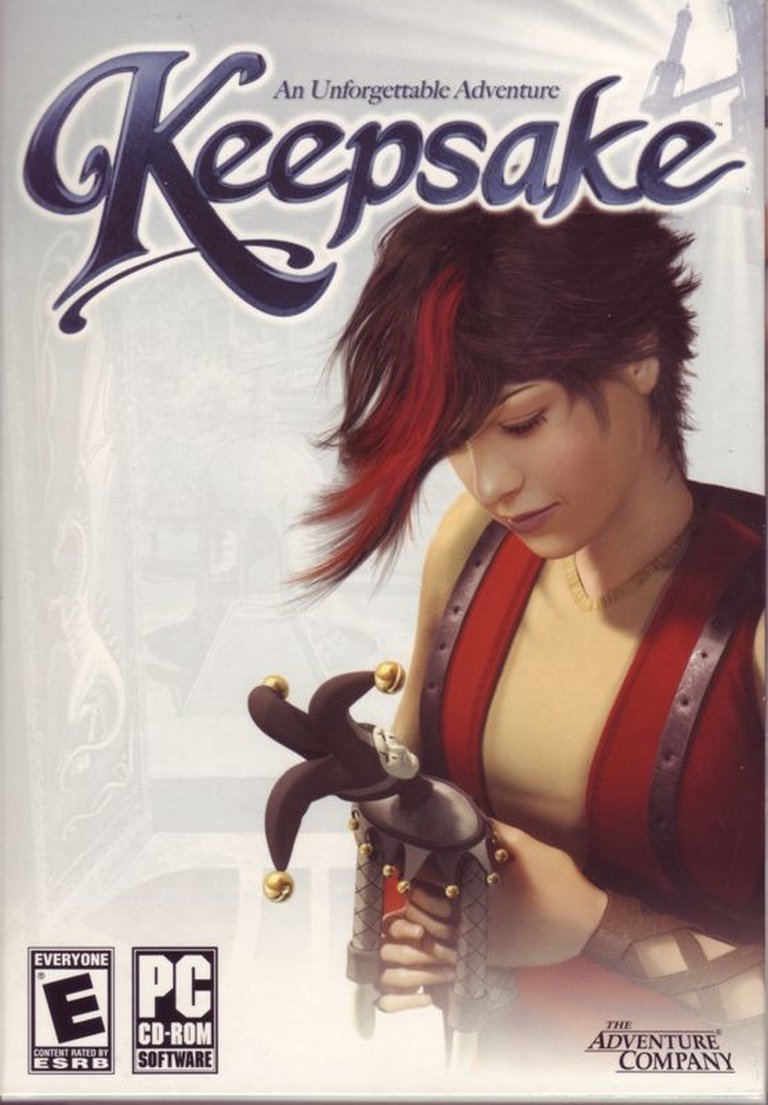
Keepsake is a third-person point-and-click adventure game set in the mystical Dragonvale School of Magic. Players take on the role of Lydia, a student who arrives on her first day only to find the school eerily deserted, with the only clue being an old puppet tied to her childhood friend, Celeste. As Lydia explores the vast, atmospheric corridors and rooms of Dragonvale, she uncovers secrets through puzzle-solving, interactions with peculiar characters and creatures, and the use of inventory items. The game features a richly detailed fantasy setting, dynamic lighting, an original soundtrack, and a compelling narrative that blends mystery and magic.
Gameplay Videos
Where to Buy Keepsake
PC
Keepsake Free Download
Keepsake Cracks & Fixes
Keepsake Patches & Updates
Keepsake Guides & Walkthroughs
Keepsake Reviews & Reception
metacritic.com (87/100): It has a couple of problems here and there (like odd echoes to the dialogue), but it sports a couple dozen intriguing puzzles, it’s well made, and it’s well acted.
mobygames.com (70/100): The most boring of point’n’click games.
ign.com (72/100): Keepsake immerses you into a mystical journey in search of answers to the disappearance of students at Dragonvale Academy.
gamespot.com (52/100): It’s got some occasionally interesting puzzles, but the lame story and irritating characters kill whatever appeal Keepsake might have had.
Keepsake Cheats & Codes
PC
Push those buttons on the keyboard while playing to get the desired effects. Some work only when actually walking around Dragonvale, some even in the title screen.
| Code | Effect |
|---|---|
| Q | Instantly quits the game. |
| L | Loads the most recent saved game. |
| M | Press to stop Lydia from moving. Zak will still try to move where you click, but will usually return to Lydia. Press again to regain movement. |
| S | Saves the game. |
| T | Some debug informations will appear on the screen. Press again to make them disappear. |
| / | Warps to a debug room with warps to all rooms in the game (works even in the title screen). Entering some warps might crash the game. |
Keepsake: A Flawed Gem in the Adventure Genre
Introduction
Keepsake (2005) is a third-person point-and-click adventure game developed by Wicked Studios, a small Canadian team, and published by The Adventure Company. Set in the sprawling Dragonvale Academy of Magic, the game follows Lydia, a young student arriving for her first day, only to find the school eerily deserted. With the help of Zak, a mysterious wolf claiming to be a dragon, Lydia must unravel the academy’s secrets, solve intricate puzzles, and confront the mysteries of her own past.
At its core, Keepsake is a love letter to classic adventure games, drawing inspiration from titles like Myst and The Longest Journey. Its lush visuals, atmospheric soundtrack, and challenging puzzles create an immersive experience that, despite its flaws, remains a standout in the genre. However, its linear progression, technical hiccups, and occasionally frustrating design choices prevent it from reaching the heights of its influences.
This review will dissect Keepsake in exhaustive detail, examining its development, narrative, gameplay, world-building, and legacy. By the end, we’ll determine whether it’s a forgotten gem or a flawed relic of its time.
Development History & Context
The Studio and Vision
Wicked Studios, founded in 2002, was a small Montreal-based team of six developers. Keepsake was their debut title, and their ambition was clear: to revive the magic of classic adventure games with a fresh, fantasy-driven narrative. The studio’s vision was to create a game that blended intricate puzzles, a richly detailed world, and a compelling story—all wrapped in a visually stunning package.
The game’s engine, Glyph, was built primarily on open-source projects, including the Crystal Space 3D engine, which allowed for cross-platform compatibility (Windows, Linux, and Mac OS X). This was a notable technical achievement for a small studio, though it also introduced some of the game’s early instability issues.
The Gaming Landscape of 2005
By the mid-2000s, the adventure genre was in a state of flux. The golden age of point-and-click adventures—defined by titles like Monkey Island, Myst, and The Longest Journey—had waned. The market was increasingly dominated by action-oriented games, and adventure titles were often relegated to niche audiences.
Keepsake arrived in this transitional period, offering a traditional adventure experience at a time when the genre was struggling to find its footing. Its release was met with cautious optimism from critics and fans alike, many of whom were hungry for a return to the genre’s roots.
Regional Differences and Patches
The game’s development was not without its challenges. The North American release was delayed to incorporate several enhancements, including:
– An in-game map (absent in the original European version).
– Fine-tuned dialogue to reduce repetition.
– Enlarged “hotspots” for smoother navigation.
– Improved pathfinding for Lydia and Zak.
– New voice-overs for key characters.
European players received some of these improvements via a 1.5 patch, but the North American version remained the most polished iteration.
Narrative & Thematic Deep Dive
Plot Summary
Lydia arrives at Dragonvale Academy, eager to reunite with her childhood friend Celeste. Instead, she finds the school abandoned, with only a discarded puppet—Celeste’s childhood toy—as a clue. With the help of Zak, a wolf who claims to be a dragon, Lydia embarks on a quest to uncover the academy’s secrets, solve its puzzles, and ultimately confront the truth about Celeste’s disappearance.
The story unfolds through a series of visions, puzzles, and interactions with the academy’s few remaining inhabitants (or spectral remnants). The narrative is deeply personal, exploring themes of friendship, loss, and self-discovery.
Themes and Motifs
-
Friendship and Betrayal: Lydia’s relationship with Celeste is central to the story. Their bond is tested by Celeste’s strained relationship with her father, Nathaniel, and the mysteries surrounding her disappearance. Zak’s own journey—from a deceptive wolf to a vulnerable human—mirrors Lydia’s quest for truth.
-
Identity and Transformation: Zak’s shapeshifting dilemma (and his eventual transformation into a cat) serves as a metaphor for self-acceptance. The game’s magic system, particularly the shapeshifting potion, reinforces this theme.
-
The Weight of the Past: The academy’s history, particularly the rivalry between its founders (Nightingale and Winterowl), casts a long shadow over the present. Lydia’s visions of Celeste’s troubled past add emotional depth to the narrative.
-
Isolation and Discovery: The deserted academy is both a setting and a character. Its empty halls and hidden secrets create a sense of loneliness, but also wonder as Lydia uncovers its mysteries.
Characters
- Lydia: The protagonist, a determined and resourceful young woman. Her voice acting is strong, though some critics noted inconsistencies in her emotional delivery.
- Zak: A wolf who claims to be a dragon, later revealed to be a human cursed by his own experiments. His character arc is one of the game’s highlights, though his early deceptions may frustrate players.
- Celeste: Lydia’s childhood friend, whose disappearance drives the plot. Her character is explored through visions and flashbacks.
- Nathaniel: Celeste’s father and the academy’s headmaster. His cold demeanor and mysterious actions make him a compelling antagonist.
- Mustavio: A traveling merchant who provides comic relief and occasional aid. His interactions with Lydia and Zak are some of the game’s lighter moments.
Dialogue and Voice Acting
The voice acting in Keepsake is generally well-done, though not without flaws. Lydia’s performance is strong, but some secondary characters (particularly Mustavio) can feel over-the-top. The dialogue is well-written, though the game’s early sections suffer from repetitive scripts—a issue addressed in later patches.
The game’s use of a “magical circlet” to translate ancient runes is a clever narrative device, allowing players to uncover the academy’s history through environmental storytelling.
Gameplay Mechanics & Systems
Core Gameplay Loop
Keepsake is a classic point-and-click adventure, with players navigating Lydia through the academy, interacting with objects, and solving puzzles to progress. The game’s structure is linear, with puzzles often requiring specific sequences of actions to solve.
Puzzle Design
The puzzles in Keepsake are its defining feature. They range from logic-based challenges (e.g., the Minotaur Maze) to environmental puzzles (e.g., the Water Pump) and even a few action-oriented sequences (e.g., the Trial of Triumph). The difficulty curve is steep, with some puzzles requiring extensive trial-and-error.
Notable Puzzles:
– The Minotaur Maze: A grid-based puzzle where players must navigate a goblin past a minotaur.
– The Weights Puzzle: A mechanical challenge involving balancing weights to restore power to the academy.
– The Teleporter Nexus: A complex puzzle requiring players to activate all teleporter disks in the upper academy.
– The Trial of Wisdom: A poetry-based puzzle where players must match runes to verses.
Hint System: One of the game’s most praised features is its robust hint system. Players can receive gradual hints for puzzles, and even opt for an “auto-solve” feature if stuck. This makes the game accessible to newcomers while still challenging veterans.
Inventory and Item Usage
Unlike traditional adventure games, Keepsake does not allow players to freely combine inventory items. Instead, items are used automatically when the correct conditions are met. This design choice streamlines the experience but may frustrate players accustomed to more open-ended puzzle-solving.
Exploration and Navigation
The academy is vast, with multiple floors, towers, and hidden areas. Navigation can be cumbersome, particularly in the early game, where backtracking is frequent. The in-game map (added in later versions) helps mitigate this, but some areas remain confusing.
Technical Issues
The game suffered from several technical problems at launch, including:
– Crashes and Freezes: Particularly in the Windows XP version, which required a 1.6 patch to stabilize.
– Audio Glitches: Dialogue volume inconsistencies and missing voice lines.
– Pathfinding Issues: Lydia and Zak occasionally get stuck on geometry.
World-Building, Art & Sound
Setting and Atmosphere
Dragonvale Academy is a masterclass in environmental design. The game’s art direction blends gothic architecture with fantastical elements, creating a sense of wonder and mystery. The academy’s empty halls, overgrown gardens, and hidden chambers all contribute to its eerie, immersive atmosphere.
Key Locations:
– The Grand Hall: A towering space dominated by a dragon statue, serving as the game’s central hub.
– The Machine Room: A steampunk-inspired area where players restore power to the academy.
– The Solarium: A lush, glass-domed garden where the Nigilis tree is grown.
– The Upper Academy: A labyrinthine network of towers, classrooms, and teleporters.
Visual Design
The game’s pre-rendered backgrounds are stunning, with dynamic lighting and detailed textures. The character models, while somewhat stiff, are expressive enough to convey emotion. The camera angles are particularly impressive, shifting seamlessly to emphasize the academy’s scale.
Sound Design and Music
The soundtrack is atmospheric, blending orchestral and ambient tracks to enhance the game’s mood. The sound effects—creaking doors, distant echoes, and magical hums—add to the immersion. However, the voice acting, while generally strong, suffers from occasional inconsistencies.
Reception & Legacy
Critical Reception
Keepsake received mixed reviews upon release, with critics praising its visuals, puzzles, and atmosphere while criticizing its linear design and technical issues.
Notable Reviews:
– Adventure Lantern (90%): “A thoroughly enjoyable and challenging game.”
– GameSpot (5.2/10): “Lame story and irritating characters kill whatever appeal Keepsake might have had.”
– IGN (7.2/10): “Impossibly difficult puzzles in the second half.”
The game’s aggregate scores reflect this divide:
– Metacritic: 68%
– GameRankings: 70%
Player Reception
Player reviews were similarly polarized. Some praised the game’s immersive world and challenging puzzles, while others found it frustratingly linear and buggy.
Positive Player Feedback:
– “Breathtaking visuals and an immersive story.”
– “The hint system is a godsend for newcomers.”
Negative Player Feedback:
– “Too much backtracking and repetitive dialogue.”
– “Some puzzles are overly complicated and not fun.”
Legacy and Influence
Keepsake did not achieve commercial success, but it remains a cult favorite among adventure game enthusiasts. Its influence can be seen in later titles that blended puzzle-solving with rich environmental storytelling, such as The Witness and Obduction.
The game’s legacy is one of ambition—an attempt to revive a fading genre with a fresh, fantasy-driven narrative. While it didn’t reach the heights of its influences, it remains a fascinating artifact of its time.
Conclusion
Keepsake is a flawed but ambitious adventure game that captures the magic of classic point-and-click titles while struggling with the limitations of its era. Its strengths—stunning visuals, challenging puzzles, and a richly detailed world—are often overshadowed by its linear design, technical issues, and occasional frustration.
Final Verdict:
– For Adventure Fans: A must-play, particularly for those who enjoy intricate puzzles and atmospheric storytelling.
– For Casual Players: The hint system makes it accessible, but the game’s pacing and backtracking may test patience.
– For Critics: A fascinating case study in the challenges of reviving a niche genre.
Keepsake is not a perfect game, but it is a memorable one—a testament to the power of ambition in game design. It may not be a classic, but it is certainly a gem worth uncovering.
Score: 7.5/10 – A flawed but immersive adventure that rewards patience and perseverance.