
- Release Year: 2016
- Platforms: iPad, iPhone, PS Vita, Windows
- Publisher: Beijing Happy Entertainment Technology, Rejet Co., Ltd.
- Developer: Rejet Co., Ltd.
- Genre: Adventure
- Perspective: 1st-person
- Game Mode: Single-player
- Gameplay: Visual novel
- Setting: Classical, Japan (Ancient, Medieval)
- Average Score: 87/100
Description
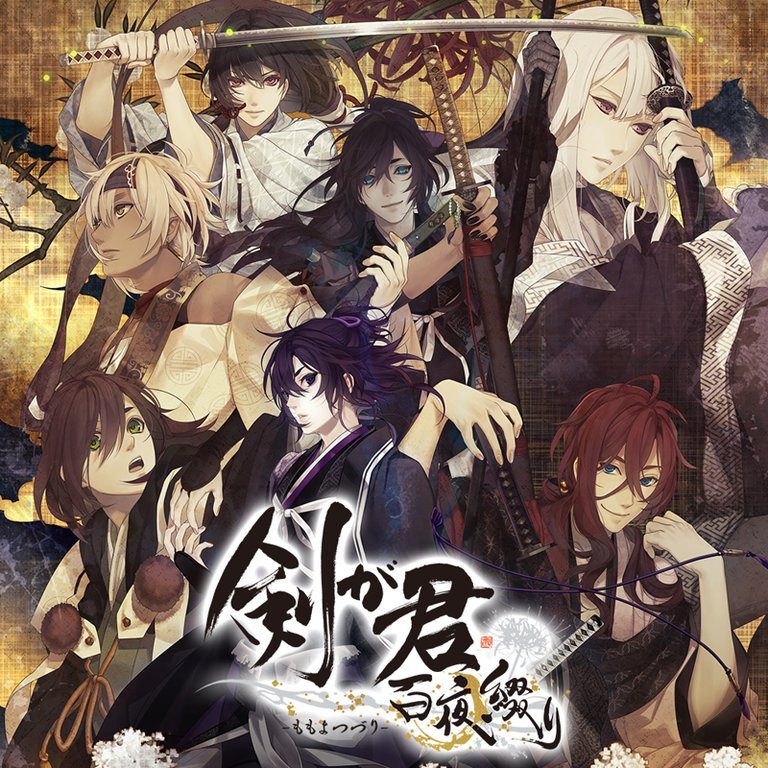
Ken ga Kimi: Momoyo Tsuzuri is a visual novel set in ancient Japan, offering a rich narrative experience with 100 unique stories. Developed by Rejet, the game features anime-style visuals and a first-person perspective, immersing players in a world of historical intrigue and adventure. It is part of the Ken ga Kimi series and has been released on multiple platforms, including PS Vita, Windows, iPhone, and iPad.
Gameplay Videos
Guides & Walkthroughs
Reviews & Reception
store.steampowered.com (86/100): KEN ga KIMI is Japanese legend ADV and is highly recommended since released at Japan.
steambase.io (88/100): Ken ga Kimi: Momoyo Tsuzuri has earned a Player Score of 88 / 100.
Ken ga Kimi: Momoyo Tsuzuri: A Masterpiece of Historical Romance and Swordplay
Introduction
Ken ga Kimi: Momoyo Tsuzuri (2016) is a visual novel that transcends the boundaries of its genre, blending historical intrigue, romantic depth, and samurai lore into a narrative tapestry that captivates players. As a follow-up to the critically acclaimed Ken ga Kimi (2015), this fan-disc expansion delivers 100 new stories, enriching the world of Edo-era Japan with unparalleled character development and thematic complexity. This review will dissect the game’s development, narrative, gameplay, and legacy, arguing that Momoyo Tsuzuri is not just an expansion but a standalone masterpiece that redefines the otome genre.
Development History & Context
Developed by Rejet Co., Ltd., Ken ga Kimi: Momoyo Tsuzuri was released on December 22, 2016, for the PlayStation Vita, later ported to PC (2020), iOS (2022), and iPad (2022). The game’s development was driven by a desire to expand the original’s lore, offering players a deeper dive into the relationships and histories of its characters. The studio’s vision was to create a game that balanced romance with historical authenticity, drawing from the Edo period’s political and cultural milieu.
Technologically, the game leveraged the Vita’s capabilities for crisp visuals and voice acting, while later ports adapted to PC and mobile interfaces. The gaming landscape in 2016 was dominated by visual novels like Steins;Gate and Clannad, but Momoyo Tsuzuri distinguished itself through its historical setting and emphasis on swordplay as a narrative device.
Narrative & Thematic Deep Dive
Plot Overview
The story begins in 1633, following the suicide of Tokugawa Tadanaga. The protagonist, a young woman living in Edo with her father, is thrust into the role of Lady Hisahime, the Shogun’s sister. Protected by six elite bodyguards, she embarks on a bridal procession to deliver one of the Tenka-Goken (Heavenly Swords), the legendary Juzumaru. The journey becomes a catalyst for romance, betrayal, and self-discovery.
Characters & Relationships
The six bodyguards—Tsuzuramaru, Kei, Kuroba Saneaki, Enishi, Sagihara Sakyō, and Suzukake—each possess distinct personalities and backstories. Tsuzuramaru, voiced by Yuki Ono, embodies stoic nobility, while Kei (voiced by KENN) brings a mix of charm and danger. The game excels in portraying their relationships with the protagonist, blending romantic tension with moments of vulnerability.
Themes
- Duty vs. Desire: The conflict between personal feelings and samurai duty is a recurring motif.
- Identity & Role: The protagonist’s journey from an ordinary girl to a political pawn explores themes of agency.
- Historical Authenticity: The game weaves real Edo-era customs and conflicts into its narrative, grounding the fantasy in realism.
Gameplay Mechanics & Systems
Core Gameplay Loop
Players navigate the story by selecting “books” from a stack, each containing multiple stories. The game’s branching narrative allows players to experience different perspectives, with choices affecting character relationships and unlocking bonus content.
Magatama Collection System
- Magatama (curved beads) are earned by reading stories, making choices, or visiting the in-game restaurant.
- These can be exchanged for bonus voice clips, CGs, and bookmarks, incentivizing replayability.
UI & Accessibility
The interface is intuitive, with options for auto-play, skip, and a built-in dictionary for historical terms. The lack of English support is a notable drawback, limiting accessibility for non-Japanese speakers.
World-Building, Art & Sound
Art Direction
Artist Yomi delivers stunning anime-style visuals, with detailed character designs and evocative backgrounds. The art captures the elegance and brutality of the Edo period, from ornate kimonos to battle-scarred landscapes.
Sound Design
- Music: Composed by PROCYON STUDIO, the soundtrack blends traditional Japanese instruments with modern orchestration. The opening theme, Mahoroba no Sora, is particularly haunting.
- Voice Acting: The cast, including veterans like Ryotaro Okiayu and Kenichirou Oohashi, delivers performances that elevate emotional scenes.
Atmosphere
The game’s atmosphere is immersive, with ambient sounds of Edo’s streets and the clashing of swords enhancing the historical setting.
Reception & Legacy
Critical & Commercial Reception
At launch, Momoyo Tsuzuri received praise for its narrative depth and character writing. On Steam, it holds an 86% positive rating (as of 2025), with players lauding its storytelling and replay value. The lack of English localization, however, limited its Western audience.
Influence on the Industry
The game’s success inspired other otome titles to incorporate historical settings and swordplay mechanics. Its emphasis on character-driven narratives influenced later visual novels like Hakuoki: Kyoto Winds.
Conclusion
Ken ga Kimi: Momoyo Tsuzuri is a triumph of storytelling, blending romance, history, and action into a cohesive whole. Its richly detailed world, memorable characters, and innovative gameplay mechanics cement its place as a landmark in the visual novel genre. While its lack of English support is a missed opportunity, its legacy endures as a testament to the power of narrative-driven gaming.
Final Verdict: A must-play for fans of historical romance and otome games, Momoyo Tsuzuri is a timeless gem that deserves a broader audience.