
- Release Year: 1992
- Platforms: Amiga, DOS, Windows
- Publisher: Microids SA, Ocean Software Ltd., Sold Out Sales & Marketing Ltd., Virgin Games, Inc.
- Developer: Cryo Interactive Entertainment
- Genre: Adventure
- Perspective: 1st-person
- Game Mode: Single-player
- Gameplay: Live action cut-scenes, Paper doll inventory, Point-and-click, Puzzle, Time-critical
- Setting: 1990s, Cold War, Europe, Leningrad, Moscow, Petrograd, St. Petersburg
- Average Score: 86/100
Description
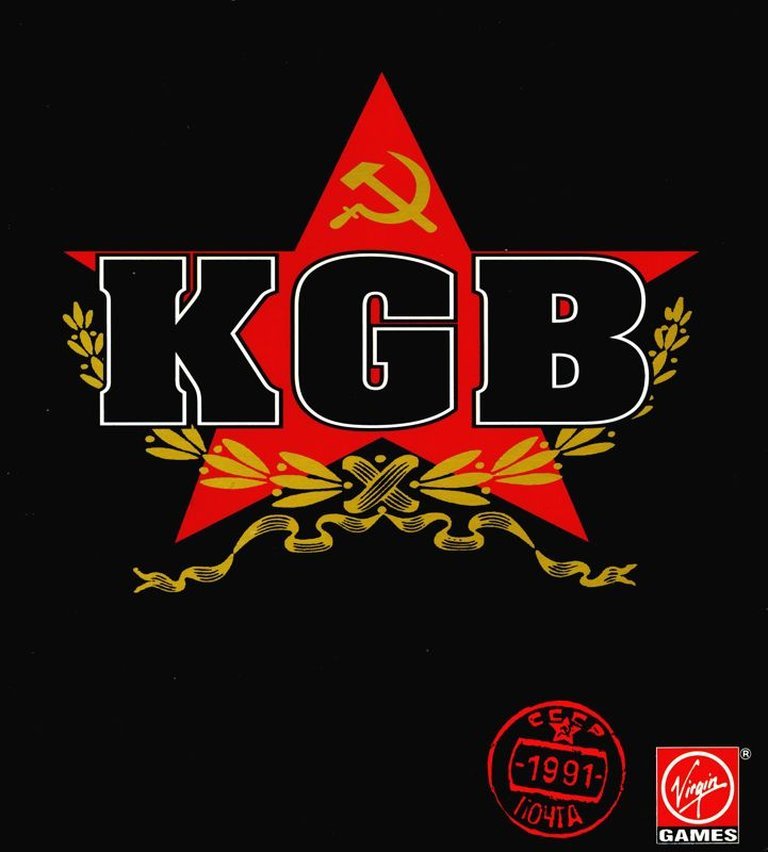
Set in August 1991 during the collapse of the USSR, ‘KGB’ (later re-released as ‘Conspiracy’) casts players as KGB officer Maksim Rukov, newly assigned to Department P to investigate corruption and traitors within the agency. Using a point-and-click interface and first-person perspective inspired by Cryo’s ‘Dune’, the game challenges players with politically charged investigations, time-sensitive decisions, and investigative puzzles in a gritty Cold War setting. With punishing difficulty and a rewind feature to correct fatal errors, it immerses players in a shadowy world of espionage, enhanced in the CD-ROM edition with Donald Sutherland’s video segments as Rukov’s father.
Gameplay Videos
KGB Free Download
KGB Cracks & Fixes
KGB Guides & Walkthroughs
KGB Reviews & Reception
myabandonware.com (91.4/100): Great adventure game. Very complexed plot that requires to be in a certain place at a certain time.
KGB: Review
KGB, developed by Cryo Interactive Entertainment and published by Virgin Games in 1992, is a point-and-click adventure game set in the tumultuous final days of the Soviet Union. The game tasks players with investigating corruption within the KGB, a mission that unfolds against the backdrop of political intrigue, espionage, and the impending collapse of the USSR. This review will delve into the game’s development history, narrative depth, gameplay mechanics, world-building, reception, and legacy, providing a comprehensive analysis of its place in video game history.
Development History & Context
Cryo Interactive Entertainment, a French studio known for its ambitious and innovative games, developed KGB. The studio’s previous work, Dune, had established a foundation for the game’s engine and interface, which heavily influenced KGB’s design. The game’s creators, including director Yves Lamoureux and designer Johan K. Robson, aimed to craft a narrative-driven experience that would immerse players in the complex political landscape of the Soviet Union.
The technological constraints of the era dictated a point-and-click interface, which was both a strength and a limitation. The game’s pseudo-first-person perspective allowed for a sense of immersion, but the graphical capabilities of the time meant that the visuals were somewhat rudimentary. Despite these limitations, Cryo managed to create a game that felt both authentic and engaging.
The gaming landscape of 1992 was dominated by text-based adventures and early graphical adventures. Games like Monkey Island and Indiana Jones and the Fate of Atlantis had set a high bar for storytelling and puzzle design. KGB sought to differentiate itself by focusing on a realistic and gritty portrayal of espionage, drawing inspiration from the works of John le Carré and the political climate of the time.
Narrative & Thematic Deep Dive
KGB’s narrative is one of its strongest assets. The game is set in August 1991, just days before the collapse of the USSR. Players assume the role of Captain Maksim Rukov, a KGB officer transferred to Department P, which investigates corruption within the organization. Rukov’s mission begins with the investigation of a murdered private detective but quickly escalates into a web of conspiracies, double agents, and political intrigue.
The plot is rich with historical context, drawing on real-world events such as the attempted coup against Mikhail Gorbachev and the rise of perestroika and glasnost. This historical grounding lends the game a sense of authenticity that is rare in video games. The narrative is non-linear, with multiple paths and endings, encouraging players to explore different approaches to solving the game’s mysteries.
The characters in KGB are well-developed and nuanced. Rukov himself is a complex protagonist, driven by a desire for justice but also haunted by his past. Supporting characters, such as Major Vovlov and Colonel Viktor Galushkin, add depth to the story with their own motivations and secrets. The dialogue is sharp and often humorous, providing a stark contrast to the game’s dark themes.
The game’s themes of corruption, betrayal, and the struggle for power are explored through a lens of political realism. KGB does not shy away from the grimier aspects of espionage, depicting a world where trust is a rare commodity and the line between friend and foe is often blurred. This thematic depth is one of the game’s most enduring qualities, making it a standout in the genre.
Gameplay Mechanics & Systems
KGB’s gameplay mechanics are a mix of exploration, puzzle-solving, and investigation. The game’s point-and-click interface is intuitive, allowing players to interact with the environment and characters with ease. The pseudo-first-person perspective provides a sense of immersion, making the player feel as though they are truly part of the action.
The game’s puzzles are not traditional in the sense of inventory-based conundrums. Instead, they often involve decoding messages, eavesdropping on conversations, and making strategic decisions. This approach to puzzle design is both a strength and a weakness. On one hand, it adds a layer of realism to the game; on the other, it can be frustratingly vague, leaving players to piece together solutions with little guidance.
The game’s time management system adds an extra layer of challenge. Players must complete tasks within specific time frames, adding a sense of urgency to the gameplay. This mechanic is well-integrated into the game’s narrative, reflecting the high-stakes nature of espionage.
The user interface is functional but dated by modern standards. The inventory system, in particular, feels clunky and outdated. However, given the technological constraints of the time, it is a testament to Cryo’s ingenuity that the game remains playable today.
World-Building, Art & Sound
KGB’s world-building is one of its most impressive aspects. The game’s setting in the Soviet Union is brought to life through detailed environments, authentic dialogue, and a keen eye for historical detail. The cities of Moscow and Leningrad (St. Petersburg) are depicted with a sense of gritty realism, reflecting the decay and corruption of the era.
The art style is a mix of pixel art and hand-drawn illustrations, which gives the game a unique visual identity. The character portraits, in particular, are well-designed, conveying a range of emotions and personalities. The game’s use of color is also noteworthy, with a muted palette that reflects the bleakness of the setting.
The sound design is minimalistic, with a focus on ambient sounds and a haunting electronic soundtrack. The music, composed by Stéphane Picq, is a standout feature of the game, adding to its atmospheric qualities. The lack of voice acting is a notable omission, but given the technological limitations of the time, it is understandable.
Reception & Legacy
Upon its release, KGB received mixed reviews. Critics praised the game’s ambitious narrative and historical context but criticized its difficulty and lack of clarity in puzzle design. Player reviews were similarly divided, with some praising the game’s depth and complexity, while others found it frustratingly opaque.
The game’s legacy is somewhat controversial. While it is often cited as a pioneering example of narrative-driven adventure games, it is also remembered for its punishing difficulty and lack of guidance. Despite these criticisms, KGB has maintained a cult following among adventure game enthusiasts, who appreciate its unique blend of espionage, politics, and historical drama.
KGB’s influence can be seen in subsequent games that sought to blend realistic settings with complex narratives. Games like Deus Ex and the Thief series owe a debt to KGB’s approach to world-building and storytelling. The game’s legacy is a testament to Cryo’s ambition and the enduring appeal of its narrative.
Conclusion
KGB is a game that defies easy categorization. It is at once a historical drama, a political thriller, and a complex puzzle game. Its strengths lie in its ambitious narrative, rich historical context, and innovative gameplay mechanics. Its weaknesses, namely its difficulty and lack of clarity, are a product of the technological and artistic constraints of the time.
In conclusion, KGB is a game that deserves to be remembered for its contributions to the adventure genre. Its legacy is a testament to the power of storytelling in video games and the enduring appeal of espionage narratives. Despite its flaws, KGB remains a unique and compelling experience, one that continues to captivate players more than three decades after its release.