
- Release Year: 2018
- Platforms: Windows
- Publisher: RewindApp
- Developer: RewindApp
- Genre: Action
- Perspective: 3rd-person
- Game Mode: Single-player
- Gameplay: Shooter
- Average Score: 51/100
Description
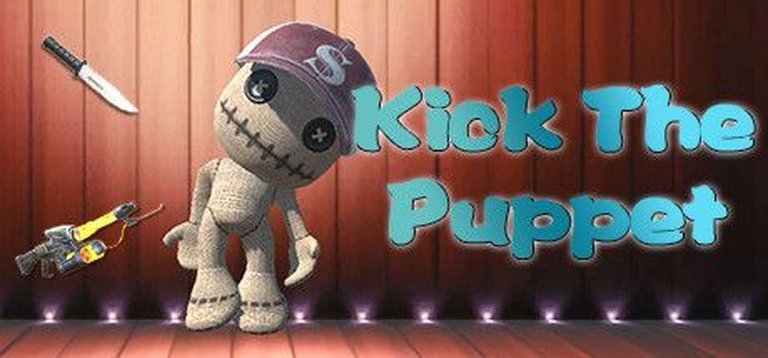
Kick The Puppet is a stress-relieving action game where players unleash their frustration on a taunting doll using an arsenal of weapons like knives, flamethrowers, and tanks. The goal is to earn gold coins by inflicting damage, which can then be spent on upgrading weapons for more destruction or outfitting the doll with stylish gear. With its simple, direct controls and third-person perspective, the game offers a cathartic, over-the-top experience designed to help players unwind through chaotic, weapon-filled mayhem.
Where to Buy Kick The Puppet
PC
Kick The Puppet Guides & Walkthroughs
Kick The Puppet Reviews & Reception
steambase.io (52/100): Kick The Puppet has earned a Player Score of 52 / 100.
store.steampowered.com (50/100): All Reviews: Mixed (50% of 24)
Kick The Puppet: A Cathartic, Controversial, and Curiously Compelling Experiment in Digital Violence
Introduction: The Dark Allure of a Simple Premise
Few games dare to embrace their own absurdity as unapologetically as Kick The Puppet. Released in 2018 by the obscure indie studio RewindApp, this third-person action-shooter hybrid presents players with a singular, almost primal objective: inflict as much violence as possible upon a helpless, taunting puppet for profit. On its surface, the game is a crude, low-budget stress-relief simulator—a digital punching bag with a monetization loop. Yet beneath its simplistic veneer lies a fascinating case study in game design minimalism, psychological catharsis, and the ethical boundaries of interactive entertainment.
At a time when the gaming industry was (and still is) grappling with debates over violence, player agency, and the moral implications of virtual harm, Kick The Puppet emerged as an unfiltered id experiment. It is neither a masterpiece nor a disaster—it is something far more intriguing: a game that knows exactly what it is, refuses to be anything else, and thrives in its own niche of unabashed, consequence-free aggression.
This review will dissect Kick The Puppet from every conceivable angle: its development context, its mechanical simplicity, its unsettling thematic undercurrents, and its polarizing reception. By the end, we will determine whether it is a mindless time-waster, a darkly humorous satire, or—dare we say—a cult classic in the making.
Development History & Context: The Birth of a Digital Stress Ball
The Studio Behind the Puppet: RewindApp’s Obscure Portfolio
RewindApp is not a household name in gaming. The studio, which appears to operate primarily through Steam’s indie-friendly ecosystem, has released a handful of titles—most of which share Kick The Puppet’s penchant for retro aesthetics, minimalist gameplay, and niche appeal. Their catalog includes Puppet Fever (2018), Drunk Puppet (2018), and Puppet House (2024), suggesting a peculiar fascination with puppet-based violence.
What little is known about RewindApp indicates a small, likely solo or duo-driven team leveraging Unity to create low-cost, high-concept experiments. Their games are not designed for critical acclaim or commercial dominance; they are digital curiosities, built to test a single idea to its logical extreme.
The Gaming Landscape of 2018: A Year of Contrasts
Kick The Puppet launched on December 8, 2018, a year that saw the release of God of War (2018), Red Dead Redemption 2, and Celeste—games celebrated for their narrative depth, technical prowess, and emotional resonance. In this environment, Kick The Puppet was an outlier, a game that rejected storytelling, graphical fidelity, and even basic gameplay complexity in favor of pure, unadulterated interaction.
This was also the year when discussions about violence in games reignited, particularly with the release of Call of Duty: Black Ops 4 and Battlefield V, both of which faced scrutiny over their depictions of war. Meanwhile, indie darlings like Undertale and Papers, Please were being praised for their moral ambiguity and player-driven consequences.
Kick The Puppet exists in stark contrast to these trends. It is violence without consequence, without narrative justification, without even the pretense of meaning. It is, in many ways, the antithesis of the “games as art” movement—a return to the pure, unfiltered id of early arcade brutality.
Technological Constraints & Design Philosophy
Built in Unity, Kick The Puppet is a technically modest game. Its system requirements are laughably low (a 2 GHz processor and 2 GB of RAM), and its visuals are deliberately simplistic. This was not due to a lack of skill but rather a deliberate design choice.
The game’s development philosophy can be summarized as:
1. Minimalist Interaction – No complex controls, no deep mechanics, just click, shoot, earn, repeat.
2. Instant Gratification – Every action yields immediate feedback (coins, sound effects, ragdoll physics).
3. Cathartic Release – The puppet’s taunts and the over-the-top weaponry are designed to provoke and satisfy the player’s urge for destruction.
In many ways, Kick The Puppet is the spiritual successor to stress-relief flash games of the early 2000s (e.g., Ragdoll Cannon, Papa’s Freezeria), but with a darker, more intentional edge.
Narrative & Thematic Deep Dive: The Puppet as a Mirror of the Player’s Id
The “Story” (Or Lack Thereof)
Kick The Puppet has no traditional narrative. There is no lore, no character backstory, no world-building. The closest thing to a “plot” is the Steam description:
“This doll makes fun of you… Show him what you’re worth!”
This single line is the entire premise. The puppet exists solely to mock the player, and the player’s role is to punish it.
The Puppet as a Psychological Projection
The puppet is not just a target—it is a symbol. It represents:
– The player’s frustrations (work, life, other games).
– The absurdity of violence in games (why do we enjoy this?).
– The lack of consequences in virtual spaces (no morality, no guilt).
The puppet’s taunts (e.g., laughing, jeering) are not just gameplay mechanics—they are psychological triggers, designed to elicit an emotional response. The game wants you to feel annoyed, even angry, so that the act of violence feels justified.
Themes: Catharsis, Power Fantasy, and the Ethics of Virtual Violence
-
Catharsis Through Destruction
- The game markets itself as a “relaxing” experience, which is darkly ironic. The act of hurting the puppet is framed as therapeutic, a way to “let off steam.”
- This raises questions: Is violence truly cathartic, or does it reinforce aggressive tendencies?
-
The Power Fantasy of Unchecked Dominance
- Unlike most games, where violence is contextualized (e.g., saving the world, surviving), Kick The Puppet offers violence for its own sake.
- The player is omnipotent—the puppet cannot fight back, only mock.
-
The Ethics of Interactive Sadism
- The game does not shy away from the sadistic pleasure of inflicting pain.
- It forces players to confront: Why do we enjoy this? Is it wrong to enjoy this?
Dialogue & Sound Design: The Puppet’s Mocking Laughter
The puppet’s voice lines (limited though they are) consist of laughs, jeers, and taunts. These are not just random sounds—they are carefully timed to provoke the player.
- Example: After a particularly brutal attack, the puppet might let out a mocking giggle, as if daring the player to do worse.
- Effect: This creates a feedback loop of escalation—the more the puppet taunts, the more the player wants to silence it.
The sound design reinforces this:
– Weapons have exaggerated, satisfying sound effects (e.g., the thud of a knife, the sizzle of a flamethrower).
– Coins jingle in a way that feels rewarding, even though the act of earning them is morally dubious.
Gameplay Mechanics & Systems: The Brutal Simplicity of a Virtual Punishing Bag
Core Gameplay Loop: Hurt, Earn, Upgrade, Repeat
The gameplay can be broken down into three phases:
-
Violence Phase
- The player selects a weapon (knife, submachine gun, flamethrower, tank, etc.).
- The player attacks the puppet in a third-person perspective.
- The puppet ragdolls realistically, reacting to each hit.
-
Economic Phase
- The player earns gold coins based on damage dealt.
- Coins are used to upgrade weapons (more damage = more coins) or customize the puppet (hats, outfits, etc.).
-
Escalation Phase
- The player unlocks new weapons, each more absurd than the last (e.g., a tank).
- The puppet’s taunts become more frequent, encouraging further violence.
Combat & Weapon Variety: From Knives to Tanks
The game’s weapon roster is its primary draw:
– Melee Weapons (Knives, Bats) – Close-range, visceral.
– Firearms (Submachine Guns, Shotguns) – Fast, chaotic.
– Heavy Weaponry (Flamethrowers, Tanks) – Over-the-top destruction.
Each weapon has:
– A unique sound effect.
– A distinct ragdoll reaction (e.g., flamethrowers make the puppet flail wildly).
– A coin multiplier (stronger weapons = more coins per hit).
Character Progression: The Illusion of Growth
The upgrade system is straightforward:
– Weapons can be upgraded for more damage.
– Puppet customization is purely cosmetic (hats, clothes, etc.).
However, the progression is illusory—there is no “endgame,” no final boss, no ultimate goal. The only objective is to keep hurting the puppet forever.
UI & Controls: Minimalism Taken to the Extreme
- Controls: Mouse-click to attack, WASD to move (though movement is largely unnecessary).
- UI: A coin counter, a weapon selection menu, and a puppet customization screen.
- No HUD clutter, no complex menus—just you, the puppet, and your weapons.
Innovative or Flawed? The Double-Edged Sword of Simplicity
Innovative Aspects:
✅ Pure, unfiltered interaction – No filler, no fluff.
✅ Psychological provocation – The puppet’s taunts create a unique player dynamic.
✅ Dark humor – The absurdity of using a tank on a puppet is undeniably funny.
Flawed Aspects:
❌ Repetitive by design – The lack of variety ensures burnout.
❌ No real challenge – The puppet cannot fight back, removing skill-based engagement.
❌ Ethical discomfort – Some players may find the premise disturbing rather than fun.
World-Building, Art & Sound: A Deliberately Unsettling Aesthetic
Setting & Atmosphere: The Void of Violence
Kick The Puppet takes place in a featureless white room, a deliberate choice that:
– Removes distractions (the only focus is the puppet).
– Enhances the surrealism (why is this happening? Where are we?).
– Makes the violence feel more intimate (no escape, no context).
Visual Design: The Puppet as a Grotesque Plaything
The puppet’s design is uncanny:
– Exaggerated, cartoonish features (big eyes, oversized head).
– Ragdoll physics that make each hit feel weighty and impactful.
– Customization options that range from silly (a top hat) to sinister (a bloodstained shirt).
The weapons are equally exaggerated:
– A flamethrower that turns the puppet into a screaming fireball.
– A tank that crushes the puppet under its treads.
Sound Design: The Symphony of Suffering
The game’s audio is minimal but effective:
– Weapon sounds are loud and satisfying (the crunch of a bat, the whoosh of flames).
– Puppet reactions include pained grunts, laughter, and taunts.
– Coin collection has a pleasing jingle, reinforcing the reward loop.
The lack of music is notable—silence makes the violence feel more personal, more intimate.
Reception & Legacy: A Game That Divides and Provokes
Critical Reception: Mixed, Polarized, and Largely Ignored
- Steam Reviews: Mixed (50% positive, 24 reviews).
- Positive reviews praise it as a “fun stress reliever” and “darkly humorous.”
- Negative reviews call it “pointless,” “disturbing,” and “a waste of time.”
- Metacritic: No critic reviews (the game was too niche for major outlets).
- Kotaku & Major Outlets: No coverage (likely due to its controversial premise).
Commercial Performance: A Niche Curiosity
- Price: Originally $1.99, now $0.55 (frequently on sale).
- Player Count: Peak of 1 player in-game (as of 2026, per Steambase).
- Sales: Likely minimal, but the game has cult appeal among fans of bizarre indie experiments.
Legacy & Influence: The Puppet’s Shadow
While Kick The Puppet is not a direct influence on major games, it exists within a subgenre of “stress-relief” violence simulators, including:
– Punching Simulator (2019)
– Goat Simulator (2014) (though more comedic)
– Hatred (2015) (though far more controversial)
Its true legacy is as a testament to indie gaming’s willingness to explore taboo subjects without apology.
Conclusion: A Game That Knows Exactly What It Is
Kick The Puppet is not a great game by traditional metrics. It is repetitive, morally questionable, and mechanically shallow. Yet, it is also bold, uncompromising, and darkly fascinating.
Final Verdict: 6.5/10 – A Flawed but Fascinating Experiment
✅ Pros:
– Unique premise that embraces its own absurdity.
– Satisfying, immediate feedback in its violence.
– Dark humor that some will find hilarious.
❌ Cons:
– Extremely repetitive—burnout sets in quickly.
– Ethically uncomfortable for some players.
– No depth—what you see is what you get.
Who Should Play It?
- Fans of bizarre indie games (Goat Simulator, Surgeon Simulator).
- Those who enjoy dark humor and absurdity.
- Players looking for a mindless stress reliever.
Who Should Avoid It?
- Those who dislike violence for violence’s sake.
- Players seeking depth, story, or challenge.
- Anyone who finds the premise morally troubling.
Final Thought: The Puppet as a Mirror
Kick The Puppet is more than just a game—it is a psychological experiment. It forces players to confront their own relationship with virtual violence, power fantasies, and catharsis. In an industry increasingly focused on narrative depth and moral complexity, Kick The Puppet stands as a defiant, unfiltered id.
It may not be a masterpiece, but it is unforgettable—and in the world of indie gaming, that is often enough.
Final Score: 6.5/10 – “A Disturbingly Fun Distraction”